There's a pattern you see with almost every local business that dominates Google search results in their area: they didn't get there by accident. Behind those 400+ five-star reviews is a system, not luck. And the businesses that figure this out early gain a compounding advantage that's almost impossible for competitors to close.
This article breaks down exactly how to build that system — from diagnosing where your review funnel leaks, to the mechanics of turning a satisfied checkout moment into a published review.
Why Review Velocity Matters More Than Review Count
Most operators focus on the total number of reviews. But Google's local ranking algorithm cares just as much — if not more — about recency and velocity: how many reviews you're getting, and how often.
A business with 80 reviews all from two years ago will often rank below a competitor with 40 reviews that have been trickling in consistently every week. Google treats fresh reviews as a signal that the business is active, engaged, and relevant.
This changes the strategic goal entirely. The target isn't "get to 200 reviews." The target is "generate 5–10 new reviews per week, sustainably."
That shift from a milestone to a rate is the core insight behind every successful review growth strategy.
The Conversion Gap: Why Happy Customers Don't Review
Here's the math most owners don't look at. If your restaurant serves 150 covers a day, and even 70% of those customers leave satisfied, that's 105 happy customers. If you're generating 3 reviews per week, your conversion rate is under 0.3%.
The problem isn't a lack of satisfied customers. It's a breakdown at the moment of conversion.
Three things kill review conversion:
Friction at the wrong moment. Asking for a review at the table, mid-meal, or in a rushed checkout creates awkwardness and low follow-through. Most people intend to review later and forget.
No clear path. Even customers who want to leave a review often don't know where to go. "Just Google us" sends them on a four-step hunt that most abandon.
No reason to act now. Without any trigger or incentive, reviewing a business competes with everything else on a customer's phone. It loses almost every time.
The solution to each of these is a combination of timing, simplicity, and motivation — and that's exactly what a well-designed review system delivers.
Building a Review Collection System That Works
A review collection system has three components: a trigger, a path, and a pull.
1. The Trigger: Catch Customers at Peak Satisfaction
The highest-converting review request happens within 90 seconds of the customer's peak positive emotion. In a restaurant, that's after they've paid and are still at the table. In a café, it's when they're picking up their order. In a retail store, it's right after the purchase is bagged.
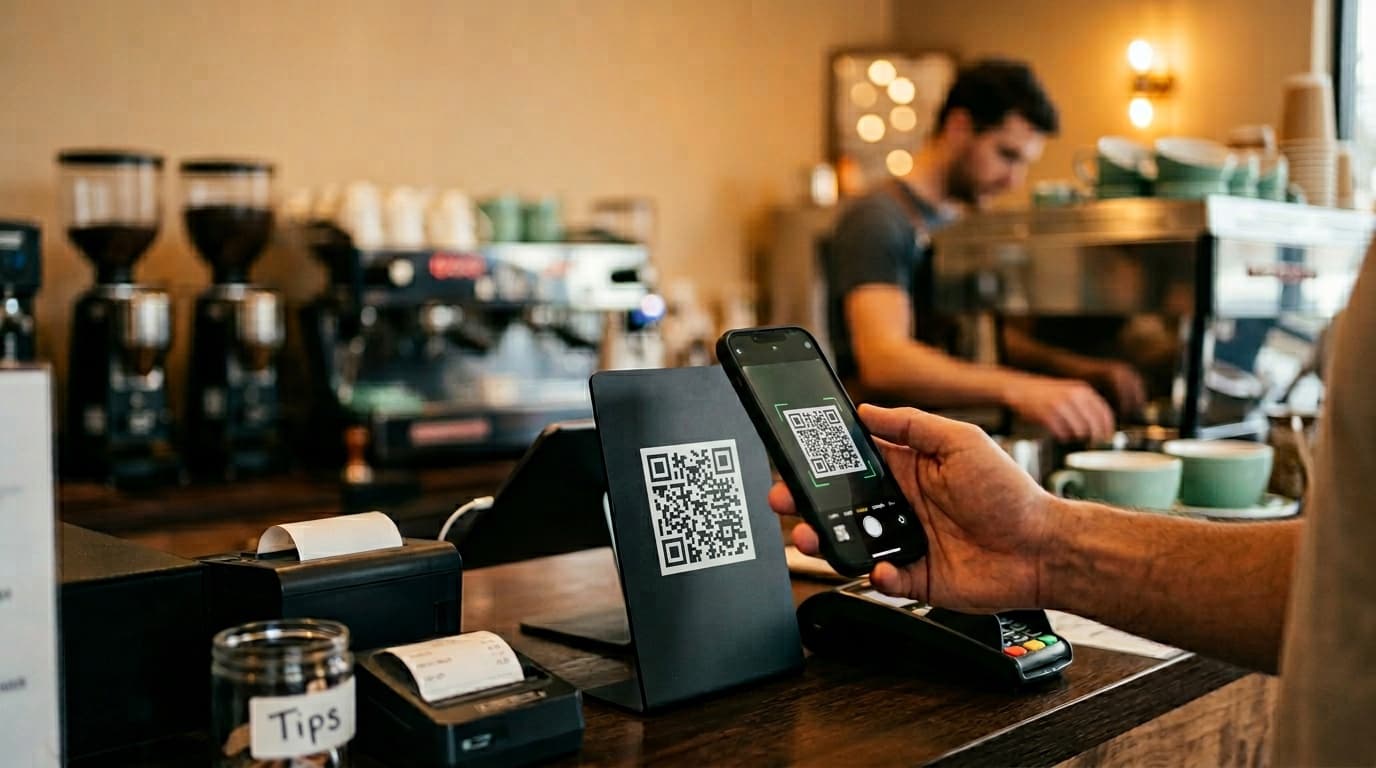
A QR code placed at the point of payment — on the receipt, on a tent card, on the terminal — bridges the gap between that moment and the act of reviewing. The customer scans while their experience is still warm.
2. The Path: Make It One Tap
Your QR code should link directly to your Google Business Profile review form — not to your homepage, not to a third-party site. Every extra tap is a dropout point. Test your own link on a fresh device and count how many taps it takes to reach the review form. If it's more than two, you're losing reviews.
3. The Pull: Give Them a Reason Right Now
This is where most systems stop — and where the high-performers separate themselves. Adding an element of immediate reward at the moment of the review request dramatically increases follow-through.
This doesn't have to be complex. A simple digital fortune wheel that reveals a discount or a free item after the scan gives customers a reason to engage right now, not later. The novelty of the mechanic also triggers word-of-mouth: customers tell friends about the experience, creating organic acquisition on top of the review benefit.
Gamification as the Multiplier
The data behind gamified review collection is consistent: businesses that add an interactive element to their review request see 4–6x higher conversion rates compared to static QR codes alone.
Why does it work? Because gamification hijacks the same psychological levers that keep people playing mobile games: anticipation, variable reward, and immediate feedback. Spinning a wheel is intrinsically motivating in a way that "please leave us a review" simply isn't.
The secondary effect is equally valuable. Customers who engage with a fun mechanic are more likely to leave a detailed, positive review — because their experience now includes a memorable interactive moment, not just the meal or the purchase.
Critically, the reward should be structured so that the review comes first. The customer scans, reviews, then spins. This ensures the review is genuine and compliant with Google's policies — no incentivizing fake or inflated reviews, just making it easy and rewarding to share a real experience.
Measuring Your Reputation Growth
Once you have a system in place, measurement shifts from passive ("how many reviews do I have?") to active ("is my system working?").
Track these three numbers weekly:
- Weekly new reviews: Your velocity metric. Target a consistent weekly minimum based on your customer volume. For a restaurant doing 100+ covers per day, aim for at least 10 new reviews per week.
- Conversion rate: Divide weekly reviews by weekly customers (or QR code scans if you can track them). A healthy rate is 5–15%. Below 3% means something in the funnel is broken.
- Average rating trend: Watch your rolling 30-day average, not just your all-time average. If recent reviews are consistently higher than your overall average, your reputation is improving. If they're lower, investigate.
Review your numbers monthly and adjust. If conversion is low, test a different placement for the QR code. If velocity is stalling, check whether your reward mechanic still feels fresh.
From One-Off to Compounding
The most powerful thing about building a review system — rather than running occasional review "campaigns" — is the compounding effect. Every week of consistent reviews lifts your ranking slightly, which brings more organic discovery, which brings more customers, which feeds more reviews.
Businesses that reach this flywheel stage often find that their review growth becomes partially self-sustaining: customers discover them on Google because of their reviews, have a great experience, and add to those reviews unprompted.
Getting to that stage takes 3–6 months of disciplined execution. But the businesses that build it early create a moat that's genuinely hard to compete with.
Ludofy is designed exactly for this: a QR code-based fortune wheel that slots into your checkout moment, converts satisfied customers into reviewers at 4–6x the rate of passive requests, and gives you a dashboard to track your velocity week over week. If you're ready to turn your customer satisfaction into a measurable reputation asset, it's the fastest path there.