When a new patient searches for "acupuncture near me," what decides whether they call you or your competitor? In almost every case, it comes down to one thing: your Google reviews. The number of reviews, the average star rating, and the quality of recent testimonials — these three signals determine your visibility on Google Maps and the credibility you convey to a skeptical first-time patient.
Acupuncture and Traditional Chinese Medicine (TCM) face a unique challenge in the world of online reviews. Unlike a coffee shop where satisfaction is immediate and obvious, the benefits of acupuncture often unfold over days and weeks. Patients who feel significant relief may not connect that improvement back to your clinic when it comes time to leave a review. Others feel relief in the moment but slip back into their busy lives before writing anything.
This guide walks you through a practical strategy for consistently collecting Google reviews at your acupuncture or TCM practice — without pressuring patients or compromising the calm, restorative atmosphere that defines your brand.
Why Google Reviews Are Non-Negotiable for Acupuncture Practitioners
Trust is the primary currency of any complementary or alternative medicine practice. A patient who has never tried acupuncture is already dealing with uncertainty about the treatment itself. They need strong social proof before they commit to a first appointment.
Studies consistently show that 87% of consumers read online reviews for local businesses before making a purchase decision. For healthcare-adjacent services like acupuncture, that number is likely higher. Your Google Business Profile is often the first thing a prospective patient sees — and a profile with 8 reviews and a 3.9-star average sends a very different message than one with 60 reviews and a 4.8 average.
Beyond patient acquisition, Google reviews directly influence your local SEO ranking. Google's algorithm uses review quantity, freshness, and sentiment as signals to determine which businesses appear in the Local Pack — the top three results in Google Maps searches. More reviews, collected consistently over time, means more visibility — and more visibility means more first appointments.
The Unique Challenges of Collecting Reviews for TCM Clinics
Several factors make review collection harder for acupuncture and TCM clinics than for a typical retail business.
The delayed benefit problem. A patient who experiences dramatic relief three days after a session may not attribute that relief to you in a way that prompts them to write a review. The connection between cause and effect fades with time.
The privacy preference. Many patients prefer not to publicize that they're seeking alternative medicine — whether due to social stigma, professional concerns, or simple privacy. They're genuinely happy with your service but reluctant to leave a public trace.
The calm atmosphere tension. Your waiting room is serene, your treatment approach is meditative, and your brand is built around non-intrusive care. Handing someone a card that says "PLEASE REVIEW US!" feels jarringly out of place.
The one-time-visit patient. Acupuncture attracts many patients who come for a specific problem, resolve it, and don't return. These are often your most enthusiastic patients — but because they don't come back, you never get a second chance to ask.
The Perfect Moment to Ask: Right After the Session
The best moment to invite a review is immediately after the session concludes, while the patient is still in the pleasant post-treatment state. Research on customer experience shows that satisfaction peaks in the minutes immediately following a positive service interaction — and decays rapidly within hours.
Your front desk team or practitioner should develop a brief, natural transition phrase such as:
"Glad you're feeling good. If you have a moment this week, an honest review on Google would really help other people find us. No pressure at all."
The words "no pressure" and "honest" do important work here — they signal that you're not fishing for five stars, but genuinely interested in their real experience. Patients who feel invited rather than obligated are more likely to leave a detailed, personal review.
For recurring patients, wait until their third or fourth visit before making the ask. By then they have enough experience to leave a meaningful review, and their continued return is itself evidence of satisfaction.
QR Codes: Removing Every Barrier to Action
Even a patient who genuinely intends to leave a review will often not follow through if the process involves any friction. Having to search Google, find your business listing, scroll to the reviews section, and tap through multiple screens — each additional step erodes completion rates dramatically.
A QR code placed at the right moment eliminates this friction entirely. One scan opens the Google review form directly on their phone. The whole action takes under 60 seconds.
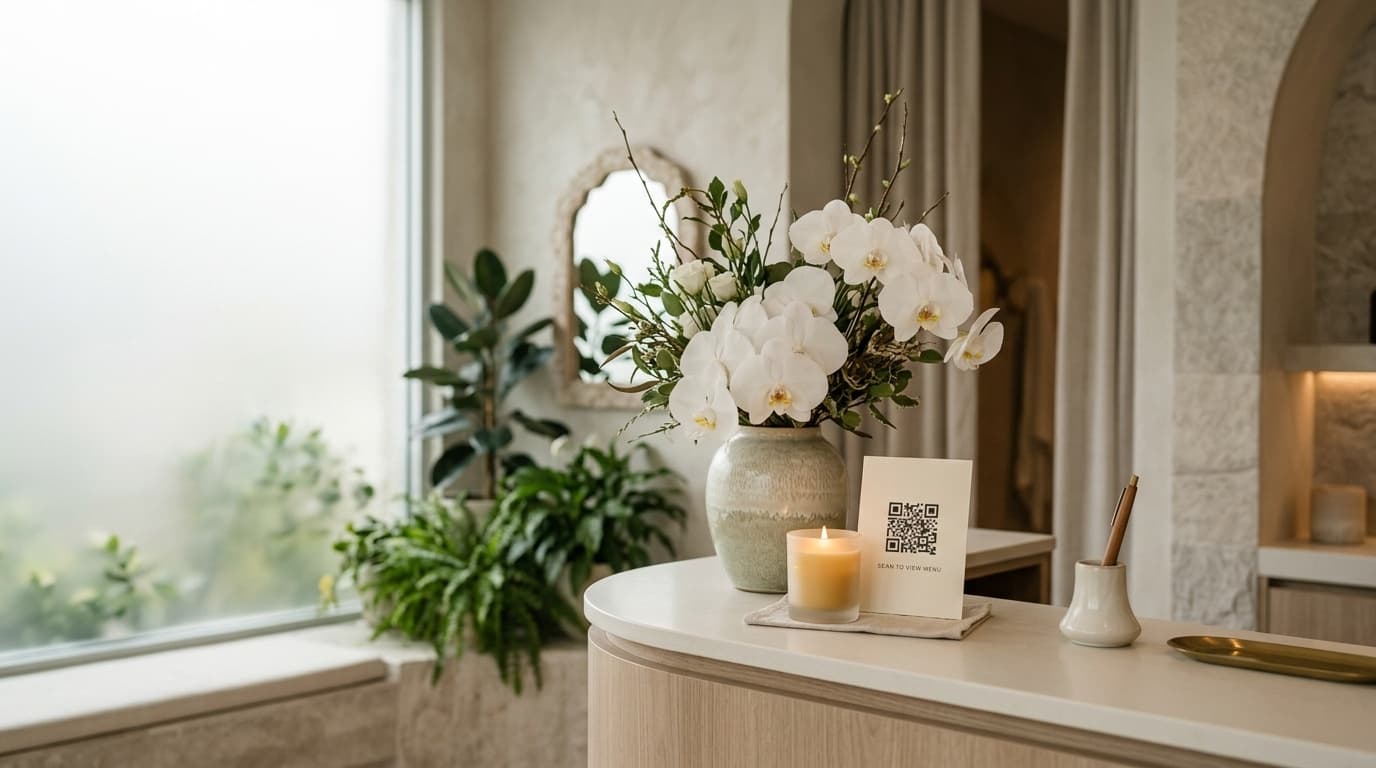
Ideal QR code placement in an acupuncture clinic:
- On the checkout counter, angled toward the patient during payment
- On a business-card-sized insert tucked into your post-appointment care instruction folder
- On a small, tasteful printed display in the waiting room with a message like "Loved your session? Help others find us"
Avoid placing QR codes in the treatment room itself — this is the patient's sanctuary, and commercial prompts would undermine the trust-based atmosphere you've worked to create.
Gamification: Turning a Review Request Into a Moment of Delight
One of the most effective innovations in local business review collection is the gamified fortune wheel. Rather than a transactional "please review us" ask, patients are invited to spin a wheel for a small prize — a discount on their next session, a complimentary herbal tea, a self-care guide — in exchange for leaving a Google review.
The mechanics are simple: the patient scans a QR code with their phone, spins a digital fortune wheel, lands on a prize, and is then guided directly to the Google review form. The entire flow takes under two minutes.
This approach works exceptionally well in TCM clinics for several reasons. First, it shifts the emotional register from obligation to play — which aligns with a holistic, wellness-oriented brand far better than a plain ask. Second, the prize creates a reciprocity effect: patients feel they received something, so leaving a review feels balanced rather than one-sided. Third, it gives hesitant patients a natural "reason" to pull out their phone at checkout that isn't overtly about reviews.
Clinics using this system regularly report a three- to four-fold increase in monthly review volume compared to verbal asks alone.
How to Respond to Your Reviews (And Why It Matters)
Responding to Google reviews isn't just good manners — it's a confirmed local SEO signal. Google has stated that businesses that respond to reviews appear more prominently in local search results.
For a TCM practice, responses should:
- Be warm and personal, not templated or copy-pasted
- Thank the patient for their trust, not just "thanks for the review"
- Reference the treatment type when possible, without revealing confidential health information
- Invite them to return if they have future needs
When a negative review appears — and it will — respond within 48 hours, acknowledge their experience calmly, and offer to resolve the issue offline. Never be defensive. Prospective patients reading your responses are evaluating your character and professionalism as much as the review content itself.
Building a Long-Term Review Strategy
The biggest mistake acupuncture practitioners make is treating review collection as a one-time campaign. A burst of reviews followed by six months of silence sends a mixed signal: Google's algorithm values freshness, and prospective patients notice when the most recent review was left eight months ago.
Sustainable review growth comes from:
- A consistent ask system at checkout — both human conversation and QR code
- A monthly review of your Google profile to respond to new reviews
- A quarterly refresh of your QR code placement to ensure visibility
- Staff alignment so every team member is comfortable making the ask
Aim for a steady cadence of 4 to 8 new reviews per month at a minimum. This keeps your profile fresh, signals to Google that your business is active and trusted, and gives prospective patients a continuous stream of recent social proof to read.
Grow Your Practice with Ludofy
Ludofy helps independent health and wellness practitioners collect Google reviews effortlessly through a QR code-powered fortune wheel. Patients scan a code at checkout, spin for a prize, and are guided directly to your Google review form — all in under 90 seconds.
If you run an acupuncture clinic, a TCM practice, or a wellness center and want to build a consistent pipeline of five-star reviews without disrupting the calm environment you've created, Ludofy is built for exactly this use case. Setup takes under 15 minutes and requires no technical knowledge.
More reviews mean better local ranking, more first appointments, and a practice that grows steadily on the strength of your patients' genuine experiences — not on ad spend or guesswork.