Why Google Reviews Are Non-Negotiable for Beauty Retail
A shopper searching "cosmetics store near me" or "best beauty supply in [city]" will see Google's local pack before anything else — those three listings with star ratings that dominate the top of the results page. That pack determines which stores get foot traffic and which get scrolled past. Not because one is objectively better, but because one looks more trustworthy at a glance.
For independent cosmetics stores, this matters enormously. When you're competing with Sephora, Ulta, or large pharmacy chains, you can't win on brand recognition. What you can win on is community trust — and Google Reviews are how that trust is quantified online.
A store with 94 reviews averaging 4.8 stars tells potential customers something powerful: other people spent money here and walked away happy. A store with 8 reviews and a 3.6 average sends a very different signal, even if the products and service are identical.
Why Beauty Shoppers Don't Leave Reviews — Even When They Love You
This is the question every cosmetics store owner eventually asks: "My regulars keep telling me how much they love us, so why do we have so few reviews?"
The answer isn't indifference — it's friction and timing.
The friction problem. Even a delighted customer won't navigate to Google, find your business listing, and compose a review unless the path is exceptionally easy. The motivation exists; the activation energy is simply too high for most people to act on it spontaneously.
The timing problem. The peak moment to ask is immediately after purchase, while the customer is still holding the lipstick they searched for or the skincare set they finally found. That window is roughly five minutes long. Miss it, and the moment is gone.
The habit problem. Leaving Google reviews is not a default behaviour for most shoppers. Unless prompted at the right moment in the right way, the thought simply doesn't occur to them — no matter how happy they are.
Three Moments When Asking Actually Works
At the Checkout Counter
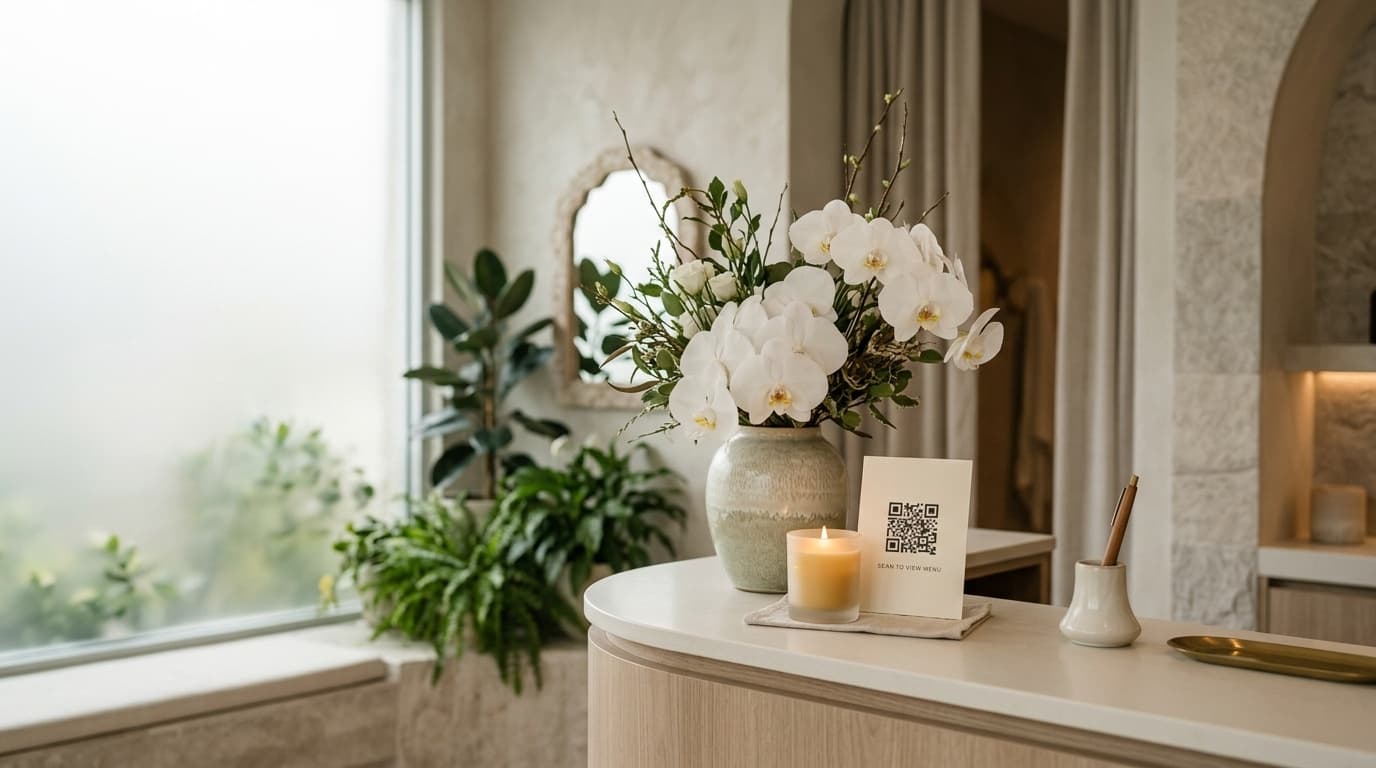
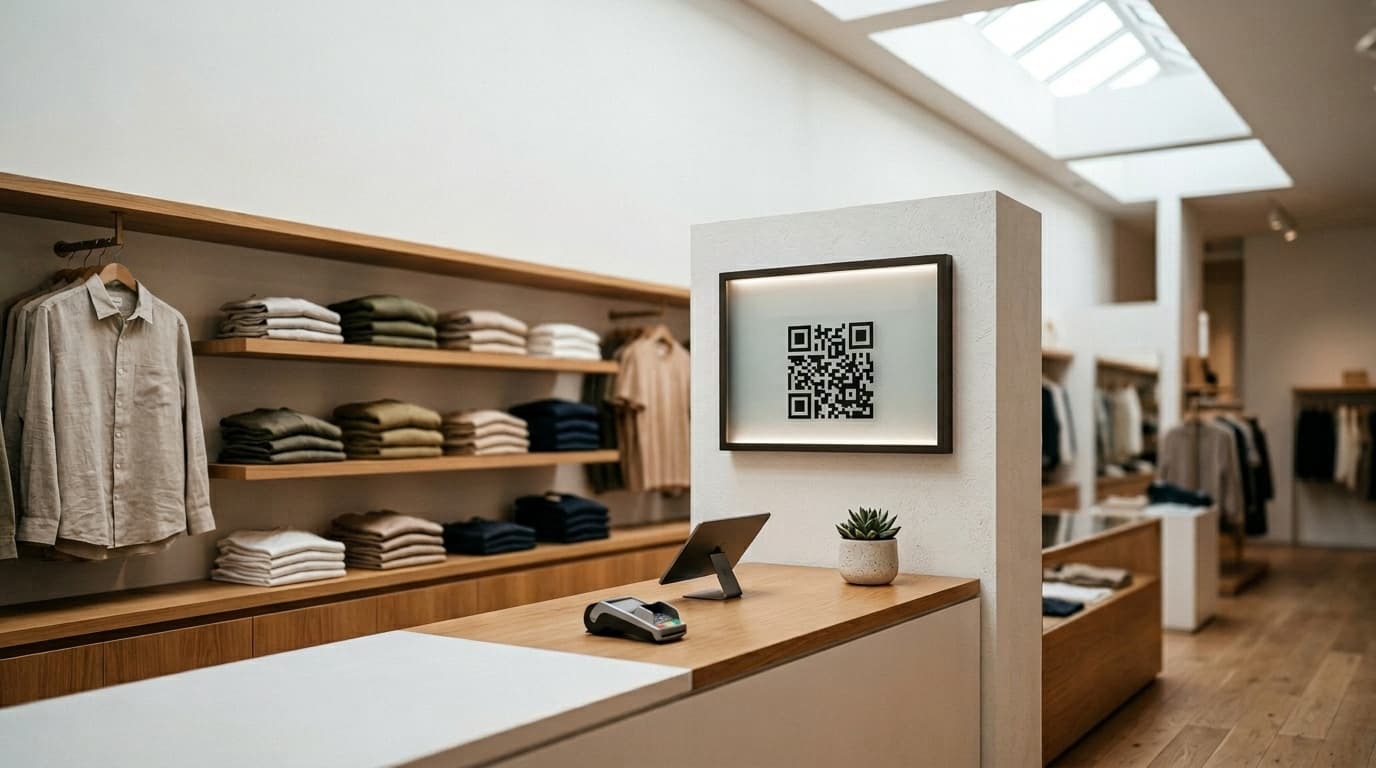
This is your highest-leverage moment. The customer has just paid; they're satisfied and still fully engaged with the in-store experience. A QR code card next to the terminal, combined with a simple verbal prompt from your staff — "If you've enjoyed shopping with us, a quick Google review would really help us out" — converts at dramatically higher rates than any passive signage.
Keep the ask conversational, not transactional. "It would mean a lot to us" lands better than "Leave us a review."
After Expert Advice
Beauty supply customers often arrive with specific questions: which foundation matches their undertone, which ingredients to avoid for sensitive skin, which professional-grade tools are worth the investment. When a staff member genuinely solves their problem, that's the moment to make the ask. The goodwill is real, the memory is vivid, and the customer is primed to share it.
A short follow-up: "I'm glad we found the right fit for you — if you have a moment later, leaving us a review on Google would really help us reach more customers like you."
On the Receipt or in the Shopping Bag
Adding a QR code to your receipt — or a small card tucked into every bag — creates a secondary ask that catches customers who weren't ready in the moment. The "scan to review" prompt works particularly well when it's framed as personal: "Thank you for choosing us. Tell us what you think — your feedback shapes what we stock next."
For beauty products that take time to show results (skincare, hair treatments, supplements), this at-home channel can be especially effective for capturing considered, detailed reviews.
QR Code Placement That Converts in a Cosmetics Store
Unlike restaurants, where the check arrival is the natural review moment, cosmetics stores have multiple high-traffic spots that can carry a QR code effectively:
- The checkout counter: Highest conversion because it coincides with the transaction itself
- Near testers and sampling stations: Customers who've tried a product and love it are pre-converted; a prompt here is well-timed
- In-store mirrors and beauty consultation areas: When a staff member has done a colour match or skin analysis, a QR code nearby makes the follow-through natural
- On shopping bags and receipts: Extends the ask into the customer's home and captures a second wave of responses
The rule across all placements: the QR code should go directly to your Google review page, with zero extra steps. Every additional tap reduces conversion.
Gamification: Turning Review Collection Into a Win-Win
One of the most effective tactics in the hospitality sector is now making its way into retail: using a fortune-wheel experience to make the review process feel like a gift rather than a request.
Here's the mechanic: the customer scans the QR code, which opens a branded digital wheel. They spin for a chance to win a small prize — a free sample kit, 10% off their next purchase, a loyalty points bonus, or a mini skincare consultation. The key distinction from incentivised reviews (which Google prohibits) is that the spin happens before any mention of a review. The prize is for engaging with the wheel, not for reviewing. The Google review link appears after the spin, as a voluntary next step.
The result: a moment of genuine delight that creates natural goodwill, and a review request that arrives at peak emotional positivity. Cosmetics retailers using this approach consistently see three to five times more monthly reviews than before, with notably higher average ratings.
Responding to Reviews: Building a Reputation That Compounds
Collecting reviews is half the work. Responding to them publicly shapes how every future customer perceives your store before they ever walk in.
For five-star reviews: Mention something specific from the customer's comment to show it was actually read. Thank them by name if available. Invite them back with a soft tease: "Looking forward to seeing you when the new autumn collection arrives."
For three and four-star reviews: These are operational gold. A gracious response that acknowledges the concern and explains how you're addressing it demonstrates maturity and professionalism — and often impresses new customers more than a wall of perfect five-star replies.
For one and two-star reviews: Respond within 24 hours, stay factual and calm, and move the resolution offline. Never argue in public. Future readers judge you on how you handle conflict, not whether conflict exists.
Building Momentum: Why Consistency Beats Volume
One common mistake is treating Google reviews as a one-time project — running a push for a month, then going quiet. Google's algorithm rewards recency. A store that receives 15 new reviews this month will typically outrank a competitor with 200 reviews whose last one was two years ago.
The sustainable approach is a steady drumbeat: 10–20 new reviews per month, every month, using the same QR code placements and ask protocols. This creates compounding visibility that becomes very hard for competitors to catch up with, and it signals to Google's algorithm that your business is actively serving customers — which is exactly what it wants to surface.
How Ludofy Brings It All Together
Ludofy is built specifically for independent businesses that want to collect Google Reviews without awkward conversations or manual follow-up. The platform generates a custom QR code linked to a branded fortune wheel — your store's logo, your chosen prizes, your brand colours.
Customers scan, spin, smile, and land on your Google review page in a moment of genuine positivity. Setup takes under 15 minutes. Results show in the first week.
For cosmetics stores competing in an increasingly crowded local market, turning satisfied shoppers into visible advocates online is the highest-ROI marketing move available to you right now. The tools are simple. The results are measurable. The window to get ahead of competitors who haven't started yet is still open — but it won't stay that way for long.