A crêperie is not a fast-food restaurant. It's a place where someone sits down, takes their time, shares a galette with someone they care about. The experience is tactile and personal — the smell of buckwheat batter, the rhythm of the spatula, the moment the crêpe lands perfectly folded on the plate.
That kind of experience generates genuine affection. Regulars recommend you to friends, they come back for years, they feel proud of "their" crêperie. The problem is that this affection rarely converts into Google reviews unless someone actively creates the moment. And without Google reviews, the crêperie that serves the best galettes in the neighbourhood can be invisible online to someone who just moved to the street.
This guide walks you through why Google reviews matter more than ever for crêperies, what blocks customers from leaving them, and how to build a simple system that keeps the reviews coming in without disrupting the calm atmosphere that makes a crêperie what it is.
Why Google Reviews Are the Key Ingredient for Local Crêperie Discovery
The crêperie market is intensely local. Someone deciding where to eat crêpes on a Sunday afternoon doesn't scroll through Instagram. They open Google Maps and look at what's around them, what's open, and what people have said. The business that shows up at the top of the map results with 150+ reviews and a 4.7-star average will capture that customer almost every time.
That ranking is not random. Google's local algorithm weighs three main factors: relevance (does your business match what someone searched?), distance (how far is it?), and prominence (how many quality reviews do you have, and how often do you receive them?). For crêperies competing in the same area, the third factor — prominence — is often the decisive one.
The challenge is that crêperies attract a certain type of diner who doesn't naturally think of leaving reviews: the regular. Regulars are loyal, vocal in person, and deeply satisfied — but they've already integrated your crêperie into their life. The novelty that prompts a review has worn off. Meanwhile, the occasional first-time visitor who could become your strongest advocate often leaves before anyone has thought to ask them.
The Two Customer Profiles That Drive Crêperie Reviews
Understanding who actually leaves reviews helps you focus your effort in the right places.
The delighted first-timer. Someone who discovers your crêperie — through a friend's recommendation, a neighbourhood walk, or a "crêperies near me" search — and is surprised by the quality or the atmosphere. This person is primed to review within 20 minutes of leaving if you catch them at the right moment. They haven't habituated to your food yet; it still feels exceptional. This is your highest-value target.
The long-time regular reactivated by a prompt. This person loves you but hasn't thought to review. They haven't reviewed because there was never a natural occasion to do so. But if you give them an easy, low-friction way to do it — a QR code at the table, a friendly mention from your server — they'll often do it gladly. Their review will also tend to be warmer and more detailed than a first-timer's because they have genuine accumulated experience to describe.
Why Asking Verbally Is Not Enough
Many crêperie owners rely on the verbal ask: "If you enjoyed it, feel free to leave us a Google review!" This is better than nothing, but it converts at a very low rate — typically 2 to 5 out of every 100 people asked.
The problem is the gap between intention and action. A customer leaves your crêperie intending to review. They walk to the car park, pick up their child, run an errand. By the time they're home and near their phone, the moment has passed and the motivation has cooled.
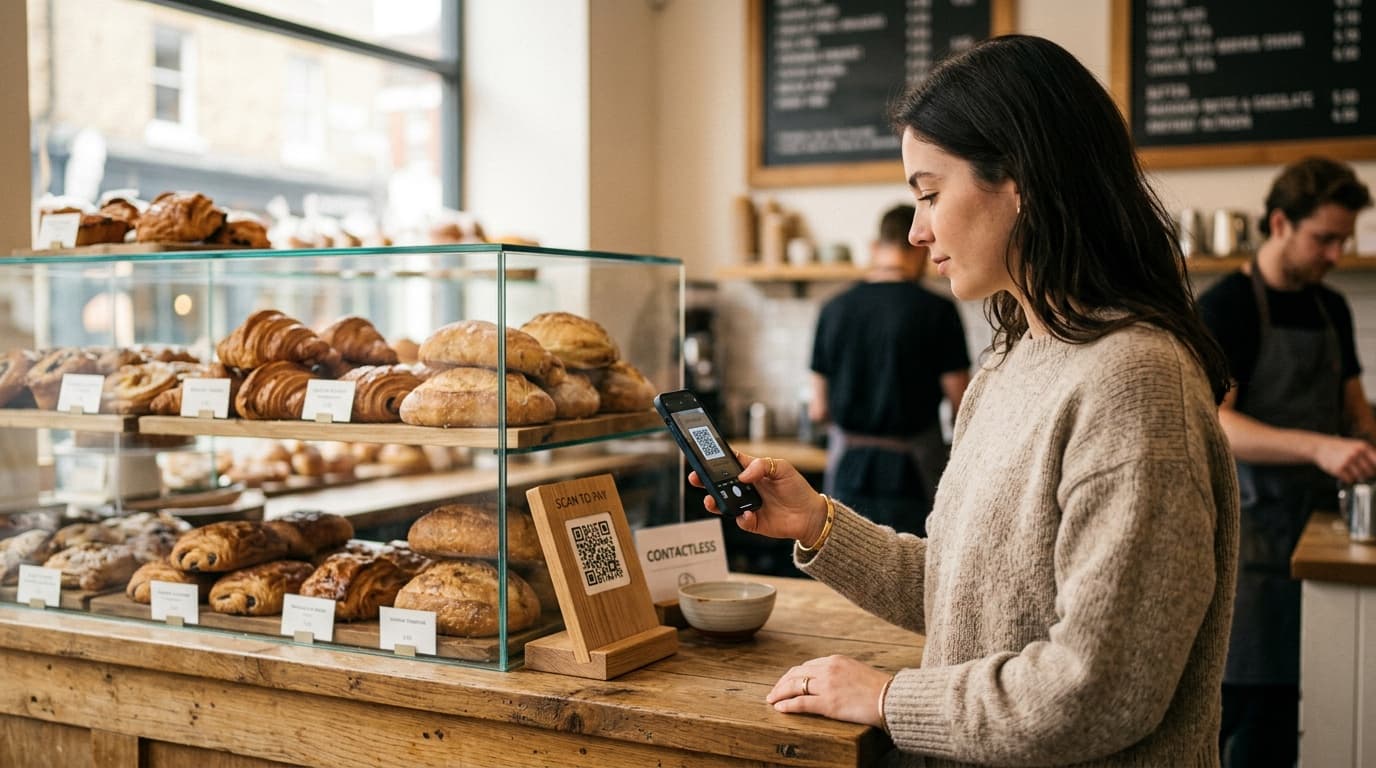
The highest-converting approach is to close that gap at the moment of maximum satisfaction — while the customer is still at the table or just settling the bill — using a QR code that opens your Google review form directly. No searching, no typing, no navigating away. One scan and they're on the review page.
The best placements for a crêperie:
- On the table as a folded card or small stand — visible during the entire meal
- On the receipt or bill folder — read by almost every customer
- At the payment terminal — catches people during the natural pause of paying
- On the door as customers exit — a final opportunity before they step out
Gamification: The Most Effective Upgrade to a Passive QR Code
A QR code that leads to a bare review page relies entirely on the customer's goodwill to act. You can significantly improve your conversion rate by giving the customer a reason to scan that feels like a gift rather than a request.
A fortune wheel mechanic tied to a Google review ask turns the transaction into a moment of fun. The customer scans the QR code, spins the digital wheel, and wins a small reward — a free topping, a 15% discount on their next visit, a glass of cider, or a crêpe for two on their birthday. After spinning, they're prompted to leave a review.
This works for three reasons. First, the wheel creates genuine anticipation — people enjoy the spin regardless of what they win. Second, winning a small reward makes customers feel positively toward the business at exactly the moment they're being asked for feedback, which improves the tone of the review. Third, the act of spinning the wheel signals to the customer that something has happened — it feels like a memorable interaction, not a marketing script.
You control the prize values, the probability of each outcome, and when the wheel is active. The system handles everything else.
Responding to Reviews: The Part That Builds Your Reputation
Collecting reviews is only half the work. How you respond to them shapes how your crêperie is perceived by every prospective diner reading them.
For positive reviews, a warm, brief response signals that your crêperie is run by real people who care. "Thank you, Élise — the buckwheat flour we use really does make the difference! Hope to see you again soon" reads completely differently from a generic "Thanks for your review." Custom responses convert more fence-sitters.
For negative reviews, the instinct to defend or explain is understandable but counterproductive. A one-star review handled gracefully — "I'm sorry the wait time wasn't acceptable on Saturday evening; we were short-staffed and that's not the experience we want to give. I'd love to offer you a coffee next time you stop by" — often reassures prospective customers more than a page of five-star reviews without any critical feedback at all.
Keeping Review Volume Consistent Throughout the Year
A crêperie's Google review strategy has to account for seasonality. The natural peak seasons — Chandeleur (Candlemas, the French crêpe holiday) in February, school holidays, summer tourism — tend to bring in more first-time customers and therefore more natural review opportunities. The slow seasons need a different approach.
During quiet periods, your regulars are your most reliable source of reviews. This is the right time to activate them: a small campaign, a gentle in-person ask, or a Chandeleur-themed promotion that explicitly includes a review prompt. Keeping your review rate above zero in slow months protects your ranking and means you're not starting from zero when the peak season returns.
A rough cadence to aim for: a minimum of 4 to 6 new reviews per month, with spikes during peak periods. Studios and restaurants in competitive urban markets that maintain this cadence consistently appear in the top results for searches like "crêperie [city]" or "galettes [neighbourhood]."
Common Mistakes Crêperie Owners Make with Google Reviews
Waiting for reviews to come in naturally. The organic rate for independent crêperies with no active strategy is often less than one review per month. That's not enough to rank or to build social proof.
Asking only once and moving on. The best systems are persistent: the QR code is always visible, the ask is embedded in the customer journey, not bolted on at the end of a shift.
Not claiming or optimising the Google Business Profile. A claimed, complete Google Business Profile (with accurate hours, photos, and a menu link) increases the likelihood that reviews appear prominently in search results and that the crêperie is suggested for relevant local searches.
Ignoring reviews from outside regulars. Tourist reviews often carry different keywords ("best crêpes in Paris," "authentic Breton galettes") that increase the crêperie's relevance for those searches. These are worth actively encouraging, especially near tourist corridors or in historic town centres.
Why Crêperies Are an Ideal Fit for Gamified Review Collection
The personality of a crêperie — warm, playful, rooted in a French tradition that people love — matches naturally with a gamified review system. A fortune wheel doesn't feel out of place in a venue that takes pleasure seriously.
Ludofy was built to solve exactly this problem for food and hospitality businesses: a QR-code-based fortune wheel that makes the review ask feel like a natural part of the experience. Crêperies using the system typically triple their monthly review volume within the first 90 days — with no additional staff effort after the initial setup.
If your crêperie is known and loved in its neighbourhood but that love isn't yet visible on Google, the gap closes faster than most owners expect when you give customers a simple, enjoyable reason to say so.