When a restaurant wants more Google reviews, the playbook is relatively simple: place a QR code at the table, at the counter, or in the check presenter. The customer is physically present, emotionally satisfied, and has thirty seconds before they reach for their coat.
Event venues and catering businesses don't have that moment. The wedding ends, the corporate dinner wraps up, the guests file out. Your client — the one who booked, paid, and managed every detail — is exhausted. Surrounded by family, already in the car, mentally elsewhere. There's no natural pause point where "could you leave us a review?" lands gracefully.
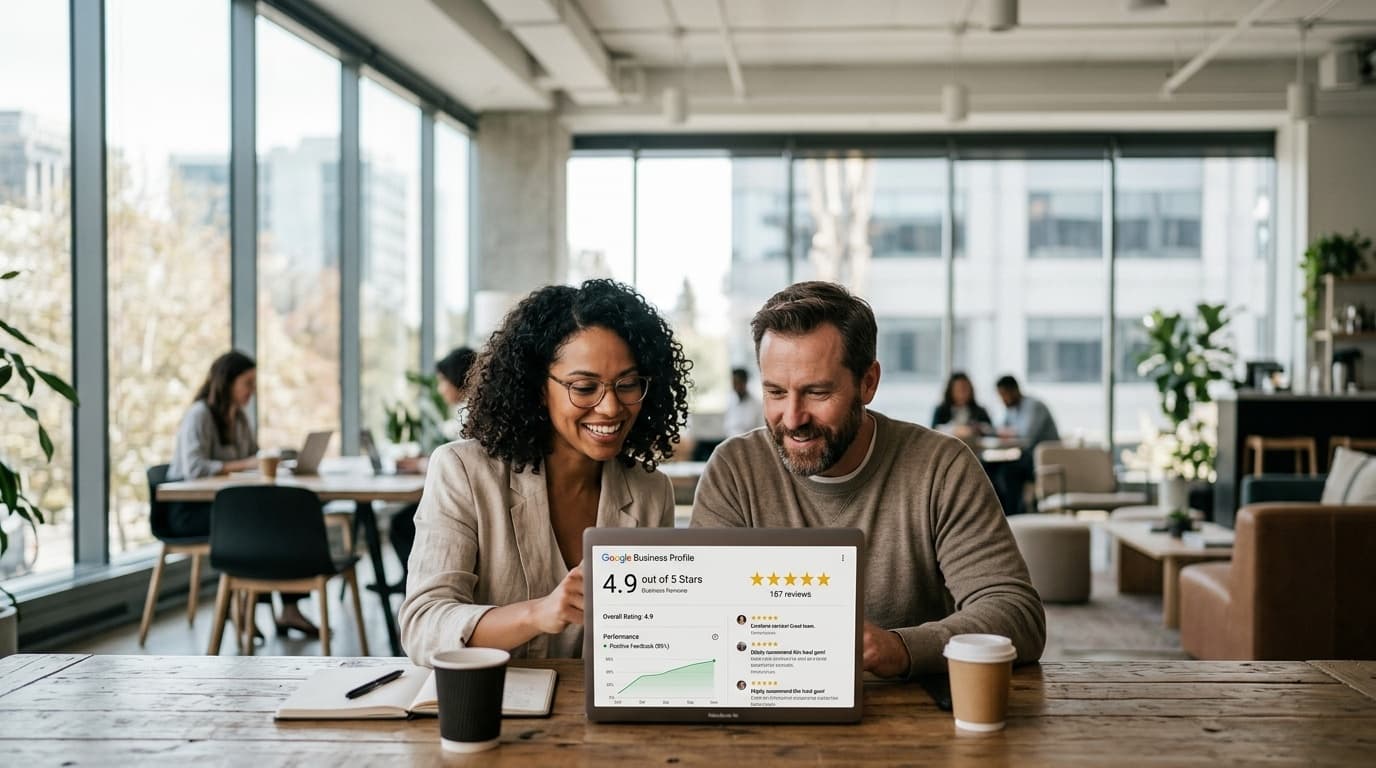
This creates a genuine operational problem. Reviews are more consequential for event businesses than for almost any other service category. When someone is spending thousands on a private dinner for forty guests or a full wedding reception, they are not going to book based on instinct alone. They read. They compare. They look for a recent testimonial from someone whose event resembled theirs. A venue with 15 reviews from 2022 and a venue with 90 reviews from the past six months do not compete on equal footing — regardless of how good the food is.
Yet most event businesses have review counts that bear no relationship to the volume of events they run. A caterer handling 120 events per year might have 28 Google reviews. The problem is not quality. It is timing, delivery, and mechanics.
Why the standard approaches fail
In the events industry, two methods dominate review collection attempts — and both consistently underperform.
Verbal requests at the end of the event. The client thanks you warmly, you mention that a review would mean a lot, they nod with a smile — and nothing happens. They are not being disingenuous. They are simply exhausted, surrounded by people, and mentally somewhere else entirely.
Email requests sent days later. These arrive when the emotional peak has passed and the inbox is already full. Open rates hover around 20–25%, and review conversion from those who open sits below 5%. The good intention is there; the window is not.
The problem is not the channel — it is the timing and the framing. A message sent at the right moment, with the right structure and the right mechanism, produces entirely different results.
The post-event review window
Experience from event businesses that consistently collect reviews converges on the same finding: the optimal window is between 18 and 48 hours after the event ends.
On the night of the event, your client is still inside the experience. The following morning, they are looking at photos. Replaying moments. Thinking about what guests said as they left. That is when satisfaction is most accessible — before daily life reasserts itself.
A message that arrives Sunday morning for a Saturday evening event converts dramatically better than an email sent on Monday afternoon from an office. The warmth of the experience is still there. The request lands during a moment of natural reflection rather than interrupting a busy workday.
Three delivery methods that work
WhatsApp is the highest-converting channel for event businesses with a direct personal relationship with their client. A short voice note or text from the owner or event coordinator — sent the morning after — arrives in a personal context and carries genuine warmth. Something like: "Thank you again for last night — seeing everyone so happy at the end of the evening made it all worthwhile. If you have two minutes this week, a Google review would mean a great deal to us." Pair this with a direct link to your Google review form. Keep it short. One sentence of appreciation, one ask, one link.
Email works for corporate clients where WhatsApp can feel presumptuous. Use a specific subject line ("Following up on [event name] — one quick ask"), keep the body to three sentences, and embed a single CTA. Do not bundle the review request with a satisfaction survey or a rebooking pitch. One message, one purpose.
A physical QR card, slipped into a thank-you folder given to the client at the close of the event, works particularly well for weddings and premium receptions. The client takes it home, finds it while sorting through mementos, and scans it in a quiet moment. A beautifully designed card feels like a keepsake rather than a demand, and that framing significantly increases the probability of action.
The gamification layer applied post-event
The fortune wheel mechanic — most commonly associated with restaurant point-of-sale review collection — adapts naturally to event business workflows. The only change is the delivery mechanism.
Instead of a QR code on a table, you embed the link in your WhatsApp follow-up or email. Your client scans, leaves a Google review freely and without any editorial direction from you, and then spins a digital fortune wheel for a prize. For event businesses, the prizes work differently than in a café: a discount on their next booking, a complimentary tasting session for an anniversary dinner, or a credit toward an add-on service.
The variable reward effect — the psychological pull of "what am I going to win?" — operates with equal force when delivered digitally. The review stops feeling like an obligation and becomes the entry to something genuinely engaging. Participation rates for gamified post-event requests consistently outperform plain email or WhatsApp links by a wide margin.
Handling clients whose event didn't go perfectly
Every event business eventually runs an event that didn't go exactly to plan. A supplier ran late. The microphone failed. A course arrived cold. The instinct is to avoid asking these clients for reviews. That is usually the wrong call.
Clients who experienced a problem that was handled well — with a genuine apology, a concrete remedy, a personal follow-up — are often among the most loyal. More importantly, they know their review will reflect the recovery, not just the incident. "There was a small hiccup early in the evening but the team resolved it immediately and the rest of the night was perfect" is a more convincing review for future clients than ten generic five-star superlatives.
The key is timing. For clients with mixed experiences, wait an additional 48 to 72 hours before sending your request. Let the positive resolution settle before you make the ask. The window is a little longer, but it is still there.
Building a system, not a habit
The businesses that accumulate strong review profiles are not doing anything fundamentally different from their competitors. They are doing it consistently. Here is a minimal system any event business can implement immediately:
After every event: Schedule the review request for the following morning, 20–24 hours post-event. Assign the task to one specific person — the account manager, the event coordinator, or the owner. Do not leave it to "whoever has time."
Template your messages but personalize the opening. Reference one specific detail from the event: the client's name, the theme of the evening, a memorable moment. Thirty seconds of personalization doubles response rates without requiring any additional infrastructure.
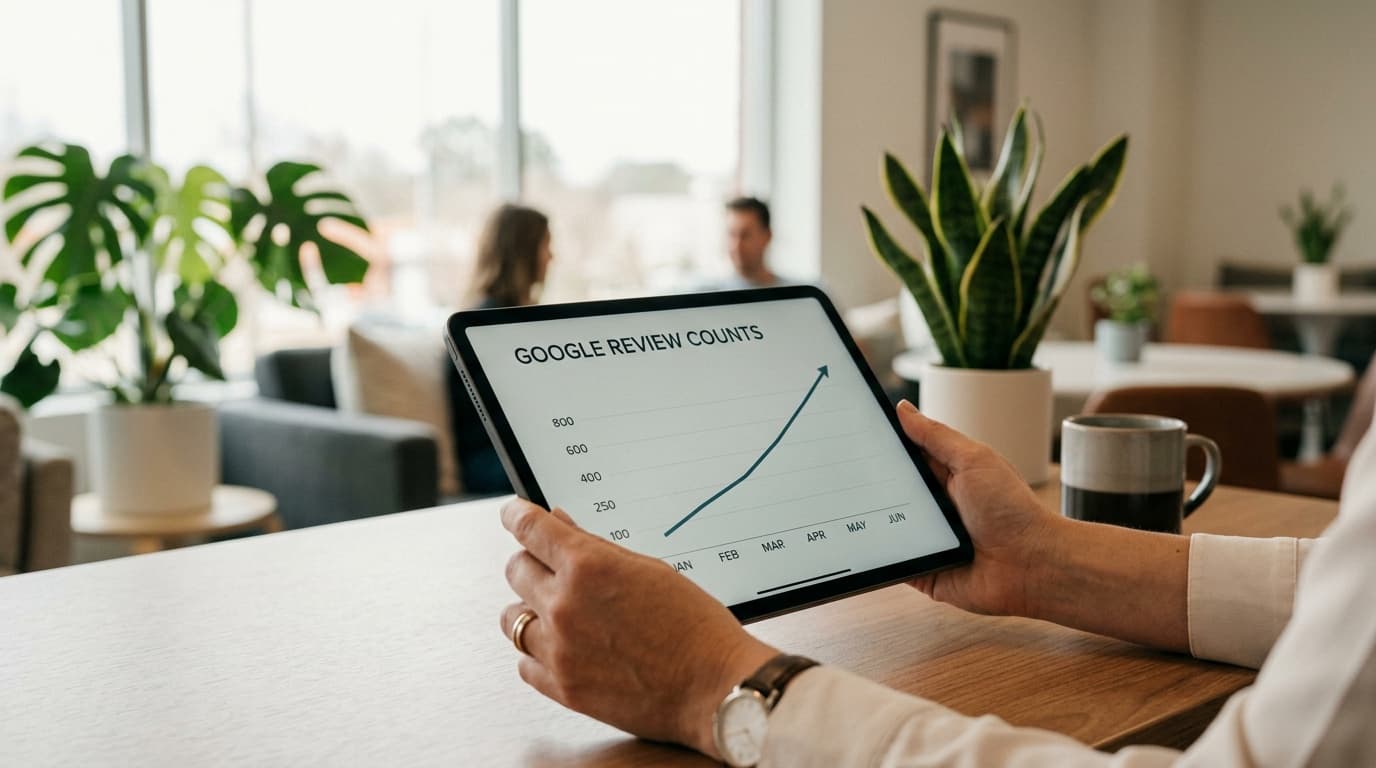
Track your review volume monthly. If you are running 10 events per month and collecting fewer than 3 reviews, your mechanics are broken — not your quality. Review the timing, test a different channel, and iterate until the numbers improve.
Review your review content quarterly. Look at what clients mention. The recurrence of specific details — the coordinator who went above and beyond, the dessert that everyone photographed — tells you what your actual differentiators are. That information shapes your marketing copy far more accurately than anything internal.
The compounding return on local search
Google's local ranking algorithm weights both review volume and recency. An event venue that collects 10–15 new reviews per month consistently outranks a competitor with an identical average rating but sporadic activity.
A catering business running 8 events per month with a 20% review conversion rate accumulates roughly 19 new reviews per month. Over six months, that is close to 115 reviews — a profile that anchors the top of Google Maps results for every high-intent search in its area. The first booking that arrives through that visibility more than pays for the time invested in building the system. Every subsequent booking compounds.
Ludofy makes this system ready to run in under fifteen minutes. You generate a QR code link, embed it in your WhatsApp message or email follow-up, and your client spins a digital fortune wheel after leaving their review. The dashboard shows you participation rates, new review volume, and rating trajectory — without requiring hours of manual analysis each week. If your event business runs well but your Google profile doesn't reflect it yet, the gap is not in your service. It is in your post-event mechanics. Fix the mechanics, and the reviews — and the bookings — follow.