If you sell flowers for a living, you're already sitting on one of the most emotionally powerful products in retail. Weddings, anniversaries, bereavements, surprise deliveries — every sale carries weight that most businesses never get close to. And yet, a walk around any town reveals a pattern: independent florists with thin, outdated Google review profiles, while the flower section of the nearest supermarket somehow accumulates more ratings.
The gap isn't product quality. It's process. Florists who build strong Google reputations don't rely on customers to think of them later. They ask at exactly the right moment, with exactly the right prompt, every single time.
This guide breaks down how to do that — and why it matters more for florists than for almost any other type of local business.
Why Google reviews hit differently for florists
Florists operate in a market where most new customers have no prior relationship with the shop. They're searching "florist near me" or "wedding florist [city]" and making a decision based almost entirely on what they see in Google's results.
That decision involves three things: distance, price signals, and reviews. You can't always control the first two. You can absolutely control the third.
Consider the asymmetry of stakes. A customer choosing a florist for their wedding flowers may be placing a £500–£2,000 order with a business they've never visited. At that purchase level, a florist with 87 reviews averaging 4.8 stars is going to win that enquiry over a competitor with 12 reviews averaging 4.3 stars — regardless of who does better work. The quality of your flowers doesn't reach that customer through the screen. Your reviews do.
Three structural reasons Google reviews hit differently for florists:
Seasonal demand concentrates decisions. Valentine's Day, Mother's Day, funerals, graduations, and wedding season each create a burst of first-time searchers. These customers can't rely on a recommendation from a regular — they need Google to tell them who to trust. Florists with strong, recent reviews capture this traffic. Those without it lose it to whoever ranks higher.
The competition includes non-florists. Supermarkets, petrol stations, Amazon same-day delivery — every one of these competes for the casual end of your market. Reviews are one of the few signals that tell a customer you're the specialist, not just the convenient option. A five-star review that mentions "the florist helped me design the entire wedding arch" is marketing that no supermarket flower display can replicate.
Purchase decisions often happen same-day. A customer who decides at 9am that they need flowers for an afternoon birthday has done zero research about you before searching. A five-second glance at your Google profile during that search is your entire first impression.
The right moments to ask
Timing determines whether a review request feels natural or intrusive. For florists, three moments consistently perform well.
At the wrapping stage, not the checkout
The peak of the customer's emotional experience is when they see the finished bouquet. This is the moment they feel the quality of your work — the textures, the colour combinations, the care in each stem. Asking at this exact moment, before they even reach the register, catches them at peak positivity.
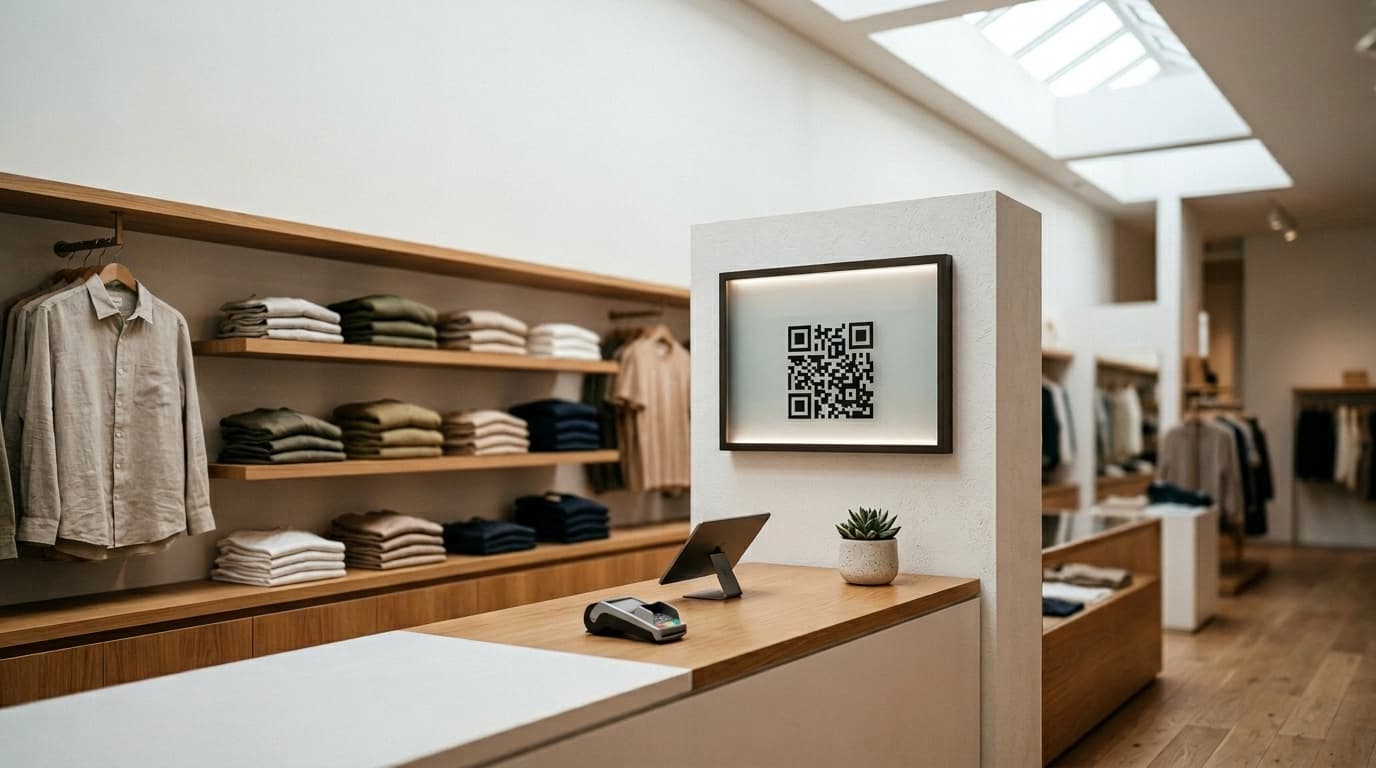
A QR code on the counter with a small card that reads "Loved your arrangement? Share it on Google" is enough. Keep the phrasing soft — no obligation, no pressure. Many customers will scan it right there, while you finish wrapping, before they even think about paying.
At delivery
If you deliver, insert a small card with a QR code in every arrangement. The recipient receives flowers and experiences a moment of joy or connection — surprise, gratitude, love. A one-line prompt on the card: "These flowers made your day? Let Google know." This reaches them at precisely the right second. Delivery reviews tend to be longer and more descriptive because the recipient has time to compose a thoughtful response, and they're writing about how the flowers made them feel, not just the transaction.
After a major event
For wedding flowers or corporate event arrangements, follow up 48–72 hours after the event. By then, the customer has experienced the full outcome — they know whether the flowers held up through the ceremony, whether the compositions matched the vision, whether delivery was on time. A brief text message referencing the specific occasion ("We hope your wedding day was everything you imagined — if you'd like to share your experience on Google, it means a great deal to us") generates some of the most detailed and credible reviews in the industry.
Seasonal strategy: build before the peak, not during it
The single most impactful thing a florist can do with Google reviews is think about them before the season, not during it.
Valentine's Day brings customers who search Google on February 12th. If your last review was from October, your profile will look dormant compared to a competitor who's been collecting consistently through winter. Worse, you'll be too busy in the days before the 14th to run any kind of review campaign.
The pattern to follow: begin a consistent collection push well before each seasonal spike. By the time the rush arrives, you have a fresh, active-looking profile that ranks above competitors who only think about reviews when they're drowning in orders.
Apply this to every major florist season:
- Valentine's Day — start pushing in January
- Mother's Day — ramp up in March and April
- Wedding season — build through autumn and winter; couples research florists months in advance
- Christmas — a strong November push means your profile looks active when searches spike in December
Google's ranking algorithm weights recency. A florist with 40 reviews spread evenly across the year ranks better than one with 60 reviews posted in two frantic weeks. Consistency beats quantity — and consistency is exactly what a systematic review process delivers.
What great florist reviews look like — and how to encourage them
Reviews that convert future customers aren't the ones that say "nice flowers." They're the ones that describe an experience: the florist who remembered the preferred colours from last year, the last-minute sympathy arrangement that arrived exactly when it was needed, the wedding table centrepieces that exceeded every expectation.
You can't ask customers to write specific things — Google prohibits scripting review content. But you can set context. When you hand over the bouquet, you might say: "If you end up leaving us a review, feel free to mention anything that stood out for you." That single phrase tends to produce richer, more useful reviews without crossing any policy lines.
When you receive a positive review, respond in a way that adds detail: "We're so glad the peonies were perfect for your daughter's graduation — thank you for choosing us." This response shows prospective customers what you do and who you do it for. Google indexes it, and future customers read it.
Handling negative reviews with confidence
Flowers are perishable. Deliveries can be late. Arrangements can fall short of what a customer imagined. Negative reviews will happen — the question is how you handle them in public.
Three rules for florists:
Respond within 24 hours. A fast response signals attentiveness. A review that sits unanswered for three weeks suggests nobody's watching.
Acknowledge, don't justify. "We're sorry the roses didn't hold up as long as you expected" works far better than "Our roses are always fresh and this must have been a storage issue on your end."
Offer a path to resolution. Invite them to contact you directly. This shows future customers that you stand behind your work — and it often gives you a chance to turn a frustrated customer into a loyal one.
A well-handled negative review often converts more sceptical customers than five additional positive ones. Prospective buyers aren't looking for perfection; they're looking for a business that takes quality seriously when things go wrong.
Building a review system that runs itself
Most florists ask for reviews occasionally, when they remember to. This produces uneven results: a burst of reviews after a concerted push, then months of silence, then another burst. The review profile looks erratic, and the algorithm responds accordingly.
The alternative is a system: a QR code at the counter, one in every delivery, a follow-up message template for major orders. Once these three elements are in place, review collection becomes a background process rather than a conscious effort — it happens regardless of how busy the day is.
Ludofy was built for exactly this. The platform generates a QR code linked to a branded fortune wheel — customers scan, leave a Google review, and spin for a small prize (a complimentary upgrade to premium wrapping, a percentage off their next bouquet, a free ribbon choice). The gamified mechanic converts a transactional ask into a genuine moment of engagement, and the platform handles follow-up messaging automatically.
Setup takes under 10 minutes. The results — a consistent stream of authentic Google reviews — compound over months into a review profile that wins searches, closes wedding enquiries, and builds the kind of online presence that no supermarket flower section can match.
The flowers you sell create memories. Your Google profile should prove it.