Your hookah lounge fills up most evenings. The atmosphere is right, the smoke is thick, and regulars keep coming back. But when a group of friends searches "hookah lounge near me" on a Friday night, they're deciding based on what they see on Google Maps — and they'll pick whoever has the most visible and most recent reviews.
The experience you've built is real. The problem is almost none of it is visible where first-time visitors are looking.
Why Google reviews are decisive in the hookah and shisha market
Hookah lounges sit in a high-consideration category. A night out at a shisha bar involves a real commitment of time — typically two to three hours — and often involves multiple people coordinating on the same decision. Nobody picks a shisha lounge at random; they look it up first, compare options, and go where the social proof feels strongest.
Google Maps is the primary discovery channel for first-time visitors. A lounge with 300 recent reviews and a 4.6-star average will capture weekend groups that a competitor with 40 older reviews at 4.8 stars simply won't attract — even if the higher-rated lounge is objectively better. The difference isn't experience quality. It's review volume built on a consistent collection system.
There's also a word-of-mouth multiplier unique to this category. Groups who had a great night want to tell others. A Google review from a group of six who stayed three hours is an endorsement that lingers in search results for months, feeding discovery for every future group considering their options.
The structural advantages you're probably not using
Most local businesses have to prompt customers after they've already gone home — via receipt, email, or follow-up SMS — at a moment of faded, general goodwill. Hookah lounges have two structural advantages that almost no other venue type shares.
Your customers stay for a long time. The average shisha lounge visit runs two to three hours. Customers aren't passing through — they're settled in, phones accessible, genuinely relaxed. The friction that kills review conversion — the post-visit distraction of normal life — doesn't kick in until they walk out the door. Every minute they're seated is a window to reach them.
Groups create a natural reviewing dynamic. When one person at a table of four pulls out their phone and leaves a review — especially if they spin a wheel and win something — others follow. A single table interaction can generate three or four reviews in minutes. This social contagion is specific to group settings, and hookah lounges are built for exactly that kind of experience.
The mistakes that cost you reviews every night
Relying on organic social media as a substitute
Your customers post stories on Instagram, tag the lounge on TikTok, share photos of smoke clouds during the session. This feels like digital presence. But Instagram stories disappear after 24 hours. TikTok tags don't improve your Google star rating. When someone types "shisha bar [your neighborhood]" next Friday, what ranks them in the top three results is not your follower count — it's your Google review volume and recency.
Social media and Google are building different things. For local discovery, only one of them actually sends new customers through your door.
No in-venue review request system
Most shisha bars either skip asking altogether or rely on a verbal prompt at checkout: "Feel free to leave us a Google review if you liked it!" This captures maybe 2–5% of willing customers. The other 95% step outside, get pulled into the rest of their evening, and never circle back — not out of bad will, but because the impulse evaporated the moment they left.
A QR code placed on the table or water pipe stand doesn't require any staff action. It surfaces the invitation during the visit, at peak satisfaction, and removes almost all friction.
Underestimating how much recency matters
Google's local ranking algorithm isn't just tallying total reviews. It's measuring whether you're still actively collecting them. A lounge with 400 reviews, the most recent dated four months ago, will rank below a competitor with 200 reviews but five posted this week. Recency is a live signal of business health, and it only stays healthy through an ongoing system — not a one-time push.
Building a review system for your lounge
QR code placement that works with the experience
Shisha venues have an unusual placement advantage: long dwell times mean customers naturally encounter the same spaces multiple times during a visit, and have plenty of unhurried opportunity to scan.
On the table or water pipe stand. A small card or sticker placed near the pipe sits in the customer's natural eye line throughout the session. They can scan at any point — not just on the way out — at their own pace, without any social pressure.
On the menu. Printing a QR code on the back of the flavor or drinks menu gives it early visibility, when customers are already engaged with your brand. A short line like "Scan before you leave to win something" creates anticipation for the rest of the evening.
With the bill. A final invitation in the check folder catches customers whose review intention built during the visit but who hadn't acted on it yet.
Gamification: the conversion multiplier
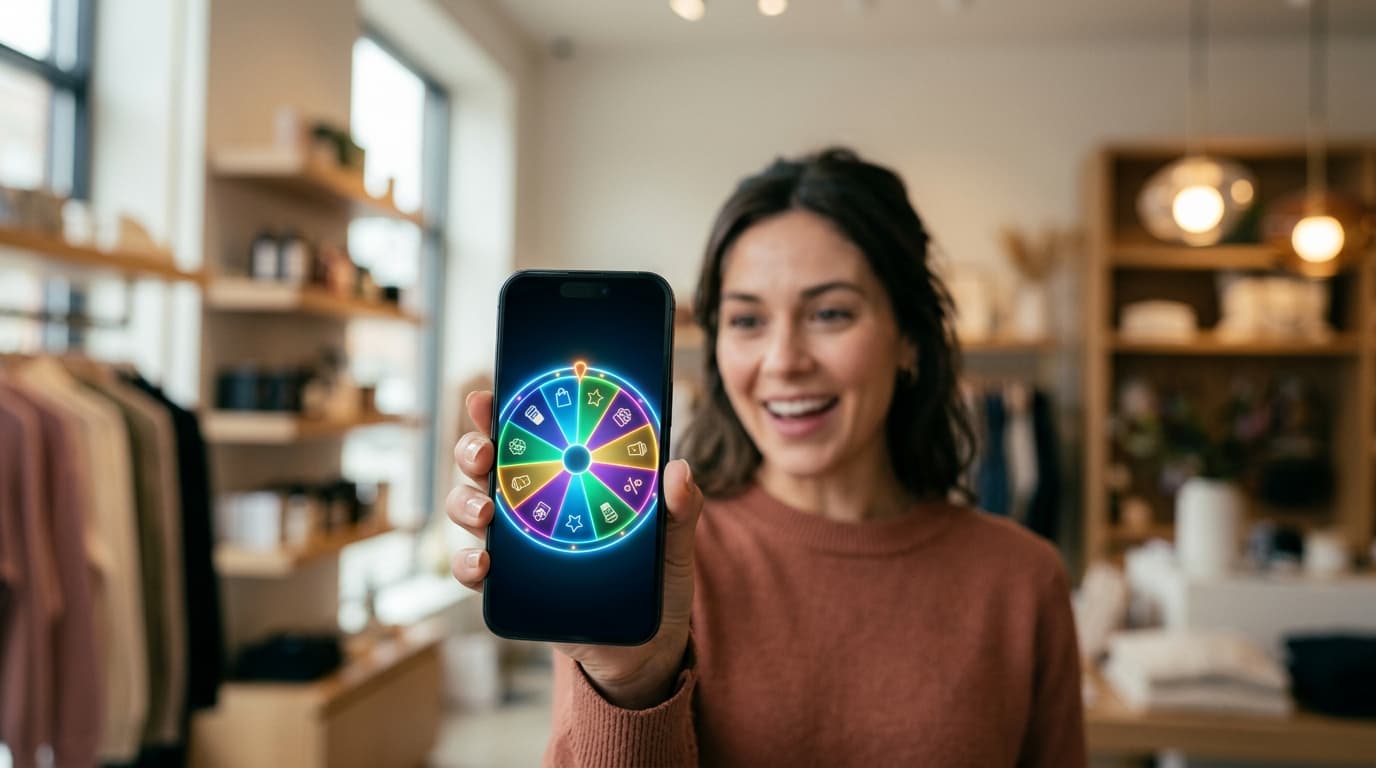
Adding a fortune wheel to your QR code review flow changes the psychological framing entirely. Instead of asking customers to do something for you, you're inviting them into a game where they win something — and the Google review is simply the entry ticket.
The mechanic is simple: the customer scans the QR code, submits their review in their own words (any rating — the system is open to honest feedback), then spins a digital wheel to reveal their prize. Prizes might include a discount on their next visit, a free flavor upgrade, a complimentary non-alcoholic drink, or — for the jackpot — a free session for the table.
Hookah lounge customers are typically younger, social, and entirely mobile-native: exactly the profile most likely to engage with an interactive phone-based mechanic. Gamified review flows at this type of venue regularly produce participation rates of 30–40%, compared to 2–5% for verbal requests. The group effect compounds this: when the first person at a table spins and wins, everyone else wants a turn. A single interaction becomes three or four reviews.
Prize ideas that resonate with this audience
For a shisha lounge clientele, the most effective rewards balance perceived value against actual cost:
- 10–15% off next visit: High perceived value; directly drives rebooking
- Free flavor upgrade or premium tobacco add-on: Low actual cost; makes the current visit more memorable and introduces the premium range
- One complimentary non-alcoholic drink: Easy to deliver, feels generous, and improves the experience that same evening
- Free session for the table (1-in-20 odds): The jackpot people actually mention to others — and sometimes post about on social media, amplifying your visibility beyond Google
Variable rewards are what keep the mechanic genuinely engaging. Even when most outcomes are modest, the possibility of the jackpot slot maintains real excitement and generates conversation about the game itself.
The long-term SEO effect
A hookah lounge consistently collecting 20–30 new reviews per week through a gamified system builds a local ranking advantage that becomes very difficult for competitors to close. In a market where most venues manage their online reputation passively, the first operators to implement a systematic approach move quickly into a dominant position on local search.
The loop reinforces itself: higher Maps ranking → more first-time visitors → more reviews collected → higher ranking still. The compound effect grows with every week the system runs. And the secondary effect: the customers most likely to participate in a gamified review flow at peak satisfaction are disproportionately the happiest ones, which pulls average ratings upward over time even without any change to the experience itself.
What most of your competitors aren't doing yet
Adoption of systematic review collection at hookah and shisha venues remains low. Most places ask verbally, a few have a static QR code somewhere, and very few have a consistent mechanism that converts each satisfied group into published reviews. That gap is an opportunity — and it closes as the practice spreads.
Ludofy is built for exactly this: a fully branded digital fortune wheel, activated by QR code at the table or with the bill, that collects the review first and delivers the prize after — with a live dashboard tracking new review volume and participation rate week over week. Setup takes under fifteen minutes, and the first reviews typically arrive within hours of going live.
Your customers are already on their phones. Give them a reason to point that attention somewhere that helps your business.