Why Google Reviews Are a Competitive Weapon for Repair Shops
A cracked screen, a dead battery, a laptop that won't boot — these are urgent problems. People don't spend time comparison shopping. They open Google, type "phone repair near me," and call the first shop that looks trustworthy. That first impression comes almost entirely from two things: your star rating and your review count.
For phone and computer repair shops, Google reviews aren't a nice-to-have — they're the deciding factor between a customer walking into your shop or the competitor across the street. Yet most repair shops collect reviews inconsistently, relying on customers to self-initiate a process most people forget within minutes of leaving.
This guide walks through how repair shops can systematically build their Google review profile: from capturing the right moment to using tools that turn relieved customers into vocal advocates.
The Trust Problem That's Unique to Repair Shops
Unlike a restaurant where a disappointing experience costs someone €20, a repair shop customer is handing you their €800 phone or a laptop with irreplaceable files. The stakes are high, and skepticism runs high accordingly.
Prospective customers scan reviews looking for specific answers: Was the diagnosis honest? Did the repair hold up? Was the price quoted upfront or did it balloon? Did the shop return the device on time? A review profile with 50 detailed, positive answers to these questions is worth more to your conversion rate than any advertising spend.
The flip side: a single visible negative review about "they charged more than they quoted" or "they lost my data" can cost you dozens of customers. The antidote isn't avoiding bad reviews — it's building such a strong review volume and quality that occasional negatives don't define you.
When to Ask: The Repair Pickup Moment
Timing matters enormously, and repair shops have one of the highest-converting moments in all of retail: the device return.
When a customer picks up their repaired phone and sees the screen is pristine again, or boots their laptop and finds all their files intact, relief and gratitude peak simultaneously. This is the exact moment to ask — not via a follow-up email two days later, but right then, at the counter.
Train your staff to make the ask part of the handoff: "I'm glad everything worked out. If you have 30 seconds, a Google review really helps us — here's a QR code that takes you straight there." The customer is holding the repaired device, the result is right in front of them, and the positive emotion hasn't faded yet.
Four In-Shop Review Collection Tactics That Work
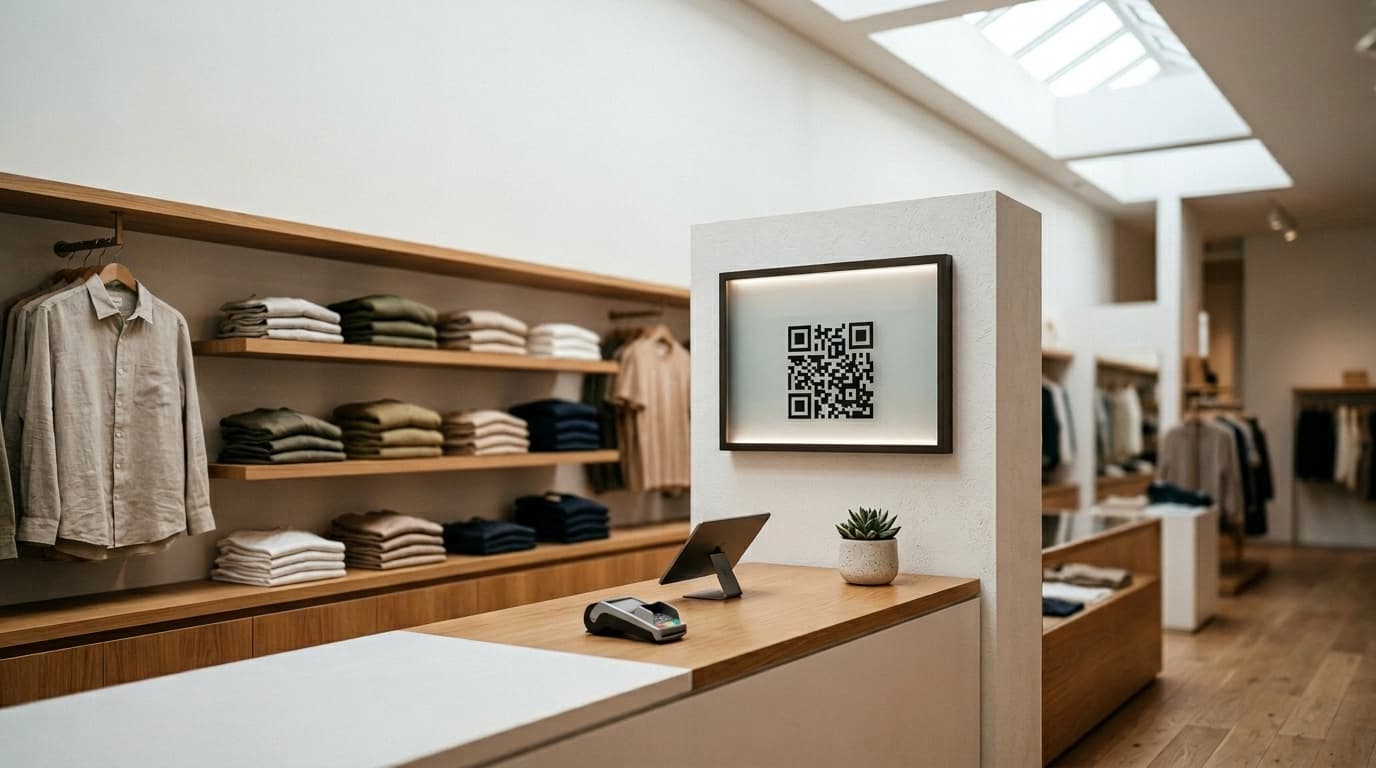
QR Code at the Counter: A small tabletop card or sticker pointing directly to your Google review form removes all friction. Customers scan at checkout while you're processing payment — the review is submitted before they've even pocketed their phone.
QR Code on the Receipt or Device Bag: Print or stamp a QR code on your receipt and on the bag or envelope you return the device in. Customers who leave quickly can review from home when they're using the freshly repaired device.
SMS or WhatsApp Follow-Up: A text message sent within two hours of pickup lands when the customer is actively using the device you fixed: "Hi, hope the [device] is running perfectly! If you're happy, here's a quick link for a Google review: [link]. Thanks so much." The emotional connection between the repaired device and your shop is still vivid.
The Invoice QR: Digital or printed invoices are documents customers keep for warranty purposes. A review QR code at the bottom becomes a low-pressure, non-intrusive nudge that some customers act on days later.
Turning Your Reviews Into a Trust Engine
Beyond collecting reviews, displaying them actively converts hesitant first-time visitors:
- Printed testimonials near the counter — specifically those mentioning data recovery, water damage, or same-day turnaround — address the exact fears new customers walk in with.
- Google review badge on your website confirms your rating to organic search visitors who want one final trust signal before calling.
- Social media posts sharing 5-star reviews (with permission) build a warm audience of potential future customers.
Treat your review profile as a living asset that needs consistent feeding — not a one-time project you set up once and forget.
How to Handle Negative Reviews Professionally
Repair shops are among the most review-sensitive businesses because customers feel deeply wronged when something personal and expensive goes wrong. Ignoring negative reviews is the worst possible response. Responding defensively is the second worst.
A well-crafted response to a negative review accomplishes three things simultaneously:
- Acknowledges the customer's frustration without immediately admitting fault
- Invites them to contact you privately to resolve the issue
- Signals to every future reader that you take service quality seriously
A strong template: "We're genuinely sorry your experience didn't meet expectations. Our technicians work hard to get every repair right the first time. Please reach out to us directly at [email/phone] so we can make this right."
That response is written for the dozens of prospective customers reading it — not just for the original reviewer.
Gamification: Turning Checkouts Into Review Moments
The challenge repair shops face is that customers complete the transaction and immediately move on. They're relieved, not neutral — but that emotion fades within the hour.
A gamified review prompt changes this dynamic. Instead of a passive QR code, imagine a counter display that invites customers who leave a Google review to spin a digital fortune wheel for a small prize — a free screen protector, a discount on their next repair, or a small gift card. The reward is modest, but the game mechanic activates curiosity and creates a moment of genuine excitement around what is usually a functional transaction.
Tools like Ludofy make this mechanic deployable in any physical shop in minutes, with no technical expertise required. The customer scans a QR at checkout, submits their review, spins the wheel — all in under two minutes. The shop earns a new Google review; the customer leaves with a memorable experience rather than just a receipt.
For repair shops dealing with skeptical, price-sensitive customers, that kind of positive exit moment builds the referral culture that sustains a local business long-term.
Building a System, Not a Campaign
The repair shops that dominate their local Google Maps listings don't run occasional review campaigns — they have a repeatable daily system:
- Ask at every device pickup — no exceptions, no awkward hesitation
- QR codes everywhere — counter, receipt, device bag, front door
- Follow up once — a single SMS or WhatsApp message within two hours
- Respond to everything — positives and negatives, within 48 hours
- Track monthly — review count growth and star rating movement tell you if the system is working
With a consistent conversion rate of even 15–20% of customers leaving reviews, a shop handling 10 repairs per day can accumulate 40–60 new Google reviews per month. Within six months, that profile will outrank most competitors within a five-kilometre radius — regardless of how long those competitors have been in business.
Your customers are already grateful when the repair works. The only remaining question is whether you capture that gratitude before it disappears — or let your competitor do it instead.
Ludofy helps local businesses collect more Google reviews through QR code-based fortune wheel mechanics. If you're running a repair shop and want to put your review collection on autopilot, learn more at ludofy.io.