You might make the best Neapolitan pizza in your city. But if your Google Business Profile shows 3.8 stars and 22 reviews from three years ago, you're losing customers before they ever smell the basil.
Pizza is one of the most searched food categories on Google. "Pizza near me," "best pizza delivery [city]," "pizza open now" — these queries happen thousands of times every day in most metro areas, and the businesses that surface first aren't necessarily the ones with the best dough. They're the ones with the most consistent review presence.
This guide gives you the practical system to change that — from where to place QR codes to how gamification can turn your review request from a chore into something customers actually enjoy.
Why Google Reviews Hit Differently for Pizza
Pizza is a high-frequency, routine purchase. Your customers order from you every week or two. That creates both a challenge and an opportunity.
The challenge: routine purchases don't inspire unsolicited reviews. Nobody texts their friends "I just had an average Friday-night pizza and I'm going to write about it online." The experience has to be actively prompted.
The opportunity: high frequency means a large base of satisfied regulars. If even 5% of your weekly orders converted into a review, a pizzeria doing 200 orders a week would collect 10 new reviews every week — 520 a year. That's a Google Maps front-page presence in most markets.
The Revenue Math
BrightLocal data shows that 87% of consumers read online reviews before choosing a local restaurant. For a pizzeria, the Friday-night decision happens in under 30 seconds: someone searches, sees two options, glances at the star ratings and review counts, and clicks. A pizzeria with 4.3 stars and 180 reviews will almost always win that click over a competitor with 4.8 stars and 14 reviews. Volume and freshness outweigh raw rating, especially for high-frequency searches.
A well-documented review strategy typically lifts revenue 15–25% in the first six months — not because the pizza changed, but because more people find and trust the restaurant.
The Four Best Moments to Ask for a Review
Timing is everything. The same request lands very differently at the wrong moment versus the right one.
1. At Delivery Drop-Off
The pizza just arrived hot, the smell is hitting, and your customer is in peak satisfaction mode. This is the highest-conversion moment in the entire delivery flow. A small card slipped into the box — with a QR code linking directly to your Google review page — converts at 6–10% in pizzerias that implement it consistently. Keep the message short: "Glad it arrived hot? Your review helps us reach more pizza lovers like you."
2. At the Point of Sale (Takeout and Dine-In)
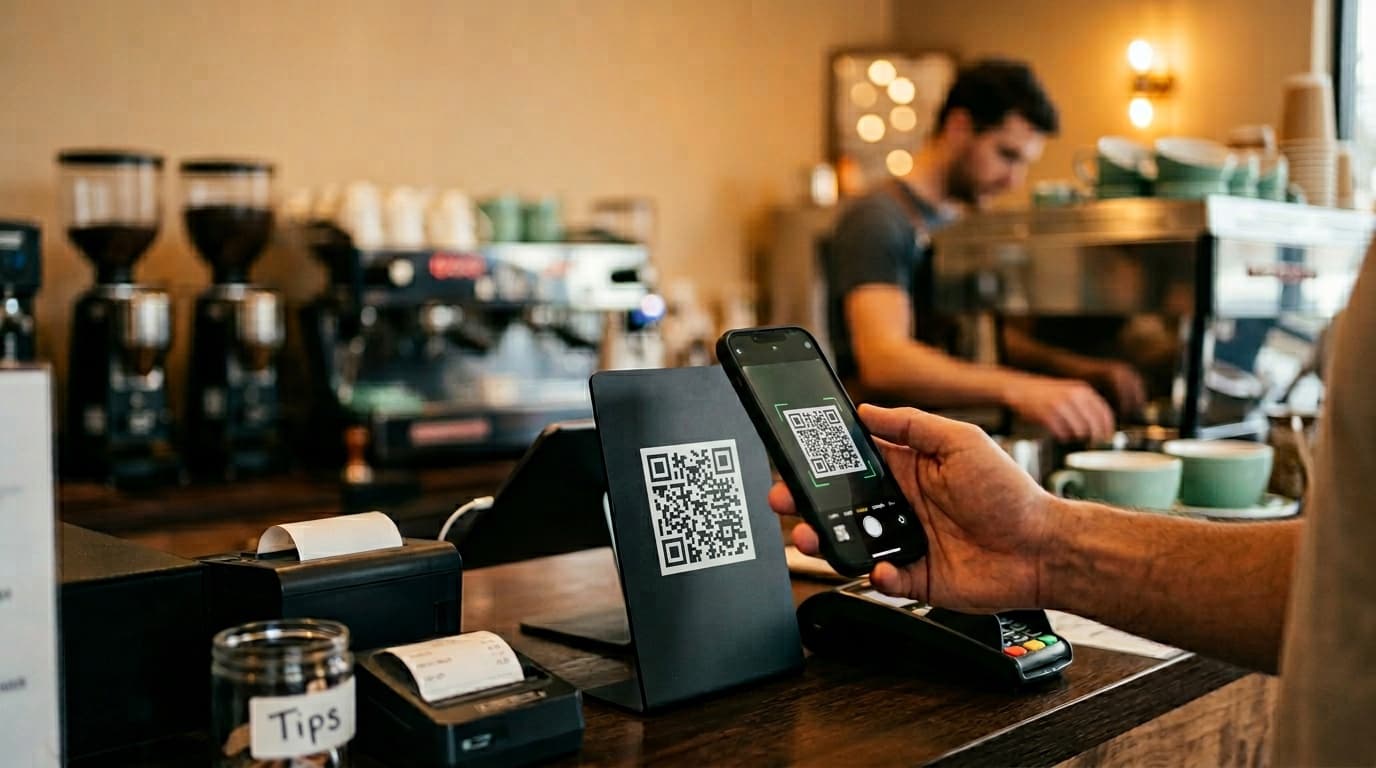
The checkout counter is a natural interaction point. While the receipt prints, your staff can mention the review — and the QR code displayed next to the card terminal does the heavy lifting passively. Customers who wouldn't respond to a verbal ask will sometimes scan spontaneously if the code is visible at eye level.
3. After a Positive Interaction
When a team member handles something well — a fast delivery acknowledged, a customization remembered, a complaint resolved without drama — that customer is warm. A natural handoff works here: "Everything came out right? If you ever have 30 seconds, a Google review really helps us out." No script required, just a genuine ask while the good feeling is fresh.
4. Via Post-Order Digital Follow-Up
If you take orders through your own system or website, a short SMS or email follow-up 20–30 minutes after delivery is one of the highest-leverage automations a pizzeria can set up. The message should contain a single link, arrive while the customer is still at the table (metaphorically), and have zero friction beyond the click. Conversion rates on well-timed follow-up messages routinely exceed 15%.
Why Satisfied Customers Don't Leave Reviews (and How to Fix It)
Most people who had a genuinely good experience at your pizzeria will never write a review — not because they don't care, but because the thought doesn't cross their mind at the right moment. There are three barriers operators need to eliminate.
They forget to do it. Physical triggers solve this: a card in the box, a sticker on the bag, a small sign at the pickup window. The review request should exist at every physical touchpoint, not just the verbal ask at checkout.
They think it's complicated. The QR code that links directly to your Google review form eliminates every intermediate step. No searching, no navigating, no logging in — scan, stars appear, done. The difference in conversion between "search for us on Google and leave a review" and a direct-link QR code is typically 3–5x.
They don't know what to write. A nudge in your request message helps: "Which pizza did you order?" or "What stood out about your delivery?" gives people a starting point. Customers who would have left one sentence write three when they have a prompt.
Gamification: Making the Review Request a Win-Win
The most effective modern approach to review collection in food service isn't just asking — it's creating a moment of genuine excitement around the ask.
The mechanism that works best: a spin-the-wheel experience. After leaving a Google review, the customer spins a digital fortune wheel and instantly wins a reward — a free drink, a dessert, a discount on their next order, or a grand-prize pizza. The wheel is spun regardless of the star rating given; the reward is for participating, not for praising.
This mechanic creates three simultaneous effects:
- Anticipation: the customer wants to see what they'll win, so they're motivated to leave the review to unlock the spin
- Immediate reward: they walk away (or hang up the phone) with something tangible, which reinforces the positive association with your brand
- Social sharing: a customer who "won a free pizza just by leaving a review" tells friends — organic word of mouth that no ad can buy
Pizzerias that deploy this kind of gamified review flow typically see their monthly review volume multiply 4–8x within the first two months.
Google's Policy on Review Incentives
Google permits incentives for reviews as long as the reward is given regardless of the content or star rating of the review. What you cannot do: offer a bonus only for 5-star reviews, or condition the reward on a specific positive outcome. A fortune wheel triggered simply by the act of posting any review — positive, neutral, or negative — stays clearly within Google's guidelines. The line is commercial influence over content, not the existence of a reward.
Responding to Reviews: The SEO Multiplier You're Probably Missing
Most pizza operators read their reviews but don't respond consistently. That's a two-part mistake: customers feel ignored, and Google notices the inactivity.
For positive reviews: personalize based on what the customer mentioned. If they called out the pepperoni, name it in your response. Takes 20 seconds, signals quality to the algorithm, and shows future readers that a real human is paying attention.
For negative reviews: don't defend, don't make vague apologies. Acknowledge the specific issue, offer a concrete resolution (refund, replacement order, a way to contact you directly), and keep the tone measured. Prospective customers read your responses more carefully than they read the reviews themselves. A thoughtful response to a 1-star review is often more reassuring to a new customer than five 5-star reviews with no engagement.
Target: respond to every review within 48 hours. Set a phone notification for new reviews — it's the highest-return two minutes you can spend on your online reputation each day.
Google Business Profile: The Foundation Everything Rests On
No amount of review volume will do its job if your profile is poorly maintained. For a pizzeria specifically:
Photos: upload fresh shots consistently — pizza out of the oven, your team at work, packaging that travels well. Profiles with frequent new images generate more clicks. Customers also add their own photos, which you can't control but benefit from.
Categories: "Pizzeria" is obvious, but also add "Italian restaurant" and "Meal delivery restaurant" to capture different search intents. Each additional relevant category can open up new search pathways.
Menu: keep it current. A customer who orders a pizza they saw listed and then finds it unavailable or differently priced is your most likely source of a negative review.
Attributes: turn on "Delivery," "Takeout," and "Dine-in" as applicable, plus any specialty attributes like "Vegan options" or "Gluten-free crust." These appear directly in search results and influence clicks before anyone reads a single review.
Q&A section: seed it yourself with your most common questions — delivery radius, average wait time, payment methods, allergen info. These answers appear on your profile and eliminate friction at the decision stage.
Building a Review Flywheel, Not a One-Time Campaign
The classic mistake: launch a push, collect 100 reviews in a month, then let the system go dormant. Google's algorithm explicitly rewards freshness. A pizzeria posting 8 reviews per month for 12 months will outperform a competitor who got 150 reviews last January and nothing since.
The goal is a lightweight, persistent system:
- QR codes physically present at every touchpoint, always
- Team trained to mention the review naturally (not robotically) at checkout and delivery
- Automated digital follow-up for online orders
- Weekly 10-minute check to respond to any new reviews
That's the full system. Nothing technically complex, nothing expensive — just consistent execution of a few high-leverage actions.
The Bottom Line
The pizzeria dominating your local Google Maps results probably isn't out-cooking you. It's out-reviewing you. Reclaiming that ground doesn't require a marketing budget or a dedicated staff member — it requires a deliberate system that fits into how you already operate.
Tools like Ludofy are built to run that system for you: a QR code at your counter and in your boxes, a gamified spin-the-wheel that rewards every reviewer, and a dashboard that shows you week-by-week review growth across all your locations. If you want to be the most-reviewed pizza spot in your area before the next peak season, that's where the lever is.