Ask most restaurant owners or shop managers what their Google rating is worth, and you'll get an honest shrug. They know a bad review stings and a good one feels validating — but the financial equation stays fuzzy.
That fuzziness is expensive. When you don't know the dollar value of each star, review collection becomes a nice-to-have. When you understand the mechanics, it becomes one of the highest-ROI activities in your entire operation.
The research is clear, consistent, and actionable. Here's what it says.
What a Single Star Is Actually Worth
In 2016, Harvard Business School professor Michael Luca published a landmark study showing that a one-star increase on Yelp led to a 5–9% revenue increase for independent restaurants. Subsequent research has replicated comparable effects for Google Reviews across hospitality, retail, and service businesses.
Run the math on a business doing $500,000 in annual revenue:
- Gaining half a star (e.g., 3.8 → 4.3) is worth an estimated $25,000–$45,000 in added annual revenue
- Gaining a full star (e.g., 3.8 → 4.8) is worth an estimated $50,000–$90,000 per year
These are averages — your actual result depends on market density, competition, and how much of your business flows through search. But even the conservative end of that range turns review collection from a PR exercise into a capital-efficient growth strategy.
The Psychology Behind the Purchase Decision
When a potential customer searches "Italian restaurant near me" or "best coffee shop downtown," they see a list. Their eyes land on two numbers: star rating and review count. These two data points function as cognitive shortcuts that stand in for word-of-mouth recommendations.
The 4-Star Threshold
Consumer behavior research identifies a hard threshold around 4.0 stars:
- Below 4.0: A significant portion of consumers — 25–40% depending on the category — will skip your listing entirely without reading further
- 4.0–4.4: Active consideration, but easily displaced by a competitor with a higher rating
- 4.5–5.0: Trust zone; customers move on to evaluating convenience and price rather than quality
This threshold is real and consequential. A customer may be willing to walk an extra five minutes to reach a 4.7-rated café rather than choose your 3.9-rated shop around the corner. Not because they've read the reviews — because the number alone signals something.
Review Volume as a Popularity Signal
Rating alone doesn't close the sale. A 5.0-star rating from three reviewers raises eyebrows. A 4.7-star rating from 340 reviewers signals a legitimate, well-trafficked business.
Studies on online search behavior show that click-through rates on Google Business Profile listings increase by 25–35% when review count rises from under 10 to over 100, independent of the star rating itself. Volume communicates longevity, activity, and community trust — things a perfect score on a handful of reviews cannot.
Three Revenue Channels Google Reviews Actually Activate
The financial impact of reviews doesn't run through a single mechanism. It activates three distinct revenue channels simultaneously.
Channel 1: Organic Discovery via the Local Pack
Google uses review signals — volume, recency, rating — as ranking factors for its Local Pack, the block of three business listings that appears at the top of local search results. Businesses with stronger review profiles consistently rank higher, capturing a disproportionate share of clicks.
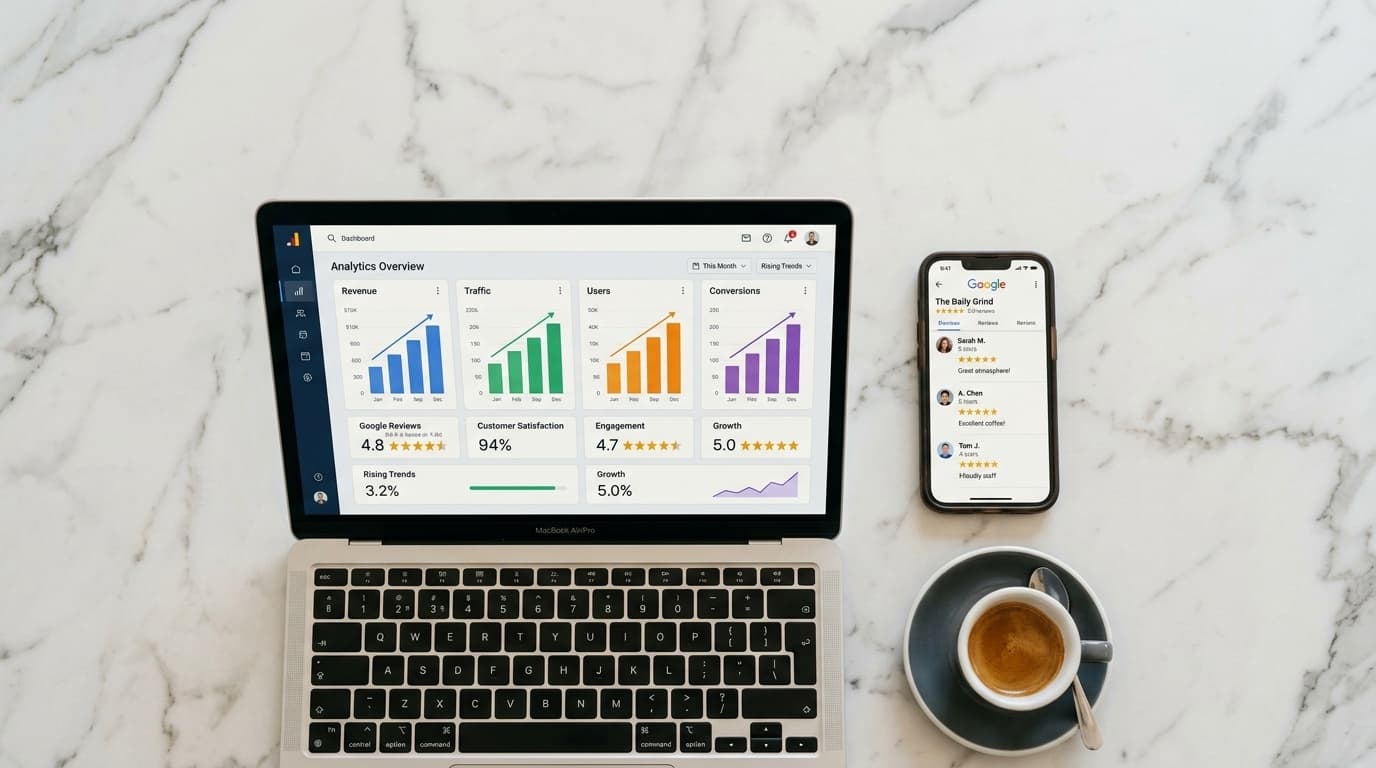
The compounding effect is significant: more reviews → higher ranking → more impressions → more profile visits → more foot traffic → more sales → more opportunities to collect reviews. Businesses that move from position four to position one in their category often see profile traffic double or triple within months — without spending anything on advertising.
This is earned media in its most literal form: reviews your customers write become permanent, compound-interest search assets.
Channel 2: Higher Conversion and Average Spend at the Point of Sale
Reviews don't just drive people to your door — they shape behavior once customers arrive. A customer who chose you based on 200 enthusiastic reviews arrives with positive expectations already set. Behavioral economics research suggests that socially validated choices increase average spend by 10–15% compared to neutral purchase decisions.
The effect plays out in small, measurable ways: they order the item a review mentioned, they're more receptive to a staff recommendation, they don't cut short the experience when they might otherwise have. These micro-decisions compound into a meaningfully higher average ticket.
Channel 3: Repeat Visits and Referrals
Customers who write a review are statistically more likely to return. The act of writing a positive review creates a consistency bias: having publicly recommended your business, they're psychologically motivated to return and confirm their judgment.
The same dynamic amplifies word-of-mouth. A customer who has committed to a written recommendation is more likely to mention your business in conversation, share your profile with a friend, or recommend you in a neighborhood Facebook group. The review isn't just a one-time digital signal — it anchors the customer relationship in a way that casual satisfaction doesn't.
The Conversion Rate Problem Nobody Talks About
If reviews are this valuable, why do most businesses accumulate them so slowly?
The answer is behavioral. A satisfied customer leaves your restaurant, gets home, and the impulse to leave a review competes with email, family, and Netflix. It loses — not because the customer dislikes you, but because the moment of motivation has passed.
The natural rate at which satisfied customers leave unprompted reviews in hospitality and retail is approximately 2–5%. That means 95–98 out of every 100 happy customers walk out without leaving a trace of their satisfaction online.
This single number explains everything. It explains why some businesses with excellent service have 47 reviews while a mediocre competitor has 430. It explains why a new business with rigorous review collection can outrank an established one within a year. And it tells you exactly where the leverage is: not in making customers happier, but in capturing the satisfaction that already exists.
What High-Review Businesses Actually Do Differently
Businesses that accumulate hundreds of reviews don't have unusually civic-minded customers. They have systems that convert satisfaction into action at the moment it's most accessible.
Timing the Ask
The window for a successful review request is narrow. The best moment is immediately after a peak positive experience — at the end of a meal, when settling a bill, when the service just exceeded expectations. Waiting even an hour reduces conversion rates substantially.
Eliminating Friction
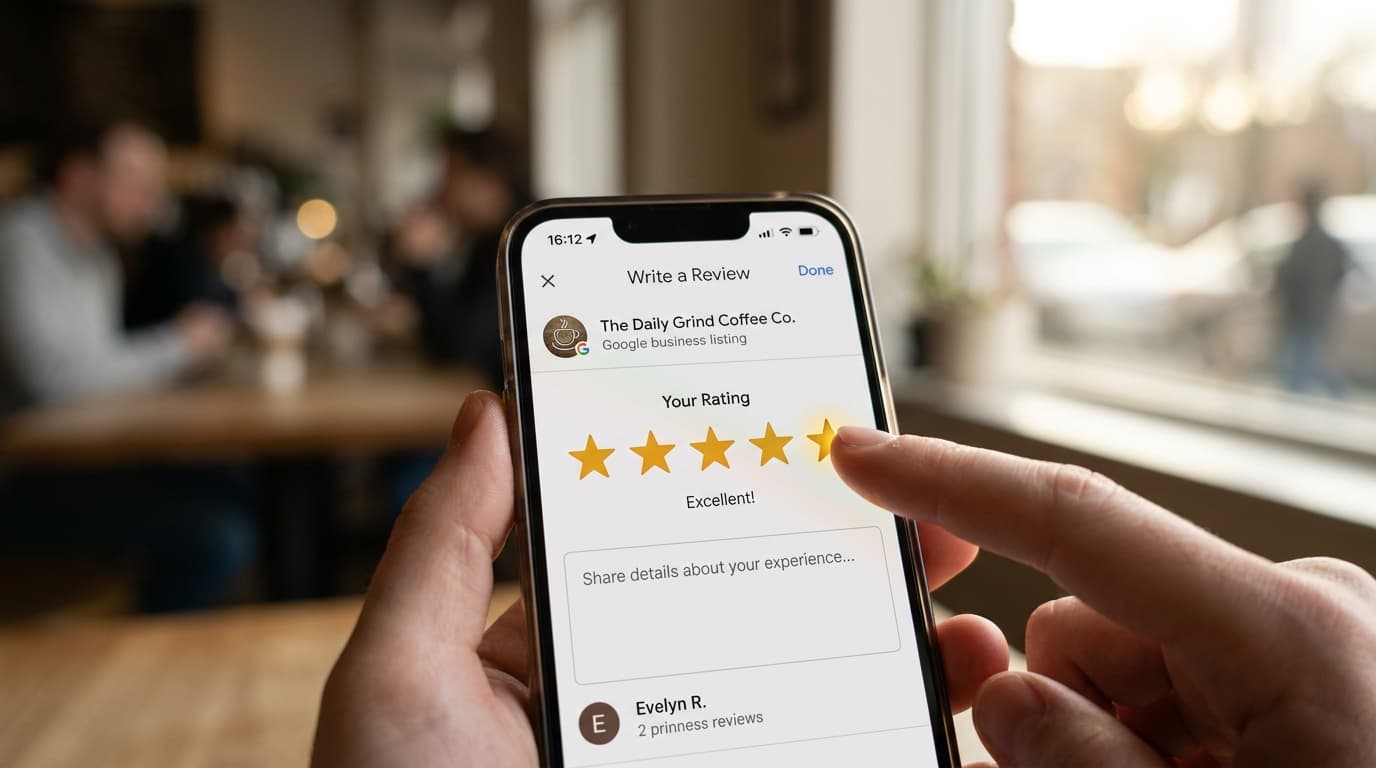
Every step between "I want to leave a review" and "I have left a review" costs conversions. Scanning a QR code that opens your Google review form directly — no searching, no navigating — can multiply conversion rates by three to five times compared to a verbal request to "look us up on Google."
Making It Memorable
Customers are dramatically more likely to act when the invitation is engaging rather than obligatory. This is the logic behind gamification: turning the act of leaving a review into a playful exchange — a spin of a prize wheel, a chance to win something — makes participation feel like an event rather than a favor.
The customer gets a moment of delight; you get a review. The transaction is symmetrical in a way that a simple "please rate us" is not.
Calculating Your Own Revenue Opportunity
Before investing in any tool or strategy, work through your actual numbers:
- How many customers do you serve per month?
- How many new reviews do you receive per month on average?
- What is your current conversion rate (reviews ÷ customers)?
If you serve 800 customers per month and receive 6 reviews, your conversion rate is 0.75%. Moving to 3% — a realistic target with the right system in place — means 24 new reviews per month. Over 12 months, that's nearly 300 additional reviews. The impact on your Local Pack ranking and monthly revenue is no longer theoretical.
Ludofy is built around this exact conversion problem. The platform pairs a QR-code-triggered fortune wheel with a direct pathway to your Google Business Profile — turning the post-experience moment into a high-conversion review touchpoint. Businesses using Ludofy typically move from a handful of reviews per month to dozens, without changing their service offering or training their staff differently.
The stars your satisfied customers haven't given you yet are sitting in their phones. A well-designed system is the only thing standing between that untapped goodwill and measurable revenue growth.