You've done everything "right" — you have a Google Business Profile, you ask customers to leave reviews, and you've probably printed a QR code sticker at some point. Yet the review counter ticks up at two or three per month while your competitor across the street sits on two hundred more than you.
The problem is almost never product quality. It's mechanics. Most businesses collect reviews passively, relying on the tiny percentage of customers motivated enough to do it unprompted. Thirty days is enough time to replace that passive system with an active one — and to see your monthly review volume double.
Here's the exact plan.
Day 1–3: Audit your baseline
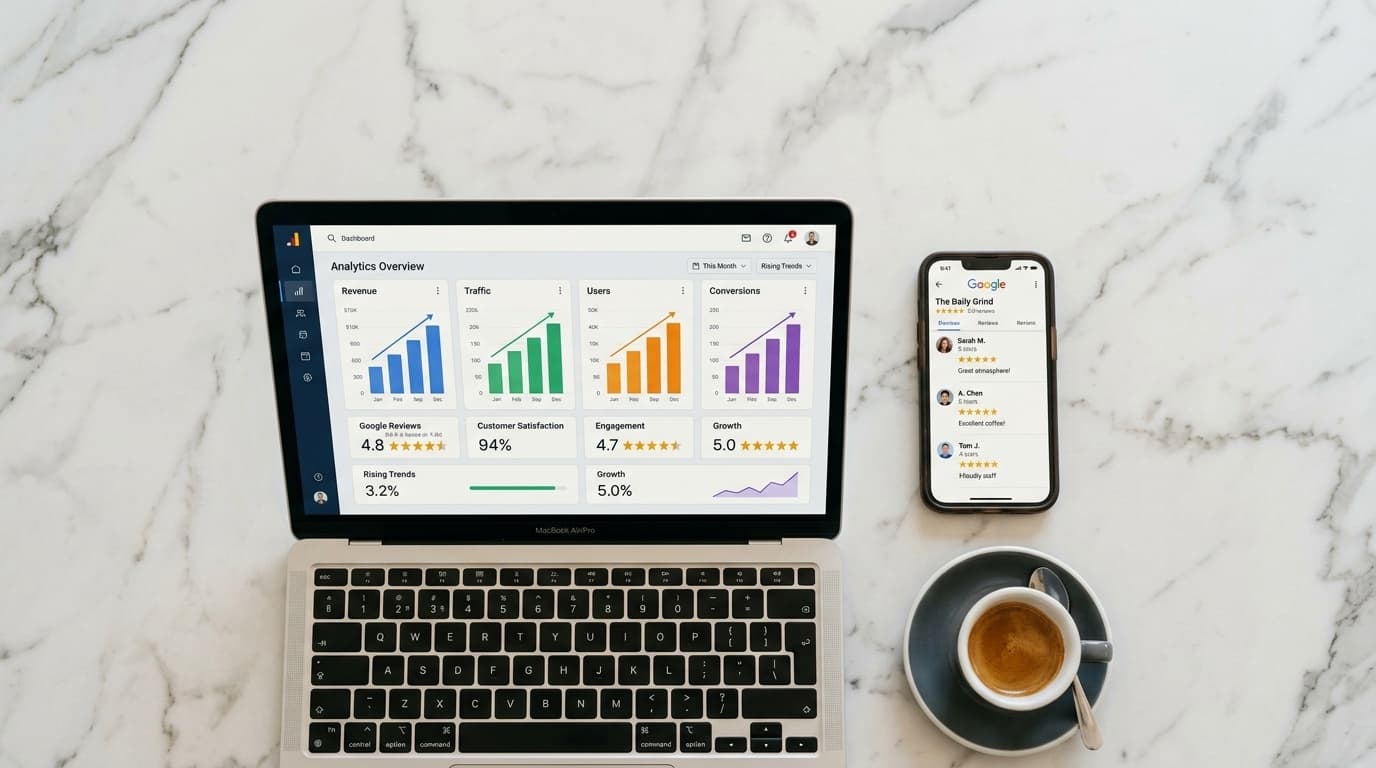
Before you can double anything, you need to know your starting number. Open your Google Business Profile and note:
- Total reviews to date
- Reviews collected in the last 30 days — this is your baseline
- Current average rating
- How many reviews you've responded to versus how many are still unanswered
Write these down. Everything you do over the next 30 days is measured against this snapshot.
Also note your existing touchpoints: Do you have a QR code? Where is it placed? Does it actually work (test it yourself)? Do your staff ever mention reviews to customers, and what do they say?
This audit almost always surfaces the first problem immediately: no consistent touchpoint, or one that nobody notices.
Day 4–7: Fix the foundation
A leaky bucket doesn't fill no matter how much water you pour in. Before driving more review attempts, make sure your Google Business Profile is complete:
- Business name matches your signage exactly
- Address and phone number are accurate
- Hours are current, including holiday hours
- Primary category is correctly set — this directly influences local search ranking
- Photos are recent and represent your actual space (add at least five if yours are outdated)
- Existing reviews all have responses — respond to every unanswered review before moving on
This step matters because a well-maintained profile converts better. A customer who scans your QR code and lands on a sparse, half-complete profile is less likely to finish leaving a review.
Day 7–10: Activate a gamified QR code flow
This is the highest-leverage move in the entire plan.
A plain QR code linking directly to your Google review page converts at roughly 5–8%. A gamified flow — where the customer leaves a review and then spins a digital fortune wheel for a small prize — converts at 25–35%. That single change can multiply your monthly review volume by four or five times on its own.
The sequence matters: review first, spin second. The customer writes their honest review (whatever their experience genuinely deserves), then discovers what they've won. This preserves the authenticity of the feedback while making the interaction genuinely fun.
Configure a digital fortune wheel with prizes you can offer consistently: a free coffee, a 10% discount on their next visit, a small gift item. Prizes don't need to be expensive — the variable reward effect works even when most outcomes are modest. What motivates participation is the uncertainty, not the size of the prize.
Day 10–14: Deploy across every physical touchpoint
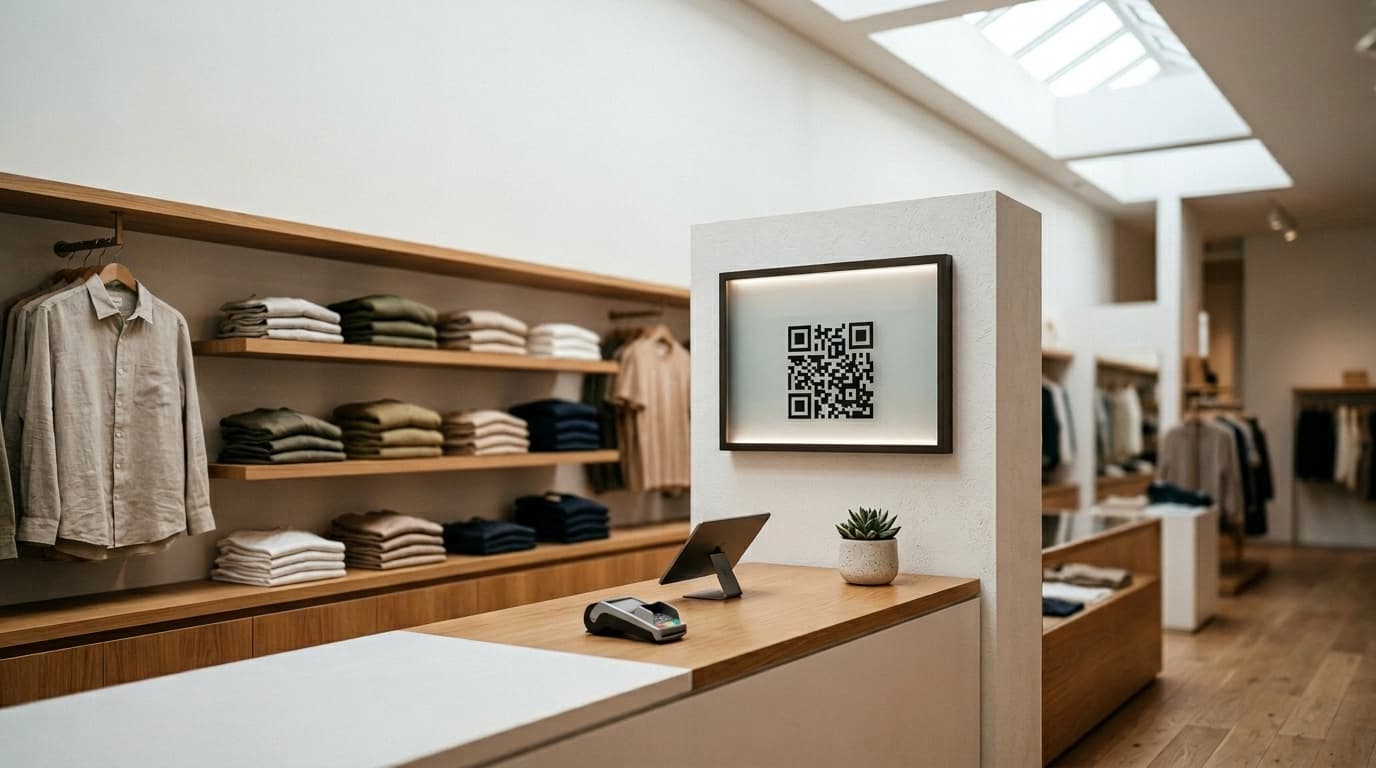
A single QR code in one location is an underperforming asset. Businesses that see the sharpest review growth place their QR code at every natural decision point:
- At the cash register — the highest-traffic touchpoint in any physical business
- On tables or counters where customers linger
- In the check presenter for sit-down restaurants
- On takeaway packaging — bags, boxes, cups
- Near the exit — a sticker, a small sign, or a business card with the code printed on it
Each additional placement increases the probability that a given customer will see and act on the prompt. You're not asking louder — you're creating more opportunities to be heard.
Day 14–20: Train your team in five minutes
Your staff is your most effective distribution channel. A brief, natural mention from a team member doubles participation rates compared to a passive sign alone.
Give your team a single phrase, non-awkward and low-pressure: "Before you head out — we have a quick game where you can win something. Just scan that code when you have a moment."
That's it. No script, no pressure, no explanation of Google rankings.
The framing is everything. "Would you mind leaving us a Google review?" creates social obligation. "We have a game where you might win a free coffee" creates curiosity. One feels like a favor you're asking; the other feels like something you're offering. Customers respond to the second one at a much higher rate.
Run a five-minute team briefing. Role-play the phrase once. Done.
Day 20–25: Capitalize on your peak hours
Review volume is a function of opportunity frequency. Identify the highest-traffic windows in your week:
- Friday and Saturday evenings for restaurants and bars
- Morning rush for cafés
- Lunch hour for quick-service businesses
- Weekend afternoons for retail
During these windows, your team should be especially consistent about mentioning the QR code. A small increase in participation rate during peak hours produces the largest absolute number of new reviews.
If you have an email list or social media followers, this is also the right moment to send a single message to existing customers who haven't left a review: "We've been working hard on the experience — if you've visited recently, we'd love to hear what you thought." Keep it brief and genuine. No instruction to be positive. This typically surfaces a cluster of latent reviews from customers who meant to leave one and never got around to it.
Day 25–30: Measure, adjust, and build the habit
By day 25, you have real data. Compare your current 30-day review rate to the baseline you noted on day 1. Most businesses see a 2–5x improvement at this stage.
If participation is lower than expected, audit your placement: Are the QR codes visible from where customers naturally look? Are they positioned where customers have a free hand and a spare moment? Is the team mentioning them consistently?
If participation is strong but few reviews are arriving, check that your QR code links to the correct Google Business Profile and that the review-then-spin sequence is working as intended.
By day 30, the goal isn't a one-month spike — it's a system that runs without active management. Review collection should feel like part of your normal customer service flow, not a special campaign.
What happens after day 30
This is where compounding takes over.
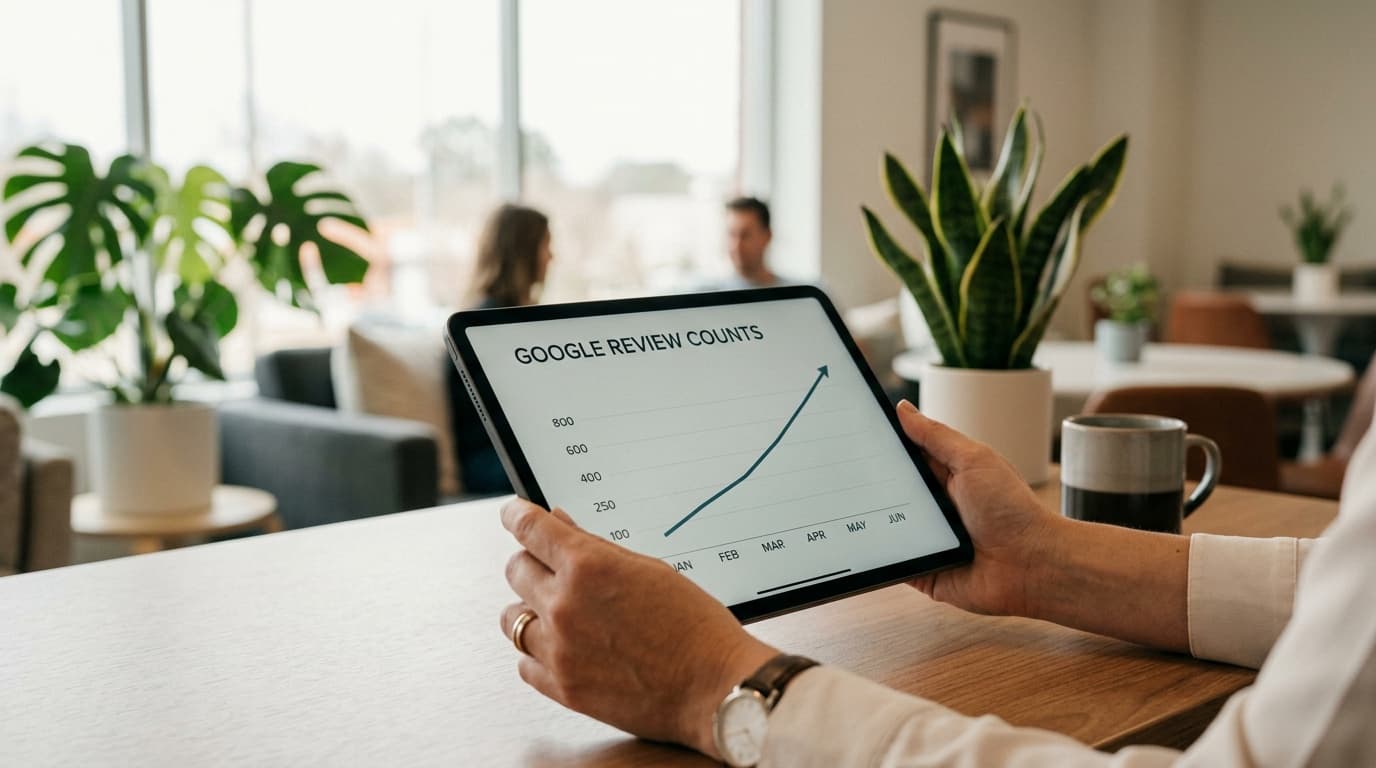
Google's local ranking algorithm weights both review volume and recency. A business collecting 15 new reviews per week consistently outranks a competitor with an identical rating but sporadic review activity. After 60 days of consistent collection, your profile begins to separate from competitors in local search results. After 90 days, the gap becomes visible in foot traffic.
The businesses that see the most dramatic long-term results treat review collection not as a campaign but as a permanent operational habit — as routine as checking inventory or opening the till. The system runs, reviews arrive, and the gap between you and competitors who haven't built this habit compounds every week.
Ludofy provides the gamified fortune wheel infrastructure described in this plan — a customizable digital wheel activated by QR code at point of sale, configured in under fifteen minutes, that sequences the review before the prize reveal and tracks results in a simple dashboard. If your business serves 50 or more customers per day and your review count doesn't reflect your service quality, the 30-day plan above is the fastest path to closing that gap.