Most local business owners spend significant energy collecting Google reviews — and then leave them sitting there, unanswered. That's a missed opportunity. Responding to reviews isn't just polite; it's one of the most direct levers you have for local SEO, customer retention, and new customer conversion.
This guide walks you through the why, the how, and the when of responding to reviews — with ready-to-use templates you can adapt for your business today.
Why Responding to Google Reviews Matters More Than You Think
Google's own documentation confirms that responding to reviews helps your business rank in local search. When you respond, Google sees your Business Profile as active, accurate, and engaged — a quality signal that influences where you appear in Maps and local pack results.
But the real audience isn't the algorithm. It's the next customer reading your reviews before deciding where to go. Studies consistently show that over 90% of consumers read online reviews before visiting a local business, and a significant portion specifically look at how businesses respond to negative feedback. A thoughtful response to a complaint can convert a skeptic into a first-time visitor more reliably than a paid ad.
The fundamental rule: every review deserves a response — positive or negative, long or short.
How to Respond to Positive Reviews
Positive reviews feel easy to skip — they're not urgent, and there's nothing to fix. But leaving them unanswered is a small signal of indifference that accumulates. Responding reinforces customer loyalty, shows personality, and subtly highlights what makes your business special for anyone reading.
The formula: Thank + echo the specific detail they mentioned + invite them back
Template 1 — Short and warm:
"Thank you so much, [Name]! We're glad you enjoyed [specific dish/service/experience]. We hope to see you again soon!"
Template 2 — Mid-length with personality:
"What a lovely review — thank you, [Name]! It means a lot to our whole team to know that the [specific detail] stood out. We'll pass your kind words along. Looking forward to welcoming you back!"
Template 3 — For a first-time visitor:
"Thank you for giving us a try, [Name]! We're thrilled it was a great first experience. There's always more to discover — we hope to see you again soon."
A few things to remember:
- Use their first name when available — it personalizes the response instantly
- Reference a specific detail from their review — shows you actually read it, not just scanned it
- Keep it under 3–4 sentences — brevity is a virtue
How to Respond to Negative Reviews
Negative review responses are where most businesses either win or lose the trust of potential customers reading from the sidelines. The goal is never to "win" the argument. It's to demonstrate how your business handles problems — with professionalism, empathy, and a genuine desire to fix things.
The LEARN framework:
- Listen — acknowledge what they experienced without dismissing it
- Empathize — validate their frustration without being defensive
- Apologize — even if you believe you weren't entirely at fault
- Resolve — offer a clear path to making it right
- Next step — invite them to contact you directly offline
Template for a service complaint:
"Thank you for taking the time to share your experience, [Name]. We're truly sorry your visit didn't meet your expectations — that's not the standard we hold ourselves to. We'd love the opportunity to make it right. Please reach out to us directly at [email/phone] so we can understand what happened and find a solution. We hope to hear from you."
Template for a food or product quality complaint:
"We appreciate your feedback, [Name], and we're sorry the [dish/product] wasn't up to par. This isn't the experience we aim to deliver, and we take it seriously. Please contact us at [email/phone] — we'd like to offer you a chance to come back and experience us at our best."
Template for an aggressive or unverifiable review:
"Thank you for your feedback. We're sorry your experience didn't meet your expectations. We take all feedback seriously and continually work to improve. If you'd like to discuss this further, please don't hesitate to contact us at [email/phone]."
What to avoid at all costs:
- Never get defensive or blame the customer publicly
- Never offer a discount or refund in the public reply — take that conversation offline first
- Never respond in anger or frustration, even if the review is factually wrong
- Never copy-paste the same response to multiple reviews
Response Timing: When to Reply
Speed matters — but so does quality. Here's a practical framework:
- Negative reviews: Respond within 24 hours. The longer it sits unanswered, the more it shapes the narrative.
- Positive reviews: Respond within 3–5 days. Regularity matters more than speed.
- 3-star neutral reviews: Treat these like negative reviews — respond within 24 hours and try to understand the gap between what you delivered and what they expected.
Consistency beats perfection. Setting aside 10–15 minutes each week to respond to that week's reviews is a sustainable habit that delivers compounding returns over time.
The Tone and Voice That Builds Trust
Your review responses are public marketing copy. Every future customer can read them. That means your tone should reflect your brand — whether that's warm and conversational for a neighborhood café, or more measured and formal for a law firm or medical clinic.
Principles that work universally:
- Be specific: A tailored response is worth ten generic ones
- Be human: A little personality creates connection; stiff corporate language creates distance
- Be consistent: Your responses should feel like they come from the same voice
- Don't keyword-stuff: Working your business name and location into every response signals manipulation and can backfire
What NOT to Do When Responding to Reviews
A few patterns that consistently hurt businesses online:
- Ignoring reviews entirely — Silence is a signal. It tells future customers you don't care what they think.
- Responding only to negative reviews — Positive reviewers deserve acknowledgment too.
- Copy-pasting identical responses — It signals automation and disrespect for the reviewer.
- Getting into arguments — Even if the reviewer is completely wrong, escalating publicly damages only you.
- Making public promises you can't keep — "We'll refund you immediately" on a public review is a commitment you now have to honor.
Building a Sustainable Response System
For businesses that receive 10+ reviews per month, responding manually without a system quickly becomes a chore — and then stops happening entirely. Here's how to build a lightweight process:
- Enable email notifications for new reviews in your Google Business Profile dashboard
- Create a template library with 5–6 customizable templates per review type (positive, service issue, quality issue, aggressive)
- Assign ownership — one person is responsible for responding each week, not "everyone"
- Review patterns quarterly — if the same complaints keep appearing, they're operational signals, not just reputation noise
The best review responses come from businesses that treat them as a customer service touchpoint, not an obligation to check off.
Getting More Reviews Worth Responding To
Of course, the prerequisite for a great response strategy is having a steady stream of reviews coming in. That's where most businesses struggle. Asking customers verbally at checkout works sometimes — but the conversion rate is low, and most customers forget before they're out the door.
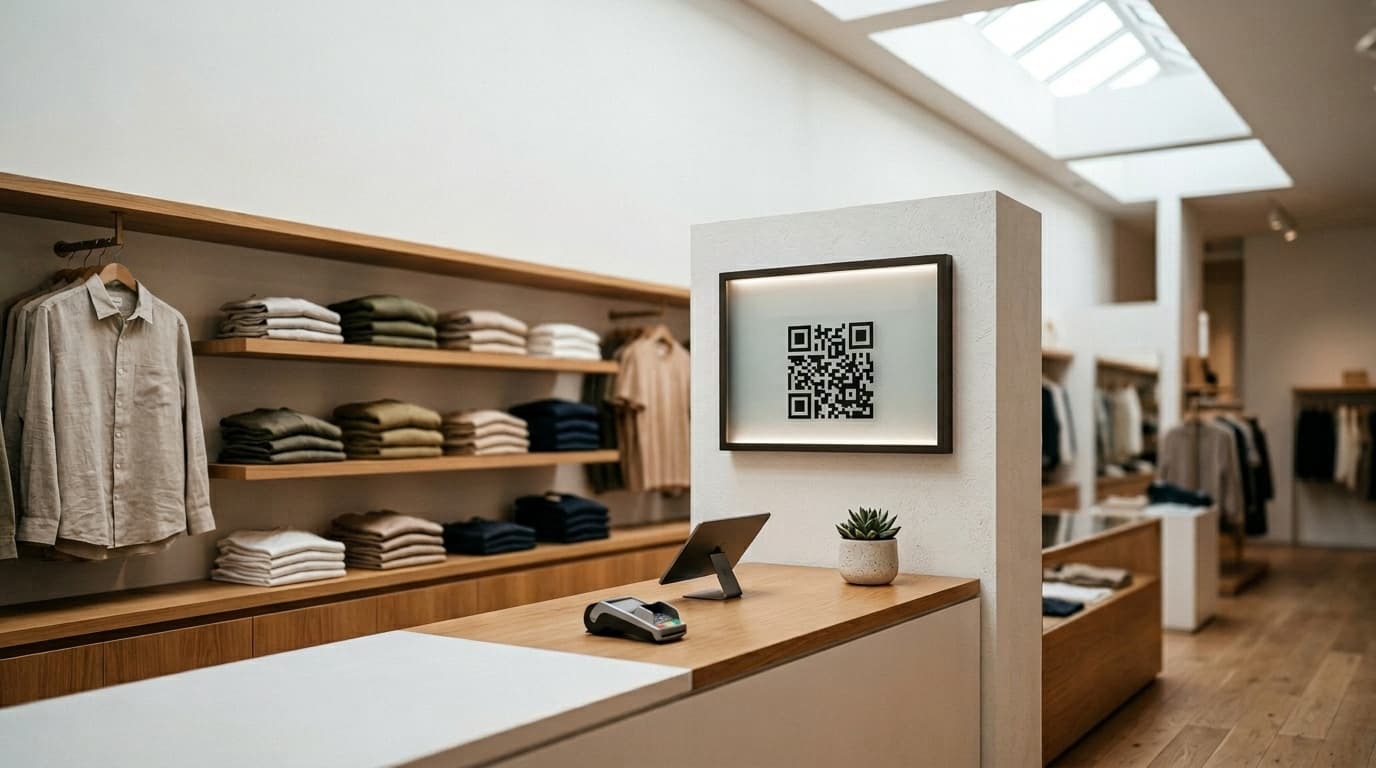
This is exactly what Ludofy solves. The fortune wheel mechanic gives customers an immediate, fun reason to scan your QR code and leave a review right there in the moment — when their experience is fresh and their satisfaction is at its peak. The result is a consistent flow of authentic reviews, arriving regularly, that your response strategy can actually work with.
A strong review collection strategy and a thoughtful response strategy are two sides of the same coin. Build both, and your Google Business Profile becomes one of your most effective sales assets — one that works for you around the clock.