Every satisfied customer is a potential Google review. But between a great experience and an actual five-star rating published online, there's a gap — and most customers never cross it on their own. The challenge isn't convincing your customers that you deserve five stars. The challenge is making the act of leaving a review easy enough and immediate enough that it actually happens before they get home, open Instagram, and forget about you entirely.
There are six widely used methods for collecting Google reviews. Each one works differently. Each one converts at a different rate. And most businesses are using the wrong mix — relying on the lowest-converting options while leaving significant volume on the table.
Here's a straight comparison of all six, with honest conversion estimates and the context that explains them.
Method 1: The Verbal Ask — Authentic but Inconsistent
The verbal ask is the oldest and most common approach: at the end of the meal or visit, a team member says something like "If you enjoyed your time with us, we'd really appreciate a Google review." It feels natural. It requires no technology. And it converts poorly when used as a standalone strategy.
Estimated conversion rate: 2–5%
The problem is that it relies entirely on the human element: whether the right staff member is present, whether they remember to ask, whether they feel comfortable asking, whether the customer is in a rush. Some employees ask every time; others never do. On a busy Friday night, the ask gets forgotten entirely.
The verbal request also creates mild social pressure in the moment — which doesn't translate to action once the customer walks out the door and gets swept up in the rest of their evening. The intention may be genuine, but without a physical prompt to act on, most people don't follow through.
The verbal ask is most effective as a complement to a physical touchpoint, not as a standalone method.
Best suited for: Boutique businesses with small daily customer volumes and deeply personalized service — where the relationship is strong enough to make the ask feel natural.
Method 2: Printed QR Code Cards or Stands — The Essential Foundation
A QR code printed on a table card, receipt, checkout counter sign, or packaging is the most accessible baseline method. The customer scans the code, lands directly on your Google Business Profile, and can leave a review without any additional friction.
Estimated conversion rate: 5–12%
Placement is everything. A QR code on the receipt or check arrives at exactly the right moment — the experience is fresh, the customer is still in your space, and the emotional high hasn't worn off. A QR code buried on a wall or hidden behind the counter might as well not exist.
The advantage of this method is its permanence: once printed and placed, it works passively around the clock with zero additional effort. The limitation is that it requires the customer to self-initiate — there's no trigger, no incentive, no moment of excitement to push them over the line.
Best suited for: All business types as a baseline, especially combined with other methods at the point of payment.
Method 3: Post-Visit Email Follow-Up — Powerful When You Have the Data
If you have customer email addresses — collected through online reservations, a loyalty program, or sign-up at the point of sale — a well-timed email can be one of the higher-converting options available.
Estimated conversion rate: 8–18% of emails opened
The formula is simple: short message, personal tone, direct link to your Google profile, sent within 24 hours of the visit. The window matters significantly. Emails sent the same evening or the following morning perform well. After 48 hours, open rates drop and conversion follows.
Personalization lifts results noticeably. Mentioning the customer's first name, the date of their visit, or something specific about their experience signals that this isn't a mass send — and customers are more likely to act.
The hard limit: most brick-and-mortar businesses don't have email addresses for every customer. Walk-in traffic, cash payments, and customers who skip loyalty programs are invisible in your CRM. For businesses heavily dependent on anonymous footfall, email is a secondary tool rather than a primary one.
Best suited for: Hotels, restaurants with reservation systems, businesses with established digital loyalty programs, appointment-based services.
Method 4: SMS and WhatsApp — High Open Rates, Tricky to Execute
SMS open rates in most markets sit around 90–95%, dwarfing email. A WhatsApp message with a direct review link can, in theory, produce the highest raw response rates of any channel.
Estimated conversion rate: 15–25% of messages delivered
In practice, two obstacles get in the way. First, collecting mobile numbers for marketing purposes requires explicit consent under data privacy regulations — you can't simply use the number someone gave you to confirm a booking. Second, unsolicited text messages from businesses can feel intrusive, especially if the branding isn't immediately recognizable or the timing feels off.
WhatsApp Business handles this more naturally, enabling conversational follow-ups that feel less like bulk marketing. But it requires the customer to already be in your contact list, which limits reach.
SMS and WhatsApp work best when the phone number is collected naturally as part of the service — such as appointment confirmations — and the follow-up message arrives within a relevant window.
Best suited for: Home service providers (plumbers, electricians, cleaning companies), beauty salons, medical and wellness clinics, any appointment-based business where the phone number is collected upfront.
Method 5: NFC Tags — Promising Technology, Real-World Constraints
NFC (Near Field Communication) tags let customers access your Google review page with a single tap of their phone — no scanning, no typing, just a tap on a sticker or branded stand near the checkout.
Estimated conversion rate: 10–20%
The appeal is in the friction reduction. A tap is faster than a scan, and faster than typing in a URL. In theory, this should drive conversion higher. In practice, several constraints limit the method's reach. Some customers are unaware their phone supports NFC, or have it disabled. Older iPhone models require specific settings to enable NFC reading. And the per-unit cost of NFC tags is meaningfully higher than a printed QR code — a consideration for businesses with multiple locations or limited budgets.
NFC is growing, particularly as contactless payments normalize the gesture. It performs best in urban markets with younger, digitally fluent customers who tap to pay without thinking about it.
Best suited for: Trendy retail stores, coffee shops, and urban hospitality businesses targeting younger demographics.
Method 6: The Gamified Fortune Wheel — The Method That Changes Everything
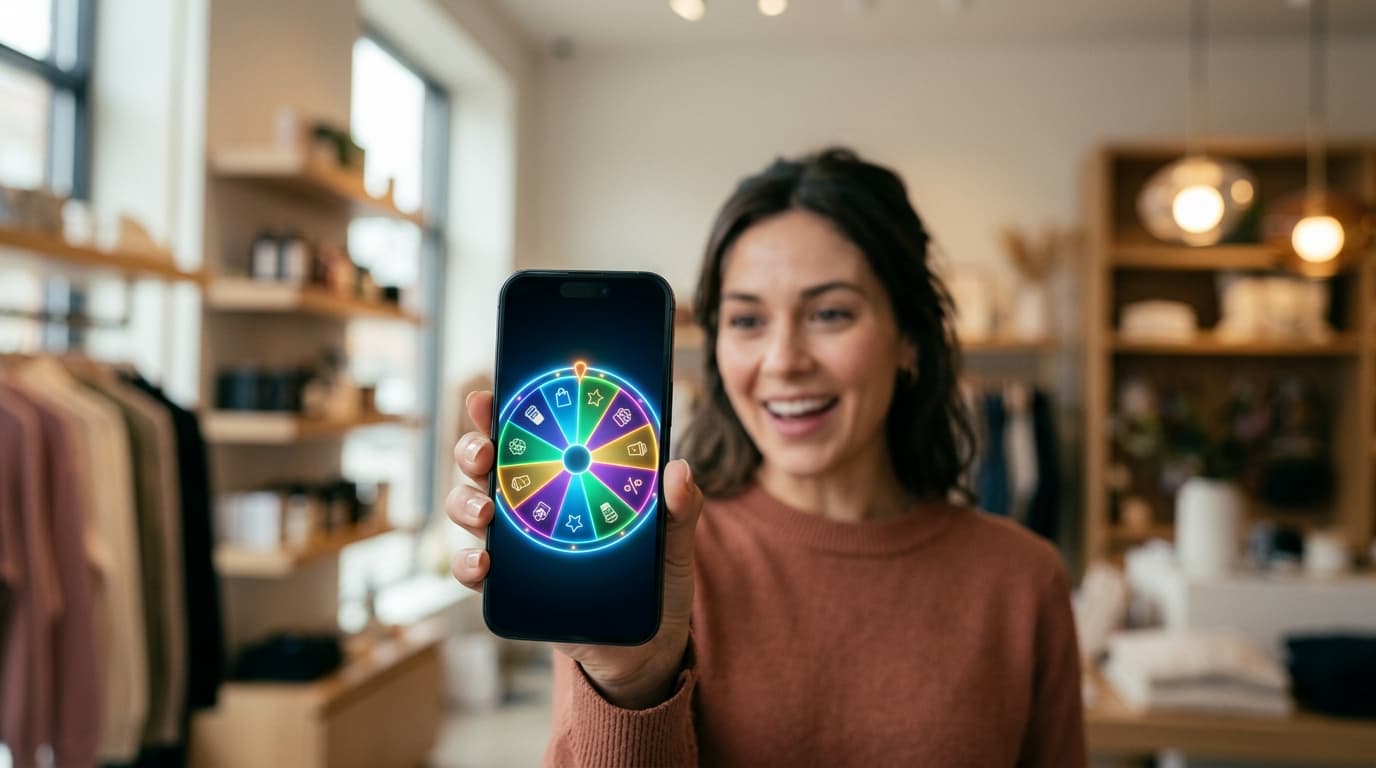
The gamified fortune wheel is fundamentally different from all the methods above. Instead of asking customers to do something for you, it offers them something in return: a chance to win. The customer spins a virtual wheel and discovers a prize — a discount, a free coffee, a dessert, a gift voucher — then leaves a Google review as part of the experience.
Estimated engagement rate: 35–60%
The psychology here is well-documented. Variable rewards — prizes where the exact outcome is unknown until the moment of reveal — trigger a dopamine response that makes participation feel exciting rather than obligatory. The customer isn't being asked to do you a favor; they're playing a game. The review is the entry ticket, not the entire point.
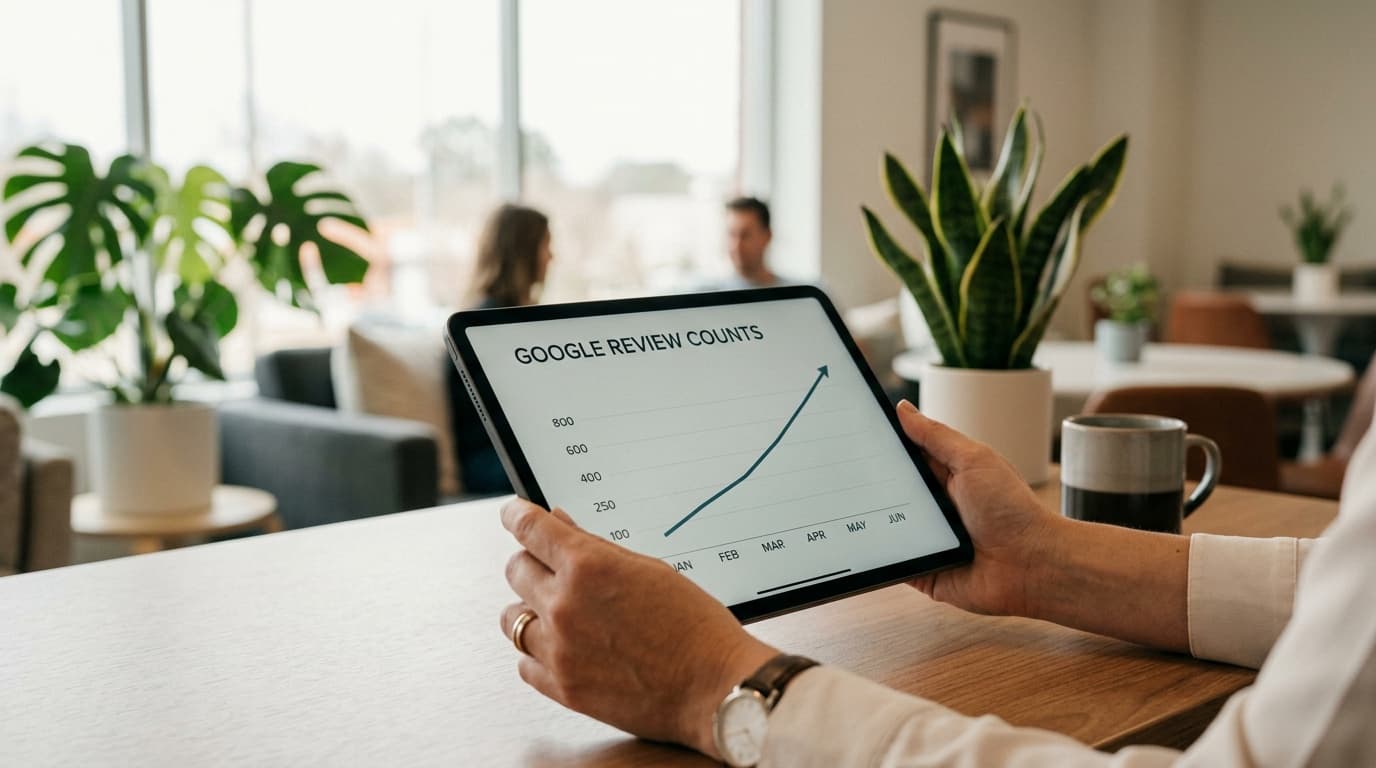
The results operators report are consistently striking. Businesses using a gamified review wheel report collecting three to five times more reviews per month compared to their previous methods. Review quality also improves: customers who just won something leave in a good mood, and that mood shows in what they write.
From a logistics standpoint, the fortune wheel is also one of the simplest methods to deploy. With a solution like Ludofy, the entire setup takes under ten minutes — a QR code that lives on your receipt, your checkout counter, or your table. No app download required for customers, no hardware beyond a QR code print.
Best suited for: Restaurants, cafés, retail stores, hotels, beauty salons, gyms — effectively any business with regular foot traffic and face-to-face customer interactions.
How to Choose the Right Combination for Your Business
No single method needs to operate in isolation. The most effective setups stack them: a permanent QR code stand at the counter as the baseline, an email follow-up for customers with reservations, and a gamified fortune wheel at the moment of payment to capture the highest-motivation window.
The single most important variable is timing. The closer you can get to the moment of peak satisfaction — when the customer is still physically present, still feeling good about their experience — the higher your conversion will be. An ask made at the table beats an email sent the next morning. A gamified moment right at checkout beats both.
If you're starting from zero, the fortune wheel is the fastest path to real results. It requires no customer data, no email list, no database — just a QR code and the right system behind it. You can build the rest of the stack as your customer database grows.
Build the System, Don't Chase the Reviews
Google reviews don't accumulate through luck or customer initiative. They accumulate through intentional systems that make the action easy, rewarding, and natural at the right moment.
Ludofy's gamified fortune wheel is designed exactly for this: a turnkey solution that deploys via QR code in under ten minutes, requires no app download, and consistently outperforms every other single collection method. Businesses across France are using it to triple their monthly review volume — and the setup takes less time than writing a reply to your next negative review. Try it free and see what gamification does for your reputation.