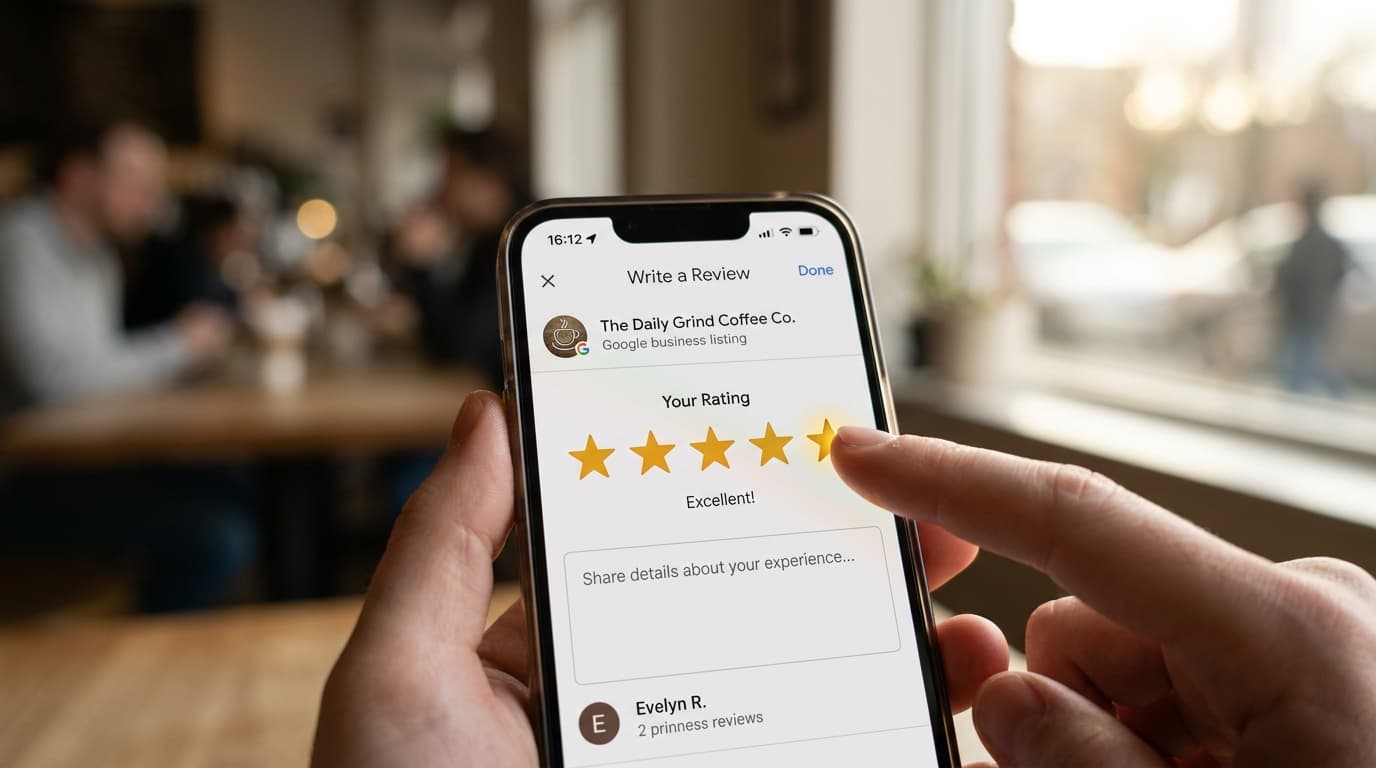
If you run a marketing agency serving local businesses, you already know the question your clients ask most often: "How do I get more Google reviews?"
It comes up in strategy calls, monthly check-ins, and — most painfully — in conversations where a client points to a competitor with twice as many reviews and asks why that happened on your watch. And yet, very few agencies have a structured, scalable service to actually answer it.
That gap is a real revenue opportunity. Here is how to close it.
Why Google Reviews Have Become an Agency Conversation
Google reviews are the primary ranking signal for local search. A restaurant with 60 reviews and a 4.2 rating loses customers every day to one with 300 reviews and a 4.7 rating, even if the food, pricing, and service are identical. The difference is not the business — it is the review count.
Local business owners understand this better than they used to. The question has shifted from "does this matter?" to "how do I fix it?" And when they ask that question, the first person they turn to is whoever manages their digital marketing.
Most agencies, when put on the spot, give one of three answers:
- "Ask your customers verbally at checkout" — low conversion, falls apart when staff are busy
- "We can add it to your email newsletter" — 5–8% click-through, minimal lift
- "We don't really handle reputation management" — honest, but disappointing
None of these answers earns a confident nod. All of them leave money on the table.
The Method That Actually Works
The most effective approach to collecting Google reviews is not email, SMS, or staff training — though these channels all help at the margins. The approach that consistently outperforms everything else is gamification at the point of experience: a QR code that gives customers a chance to spin a digital prize wheel immediately after they leave a review.
The mechanics are straightforward. A customer finishes their meal, treatment, or purchase. They see a tent card or counter display with a QR code. They scan it, leave a Google review, then spin the wheel and win a small prize — a discount on their next visit, a free item, a gift voucher. The whole process takes under two minutes.
Why does this outperform other channels?
The timing is optimal. The review request happens at peak satisfaction — right after the experience, while the customer is still on-site. This is when emotions are highest and the motivation to give something back is strongest.
There is an immediate personal incentive. Asking for a review without an incentive requires the customer to do you a favor. Adding a spin of the wheel — even for a modest prize — shifts the psychology. The customer wins something, and the review becomes a natural exchange rather than a favor asked.
Conversion rates are dramatically higher. A verbal ask at checkout converts 2–5% of customers at best. A QR code prize wheel consistently achieves 15–30%. For a restaurant serving 150 covers a day, that is the difference between 3 new reviews per week and 30.
How to Package This as a Retainer
Agencies are well positioned to deliver this service because they already have client relationships, billing infrastructure, and the ability to configure and monitor campaigns at scale.
Here is a three-tier packaging model that works in practice:
Starter (€99–150/month per client)
- Campaign setup and configuration of the QR code prize wheel
- Branded digital assets: table tent templates, counter cards, and poster designs
- Monthly performance report showing review count, conversion rate, and prize redemptions
- Target margin: 50%+ over wholesale software cost
Growth (€200–350/month per client)
- Everything in Starter
- Review response templates for positive, neutral, and negative reviews
- Quarterly review of prize strategy and conversion performance
- Optional integration with existing loyalty or CRM systems
- Target margin: 55–65% depending on team time invested
Multi-Location (€400–700/month per group)
- Unified campaign management across 3–20 locations
- Location-by-location performance benchmarking
- Network-wide prize campaign calendar
- Ideal for franchise groups and businesses with multiple sites
Pricing principle: Never resell at cost. Your agency's value is strategy, setup, ongoing management, and accountability — charge for that. Local business owners do not want to manage software. They want results and someone responsible for delivering them.
The Client Pitch
Most agencies pitch reputation management by leading with features. Do not. Lead with the problem the client already feels.
Try this framing:
"Right now, your Google review count is what determines whether a customer picks you or the business next door. We've been helping you rank better — but the review gap is something we can close directly. Here is what that looks like."
Then show a before-and-after example. A client that went from 80 to 220 reviews in 90 days is your most powerful sales tool. If you do not have a case study yet, run a pilot with your most engaged client at cost, document the results carefully, and use that as your proof point for the next five pitches.
One framing that resonates particularly well with local business owners who have already invested in SEO: "We can get you ranking better on Google Maps — but if the reviews aren't there to back it up, our SEO work hits a ceiling. This is what removes that ceiling."
Choosing the Right White-Label Platform
Not all review collection platforms are built for agency use. When evaluating options, look for:
Multi-client management. Running campaigns for 15 clients from one dashboard is very different from managing 15 separate logins. Proper agency infrastructure handles this from day one.
Custom branding. The prize wheel interface and all physical assets should carry your client's brand — not the software vendor's name. Your client should feel like they own the experience.
Agency-tier pricing. Look for a platform that offers genuine wholesale pricing — typically 40–50% below retail — so you can build sustainable margins into your packages without pricing clients out of the market.
Reliable reporting. You need to walk into every monthly call with data. Review volume, conversion rate, prize redemptions — these are the metrics that demonstrate clear value and justify the retainer renewal.
Ludofy was built with agency workflows in mind. The platform offers a white-label QR code prize wheel, a multi-client management dashboard, and a partner pricing structure that gives agencies the margin they need to build a profitable offering without writing a line of code.
A 90-Day Launch Plan
You do not need to overhaul your service menu on day one.
Month 1: Pilot with two or three existing clients who already raise Google reviews as a concern. Offer it at a reduced introductory rate in exchange for a documented case study. Measure everything: review count before, review count after, conversion rate, client satisfaction.
Month 2: Formalize your pricing and create a single-page service overview. Add it to your retainer menu and to any proposals going out to new clients.
Month 3: Audit every current client. Any client with fewer than 100 Google reviews or a rating below 4.3 is a pitch candidate. Lead with your pilot results as social proof.
Most agencies find that the first success story accelerates everything that follows. A client who doubles their review count in 60 days does not need convincing to keep the service — and neither do the prospects who hear about it.
The Case Beyond the Retainer
The argument for building this service goes beyond the monthly recurring revenue. When your agency owns a client's review strategy and it is visibly working, you become structurally difficult to replace. Switching agencies means handing over a core piece of their local search foundation — a switching cost most business owners are not willing to pay.
Review collection is also a data business. A well-run campaign builds a customer contact database over time — people who opted in through the prize mechanic. That database opens up SMS marketing, loyalty campaigns, and retargeting opportunities. Each of these is an additional service you can layer on later.
The agencies that will lead local marketing over the next few years are not necessarily the ones producing the most content or running the most ad spend. They are the ones who have embedded themselves into the operational infrastructure of their clients' businesses. Review collection is one of the clearest, most measurable paths to getting there.