The Loyalty Paradox: Your Best Customers Stay Silent
Think about the customers who come back to your restaurant every week, recommend you to friends without being asked, and never complain. These are the people who genuinely love your business. Yet if you look at your Google profile right now, chances are they haven't written a single review.
This is the loyalty paradox: your most satisfied customers are often your least vocal ones online. New visitors, motivated by the novelty of discovering somewhere new, are far more likely to leave a review after a first experience than a regular who has been coming to your table for two years and simply assumes you already know how much they love it.
The result? Your Google profile ends up reflecting the opinions of occasional visitors rather than the enthusiastic regulars who form the real backbone of your business. That skewed picture costs you new customers every day.
Why Loyal Customers Make Better Reviewers
Before getting into solutions, it's worth understanding why loyal customers make more valuable reviewers than one-time visitors.
Depth of experience. A regular who has visited your bistro fifteen times can speak to consistency, seasonal menu changes, and the warmth of being recognized by name. That kind of nuanced, specific review is far more convincing to prospective customers than a generic "great food, nice atmosphere."
Credibility signals. Review platforms and search algorithms can detect quality patterns. Reviews from customers who visit repeatedly, who have their own established review history, and who write detailed, specific observations carry more algorithmic weight than a cluster of brief, first-visit impressions.
Word-of-mouth amplification. The loyal customer who leaves a review is also the person most likely to share it with their network, tag your business on social media, or recommend you in conversation. The written review becomes a launchpad for broader advocacy that money can't buy.
The business case is clear: if you want reviews that genuinely build your reputation, you want them from regulars. The challenge is converting what those regulars already feel into the 90 seconds of action it takes to write it down.
The Gap Between Satisfaction and Action
Customer satisfaction research consistently shows that the gap between "I had a great experience" and "I left a review" is enormous. Across hospitality and retail, fewer than 5% of satisfied customers spontaneously leave a positive review, while dissatisfied customers are two to three times more likely to post something publicly.
This isn't because your regulars don't care. It's because leaving a review requires three things that satisfaction alone doesn't provide:
- A trigger — most people think of writing a review in the moment, then forget by the time they're home
- A frictionless path — many customers don't know your exact Google Business Profile URL and won't go searching for it
- A reason beyond goodwill — even ten extra seconds of friction is enough to break the impulse
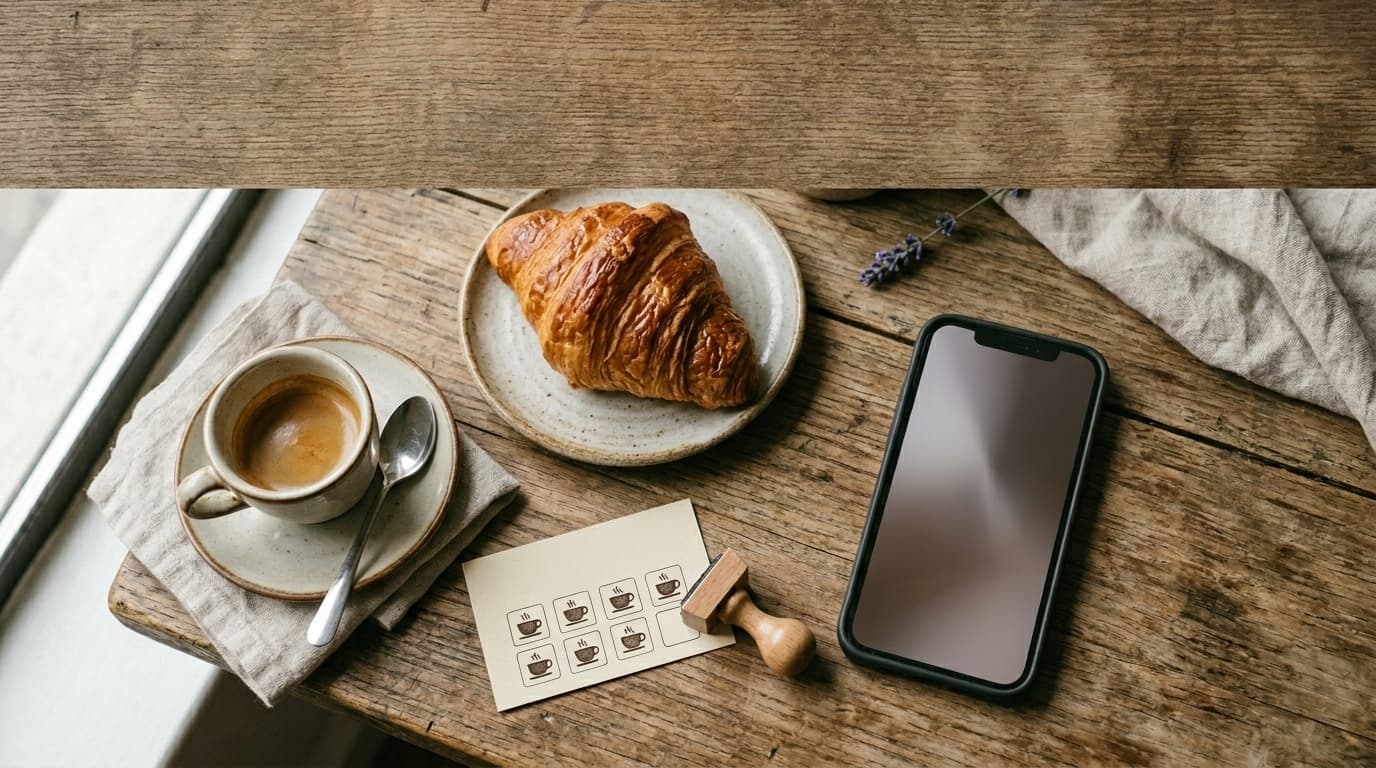
Traditional loyalty programs — stamp cards, points systems, birthday discounts — are excellent at driving repeat visits, but they do nothing to close this gap. They reward the act of returning. They don't reward the act of sharing.
Gamification as the Bridge
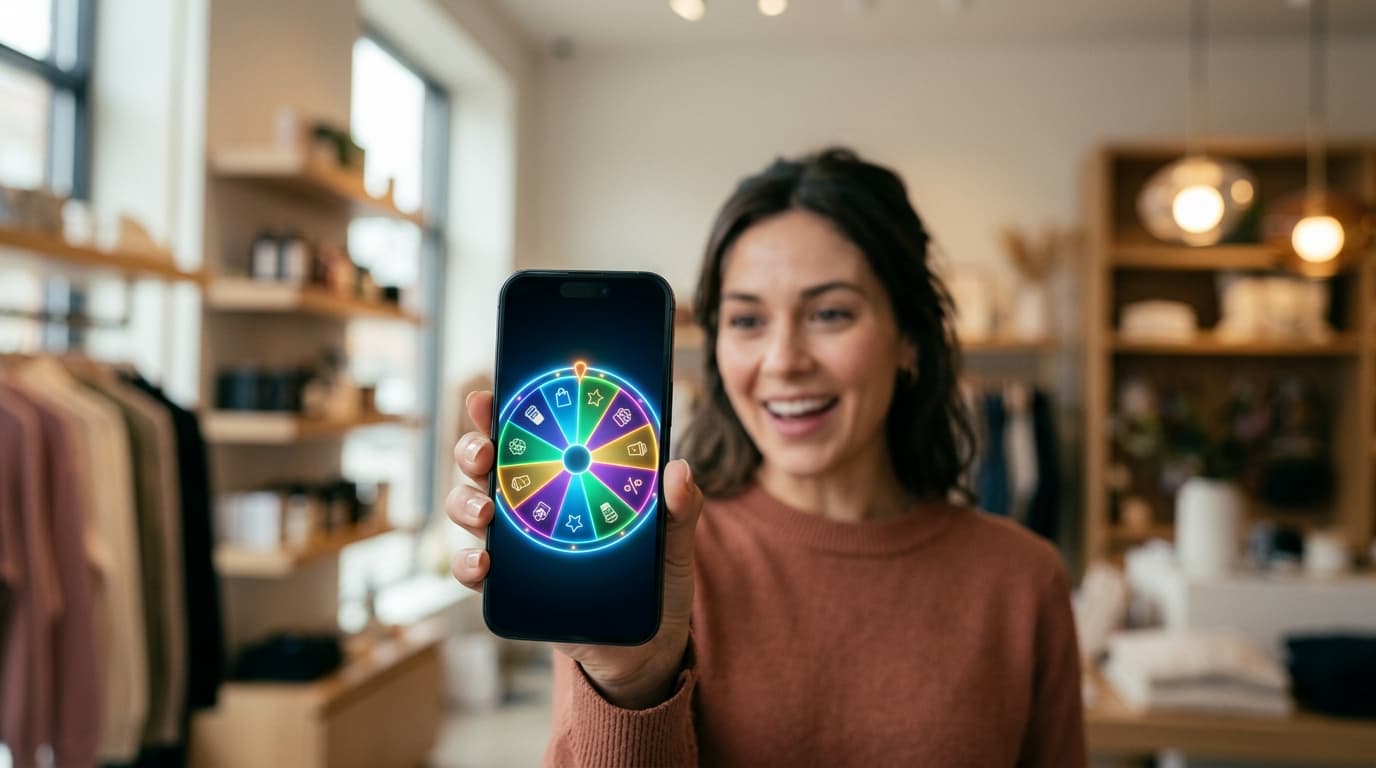
This is where gamification changes the equation entirely. Instead of asking customers to leave a review as an act of generosity, gamification turns it into a moment of play with an immediate, tangible reward.
Here's how a well-designed system works in practice:
Step 1: The moment of delight. After paying their bill or finishing a service, your customer scans a QR code — at the table, the counter, or the checkout. They're immediately presented with a digital fortune wheel: colorful, fast, and fun.
Step 2: Earn the spin. To activate the wheel, the customer completes a micro-action: leaving a Google review. This isn't phrased as a demand. It's framed as "unlock your prize." The review is the key, not an obligation.
Step 3: Instant reward. After submitting the review and returning to the screen, the wheel spins. They win a reward — a discount on their next visit, a free item, a complimentary upgrade, whatever fits your business model. The prize is delivered immediately, not deferred.
Step 4: Loyalty loop activated. The reward gives them a reason to return. When they come back, they're already part of your loyal base — and the next time they encounter the QR code, the cycle reinforces itself.
The power of this approach isn't just the reviews it generates on day one. It's the feedback loop it creates between loyalty and advocacy. Regulars become reviewers, reviewers become more loyal, and the whole system compounds over time.
Building Your Flywheel: Practical Setup
Getting this running doesn't require a complicated setup or weeks of staff training. Here's a practical framework:
Define your reward. Match the prize to your margins and to what feels genuinely valuable to your customers. A 10% discount on a return visit costs less than the customer is likely to spend when they return, and it guarantees another booking. A free appetizer or coffee works well in hospitality. Salons often do well with a complimentary add-on service. The reward should feel worth a 90-second review — not transactional, but genuinely fun to receive.
Place QR codes at the right moment. The optimal trigger is immediately after the positive experience — at bill payment in a restaurant, at checkout in a retail store, after a service is completed in a salon or spa. Avoid placing QR codes only at the entrance, where customers haven't yet formed their opinion.
Remove every click of friction. Your QR code should open directly to your Google review form, pre-loaded and ready to type. Every additional tap reduces completion rates by roughly 15–20%. The path from scan to submitted review should take under two minutes.
Verbal reinforcement doubles results. Train staff to mention the QR code naturally: "If you'd like to try your luck on the wheel, there's a QR code on the receipt — just leave us a quick review to spin." Businesses that add this single verbal prompt consistently see scan rates double compared to silent QR codes.
Rotate prizes seasonally. Static prize menus lose novelty. Changing rewards with the season — a warm drink in winter, an ice cream in summer, a themed offer for Valentine's Day — gives regulars a fresh reason to participate again and again.
Measuring the Flywheel in Motion
Once live, four metrics tell you whether the system is working:
- Review velocity — new Google reviews per week. This is your primary growth signal.
- Average rating trend — is your score stable or climbing? A rising score directly correlates with higher conversion of new profile visitors into actual customers.
- QR scan-to-review conversion — what percentage of customers who scan actually complete a review? Above 30% is strong; below 15% suggests friction in the review link, the prize appeal, or staff communication.
- Return visit rate among reviewers — do customers who spin the wheel come back? Track this through redemption of reward codes. A high return rate confirms the loyalty loop is working as intended, not just generating one-time reviews.
Most businesses that implement this approach see meaningful review acceleration within two to three weeks. By the 60-day mark, many have doubled or tripled their review count. Because those reviews come from genuine regulars, both the rating distribution and the richness of language tend to be significantly better than businesses relying on passive review generation.
From Loyal Customers to Online Reputation Builders
Your loyalty program is already doing the hard work of keeping customers coming back. The missing piece is a mechanism that converts that loyalty into visible, public advocacy at scale.
Ludofy is built around exactly this connection: a simple, gamified QR code experience that makes leaving a Google review feel rewarding rather than obligatory. No complex software overhaul, no lengthy staff training — just a well-placed QR code and a fortune wheel that turns your most loyal customers into the online ambassadors they already are in real life.
If you've spent years building customer loyalty and watched your Google review count stagnate, this is the lever you've been missing. The customers you need to hear from are already there. You just need to give them a reason to speak up.