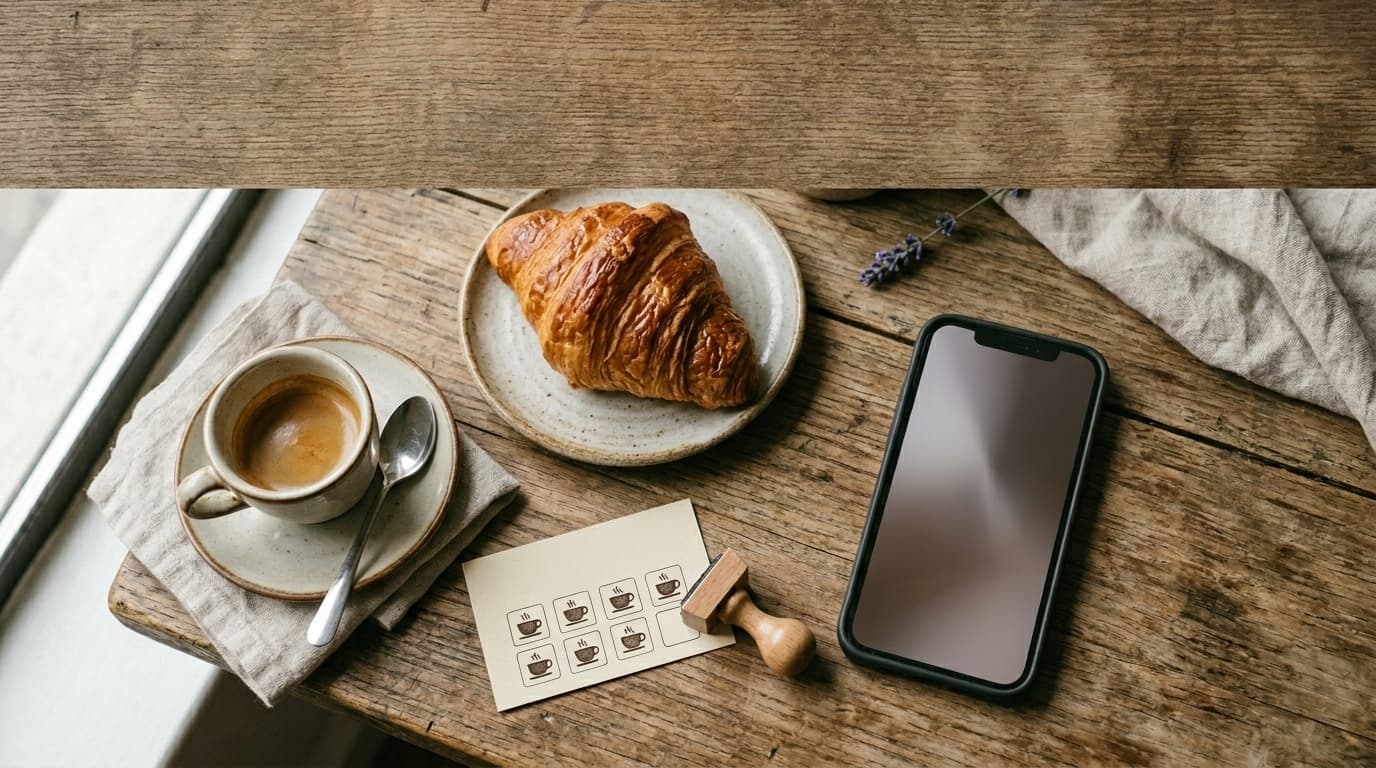
Walk into any independent coffee shop and you'll find them: dog-eared punch cards rattling around at the bottom of wallets, half-stamped loyalty cards tucked behind credit cards, forgotten program memberships nobody has used in months.
Traditional loyalty programs were designed for a world where scarcity was the problem. Ten stamps gets you a free drink — and the implicit message is that earning something takes effort and time. But in a market where customers have dozens of alternatives within walking distance, the last thing a business should do is make loyalty feel like homework.
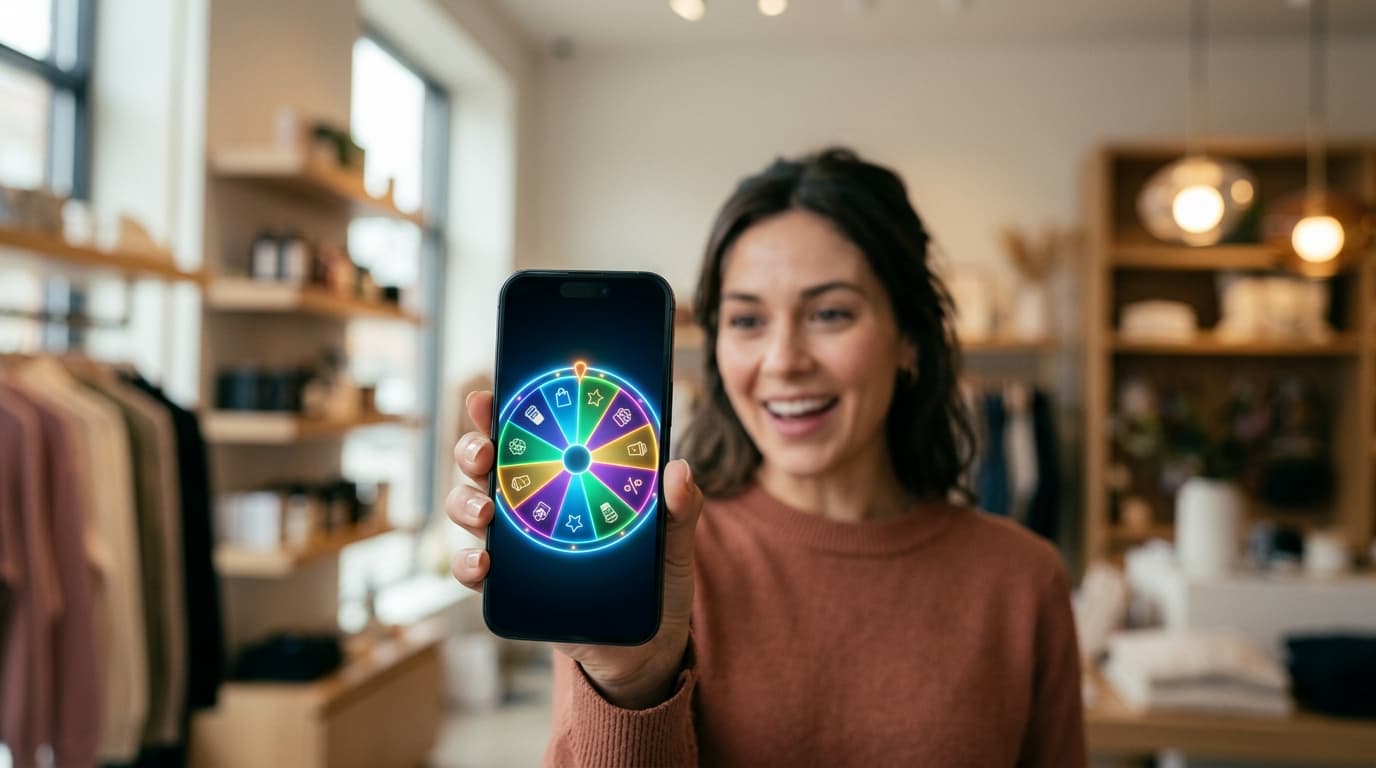
The fortune wheel mechanic flips this dynamic. Instead of delayed gratification, it offers instant excitement. Instead of a passive stamp, it creates an active moment. And instead of a paper card that gets lost, it lives on a smartphone — exactly where your customer already is.
Why punch cards plateau
Let's be honest about what punch cards actually do.
At their best, they create a mild habituation loop — the same psychology behind supermarket and airline loyalty programs. Visit enough times, get something. The problem is that "enough" feels distant, and the reward at the end isn't personalized, surprising, or memorable.
Research from Bain & Company puts the cost of acquiring a new customer at 5x the cost of retaining an existing one. Despite this, most small business owners spend the bulk of their marketing budgets on acquisition — Facebook ads, Google Ads, seasonal promotions — and treat retention as an afterthought handled by a card in a drawer.
The average punch card program drives roughly an 18% increase in repeat visits. That's a real number, and it's better than nothing. But a well-configured fortune wheel deployment consistently achieves 1 in 5 players returning within 10 days — with the added benefit of generating Google reviews, social follows, or email captures in the same transaction.
What the fortune wheel does differently
The mechanics of a fortune wheel work because they tap into three psychological principles that punch cards ignore entirely.
Variable reward
Neuroscience has shown consistently that uncertainty of reward activates dopamine pathways more strongly than certainty. A punch card says "do X, get Y." A fortune wheel says "do X, find out what you get." That unknown creates genuine anticipation — the kind that makes a customer smile as they pull out their phone. The excitement begins before the wheel even stops spinning.
Active participation
Spinning a wheel requires a physical action. This shifts the customer from passive recipient to active participant. Behavioral economics refers to this as the "endowment effect": once someone has done something to earn a reward, they value it more. The act of spinning creates a sense of ownership before the prize is even revealed.
Immediate closure
Every spin ends with a result, right now. There's no waiting until the tenth visit. This provides instant positive reinforcement — which is far stronger at shaping future behavior than delayed reinforcement. The customer leaves having won something, which creates a positive memory of the visit and a reason to return.
Building a wheel that drives return visits
Not all fortune wheel implementations are equal. The difference between a wheel that generates one-off interest and one that builds genuine loyalty comes down to three design decisions.
Prize structure matters more than prize value
The most effective prizes are future-visit incentives, not immediate gratifications. A "free coffee on your next visit" creates a reason to come back. A 10% discount applied right now doesn't. When operators configure wheels for loyalty — not just for review collection — they lean heavily toward prizes that expire in 7 to 14 days. Short enough to create urgency, long enough to be convenient.
A counter-intuitive finding: modest prizes tied to a return visit outperform high-value prizes redeemable immediately. A €3 coffee voucher for next time drives more return visits than a €10 on-the-spot discount.
The action gate determines what you get back
Before the wheel spins, the customer is asked to complete one action: leave a Google review, follow on Instagram, or confirm their email address. This isn't friction — it's a value exchange. The customer trades 30 seconds of attention for a chance at a prize. The business trades a prize for a review, a follower, or a contact.
When the gate is clearly communicated — "Spin to win — just leave us a quick Google review first" — opt-in rates consistently exceed 20%. When the gate is hidden or unclear, participation drops sharply.
Follow-up is where loyalty is actually built
A customer who wins a "free dessert on your next visit" has a reason to return. But a customer who receives a message three days later saying "Your free dessert expires in 4 days — we'd love to see you again" is far more likely to actually walk back through the door.
Automated follow-up — a simple SMS or email — is the mechanism that turns a game into a loyalty system. Without it, the wheel is entertainment. With it, it's a retention engine.
Integrating without disrupting your team
One of the most common objections from restaurant and café operators is that any new system creates work for staff. That's a fair concern — but the fortune wheel model is specifically designed to be staff-independent.
The QR code does the work. Placed at the point of sale — on a table tent, a receipt insert, or a counter display — it prompts the customer without requiring any explanation from the team. The customer scans, plays, wins, and leaves. The operator sees the data in a dashboard. No one had to pitch, explain, or follow up in real time.
That said, a brief mention from staff — "feel free to spin the wheel on your way out" — increases scan rates meaningfully without requiring a formal script. One sentence is enough.
Placement matters. The QR code needs to be visible at the exact moment the customer is settling up, not at the entrance or on a distant wall. A counter stand or a printed insert in the check folder performs best.
What good metrics look like
A fortune wheel deployment, unlike a punch card, generates real-time data. Here's what to watch:
- Scan rate: the percentage of paying customers who engage with the QR code
- Spin rate: of those who scan, how many complete a spin
- Redemption rate: how many winners actually claim their prize — high redemption signals both compelling prizes and real return visits
- Review volume: directly trackable if review collection is gated before the spin
- Return interval: with contact data captured, you can measure whether the average time between visits shortens after deployment
The benchmark that matters most for most operators is the return interval. If customers with fortune wheel exposure visit 20% more frequently than customers without it, the program is paying for itself many times over — in reduced acquisition spend alone.
If the scan rate is low, the QR code placement needs adjusting. If redemption is low, the prizes aren't compelling. If reviews are climbing but return visits aren't, the follow-up sequence is missing.
How Ludofy handles the setup
Ludofy is built specifically for physical businesses — restaurants, cafés, retail shops, salons — that want to generate Google reviews and drive repeat visits through the fortune wheel mechanic.
Setup takes minutes: configure your prizes, set your action gate (review request, Instagram follow, or email capture), download your QR code, and place it at the point of sale. The platform handles the game flow, prize delivery, and automated follow-up messaging. Analytics are broken down by location, so multi-site operators can see where the mechanic is performing and where configuration needs adjusting.
The shift from a punch card to a fortune wheel isn't just a technology upgrade — it's a fundamentally different theory of how loyalty is built. Customers don't come back because they're obligated to. They come back because they remember that last visit, and they're curious what the wheel has in store next time.