An artisan butcher shop has something most businesses can only dream of: deeply loyal customers who return week after week, year after year, and trust you with the centerpiece of their family meals. Yet that loyalty rarely translates into Google reviews. The result is a widening gap between the real quality of your shop and your online visibility — one that a newer, less personal competitor next door can easily exploit with a simple review campaign.
If you run a butcher shop or artisan meat market, this guide will show you how to close that gap and build a Google review strategy that feels natural for both your customers and your team.
Why Google Reviews Matter More Than Ever for Butcher Shops
When someone moves to a new neighborhood, visits a market town on a weekend trip, or needs something special for a dinner party, their first move is to open Google Maps and search. What they find — your star rating, your review count, and the content of recent comments — determines whether they walk through your door.
A few numbers that put this into context:
- Businesses in the Google Local Pack (the top three results shown beneath the map) capture the vast majority of local search clicks. Review count and recency are among the key signals that earn you a spot there.
- A shop with 150 reviews at 4.7 stars consistently outranks a competitor with 8 reviews at 4.9. Volume and consistency matter as much as the score itself.
- Google weighs recent reviews heavily. A review from last week is worth more to your ranking than one from eighteen months ago.
For an artisan butcher, this creates both a problem and an opportunity. The problem: your most loyal customers are also your most habitual ones — they don't stop to think about leaving a review because visiting you is second nature. The opportunity: when you ask at the right moment, in the right way, they almost always say yes.
The Best Moments to Ask for a Google Review at a Butcher Shop
Timing matters enormously. The ideal moment to ask is when a customer's satisfaction is at its peak — not the next day, when the experience has faded into routine.
At the counter during checkout
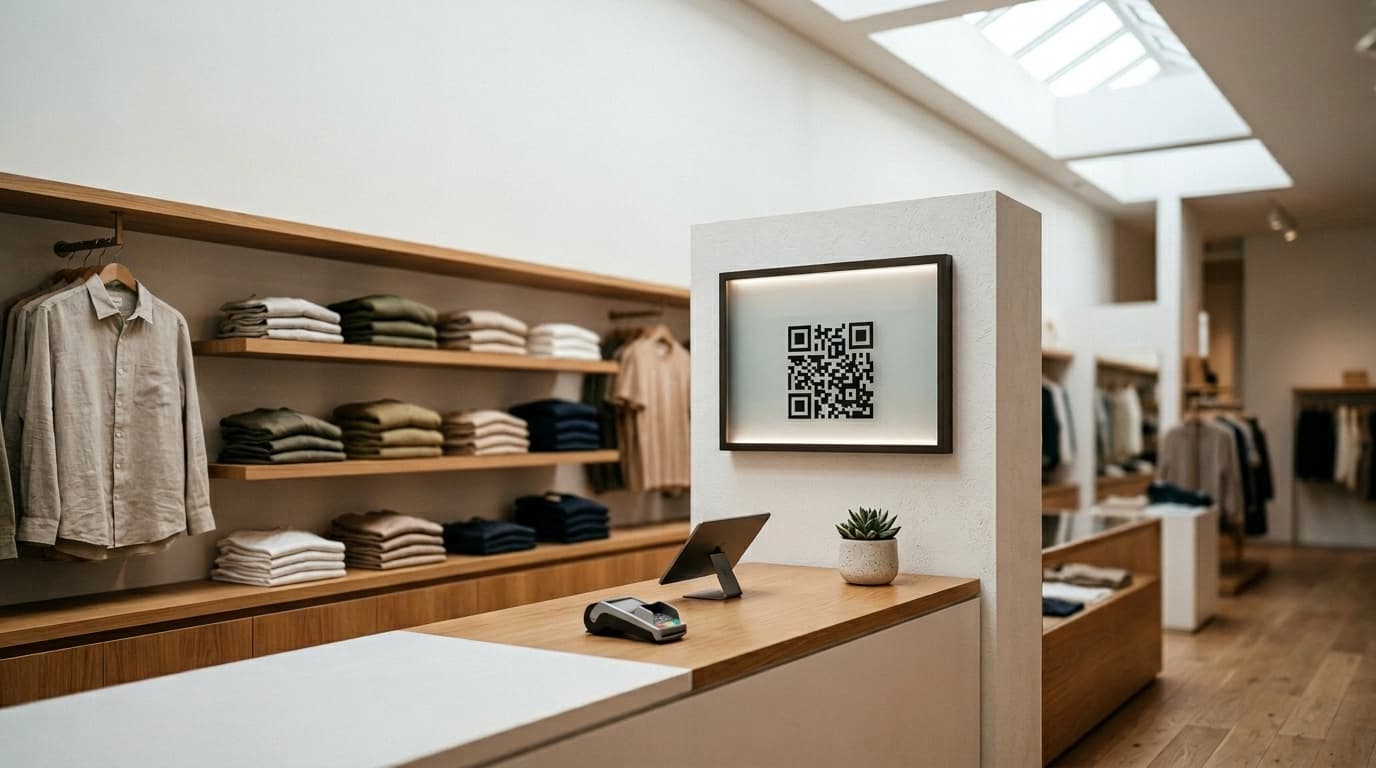
This is the highest-converting moment in any butcher shop. Your customer just received a beautiful cut, got a cooking tip, and is satisfied before they've even left the building. A QR code on the counter, right next to the card terminal, makes the next step obvious. A short verbal prompt from your staff doubles the conversion rate:
"If you enjoyed the service today, we'd really appreciate a Google review — the QR code is right there."
After a special or large order
A Christmas joint, a whole lamb for a garden party, a charcuterie spread for a corporate event — these are memorable purchases that generate stories customers want to share. A short follow-up message the next day via WhatsApp or SMS, with a direct link to your Google review form, captures that satisfaction while the meal is still a talking point.
Following expert advice
One of the things customers value most about artisan butchers is the knowledge — which cut for a slow braise, how to dry-age at home, what to ask for when the recipe says "braising steak." When a customer has just received that kind of guidance, they're naturally primed to talk about it. Encourage them: "That kind of advice is exactly what people look for in our reviews — feel free to mention it."
QR Code Placement: Where It Works Best in a Butcher Shop
A QR code linked directly to your Google review page is the simplest tool in your arsenal. The difference between a QR code that gets scanned and one that gets ignored comes down almost entirely to placement.
On the counter: A small tabletop stand at eye level, positioned next to the register. Customers see it naturally while their card processes or while you're wrapping their order — a built-in pause moment.
On your packaging: A sticker on your butcher paper, vacuum-sealed bags, or takeaway boxes extends the invitation past the shop door. Customers who intended to leave a review but forgot are reminded the moment they open their fridge at home.
On your shopfront window or door: A small vinyl decal visible from the street reminds regular customers who didn't stop that day — and signals to curious passersby that this is a shop others value enough to review.
On order forms and receipts: For pre-orders and event catering, include the QR code at the bottom of the order form or printed receipt. Customers see it at the moment of collection, when enthusiasm and gratitude are highest.
Gamification: Making the Review Ask Feel Natural — Even Fun
Many butchers hesitate to ask for reviews because it feels uncomfortable, like asking for a personal favor. Gamification removes that friction by turning the exchange into something the customer wants to participate in.
The mechanic is straightforward: after leaving a Google review, the customer scans a QR code and spins a digital fortune wheel on their smartphone to win a prize — a discount on their next purchase, a complimentary sausage, a store credit, or a free cut of the week. The reward is instant, visible, and gives the customer a reason to come back.
The results for shops that implement this approach are consistent:
- 3 to 5 times higher review conversion compared to a plain QR code with no incentive
- Increased repeat visits — the prize creates a concrete reason to return and redeem
- Organic word-of-mouth — customers tell people about the experience ("you can actually win things at the butcher's!")
This is the mechanic at the heart of Ludofy: a plug-and-play digital fortune wheel solution that any shop can deploy in minutes, without any technical knowledge or dedicated staff training.
What Your Customers Actually Write About (and How to Encourage the Best Reviews)
Reviews on butcher shops tend to focus on specific themes that differ from restaurant or café reviews. Understanding what your customers write about helps you prime them to write better, more useful reviews — without ghostwriting for them.
The most common themes:
- Product quality and freshness ("the beef is always perfectly butchered, never disappointed")
- Expert service and advice ("they explained how to cook the topside — absolutely nailed it")
- Provenance and traceability ("local farm, they know where everything comes from")
- Atmosphere and tradition ("a proper old-school butcher, the way it used to be")
You can seed these themes naturally during service. When recommending a cut, mention the farm or the breed it came from. When a customer asks about cooking, give them a specific tip they'll remember and want to share. You're not writing their review — you're giving them something worth writing about.
Responding to Reviews: The Signal Google Is Watching
Google doesn't just count how many reviews you receive — it tracks how actively you manage them. Shops that respond to every review, positive and negative, are treated as more engaged and more deserving of visibility in local search results.
For positive reviews, keep responses personal and brief:
"Thank you — the dry-aged ribeye is a real favourite of ours too. See you next week!"
For negative reviews, which even the best butchers receive occasionally, stay calm and offer a path to resolution:
"We're sorry to hear the order didn't meet your expectations. Please do come in or give us a call — we'd like to make it right."
Prospective customers reading these exchanges make judgments about your character as a business owner. A butcher who engages thoughtfully with criticism inspires more trust than one with a perfect score and no responses at all.
Building a Review Rhythm That Actually Sticks
The most common mistake is treating reviews as a one-off campaign — launching a push around a shop refurbishment or a slow period, then forgetting about it. Google rewards consistency, not bursts.
A realistic weekly routine for a butcher shop:
- Monday: Reply to any reviews received over the weekend. This takes less than ten minutes and keeps your response time short.
- Thursday through Saturday (your busiest trading days): Ensure the QR code is prominently displayed on the counter and that your staff are comfortable mentioning it.
- Before major food holidays (Christmas, Easter, summer barbecue season, Thanksgiving): Activate a WhatsApp or SMS message to your regular customer list with a direct review link and a short personal note.
At a steady pace of two to four reviews per week, a butcher shop can add one hundred to two hundred reviews over the course of a year — transforming its presence on Google Maps without spending a single pound or euro on paid advertising.
The Competitive Edge You May Already Be Missing
If you're not actively collecting reviews, someone else is filling that gap. The supermarket deli counter, the newer butcher who just opened on the high street — they may not have your craft, your relationships, or your sourcing. But if they have two hundred reviews and you have twenty, they win the Google search.
Your regulars are your strongest competitive asset. They already believe in what you do. They've told their friends, their neighbors, their colleagues. All they need is a nudge, the right moment, and an easy way to share what they already think.
Ludofy makes that nudge seamless: a QR code, a digital fortune wheel, and an automatic review flow that turns your most satisfied customers into your most visible advocates — with no technical overhead and no long-term commitment required.
Your butcher shop has been building its reputation one cut at a time, one customer at a time. It's time that reputation reached every person searching Google in your area.