Aesthetic clinics occupy a unique position in the local business landscape. The decision to trust someone with your face or body is deeply personal — and high-stakes. When a prospective patient searches "lip filler near me" or "laser treatment clinic [city]," they don't just glance at your rating. They read. They compare. They look for signals that tell them you are the safe choice.
Your Google Reviews are that signal. And unlike a restaurant or retail shop, getting them in a way that feels natural and appropriate for your sector requires a considered strategy.
Why Google Reviews Are Non-Negotiable for Aesthetic Practices
Aesthetic treatments are high-consideration purchases. A disappointing haircut grows back. A botched filler or poorly calibrated laser treatment does not resolve in a week. This asymmetry of perceived risk drives prospective clients to do far more research before booking than they would for most other services.
The consequence: the vast majority of new patients booking with you for the first time have already vetted you through your online reviews. A rating below 4.5 stars in your sector creates near-instant hesitation. A clinic sitting at 4.8 stars across 150 recent reviews communicates trust, competence, and care — all before a single phone call.
Reviews also directly influence your local search ranking. Google's algorithm favors businesses with frequent, varied, and recent reviews. For search terms like "anti-aging clinic," "botox injections," or "PRP facial treatment," the practices appearing in the top three map results consistently have more reviews than their competitors — often regardless of how long they have been open.
The Privacy Challenge: Asking Without Overstepping
Here is where aesthetic clinics differ fundamentally from other local businesses. Many of your clients are delighted with their results but would prefer those results remain private. The person who enjoyed a deeply relaxing massage will happily say so online. The person who had a rhinoplasty correction or a course of acne laser treatments may feel very differently about broadcasting that publicly.
This is not reluctance — it is a reasonable boundary you must respect. The good news is that you do not need clients to disclose their treatment. You need them to share their experience.
Reframe how your team asks for reviews. Instead of "Would you leave us a review about your treatment?", train your staff to say: "If you're happy with how we looked after you today — the welcome, the atmosphere, the way we listened to you — we'd really appreciate it if you shared that online. It helps people like you make the right choice."
This framing invites a review about the experience rather than the procedure. Some clients will volunteer what they had done. Most will write warmly about your team, your clinic's cleanliness, and how valued they felt. Those reviews are every bit as persuasive as detailed treatment accounts — and they protect your clients' privacy.
Timing the Ask: Let Results Do the Talking
Unlike a coffee shop where the experience completes the moment the cup is empty, aesthetic treatments have a timeline. Swelling fades. Pigmentation evens. Results from laser sessions accumulate. Asking for a review at checkout — before results are visible — is asking your client to evaluate something incomplete.
The optimal window for most aesthetic treatments is five to ten days post-appointment. At that point, your client has seen the results, recovery discomfort has passed, and they are at peak satisfaction. A well-crafted follow-up message that starts by checking in — "How are you feeling after your treatment? Any questions?" — and ends with a gentle invitation to share their experience generates a far higher response rate than a checkout-counter request.
This follow-up serves a second function: it demonstrates that your care extends beyond the appointment. That attention is what prompts clients to write detailed, enthusiastic reviews rather than a quick three-word comment.
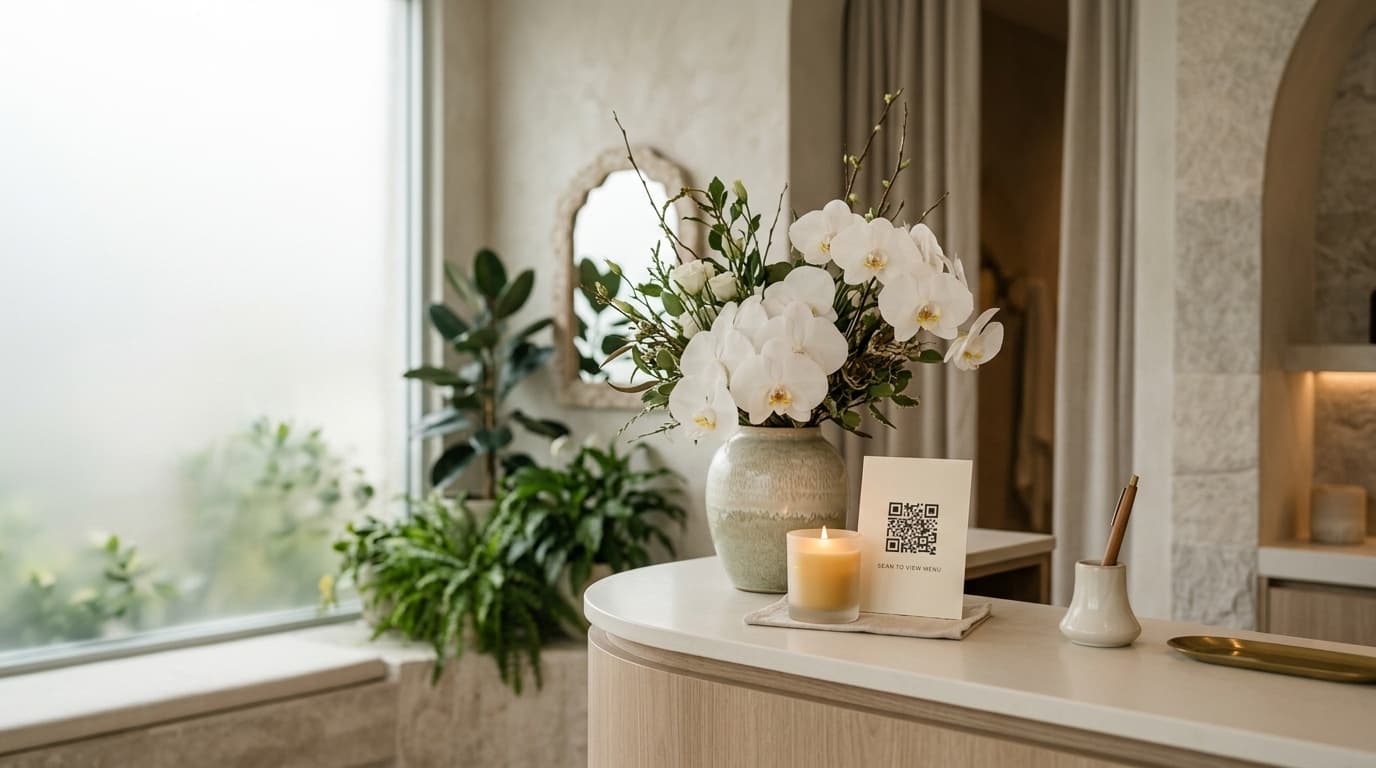
For treatments with immediate visible results — signature facials, microdermabrasion, express peel sessions — asking at checkout is appropriate. A discreet QR code card handed alongside the aftercare instructions is all you need.
QR Codes and Gamification: Matching Your Clinic's Premium Experience
Not all QR code implementations are equal. A printed sheet taped to the reception desk sends the wrong signal for a premium aesthetic practice. But a beautifully designed card in your brand palette, placed at the checkout or tucked into a branded envelope with aftercare products, is consistent with the experience you deliver.
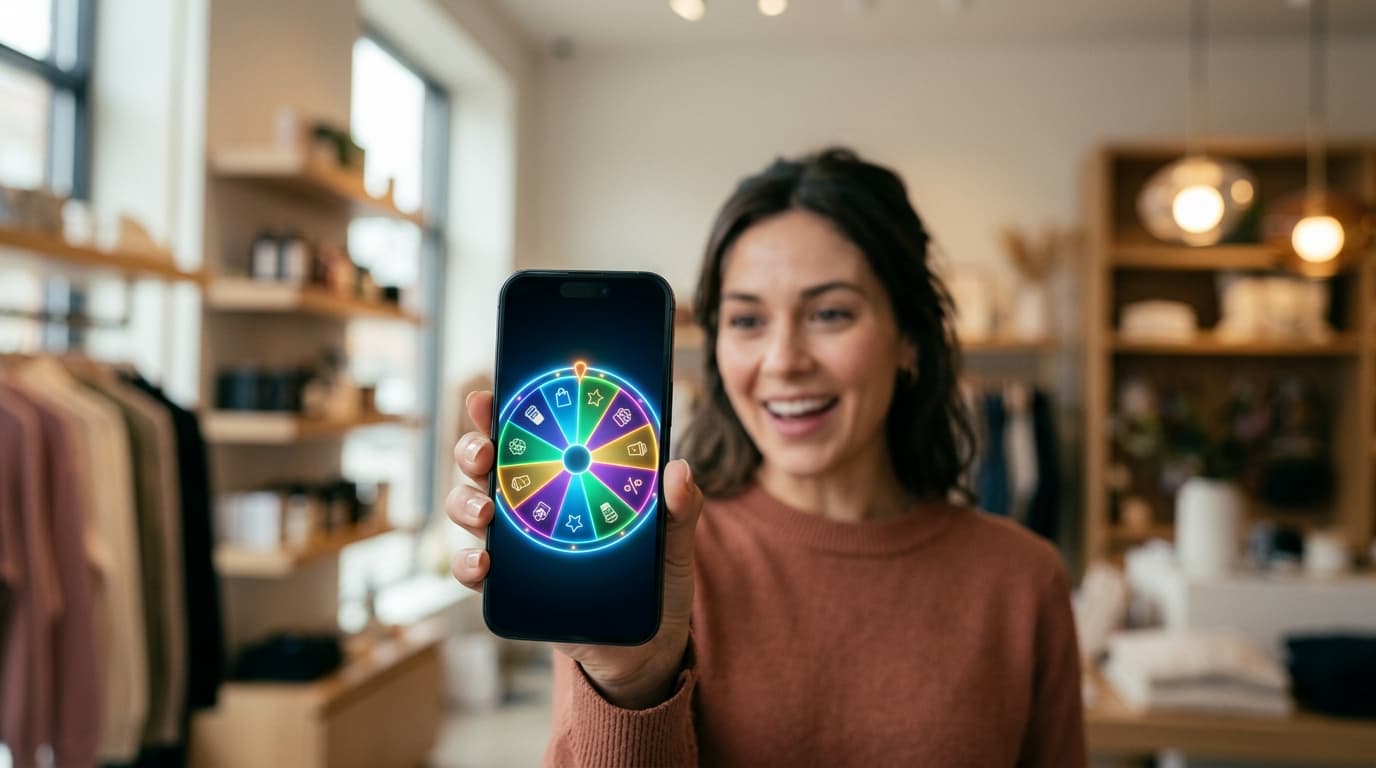
Platforms like Ludofy make this straightforward. The client scans a QR code, leaves an honest review on Google, and then spins a digital fortune wheel to discover a reward — perhaps a 10% discount on their next visit, a complimentary add-on, or a free follow-up consultation. This gamified mechanic transforms what might feel like an awkward obligation into a pleasant, memorable moment.
Keep one principle front of mind: the reward must be offered in exchange for any honest review, not for a five-star rating specifically. That distinction keeps you on the right side of Google's policies and, more importantly, maintains the authenticity that makes your reviews credible.
Adapt the reward to your price point. A 5% discount on a course of treatments, a sample of a partner skincare product, or a complimentary skin consultation all work well in the aesthetic context without devaluing your services.
Responding to Reviews: Privacy as Standard Practice
Responding to reviews in medical aesthetics requires more care than in most sectors. The cardinal rule: never confirm a specific treatment in a public response.
If a client writes, "I had my lip fillers done here and couldn't be happier," a response that says "So glad you loved your filler appointment!" has just confirmed private health-adjacent information publicly. Even if the client volunteered it first, repeating it in your response amplifies its reach.
Instead, keep responses warm but generic: "Thank you so much for taking the time to share this — we're thrilled you had such a great experience with us. Looking forward to seeing you next time." This is equally meaningful and entirely discreet.
For negative reviews, stay composed and invite private resolution: "Thank you for your feedback. We're sorry your experience didn't meet expectations and would love the chance to understand what happened. Please reach out to us directly and we'll do everything we can to make it right." Resist the urge to defend publicly, even when a complaint is unfair. Prospective patients watching your response care less about who is right and more about how you handle difficulty.
Building a Sustainable Review Pipeline
The goal for an aesthetic clinic is not to collect fifty reviews in a month and then go quiet. Consistency beats volume. A clinic that publishes eight to twelve reviews per month, spread across different treatments and client profiles, signals active practice to Google's algorithm and reassures prospective clients that the results shown are current and representative.
Ludofy is built to make this consistent flow effortless — a QR code at reception, a card in the post-treatment pack, or an integration into your follow-up process. The system runs in the background while your team focuses on what they do best.
A clinic's reputation online is ultimately a reflection of the care delivered inside it. The right tools simply make sure that care is visible to the people who need to see it before they book.