A family spends a week at your campsite. They loved the morning mist over the lake, the firepit evenings, the kids running free. They leave Sunday morning, tired and happy, promising each other they'll come back next year.
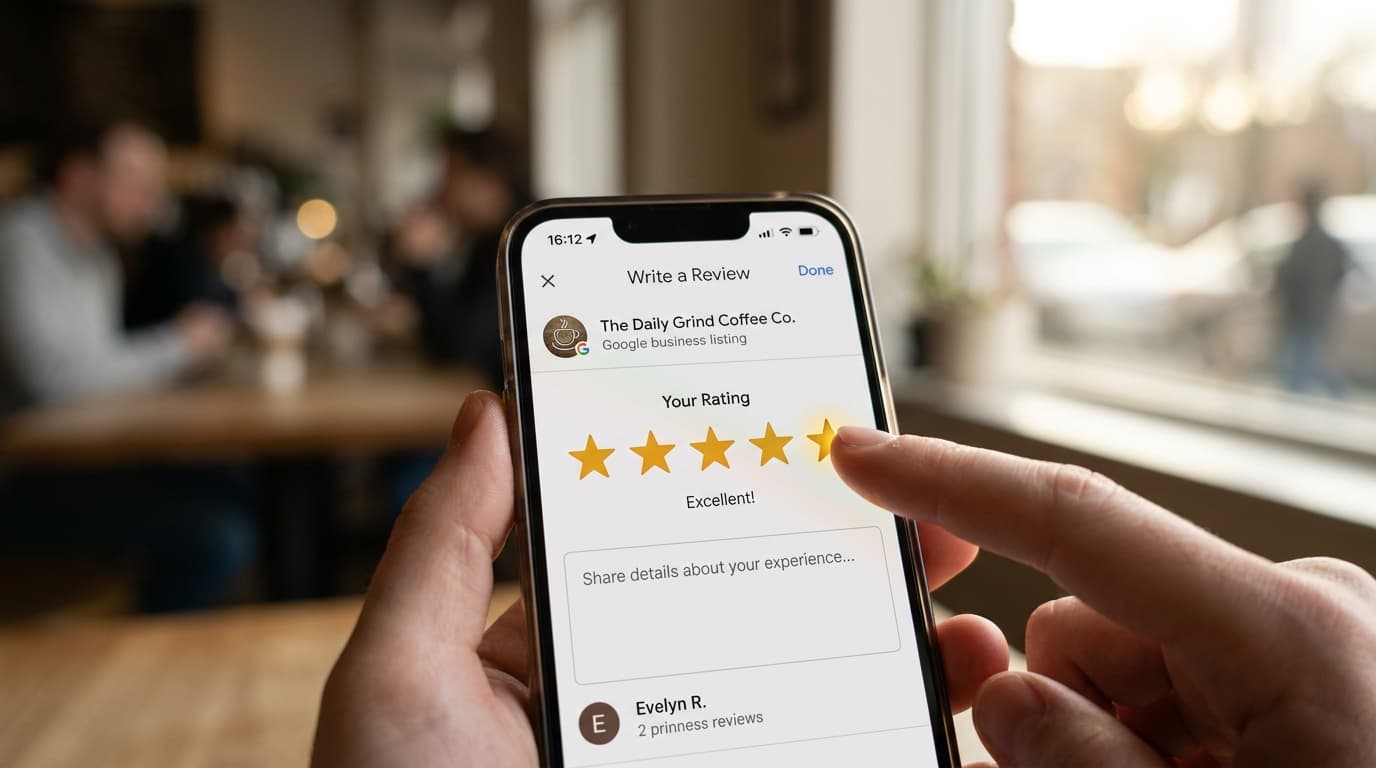
And then they never leave a Google review.
Not because they were unhappy. Because the moment passed, the car pulled out of the gate, and nobody asked. By the time they got home, unpacked, and returned to ordinary life, the impulse was gone.
This is the defining challenge for camping sites, glamping venues, and outdoor resorts: your guests leave in a state of genuine satisfaction — and you lose almost all of it. Unlike hotels, which have a natural review-collection bottleneck at the front desk during check-out, outdoor accommodation businesses scatter their guests across a wide site, over variable departure times, with no centralized moment of contact.
The good news: campers who do leave reviews tend to be exceptionally detailed and emotionally engaged. One well-collected review from a family describing your sunsets and firepit atmosphere is worth twenty generic one-liners from a business hotel. Google's algorithm notices this too — meaningful, specific review text contributes more to your local search ranking than volume alone.
Here's how to build a system that captures that goodwill before it evaporates.
Why Google Reviews Are Especially High-Stakes for Outdoor Accommodation
Outdoor accommodation decisions are deeply emotional. Families researching a summer campsite aren't just comparing price per pitch — they're imagining the holiday. They're reading through reviews looking for specific signals: is it quiet at night? Are the showers clean? Is it child-friendly? Do the photos match reality?
A campsite with 4.6 stars and 180 detailed reviews doesn't just look more trustworthy than a competitor with 4.4 stars and 40 reviews. It looks like an entirely different category of experience. In high-intent searches like "family campsite near [region]" or "glamping [area] this weekend," the review count and score determine whether your listing gets a click or gets scrolled past.
What makes this particularly important is the seasonal concentration of outdoor accommodation. Unlike restaurants that have year-round traffic, most campgrounds earn 60 to 80 percent of their annual revenue in a three-to-four-month window. If you fail to collect reviews during peak season, you don't just miss a month — you miss your entire annual reputation-building opportunity.
The Unique Challenges of Collecting Reviews from Campers
Campers aren't at your mercy the way hotel guests are. They arrive with their own tents and cars. They come and go at flexible times. Many check out before your reception even opens. In a large campsite, you may process hundreds of families across a weekend without ever having a face-to-face departure conversation with most of them.
This creates specific friction points:
- No front-desk checkout moment: the natural hotel review-request touchpoint doesn't exist
- Variable departure times: Friday evening departures, Saturday morning rushes, Sunday hangers-on — no unified departure flow
- Connectivity gaps: depending on your location, guests may not have reliable mobile data during their stay, making in-the-moment review requests harder
- Group psychology: families decide together; one motivated reviewer may not have the review link at hand when enthusiasm peaks
All of this is solvable, but it requires intentional design rather than hoping guests will find you on Google later.
When and Where to Ask: The Three Best Touchpoints
1. The Day-Before Departure Message
If you collect guest contact information at check-in, a friendly text or email the evening before departure is your highest-converting touchpoint. The guest is still on-site, still in the emotional high of the holiday, and has the next morning to leave a review while packing up. Keep the message personal and light — "We hope you've had a wonderful stay. If you have a moment before you leave tomorrow, a Google review means the world to us" — and include a direct link.
Response rates on day-before messages typically run 3 to 5 times higher than post-departure follow-ups because the guest is still physically in the experience.
2. Reception and Camp Store QR Codes
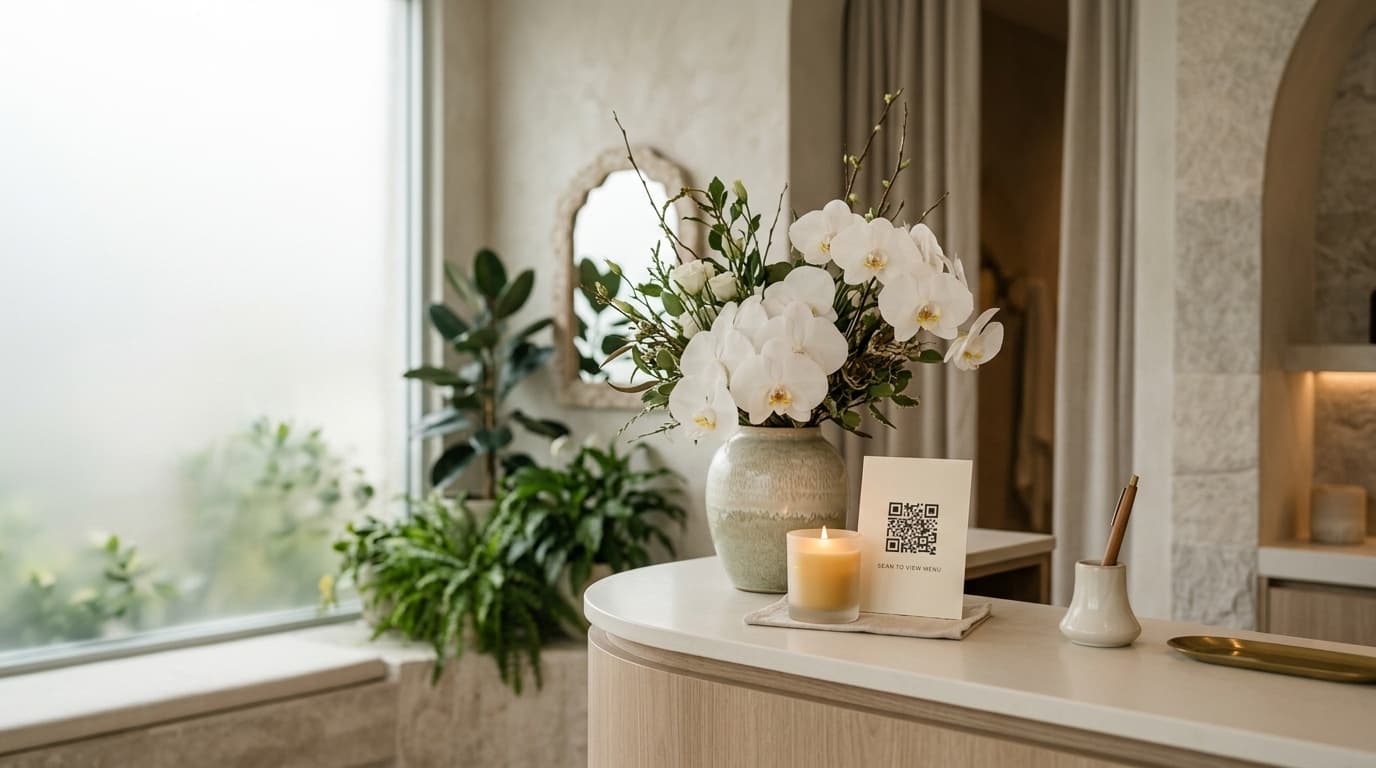
Your reception desk, camp shop, and any centralized facilities (shower blocks, laundry rooms, pools) are the physical locations where every guest passes at some point during their stay. A well-positioned QR code with a brief, friendly prompt — "Enjoyed your stay? Leave us a review in 30 seconds" — catches guests in a warm moment without requiring staff intervention.
The key is placement: eye level, at the exit point rather than the entrance, and paired with a clear, benefit-forward message. A small A-frame stand at reception checkout or a card at the camp shop counter works better than a poster buried among safety notices.
3. The Gamified Check-Out Wheel
Outdoor accommodation is one of the environments where gamification has a disproportionate impact on review conversion. Families arriving at reception to hand in keys or settle final bills are in a celebratory, end-of-holiday mood. A QR code that invites them to spin a fortune wheel — winning anything from a 10% discount on their next booking to a free campfire kit — creates a moment of shared excitement that converts at significantly higher rates than a plain "please leave us a review" request.
The mechanics are straightforward: the guest scans, plays, wins a small prize, and the process naturally invites them to leave a Google review as part of the interaction. The gamified format is particularly effective with families because children often push parents to participate.
Managing Reviews About Things You Can't Control
Outdoor accommodation receives a category of reviews no hotel does: complaints about the weather, midges, noise from wildlife, or "too many trees." You cannot control these, but you can control how you respond.
The best responses to nature-related complaints don't get defensive — they acknowledge the experience, clarify what's inherent to the outdoor environment, and demonstrate that you care about guests' overall stay. A response like "We're sorry the midge situation made the evenings difficult — we share your frustration with late July hatches and have updated our welcome pack to include repellent advice for future guests" tells future readers that you're attentive and proactive.
Responding to every review — positive and negative — also signals to Google's algorithm that your listing is actively managed, which contributes positively to local search rankings. Aim for a response within 48 hours on negative reviews, within a week on positive ones.
Seasonal Strategy: Front-Load Your Reputation Before Peak Season
The biggest mistake outdoor accommodation operators make is treating review collection as passive. By the time August arrives and your site is full, it's too late to build the review profile that would have filled your Easter and June bookings.
Start actively collecting reviews in April and May, when your early-season guests are your most engaged and often most forgiving audience. These early reviewers set the benchmark that late-season searchers will see. A site with 40 reviews by July 1 converts booking inquiries more effectively than one that accumulated 120 reviews from July to September — because the 40 reviews were visible during the planning season.
How Ludofy Helps Outdoor Accommodation Operators Collect Reviews Consistently
Ludofy was built for exactly this challenge: turning the operational reality of local businesses — limited staff time, variable guest flow, no dedicated marketing function — into a systematic review-collection machine.
With Ludofy, campsite operators set up a QR code-activated fortune wheel that guests interact with at check-out or at any touchpoint during their stay. The platform handles the gamification logic, the prize management, and the review request flow automatically. You configure it once at the start of the season, and it runs every day without staff intervention.
The result isn't a one-month spike in reviews followed by silence. It's a consistent accumulation across your entire season that compounds into a review profile strong enough to fill the following season before it even begins.
The campgrounds filling up before Easter bookings open aren't necessarily the most beautiful or most affordable. They're the ones whose Google presence makes the decision feel easy.