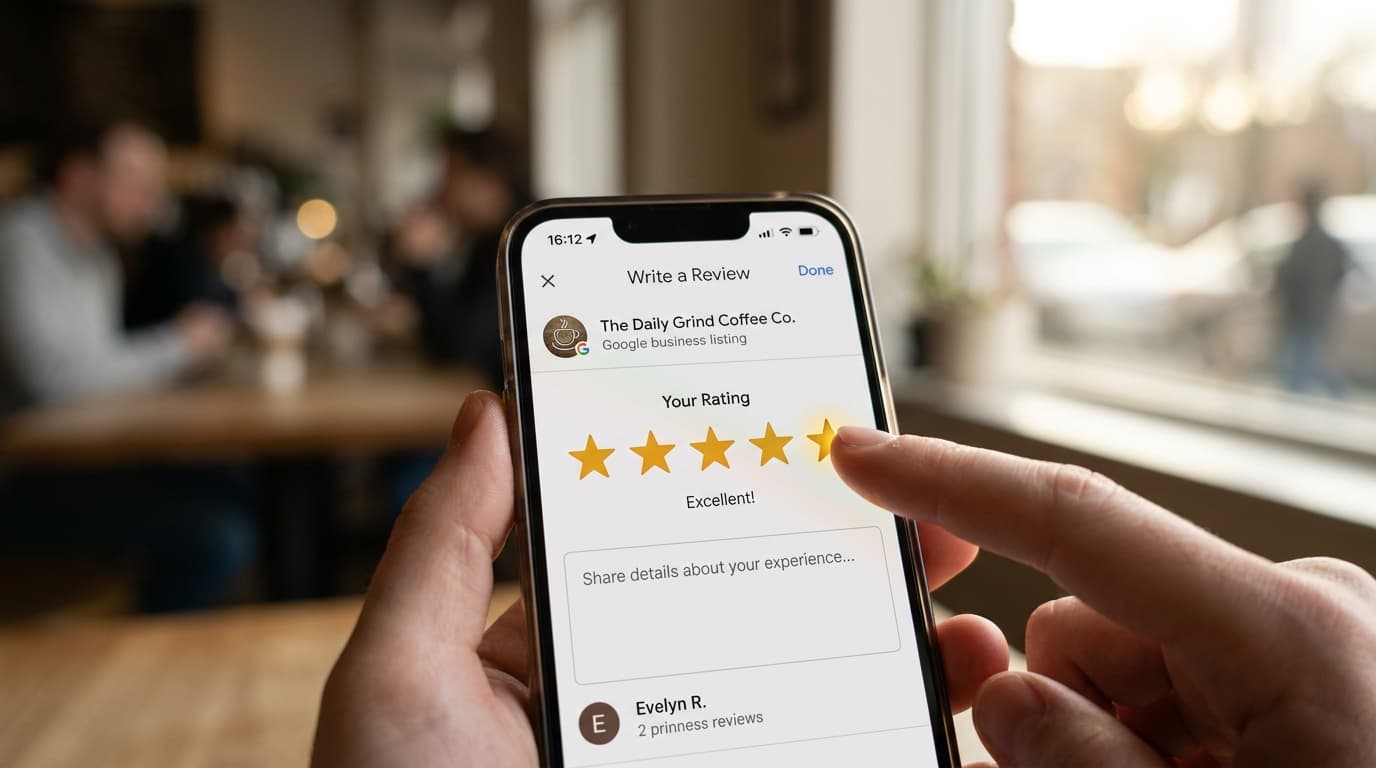
Trust is the currency of healthcare. When someone searches for a chiropractor or osteopath nearby, the first thing they do is scan Google reviews. Your star rating, your review count, and the specificity of what patients write all shape whether a new patient books an appointment with you or scrolls down to the next result.
Yet despite this reality, most chiropractic and osteopathy practices have far fewer Google reviews than the number of patients they treat. It's not because patients are dissatisfied. It's because the healthcare context makes asking feel awkward — and patients rarely think to review a health appointment the way they'd review a restaurant or hotel.
This guide covers exactly how to fix that: systematically, sensitively, and in a way that fits naturally into your practice workflow.
Why Google Reviews Matter More Than You Might Think for Health Practitioners
For most local businesses, Google reviews influence discovery and conversion. For healthcare practitioners, they do something additional: they build clinical trust before the first appointment is ever booked.
A prospective patient searching "chiropractor near me" is often dealing with pain — a bad back, a sports injury, recurring headaches. Their need is urgent, and their tolerance for uncertainty is low. They want to see that others have trusted you with the same problems and came out better. A practice with 9 reviews reads as unproven. A practice with 170 reviews, where patients describe specific treatments and positive outcomes, reads as established and trustworthy.
Beyond trust, reviews drive local SEO rankings. Google's algorithm weighs the quantity, recency, and quality of reviews when determining which practices appear in the local 3-pack — the three businesses that appear at the top of a local search. More reviews, arriving more consistently, translate to more visibility. Practices with strong review profiles routinely outrank competitors with better websites and more years of experience, simply because they've built a steady stream of patient feedback online.
Why Healthcare Patients Don't Review by Default
In most service industries, the emotional high of a great experience naturally prompts people to share it online. A fantastic restaurant meal generates reviews. An impressive hotel stay generates reviews. But a health appointment — even a genuinely excellent one — rarely does.
Several factors work against you:
Privacy hesitancy. Patients may feel uncomfortable publicly associating themselves with a health condition. Writing "excellent chiropractor for my chronic lower back pain" means disclosing personal medical information on a public platform — something many people instinctively avoid.
Category blindness. People don't think of health appointments as review-worthy events. Healthcare falls into a mental category of "professional services" that most people don't evaluate the way they would a consumer experience.
No visible prompt. Most practices don't remind patients to leave a review. Without a prompt, even genuinely satisfied patients forget — the intention forms and dissolves before they reach home.
Understanding these barriers is the first step. Designing around them is the second.
The Right Moment to Ask — and How to Frame the Request
Timing matters more than almost anything else in review collection. The optimal window is immediately after a successful session — when the patient is at reception booking their next appointment or settling the bill. Their experience is fresh, relief from pain is recent, and they're in a positive emotional state. That window is short; don't miss it.
Framing matters as much as timing. Avoid transactional language. Instead of "Could you leave us a Google review?", something warmer and more purposeful lands better: "If today's session was helpful, sharing your experience online really helps others in the same situation find us."
This framing respects the patient's autonomy, makes the ask feel purposeful rather than commercial, and fits naturally into the end of a therapeutic interaction rather than feeling like a marketing pitch.
QR Codes at Reception: The Infrastructure That Eliminates Friction
Even patients who intend to leave a review often don't. The reason is friction. Finding your Google listing, navigating to the review section, and writing something useful is more effort than most people will make after leaving an appointment.
A QR code solves this. Placed at your reception desk, on appointment reminder cards, or on a small stand in your waiting room, a QR code takes the patient directly to your Google review form with a single scan. No searching. No navigation. Just an open form and a moment of goodwill.
Placement is everything. A small, professional card at the payment point — visible while the patient is settling the bill — is your single most effective location. Supplement it with a QR code on your appointment reminder text message and you create multiple touchpoints without multiple conversations.
Gamification: Making the Review Ask Feel Like a Reward
One of the most effective tools in modern review collection is gamification — specifically, the fortune wheel mechanic.
Instead of simply asking patients to leave a review, you invite them to spin a digital wheel for a chance to win something: a discount on their next session, a complimentary add-on treatment, or a small wellness-related gift. After they spin, they complete their Google review to unlock the outcome.
The psychology behind this is well established. The element of chance creates genuine curiosity. A small potential reward provides a reason to engage that isn't rooted in obligation. And the fun of spinning reframes what is otherwise a passive administrative ask into something patients actually enjoy doing.
For health practices specifically, this approach has a meaningful secondary benefit: it gives you something to say at checkout that isn't a clinical or commercial ask. "If you have a moment, scan this to try your luck — and if today's session helped, share it on Google" is a sentence that feels natural, light, and warm.
Participation rates for gamified review requests typically run three to five times higher than standard verbal or QR code asks alone.
Responding to Reviews: What Healthcare Professionals Need to Know
Every review deserves a response — positive and critical alike. For healthcare practitioners, responses require an additional layer of care.
When responding to positive reviews: express genuine gratitude, but do not confirm or elaborate on clinical details mentioned by the patient. Even if a patient describes their condition in their review, your response should remain general ("We're glad your session went well and look forward to seeing you again").
When responding to critical reviews: never discuss treatment specifics publicly, even in your own defense. Acknowledge the concern briefly, invite the patient to contact you directly to resolve the matter, and keep the response professional and restrained.
These practices protect you professionally and signal clinical credibility to anyone reading your reviews. Prospective patients notice how practitioners handle difficult feedback — and measured, thoughtful responses build trust in ways that defensive ones never can.
Building a Review Habit Into Your Practice
The practices that consistently accumulate Google reviews aren't doing anything complicated. They've made the ask a standard part of their checkout workflow.
A simple system looks like this: every patient completing a session sees the QR code at the payment desk; reception mentions it once, casually and without pressure; a text reminder goes out the following day with the review link included; review counts are tracked weekly so the team can see progress building over time.
This takes minutes to set up and adds nothing material to your daily workflow. Compounded over a year, it's the difference between 15 reviews and 200.
The Competitive Advantage of a Strong Review Profile
Chiropractic and osteopathy markets in most areas are competitive. Patients often choose between two or three options that seem roughly equivalent on the surface. A strong Google review profile is one of the clearest differentiators available to a solo or small-group practice — and it costs nothing to build beyond the commitment of asking consistently.
Your expertise builds patient outcomes. Your review profile builds patient pipeline. Both deserve deliberate attention.
Ludofy provides exactly the infrastructure health practitioners need: a QR code-powered fortune wheel that makes review collection consistent, engaging, and frictionless — without adding complexity to your clinical day. Install it at reception, and the system does the rest.
In a competitive local market, your Google review profile is often what determines which skilled practitioner a new patient calls first. That gap is entirely within your control to close.