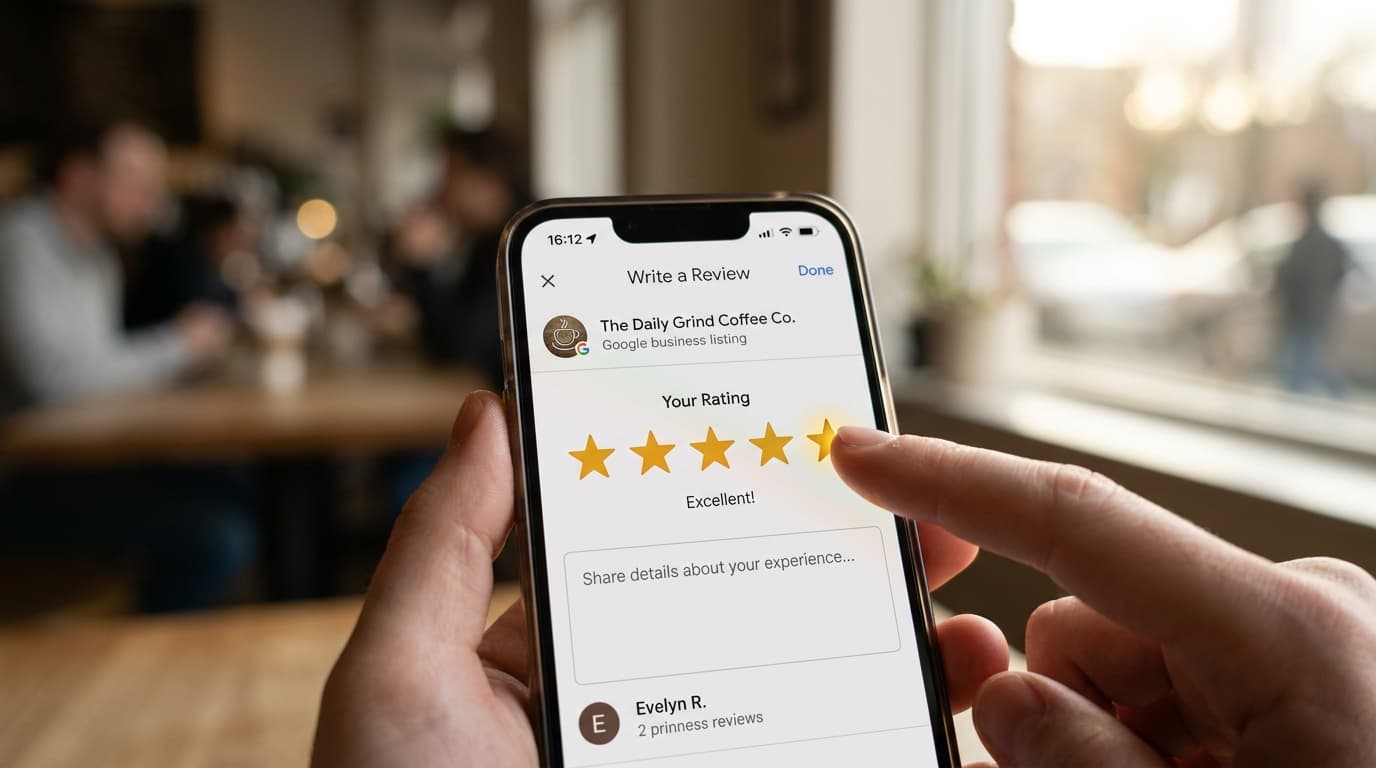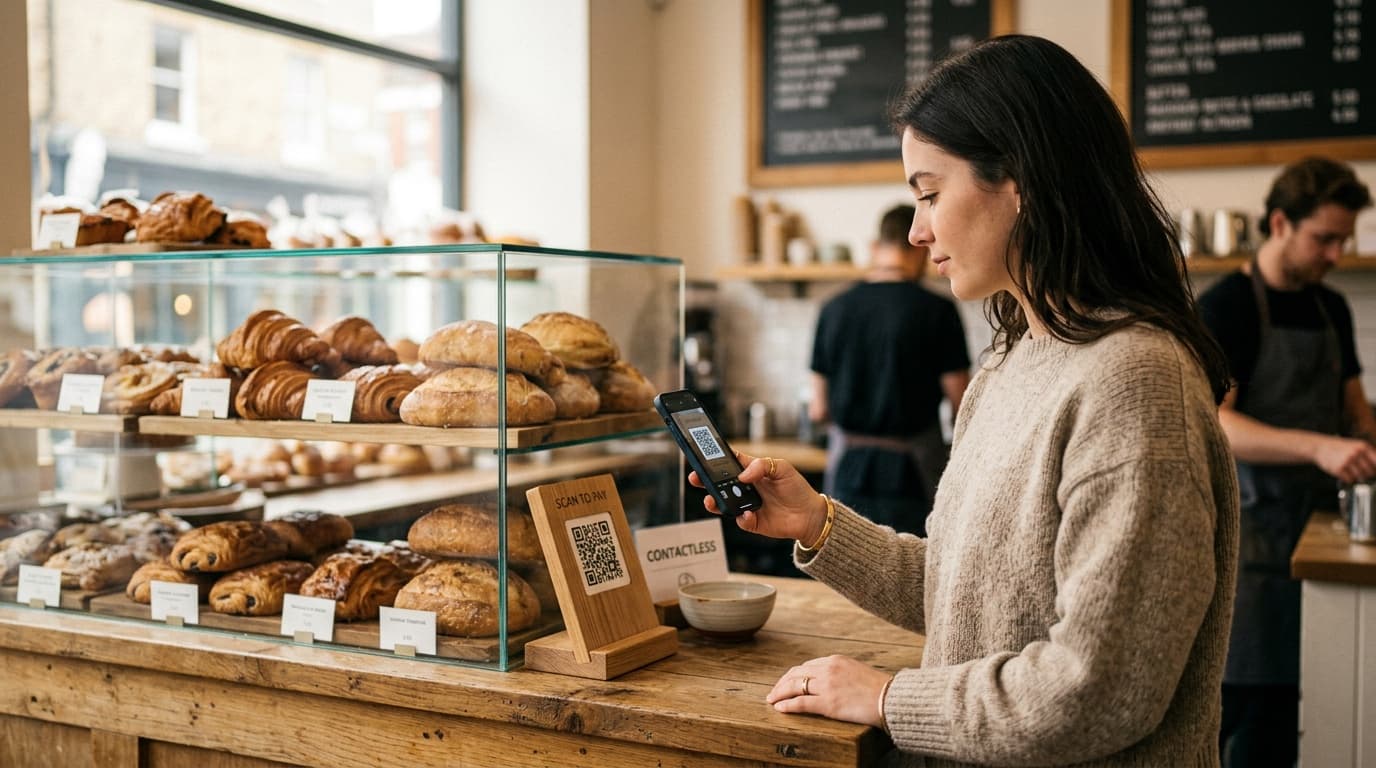
Chocolate shops occupy a rare position in retail: they sell pure pleasure. Every purchase — a box of truffles, a hand-painted Easter egg, a bag of artisan sweets — is tied to an occasion, a feeling, or a memory. Yet most chocolatiers and confectionery retailers collect very few Google reviews, even when their customers are completely delighted.
That's a missed opportunity. This guide explains why Google reviews matter more for specialty food retailers than you might think, how to collect them consistently without being pushy, and how gamification can make the whole process feel as enjoyable as the products you sell.
Why Google Reviews Are a Make-or-Break Factor for Chocolate Shops
People search online before they buy gifts
"Best chocolatier near me." "Artisan chocolate shop [city name]." These searches happen every day, and they spike sharply before Valentine's Day, Easter, Mother's Day, Christmas, and every other gift-giving occasion in the calendar. What determines who gets the click? The star rating and the number of reviews.
A chocolatier with 4.8 stars and 90 reviews will consistently outperform one with 4.3 and 12 reviews — regardless of which has the better chocolate. Brutal, but true. In a world where the decision to walk through your door is made before anyone sets foot outside, your Google profile is your first impression.
Seasonality raises the stakes
For most chocolatiers, a large portion of annual revenue is compressed into a few key weeks. The customers you lose to a competitor during the Christmas rush because your Google profile looked thin? You don't get those back. Building your review base consistently throughout the year means you enter peak season with momentum rather than scrambling to catch up.
Premium pricing requires premium social proof
If you're charging twice what a supermarket chocolate bar costs — and you should be — you need to justify that price before a customer ever steps inside. Thoughtful reviews that mention "incredible ganache," "beautifully packaged," or "staff who really know their chocolate" do that work for you. They're word-of-mouth at scale, visible to everyone searching in your area.
The Chocolatier's Core Challenge: Short Visits, High Emotion
The typical visit to a chocolate shop is brief. Customers browse, make their selection, pay, and leave. The interaction is warm but fast. This means the window for requesting a review is narrow — and most shop owners either miss it entirely or feel awkward bringing it up.
Here are the right moments to act.
During packaging
Wrapping and boxing is often a performance in itself. While you're arranging the selection, there's a natural pause in the conversation. This is the perfect moment to hand over a small card with a QR code: "If you enjoy these, we'd love a Google review — it really helps us." No pressure, no hard sell. The card does the work once the customer is home and the chocolate is as good as you promised.
At the register, with a game
This is where a fortune wheel changes everything. Instead of making a straight ask, you invite customers to spin for a treat — a free sample, a discount on their next visit, or a small surprise. They scan a QR code, leave a review, then spin the wheel. The playful format removes the awkwardness of the request and makes the interaction memorable. For a chocolate shop, "spin to win a treat" fits perfectly with the brand — it feels indulgent rather than transactional.
On packaging that travels as a gift
Gift boxes leave your shop and end up in someone else's hands. Slip a small card inside: "Your gift came from [shop name] — if the person receiving it loved it, we'd be grateful for a Google review." The gift recipient, delighted by what they received, becomes a reviewer you never directly interacted with. This is leveraged word-of-mouth.
Helping Customers Know What to Write
Even happy customers sometimes freeze when faced with a blank review form. A few gentle prompts displayed near your checkout — or printed on your card — can double your completion rate without steering what people say:
- "Tell us about your favorite piece from today's selection."
- "Did we help you find the right gift? We'd love to hear about it."
- "Describe the experience — the shop, the packaging, the taste."
You're not telling them what to write. You're removing the blank-page paralysis.
Responding to Reviews: Every Reply Is Public Marketing
Reply to every review, positive or negative. Google favors active profiles in its local ranking algorithm, and your responses are read by prospective customers doing research. A thoughtful reply to a glowing review ("So glad the salted caramel collection was a hit — we make those in small batches so they're always fresh") signals quality and attentiveness.
For negative reviews — they'll happen, even to the best — stay calm, acknowledge the issue, and offer to make it right. Readers watching that exchange will judge you on your response, not the complaint.
Avoid These Common Mistakes
Asking only in December. A spike of reviews in one week looks odd to Google's algorithm and won't serve you the rest of the year. Aim for consistent collection: even 2–3 new reviews per week during quieter months builds a solid foundation.
Never following up. Most customers intend to leave a review but forget. A brief follow-up via text or email — "Hope you enjoyed your chocolates! If you have a moment, a Google review means the world to us" — can double your conversion rate.
Neglecting your Google Business Profile. A rising review count loses impact if your listing is incomplete. Keep your hours updated (especially around holidays), add seasonal product photos, and make sure your website link and address are correct.
Only chasing 5-star reviews. A mix of 4- and 5-star reviews with genuine content is more credible than a suspiciously uniform stream of perfect ratings. Authenticity builds trust.
Workshops: Your Best Review Opportunity
If you run chocolate-making workshops — for children's parties, date nights, corporate team building — you have access to groups of people who've just had a memorable shared experience. That's the highest-likelihood review scenario that exists.
Send a follow-up email or text to all participants 24–48 hours after the workshop with a direct link to your Google review page. Personalize it slightly: "Thank you for joining yesterday's truffle-making session — we hope you're still enjoying what you made! If you'd like to share the experience on Google, here's the link." Expect conversion rates in the 30–50% range.
Measuring What Matters
Track these metrics monthly:
- New reviews per month
- Average rating trend
- Recurring words in review text (what customers love, and what needs attention)
- Search visibility (how often your profile appears in local searches)
After six months of consistent effort, you'll have enough data to see a direct correlation between review activity and foot traffic, particularly in the weeks before peak seasons.
How Ludofy Fits In
Ludofy is built for exactly this kind of shop. A QR code on your counter, a customizable fortune wheel with prizes that make sense for a chocolate retailer (a free truffle, 10% off the next visit, a mystery sweet), and a simple dashboard to track your review growth.
For an artisan chocolatier, every Google review is a public declaration of quality. Start collecting them systematically, and by the time the next holiday season rolls around, your profile will be doing the selling before customers even walk through the door.