Coworking spaces have one of the most competitive local search landscapes of any service category. In any mid-sized city, a prospective member might search "coworking space near me" and be confronted with a dozen options — each with a slick website, attractive pricing, and a promise of vibrant community. How do they decide?
They read Google Reviews.
This is the reality most coworking operators underestimate. The 10-minute tour you give a prospect is powerful, but it comes after they've already shortlisted you — or eliminated you — based on what strangers said about you online. For a business category where the product is an atmosphere, a community, and a feeling, Google Reviews carry extraordinary weight. And for most coworking spaces, they're also the biggest untapped growth lever.
Why Reviews Hit Differently for Coworking
When someone is choosing a restaurant, a single 2-star experience might not be enough to lose the decision. But choosing a coworking space is a considered, recurring commitment. A day pass becomes a monthly membership. A monthly membership might run for a year or more. That decision requires trust — and trust in 2026 is built on peer testimony, not advertising copy.
Reviews for coworking spaces also encode information that your sales deck cannot. Your website says "vibrant, productive community." A Google review that says "Moved here six months ago and already met my co-founder at one of their Thursday networking nights" says it in a way that no marketing team can write. The specificity is what converts.
There is also the local SEO angle, and it is not subtle. Google's algorithm for local search weighs review quantity and recency heavily. A coworking space with consistent, fresh reviews ranks higher in the Local Pack — the three results that appear at the top of a "coworking space [city]" search. Ranking in that top 3 is worth thousands in free monthly advertising. Sitting at position 4 means being essentially invisible to organic search traffic.
What Prospective Members Actually Look For in Reviews
Before building your review collection strategy, it's worth understanding what signals matter to the people reading your reviews.
Internet reliability comes up in nearly every review from knowledge workers and developers. If your WiFi is fast and stable, you want this stated in reviews. If it isn't, you need to know — because it will show up in negative reviews whether you ask or not.
Community and people are mentioned in the reviews that convert best. "Everyone is genuinely kind and helpful" or "The community managers actually make introductions" signals that your space delivers on the promise that distinguishes coworking from renting an office.
Noise management and zones matter to deep-work types. Reviews that describe a well-organized quiet zone versus a busier social area help prospects self-select — which means better-fit members and fewer complaints.
Value for money shows up in day pass reviews especially. A review that says "Best-priced hot desk I've found in the city and the coffee is great" will drive day pass bookings directly.
Onboarding and welcome experience appear most often in reviews from members who joined in the past three months. They remember the first impression clearly. That's the moment to ask.
Five Ways to Collect Reviews Consistently
1. The Hot Desk QR Card
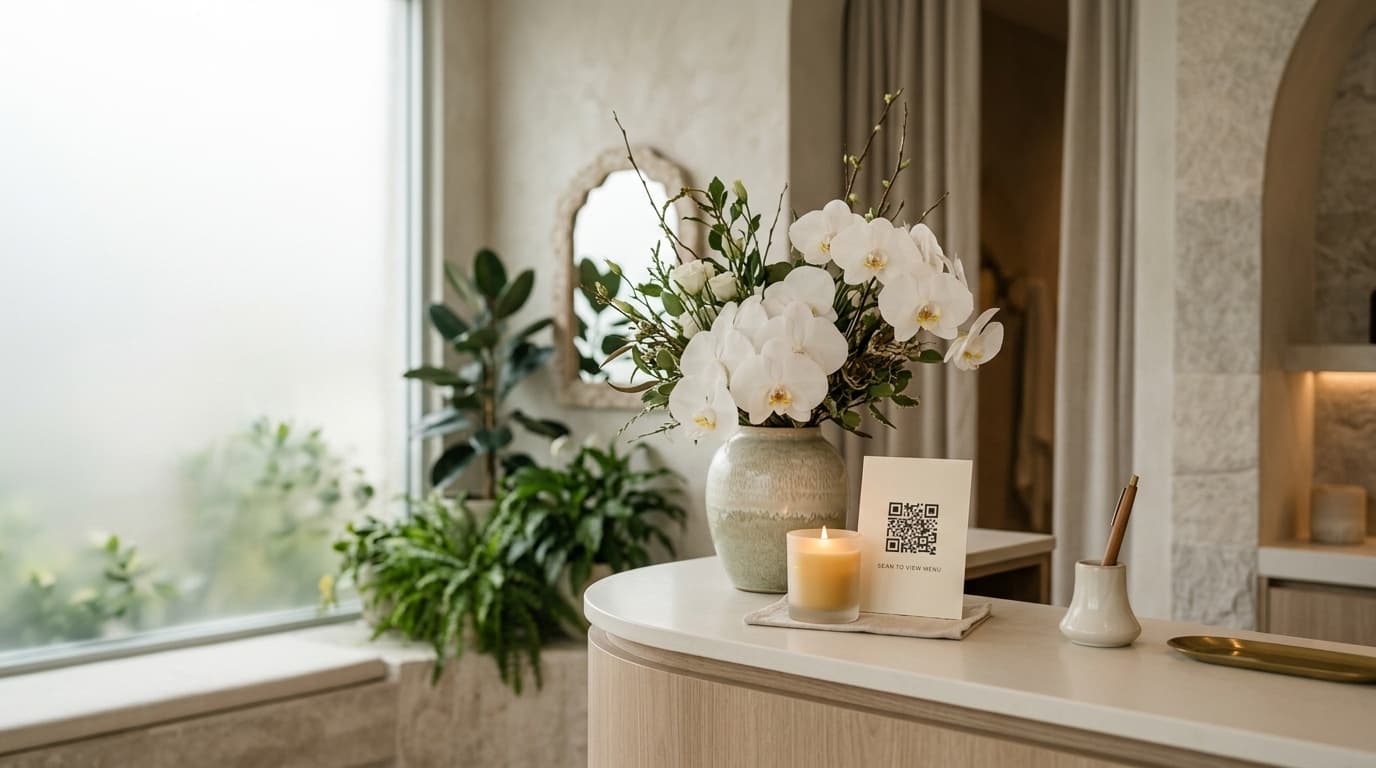
Place a small, nicely designed card on each hot desk. After a productive day, people are genuinely happy and briefly open to expressing that. A card that says "Enjoyed your day? Two minutes of your time helps us keep growing — scan to leave a quick Google review" catches that window. Keep the design clean and the ask specific: "it takes about 90 seconds."
2. The New Member Email at Day 30
New members have strong opinions and fresh memories. At the 30-day mark, send a simple email: "You've been with us for a month now. If you're enjoying the space, a Google review would mean the world to us — and helps other freelancers and founders find their right fit." Include a direct link. This is often your highest-converting single touchpoint.
3. The Event Capture Moment
Coworking spaces that run networking events, workshops, or founder dinners have a natural emotional peak at the end of the event. Before people leave, put the QR code on the screen: "If you enjoyed tonight, tell Google — it helps more people find evenings like this." Event attendees are in a positive emotional state and are much more likely to leave a review than members in the middle of a normal workday.
4. The Reception Kiosk
A tablet at your reception or exit area showing a fortune-wheel or a simple review prompt creates a natural pause point. Staff can mention it as people wrap up: "Before you head out, feel free to spin the wheel — we're running a little 'thank you' for people who leave us a review." No pressure, just a playful prompt at the right moment.
5. The Monthly WhatsApp or Slack Nudge
If your coworking space has a members' WhatsApp group or Slack community — and most do — a monthly message from community management asking for reviews lands in a warm channel. "Hey everyone — if you love the space and haven't left us a review yet, it takes 2 minutes and really helps us. Here's the link 🙏" Members who feel part of the community respond well to this kind of peer-supported ask.
Gamification: The Highest-Converting Approach
The single most effective tactic for consistent review collection in high-traffic settings is gamified incentivization. This is where tools like Ludofy become a genuine operational advantage.
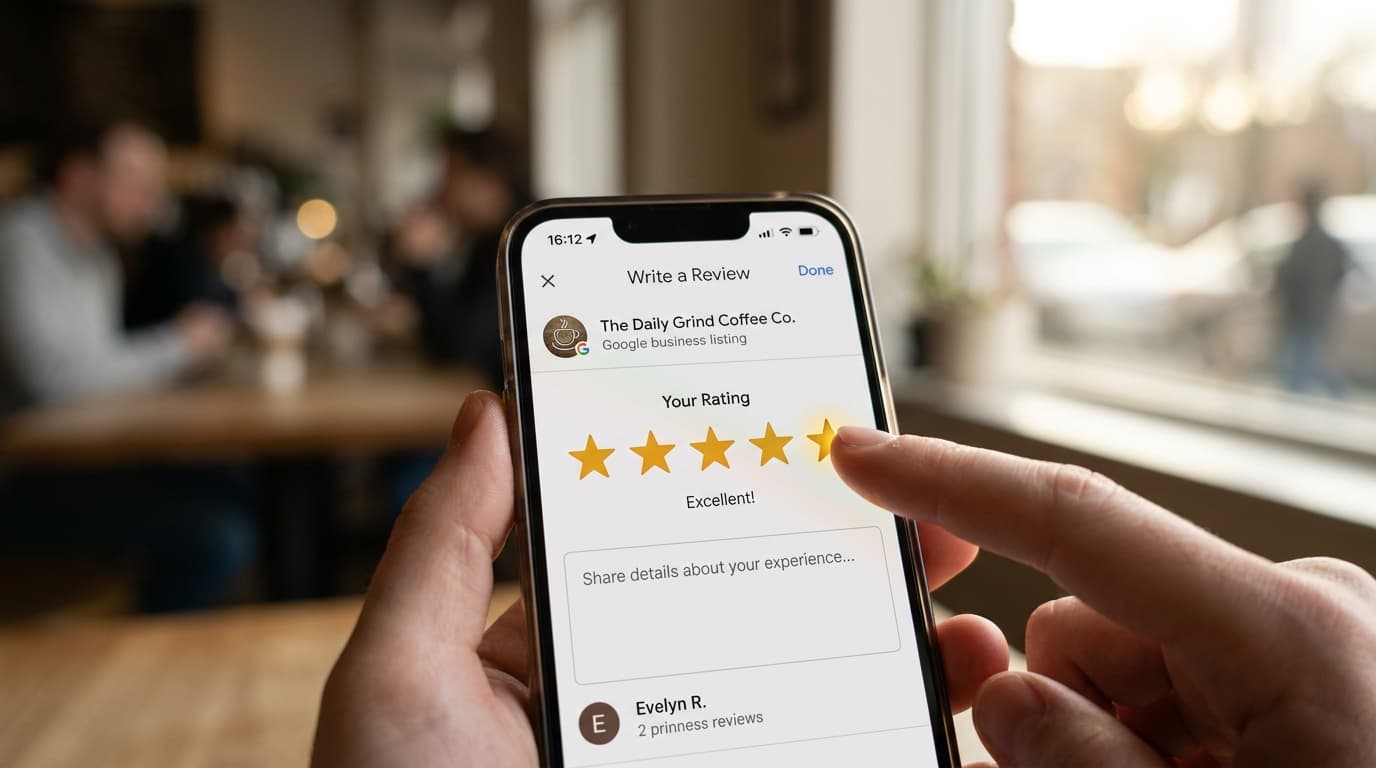
The mechanic is simple: a member scans a QR code, leaves a Google Review, and gets to spin a fortune wheel for a small prize — a free day pass extension, a coffee voucher, a discount on their next month's membership, or access to a members-only event. The game element creates delight. It transforms what feels like a chore into a moment of fun. And the conversion rate dramatically outperforms any passive "please review us" ask.
For coworking spaces, the natural touchpoints are at reception, near the coffee station, and at the exit. The key is making the ask feel like a benefit, not a burden. When the prize is genuinely attractive — or genuinely unexpected — members share the experience with each other, which amplifies the effect.
Responding to Every Review
Google rewards owners who respond to reviews — it's a documented ranking signal. Beyond the algorithm, responses signal to every prospective member reading your listing that your team is present, engaged, and cares.
For positive reviews, make the response personal and specific. If someone mentions that the Thursday events are their highlight, reply: "So glad the Thursday sessions hit right for you — the next one's going to be even better." Generic "thank you for your review" responses read as automated and undermine the trust you're trying to build.
For negative reviews, stay measured. If someone says check-in was confusing or that the AC was out for a week, acknowledge it directly: "You're right that we had a rough week with the climate system — we've since had it serviced and added a backup unit. We'd love to have you back to see the difference." Prospective members who read that exchange come away trusting you more, not less.
The Compound Effect: Why Velocity Beats Total Count
One misconception about Google Reviews is that you need to sprint to accumulate them, then you can stop. The reality is that Google's algorithm tracks recency and velocity — the rate at which new reviews arrive. A space that gets 8 reviews per month consistently outranks one that got 100 reviews in a burst two years ago and has been dormant since.
Set a monthly review target. Track it. Even a modest goal — 10 to 15 new reviews per month — compounds into 150 reviews per year. At that point, you're almost certainly ranking in your area's top 3, you have a library of authentic social proof, and your team has a habit of capturing reviews built into their weekly routine.
Building Your Review Engine with Ludofy
The coworking spaces that dominate their city's Google search results in the next few years won't necessarily have the best espresso or the most aesthetic interiors. They'll be the ones that built the most trusted online reputation — and that reputation is built review by review, member by member.
Ludofy makes that system easy to sustain. With QR code-triggered gamification that rewards members for leaving reviews, automated flows that hit members at the right moments, and a dashboard that shows you where your reviews are coming from and how fast they're growing, you can stop hoping for reviews and start expecting them.
The coworking space that's easiest to trust is the one that fills up first. Start building that trust today.