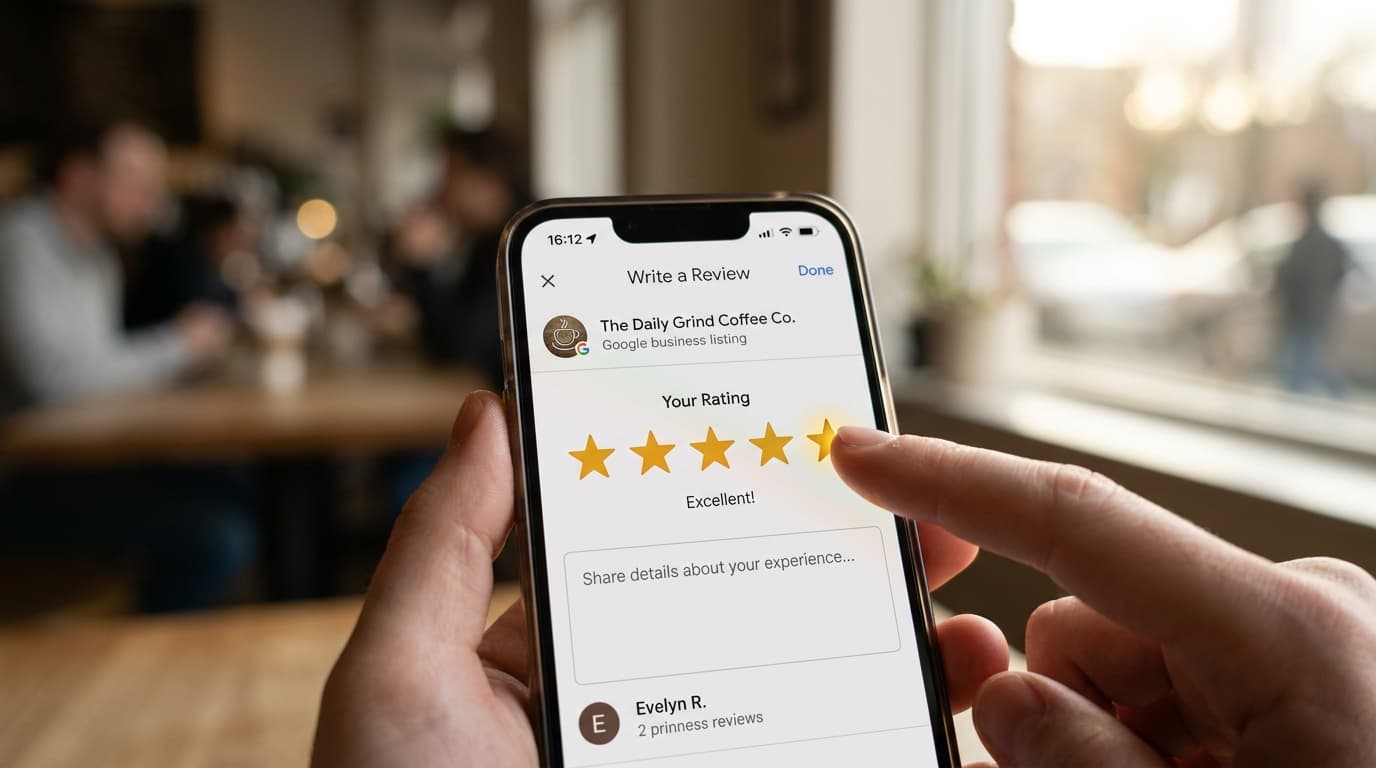
Independent gyms and fitness studios are fighting an asymmetric war. Discount chains have location density, brand recognition, and marketing budgets that dwarf what a local studio can spend. Competing on price is a race to the bottom. Competing on features takes years of capital investment. But there is one battlefield where an independent gym can consistently outperform any chain: local online reputation.
Google reviews are the trust signal that converts a searcher into a member. When someone moves to a new neighborhood or decides to change their fitness routine, they open Google Maps. They look at ratings. They read what members say about the coaching, the equipment, the atmosphere. A gym with 250 genuine reviews telling a story of personal attention and community wins that moment, every time, against a chain with a national ad campaign but 40 reviews at 3.9 stars.
The challenge is that most gyms collect reviews slowly and inconsistently, not because their members are unhappy, but because there is no system in place to capture that satisfaction at the right moment.
Why Google Reviews Matter More for Gyms Than Most Businesses
The decision to join a gym is more considered than most local service purchases. Signing an annual membership or committing to a recurring debit is a financial and behavioral commitment. Prospective members research thoroughly before deciding.
According to consumer research on local fitness services, 89% of people read online reviews before choosing a new gym or fitness studio. That number is higher than for restaurants, retail stores, or even personal care services. The fitness commitment is simply more significant — and people want proof that others have had a good experience before making it.
For independent studios specifically, this translates into a clear competitive dynamic. A boutique CrossFit box, yoga studio, or personal training gym that has 180 reviews explaining exactly what makes it different will outconvert a big-box chain with 400 reviews that all sound the same. Specificity builds trust. A review that says "Coach Marc pushed me harder than I thought possible without ever making me feel like I was failing" does something no corporate marketing can replicate.
How Google ranks local fitness businesses
Google's local ranking algorithm for gyms and fitness studios weighs several factors beyond the star average:
- Review volume: a gym with 150 reviews at 4.5 will typically outrank one with 20 reviews at 5.0
- Review recency: fresh reviews signal an active, thriving business — stale reviews signal stagnation
- Review content: reviews mentioning specific services (yoga, HIIT, weight training, personal coaching, group classes) strengthen your ranking for those exact search terms
This means your goal is not just to get a good rating. It is to build a continuous stream of reviews that Google reads as proof of consistent, ongoing member satisfaction.
The Loyal Member Paradox: Happy but Silent
Here is the frustrating reality most gym owners know well. Your regulars have been coming three times a week for two years. They refer friends. They buy merchandise. They would fight to defend your gym in a conversation with a friend who trains at a competitor. But they have never left a Google review.
This is not unusual, and it is not ingratitude. It is a structural problem with how most gyms approach reviews.
Habit kills the impulse to share. A member who has been training with you for 18 months does not experience your gym as something worth announcing anymore — it has become part of their routine. The emotional peak that drives someone to leave a review publicly occurred back when they first joined and saw early results. That moment has passed.
Generic reminders get tuned out. A poster on the wall saying "Love your gym? Leave us a Google review!" has been there for months. Members see it as wallpaper. It creates no moment of motivation, no specific call to act today rather than tomorrow.
The process has too many steps. Even motivated members face friction: open Google, search for the gym, find the listing, navigate to the review section, write something thoughtful, submit. Any step can lose them. Most lose them all.
What you need is not a louder reminder. You need a specific moment with a concrete reward that makes acting feel worthwhile right now.
The Gamification Fix: Fortune Wheel at Checkout
The most effective system for gyms is a QR code linked to a digital fortune wheel, deployed at the exact moment when members are most emotionally receptive — right after a session.
Here is how it works in practice:
After a workout, class, or coaching session, your member walks past a QR code at the exit, reception desk, or changing room. A small sign invites them to scan for a chance to win something. On their phone, a spinning wheel appears with prizes tailored to your gym: a free coaching session, a guest pass for a friend, a branded gym bag, a month's membership credit, a recovery supplement. To spin and claim their prize, they first post an authentic Google review.
The psychology is entirely different from a passive reminder poster:
- The member has a specific, immediate reason to act — not "help the gym," but "get something for myself"
- The experience is fun — spinning a wheel triggers positive anticipation
- The timing is perfect — they are still in the post-workout endorphin window, feeling the best they will feel all day
- The review is genuine — they write what they actually think, which complies with Google's policies
Gyms using this system typically see conversion rates of 30–50%, compared to under 5% for posters or verbal reminders. Your staff script needs to be minimal: "Scan this when you leave — you might win something." That is all it takes.
Where to place your QR codes
For a gym, strategic placement drives results:
- Reception desk or front gate: visible during check-in and check-out, catches members both entering and leaving
- Changing rooms: members are already on their phones, in a transition moment
- Stretching or recovery area: members who stay to cool down have a natural pause — fill it
- Post-class exit: position a card at the door where group class participants file out, while the energy is still high
- Supplement or nutrition station: if you have a protein bar or recovery station, it is an ideal dwell point
Choosing Prizes That Drive Action
The prizes you offer determine your conversion rate. For a gym, the best rewards combine high perceived value with manageable cost and a direct connection to fitness.
Prizes that work well:
- A free one-hour personal training session (high perceived value; if you coach yourself, low marginal cost)
- A guest pass letting the member bring a friend for free (also a customer acquisition tool)
- A branded gym bag, water bottle, or resistance band set
- One free month added to the next membership renewal
- A recovery supplement or protein sample
Prizes to avoid:
- Generic retail vouchers unrelated to fitness
- Complicated redemption processes with expiry dates members will forget
- Prizes members feel guilty about claiming (e.g., expensive items that feel disproportionate)
The prize does not need to be valuable in absolute terms. It needs to feel genuinely worth two minutes of a member's time. A guest pass that lets someone bring a friend is perceived as generous while costing you very little.
Responding to Reviews: The Step That Compounds Everything
Once you have a steady flow of reviews coming in, how you respond shapes your reputation further.
Reply to every review within 48 hours. For positive reviews, personalize your response by referencing the member's comment or the specific class or service they mentioned. "Thanks Jamie — stoked that the Saturday HIIT class is working for you. See you on the floor!" reads completely differently from "Thanks for your review!" It signals genuine engagement and shows prospective members what the community feels like.
For negative reviews, resist the urge to defend or explain publicly. Acknowledge the experience, express regret, and offer to resolve it privately. The audience for your reply is not the dissatisfied member — it is every person reading your listing before deciding whether to sign up. A composed, attentive response to a critical review builds more trust than a perfect score with no engagement.
Use the content of your reviews as operational intelligence. If multiple members mention that the showers are never hot enough, or that equipment queues are too long on Monday evenings, these are operational priorities that reviews reveal before they become churn drivers.
The Compounding Effect Over Twelve Months
Review collection compounds, and the compounding accelerates over time.
A gym that grows from 35 to 180 reviews over 12 months does not just rank higher on Google Maps. It changes the quality of the leads it attracts. Prospective members who find your gym after reading 150+ genuine reviews arrive with their objections already handled. They are more likely to sign annual plans, less likely to cancel after the first month, and more likely to refer people they know. They chose your gym after real consideration, not impulse.
Set a target of 8 to 12 new reviews per month. At 30–50 members per training day, reaching that target requires a conversion rate of well under 5% across your traffic. It is entirely achievable with the right system. Sustain it for two years and you have built a review asset that no new competitor can replicate quickly, regardless of their equipment budget.
How Ludofy Makes This Automatic
Ludofy is a gamification platform designed specifically for independent local businesses — including gyms and fitness studios — to collect Google reviews consistently through QR-code fortune wheels.
Setup takes under 30 minutes. You define your prizes, activate a fortune wheel personalized with your gym's branding, and print or display your QR code. From that point, the system runs automatically: wheel displays, review verification, prize redemption tracking, and weekly performance dashboards so you can see exactly how many reviews you have collected.
No long contracts. No technical skills needed. Just a system running quietly in the background that turns every satisfied workout into a review that attracts the next member.
Gyms using Ludofy have multiplied their Google review count by four to six within the first three months. Nothing about the gym changed — only the mechanism that captures the satisfaction that was already there.
If you want your Google listing to reflect what your members actually feel about your gym, the infrastructure to make that happen is simpler than you think.