Your ice cream shop has a natural advantage most businesses would kill for: happy customers.
People don't walk into your shop stressed or skeptical. They're treating themselves, celebrating a small moment, or making a family memory on a warm afternoon. That emotional state — joy, anticipation, satisfaction — is the single best condition for earning a genuine Google review. The problem is that most ice cream shops never capitalize on it.
This guide walks you through exactly how to build a steady, consistent flow of 5-star Google reviews — without awkward asks, without paid review schemes, and without adding friction to your already-busy operation.
Why Google Reviews Are Make-or-Break for Dessert Businesses
When someone searches "ice cream near me" on Google Maps, they see a list of nearby shops with star ratings, review counts, and photos. Research consistently shows that businesses with higher ratings and more reviews get clicked on more — and visited more. For a dessert shop, this effect plays out with unusual intensity.
Impulse decisions dominate. Most customers haven't planned their visit in advance. They're walking by, they're craving something sweet, or they're checking their phone to find the nearest option. In this zero-deliberation scenario, your star rating is doing all your marketing in two seconds flat.
Your season is short. A significant portion of your annual revenue may come in three or four months. A weak Google profile during peak season is revenue you can't recover. Investing in reviews before summer hits can meaningfully shift your local ranking exactly when it matters most.
Chains have the infrastructure advantage — reviews are yours. Major ice cream chains have polished profiles, professional photography, and brand recognition. As an independent shop, your genuine, local reviews from real customers are the one asset chains can't replicate. Use them.
The Optimal Moment to Ask — and Why Most Shops Miss It
Timing is everything in review collection. Ask too early and the request feels hollow — the customer hasn't experienced your product yet. Ask too late and the moment of delight has already passed.
For an ice cream shop, the optimal window is at the register, after the customer has received their order. They're holding something they're genuinely excited about. That excitement is transferable, and right now it can go straight into a Google review.
Two common mistakes to avoid:
The verbal ask. "If you have a second, could you leave us a Google review?" This creates social pressure. Most customers will say yes and forget immediately after walking out the door. It's not a repeatable system.
The passive door sticker. A "Find us on Google" decal near the entrance works for brand awareness — it does nothing measurable for review conversion. People need a prompt and a clear action, not a logo.
What works is a clear, low-effort prompt with an immediate incentive: something the customer can complete right now, in under 90 seconds, with a reward waiting on the other side.
QR Codes: Frictionless and Effective at the Counter
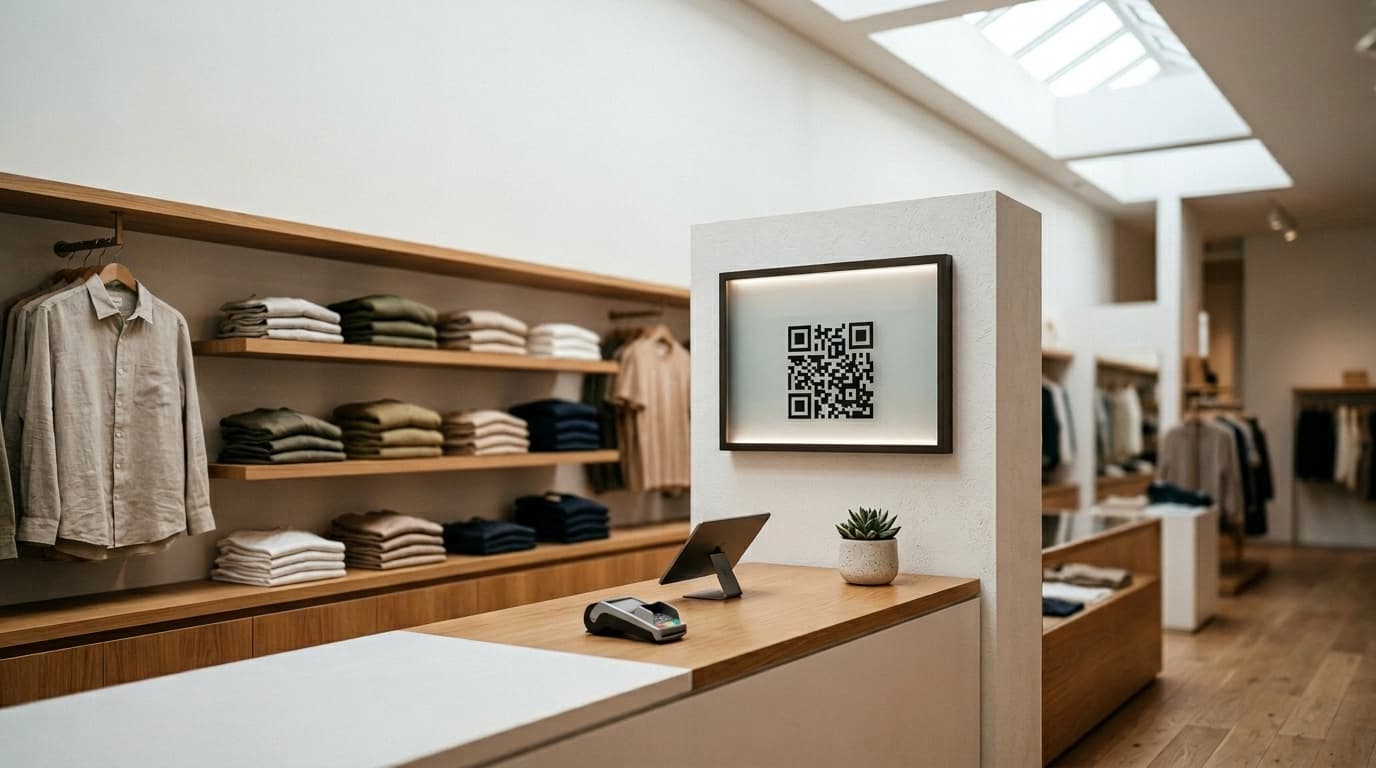
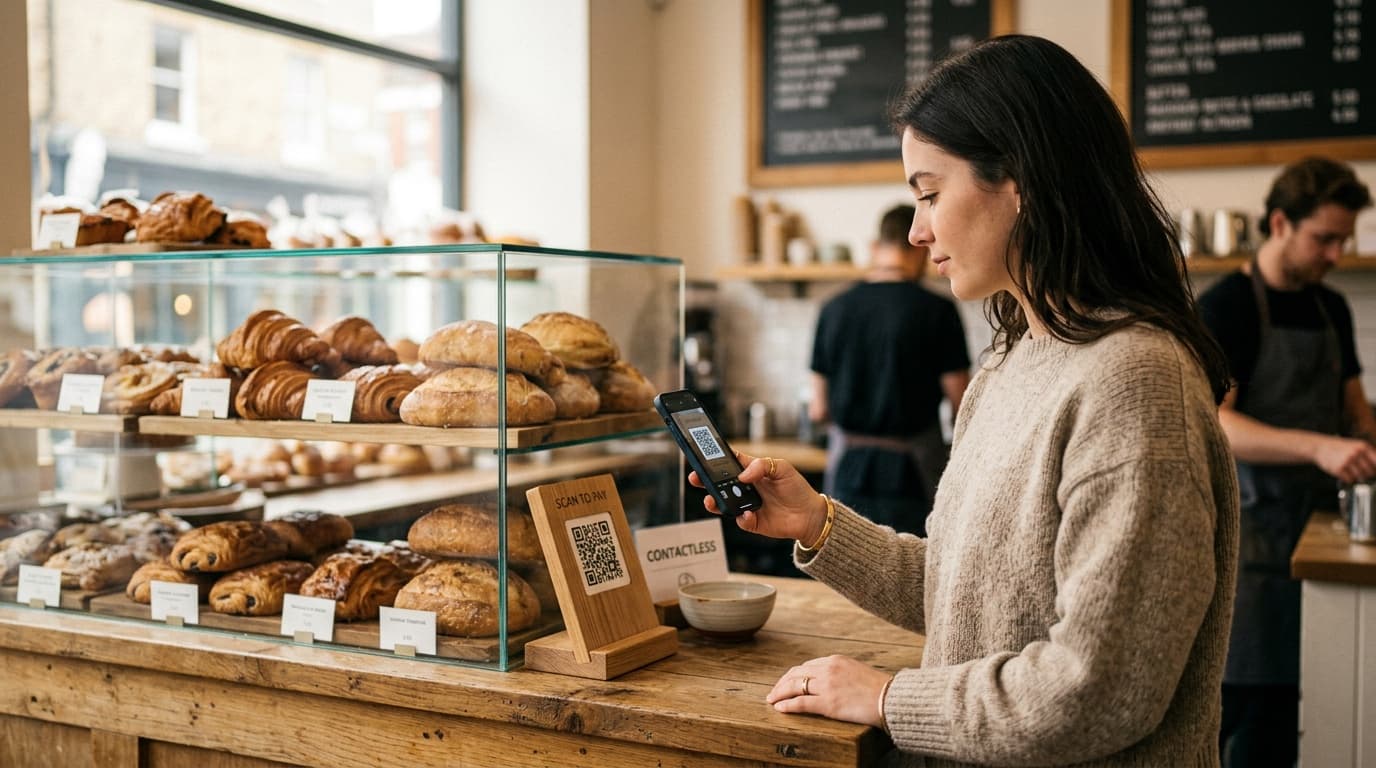
A QR code placed at the point of sale is the single highest-ROI upgrade you can make to your Google review strategy. One scan takes the customer directly to your Google review form — no searching, no typing your business name, no guessing the right listing.
A few principles that make QR codes perform better:
Position matters more than design. Eye level at the register outperforms a sticker on the door or a small card buried in a receipt. The code should be in the customer's natural line of sight during payment.
Label it with intent. "Leave us a Google review ⭐" with a visible star icon drives more scans than a bare QR code. Customers need to know what they're scanning before they'll do it.
Multiply your touchpoints. If you have seating, add a small tent card on each table. Seated customers are relaxed, unhurried, and often scrolling their phones — all conditions that favor taking 60 seconds to write a quick review.
Gamification: Turn a Review Request Into a Fun Experience
Here's the frame shift that changes the entire dynamic. Instead of asking customers to do you a favor, you're inviting them to play a game.
A fortune wheel mechanic works like this: a customer leaves an honest Google review, then spins a digital wheel to win a prize. Free topping, buy-one-get-one on their next visit, a surprise flavor sample, a small discount — prizes you control and calibrate to your margins.
This approach is unusually effective for ice cream shops for one specific reason: you already have children in your customer mix. Kids are instinctively drawn to spinning wheels and prizes. They become your most enthusiastic advocates for the review process — nudging parents, asking to play the game themselves. The interaction becomes a memory attached to your shop, not just a transaction.
The flow is simple enough for any member of your team to run:
- Customer pays.
- Team member shows a QR code on a tablet or printed card.
- Customer scans, leaves a Google review.
- Customer spins the wheel and receives their prize.
The whole process takes under two minutes and integrates naturally into your service rhythm.
Handling Negative Reviews Without Losing Your Composure
Even beloved ice cream shops collect the occasional negative review. A flavor that didn't land. A long wait on a hot Saturday. A communication gap with a new team member. It happens.
The rule is simple: respond to every negative review, quickly and calmly.
A thoughtfully handled negative review often reassures prospective customers more effectively than a string of generic five-star posts. It signals that a real person is paying attention and that problems get addressed — which is precisely the kind of trustworthiness that converts browsers into buyers.
A structure that works every time:
- Thank the reviewer for the feedback.
- Acknowledge the issue without minimizing it.
- Explain what you've done or what you'll change.
- Invite them to return for a better experience.
What never to do: respond defensively, dismiss the complaint, or ignore it hoping it slides off the page. Google considers activity and responsiveness as part of your overall profile health.
Building a Year-Round Review Cadence
Seasonal businesses fall into a predictable trap: they collect most of their reviews during summer, then go quiet for six months. Google's algorithm weights recency. A review from this week carries more signal than one from last August, even if last August's was more detailed.
If you operate year-round — or if you reopen in spring after a winter break — here's how to keep your review count growing through the off-peak months:
Create seasonal hooks. Valentine's Day ice cream cakes, Easter sundae specials, Halloween flavor reveals — each themed moment gives customers a specific reason to talk about you, and gives you a natural prompt to ask for a review tied to the occasion.
Target shoulder season intentionally. April and September are quieter, but that's exactly when a spike in reviews can give you an edge going into summer. Run a short-term incentive campaign and watch what happens to your Maps ranking by June.
Leverage special events. Did you serve at a local market, school event, or corporate afternoon? That audience is warm and happy — follow up with a QR code or a mention of your Google profile in your post-event social content.
Make photos part of the ask. Reviews with photos earn more visibility on Google. Train your team to mention it casually: "Feel free to add a photo if you grabbed a picture." A shot of your most visually impressive creation can double the impact of any review it accompanies.
Give Your Shop the Online Reputation It Deserves
The best ice cream in your neighborhood shouldn't be buried under competitors with average product and better Google profiles. Ludofy makes it simple to turn your natural advantage — genuinely happy customers — into a consistent flow of 5-star reviews.
With a customizable fortune wheel connected directly to your Google review link, your team has a proven, enjoyable system to collect reviews every day — without awkward conversations, without follow-up reminders, and without adding anything complicated to your workflow.
The goal isn't just a higher star rating. It's making sure that the next time someone in your neighborhood searches for the best dessert spot, the answer is unmistakably you.