Search "Indian restaurant near me" in any mid-sized city and the pattern is immediately clear: the top three results aren't necessarily the best food — they're the restaurants with the most reviews and the highest ratings. A 4.7-star profile with 500 reviews will consistently outrank a 4.9 with 30, win more clicks, and put more covers on the books every single week.
Indian cuisine has never been more popular globally. But that same popularity means the competitive field is crowded. Whether you run a refined North Indian fine-dining room, a casual South Indian dosa spot, or a busy takeaway tikka house, your Google reputation is now one of the most powerful growth levers available to you — and most Indian restaurant owners are leaving it almost entirely to chance.
Why Google Reviews Carry Extra Weight for Indian Restaurants
For many diners, visiting an Indian restaurant is still an occasional decision: a special dinner, a work lunch with clients, a date night craving something different. Unlike the neighbourhood café they drop into out of habit, they're choosing your restaurant after a deliberate search. That means the research phase matters more, and Google reviews carry more influence.
Diners evaluating an Indian restaurant through Google reviews are looking for answers to three specific questions: Is the food authentic? Is it worth the price? What's the atmosphere like? Your reviews — and how you respond to them — are the only way to answer those questions before someone sets foot in your door.
Beyond the first-impression value, a consistently strong rating compounds over time. Google's local search algorithm rewards volume and recency: a restaurant with 20 new reviews in the last 30 days will outrank one with the same average rating but reviews that dried up six months ago. Review momentum is a ranking factor, not a one-time achievement.
The Real Problem: Satisfied Customers Who Never Write a Word
Most Indian restaurant owners who struggle with Google reviews aren't getting bad reviews — they're getting almost no reviews at all. Guests finish a wonderful meal, compliment the chef, say they'll be back, and then walk out the door and never write a line. Not because they didn't enjoy it. Because the friction between intention and action is too high.
To leave a Google review from scratch, a customer needs to remember to do it later, find the restaurant on Google, sign into their account, navigate to the review form, and actually write something. That's five separate moments where they can lose the impulse. Your job is to eliminate that friction entirely — and to do it at the right moment.
The right moment is while they're still in your restaurant, warm from the meal, with their phone already in their hand.
The Three Highest-Converting Moments to Ask
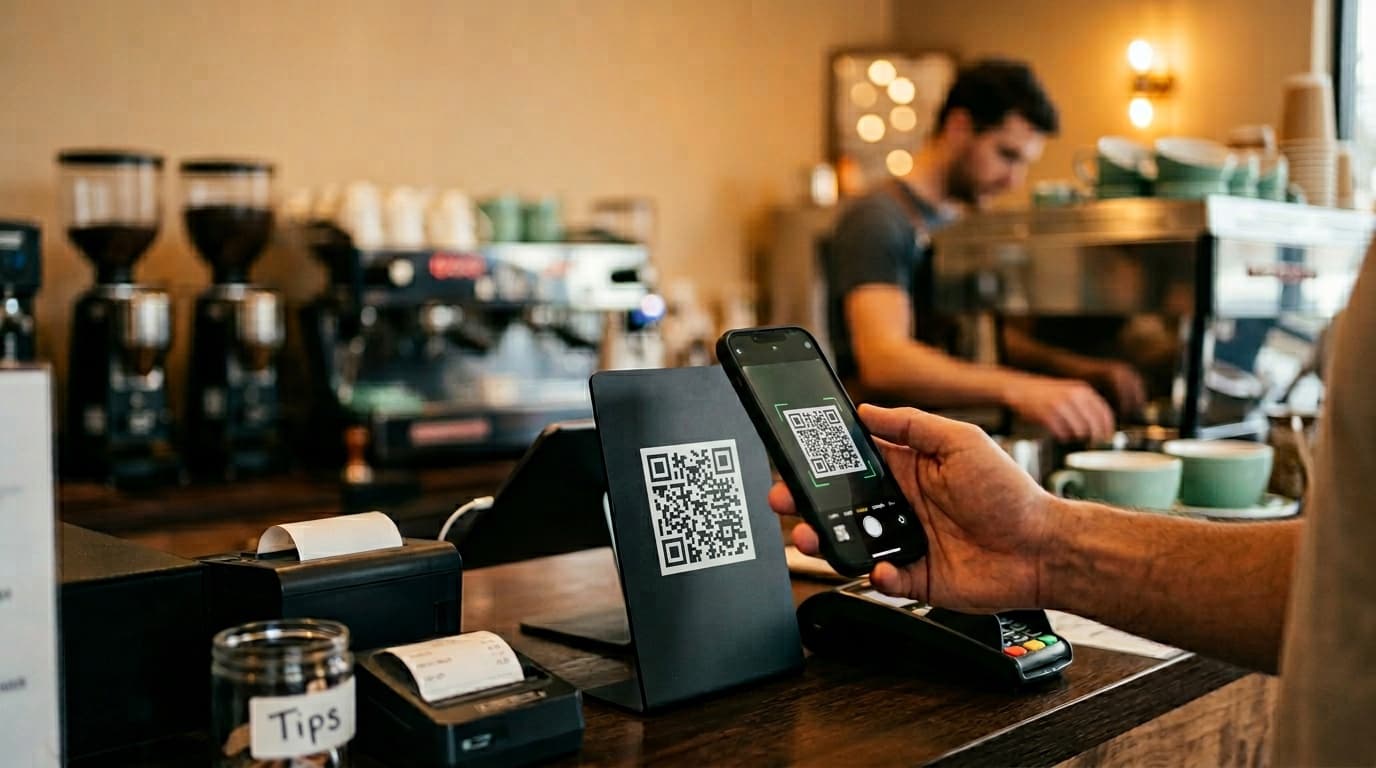
At the point of payment. This is where the conversion rate is highest. The meal is over, the experience is complete, and the customer is in a closing mindset. A QR code on the printed receipt, printed on a small card beside the card terminal, or standing in a small tent on the table can take them directly to your Google review page in two taps. No searching, no navigating — just scan and write.
When the main course arrives. Train your floor staff to return two or three minutes after delivering the main dishes. When a customer signals they're happy, the server can say naturally: "So glad to hear it — if you're enjoying the evening, we'd really appreciate a review on Google. The QR code is on your menu." This is a warm, human ask at the peak of the dining experience.
Via follow-up message. If your restaurant collects phone numbers for reservations or a loyalty program, a brief WhatsApp or SMS message sent 45 to 60 minutes after the customer would typically have finished their meal — with a direct link to your Google review page — can recover the reviews that weren't captured in the room. Keep it short, warm, and direct.
Gamification: The Strategy That Multiplies Review Volume
The most significant improvement in review collection for restaurants over the past few years has been gamification — specifically, digital fortune wheels that let guests spin for a small reward immediately after leaving a Google review.
The mechanic is straightforward. A customer scans a QR code at their table or on the receipt. They're taken to a branded digital wheel. To spin, they first submit a Google review (the system confirms this). The wheel lands on a reward — a free mango lassi on their next visit, 10% off their next order, a complimentary naan, or a free dessert — and they receive it as a digital voucher right away.
The impact on review volume is significant. Passive QR codes that simply link to a review form convert at roughly 5 to 8% in most restaurant settings. Gamified systems regularly hit 30 to 50%, because the immediate, tangible reward turns a vague intention into a specific action with a clear payoff.
For Indian restaurants specifically, the best-performing prizes tend to be things that feel culturally on-brand and genuinely useful: a complimentary lassi, a shared starter, a percentage off the next dine-in visit. These prizes cost very little but create a strong incentive to act — and the voucher itself drives return visits, turning a review moment into a loyalty moment.
One important point: any incentive must be available regardless of the star rating the customer leaves. Google's review policies prohibit selectively rewarding positive reviews only. A well-designed gamification tool handles this automatically.
Responding to Reviews: Where Reputations Are Really Built
Collecting reviews is only the first half of the strategy. How you respond — to everything, positive and negative — is what transforms your Google profile from a score into a living demonstration of how you run your restaurant.
For positive reviews: respond personally and briefly. If the reviewer mentions a specific dish, reference it. If they mention a special occasion, acknowledge it. Two or three sentences, written as if you're talking to the customer directly. This signals to every future reader that the people behind the restaurant genuinely care.
For negative reviews: respond calmly, without defensiveness. The most common criticisms in Indian restaurant reviews tend to cluster around spice levels, wait times, portion size relative to price, or service pace during busy periods. Acknowledge what the customer experienced, explain how you've addressed it, and invite them back. A negative review handled gracefully often impresses prospective customers more than a string of perfect five-stars.
Aim to respond to every review within 48 hours. This isn't just about customer relations — it's a signal to Google that your listing is actively managed, which feeds into your local search visibility.
Turning Reviews into Marketing Fuel
Your Google reviews don't have to stay on Google. They're testimonials you've already earned — put them to work.
Website: Display your top reviews, especially those that mention specific dishes, atmosphere, or occasions, on your homepage and reservation page. A collection of authentic five-star quotes from real diners is worth more than any marketing copy you could write yourself.
Social media: A screenshot of a strong review alongside a photo of the dish mentioned makes an excellent Instagram or Facebook post. It costs nothing to produce and performs well because it's genuine.
Table inserts and menus: Add your Google rating ("Rated 4.7★ on Google — 340 reviews") to your physical menus and table inserts. This reinforces credibility at the moment of ordering.
Google Business Profile posts: Publish weekly or fortnightly posts on your Google Business Profile using quotes from recent reviews alongside photos of featured dishes. This keeps your profile active and fresh, which Google's algorithm rewards with better visibility in local search.
Building Review Momentum Over Time
The restaurant owners who dominate local Indian food searches in 2026 aren't the ones with the biggest marketing budgets. They're the ones who've built review collection into the fabric of how they operate — consistently, every service, every day.
A realistic monthly rhythm: 15 to 25 new reviews per month, a 48-hour response policy for all reviews, one social media post per week using review quotes, and a quarterly look at the themes coming through in review text to identify service or menu improvements.
Hold that cadence for six to twelve months and the compounding effect becomes visible: more reviews, higher average rating, better map placement, more new customers discovering you organically — who leave more reviews.
Ludofy was built to make this loop work without adding to an already full plate. The digital fortune wheel handles the hardest part — getting satisfied guests to act while they're still in the room — and the review volume follows. If you want to see what that looks like in practice for a restaurant like yours, the setup takes less than a day and the results show up within the first week.