The indoor climbing industry has not been the same since the 2024 Paris Olympics put sport climbing in front of a global prime-time audience. Bouldering centers are opening in city centers worldwide, and competition for new members has never been more intense. When someone searches "climbing gym near me" or "bouldering center [city]," the gyms with the most and freshest Google Reviews take the first spots — and the memberships that come with them.
The frustrating irony is that climbers are among the most passionate customers in sport. They log sessions obsessively, track their grades, post on social media, and recommend gyms to every friend who shows the slightest interest. Yet most climbing gyms have fewer than 50 Google Reviews, while a comparable café three streets away has 300. This is not because climbers don't care. It's because nobody asked at the right moment, in the right way.
Why Google Reviews Matter More Than You Might Expect
A person researching climbing gyms in your city cannot judge route quality from a photo. They cannot tell whether the community is welcoming, whether the coaches are any good, or whether the beginner courses actually work. What they can read is what current members say.
A gym with 180 reviews at 4.9 stars reads as established, safe, and worth the membership fee. A gym with 22 reviews at 4.2 reads as an unknown quantity — which, for someone spending €50–80 per month on a sport they're just starting, is too risky.
The Google Maps ranking algorithm reinforces this effect mechanically. Review count, recency, and average rating all feed directly into local pack placement. A gym generating 8–12 new reviews every month will outrank a competitor with an older, larger pool of reviews that stopped arriving six months ago. Freshness matters as much as volume.
The Climbing Customer Is Built for Reviewing — When You Ask Right
Climbing gym members are, paradoxically, both easy and hard to get reviews from. Hard because they're absorbed in their sport and don't think about the gym as a service they evaluate. Easy because once prompted, they have real things to say.
Climbers are:
- Community-minded. They introduce friends to gyms, share beta, celebrate sends together. If the ask feels like contributing to the community rather than doing the gym a favor, conversion goes up sharply.
- Progress-obsessed. They measure everything — grades, flash rates, strength benchmarks. Tying the review ask to a milestone (first V4, completed beginner course, first lead climb) makes it emotionally resonant.
- Digitally active. The climbing community documents everything on Instagram and TikTok. Scanning a QR code to do something interactive is a completely natural behavior.
- Loyal over months, not visits. A member who has been training for four months has a richer story to tell than a one-time visitor to a restaurant. These are your most valuable review writers.
The Right Moments to Ask
Timing transforms conversion rates. The wrong moment is the front desk on arrival. The right moments are:
After a breakthrough session
A climber who just flashed their first V5 or topped a project after three weeks of attempts is in a window of peak positivity. This is when "scan this code, leave a quick review, and spin the wheel for a prize" lands without friction.
At the end of a beginner course
Participants who completed a first-timer course have a complete narrative arc — they came in knowing nothing, they can now climb. That's a compelling review in the making. Course completion is the single highest-converting moment for first-time reviews.
Membership renewal at the counter
Someone renewing their monthly pass has already voted with their wallet. A QR code at the payment point at the exact moment of renewal consistently converts at 30–40% of those who scan it.
QR Code Placement Strategy for Climbing Gyms
The physical environment of a climbing gym offers several high-quality touch points that most gyms leave completely unused.
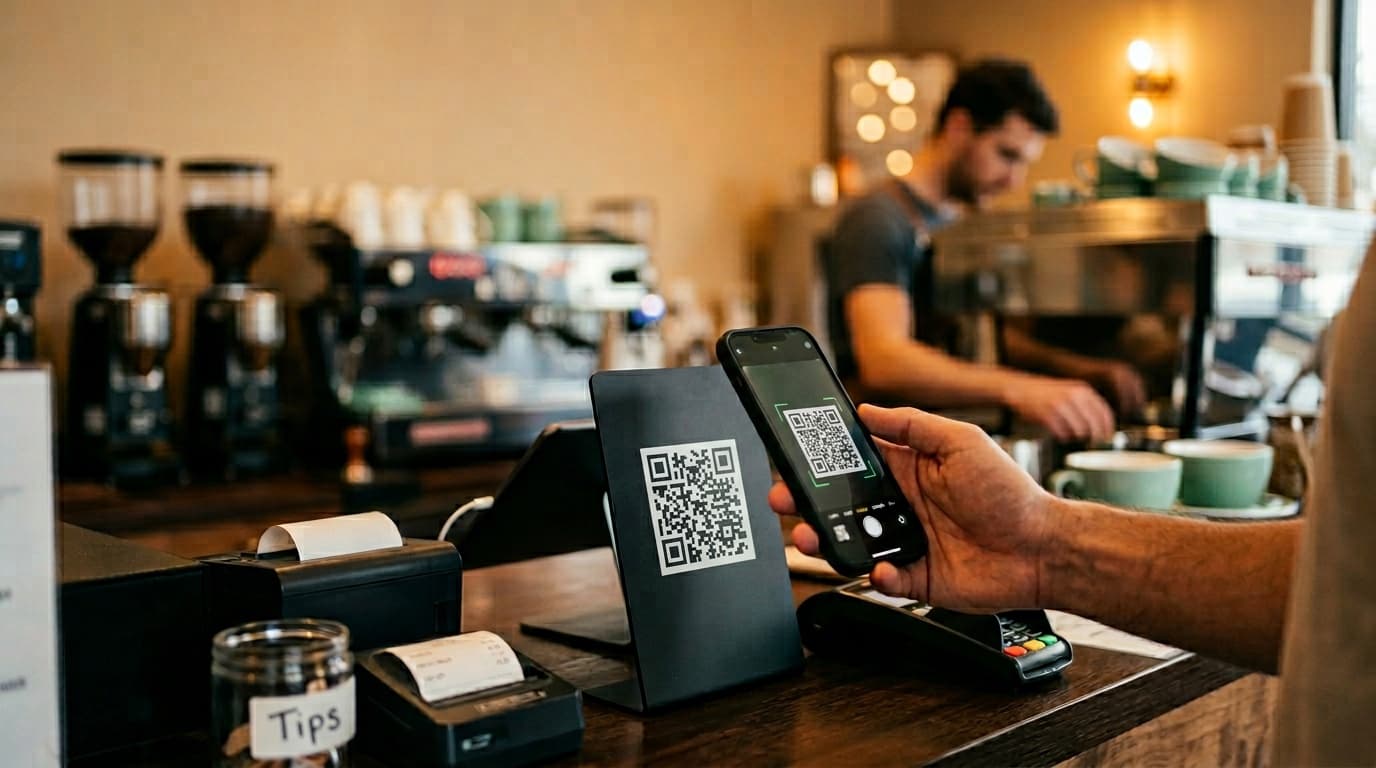
Front desk. The baseline. A QR code stand or card holder next to the payment terminal, with a clear message: "Loved today's session? It takes 60 seconds." This alone will double your review velocity.
Changing rooms. Climbers spend five to ten minutes in changing rooms after a session, often still running on the endorphin spike. A well-designed A4 poster converts people who are already reflecting on the experience.
Membership cards. Print the QR code on the back of the physical or digital membership card. Every member carries it.
Route-setting boards. Some gyms post information about new routes. A small card at the base of a new set — "Rate this sector? Rate the whole gym on Google" — intercepts climbers at peak engagement with the venue.
Staff scripts. Front desk staff asking "how did your session go?" is common. Adding "if you want to leave us a quick review, scan here and you might win something" converts casual positive responses into actual reviews.
Gamification Fits Climbing Culture Perfectly
Climbing is already inherently gamified. Problems have grades. Circuits have sequences. Progression is tracked, visualized, and shared. The fortune wheel mechanic maps onto this mindset in a way it doesn't for most other businesses.
When a climber scans your Ludofy QR code after leaving a review, they spin a wheel with prizes calibrated to what climbers actually want:
- A free day pass for a friend (high perceived value, zero marginal cost for an off-peak slot)
- 10% off next month's membership
- A free 45-minute coaching session with one of your instructors
- Priority access to new route preview nights
- Branded chalk bag or water bottle
The spin creates a moment of genuine excitement that makes the review feel rewarded rather than extracted. Conversion rates for this mechanic run at 25–40% of people who scan — versus 2–5% for a verbal request. The math is simple: a gym seeing 60 members per session and converting 30% of post-session scans generates around 18 new reviews per day if the placement is right.
Skip generic discount codes. Prizes that enhance the climbing experience — coaching time, extra sessions, gear — resonate far more with a sports community than a percentage off a bill.
Handling Negative Reviews: Community Management in a Vocal Sport
Climbing communities are vocal and sometimes blunt. A negative review about route quality, hygiene, or a poor coaching experience will be read by every climber researching your gym. The response matters.
A thoughtful, specific reply — acknowledging the feedback, explaining what changed, inviting the reviewer back — signals to the whole community that management is engaged and takes quality seriously. Ignoring negative reviews is the worst possible signal in a word-of-mouth sport where community reputation is everything.
Getting Started with Ludofy
Ludofy lets you set up a QR code-linked fortune wheel in under an hour, with no technical configuration beyond generating the code and printing it. You define the wheel prizes, connect to your Google Business Profile, and you're live.
For climbing gyms, the highest-impact first placement is at the front desk during post-session checkout. Set up a small stand with a direct message, track monthly review volume, and adjust prize values based on what your community responds to.
Your Google reputation is not a marketing side project — for a climbing gym, it's the first thing a new climber reads about you. In a sport built on community and shared progress, that reputation is part of your culture. Start building it deliberately.