The plant-based restaurant market is one of the fastest-growing segments in the food industry. Whether you run a fully vegan fine dining spot, a casual plant-forward cafe, or a quick-service whole-food counter, one thing holds true across all formats: your Google Reviews are the first thing potential customers see when they search for vegan food near them.
Before they ever see your menu, your interior photos, or your chef's story, they see your star rating and your most recent reviews. That first impression either earns the click — or loses it to the place two doors down.
Why Vegan Restaurants Need Google Reviews More Than Most
Vegan and plant-based diners are among the most research-driven restaurant customers in any market. Before visiting somewhere new, they check:
- Is the menu genuinely 100% plant-based, or does it just have a few vegan options hidden at the bottom?
- Do reviewers mention staff knowledge about cross-contamination and allergens?
- Is the food actually good, or is it the kind of place that relies on the ethics alone?
- How does the price compare to the portion and quality?
These questions don't get answered by your website copy. They get answered by your reviews. And when two similar vegan restaurants compete in search results, the one with more recent, detailed reviews almost always wins the customer — regardless of which one is technically better.
There's also an important algorithmic dimension. Google's local search ranking factors include review volume, recency, and response rate. A plant-based restaurant sitting at 4.7 stars with 180 reviews will reliably outrank a 4.9-star competitor with 20 reviews in most local markets. Building that volume takes time, but it's entirely manageable with a consistent approach.
The Specific Challenges Vegan Restaurants Face with Reviews
Plant-based operators face a particular challenge that mainstream restaurants don't: polarized reviewers.
Your most passionate regulars — people who have embraced a vegan lifestyle — are among the most enthusiastic reviewers on the internet. They love recommending places where they feel seen and well-fed, and they'll often write detailed, specific, five-star reviews that help your rankings enormously.
But online visibility also brings in visitors who arrived out of curiosity, peer pressure, or because they couldn't agree with friends on a different restaurant. Some of these customers leave reviews that reflect mismatched expectations rather than actual service failures — complaining about the lack of meat options at a place that's been openly vegan since day one.
Managing this requires two things: a proactive strategy to maximize reviews from your core audience, and a thoughtful response policy that handles outlier criticism without defensiveness.
Seasonal spikes are another factor. Events like Veganuary in January, World Vegan Day in November, or plant-based food festivals bring surges of first-time visitors who may not be as emotionally invested in your success. Without an active review collection strategy, these high-traffic periods can dilute your average score rather than boost it.
When to Ask for a Review in a Vegan Restaurant
The single most important factor in review collection is timing. Ask at the right moment and your request feels natural. Ask at the wrong one and it feels transactional.
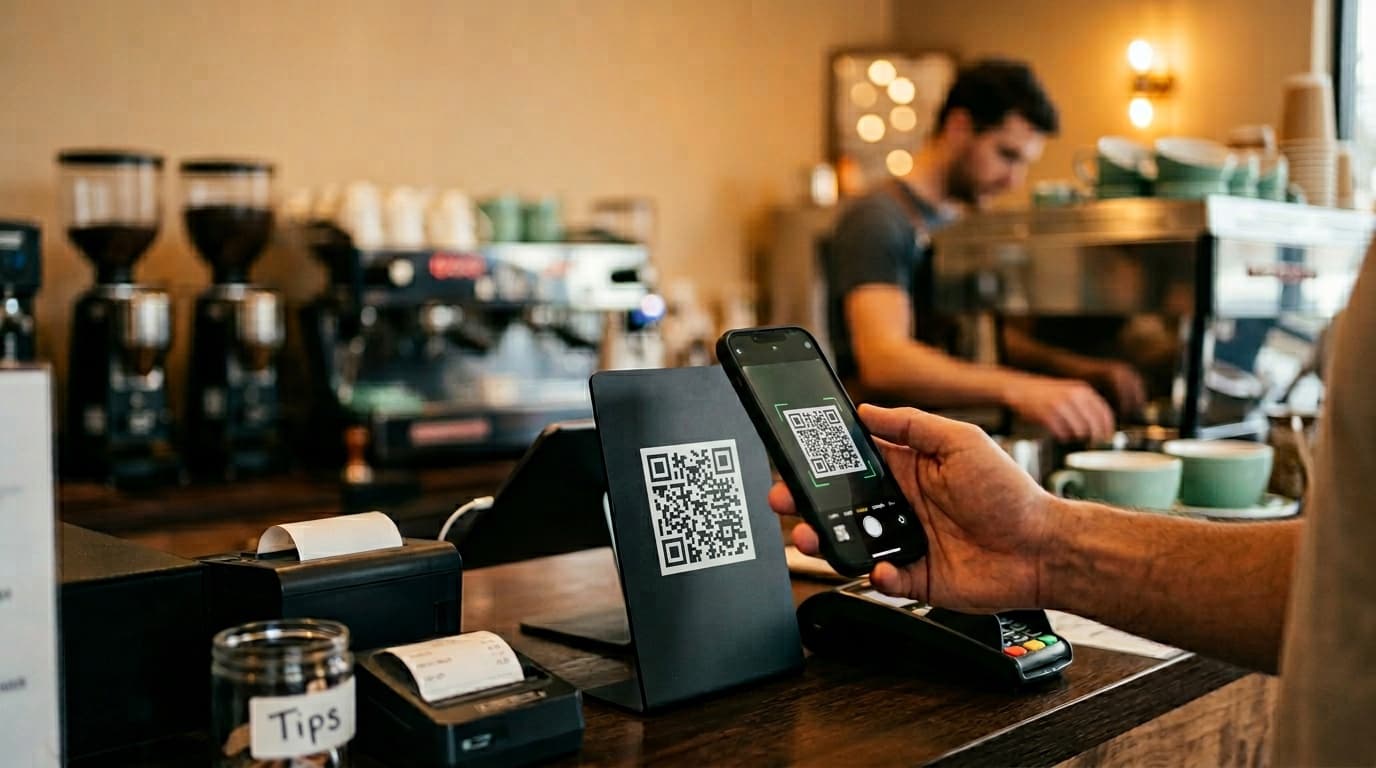
At the end of a great meal, when the bill arrives. This is the emotional high point of the visit. A QR code on the receipt, a table tent card, or a small piece of card stock included with the bill creates a frictionless path: one scan, and the customer is on your Google review form. No app to download, no account to create.
When a customer expresses genuine enthusiasm. Train your floor team to recognize the moments when guests are clearly delighted — the spontaneous comment about the mushroom tartare, the request to compliment the chef, the eyes-wide reaction to a dessert. That's the moment for a soft, genuine ask: "We'd really love it if you shared that on Google — it helps so much." Pair it with a visible QR code nearby and you'll convert that enthusiasm into a published review far more often than you'd expect.
After a dietary accommodation is handled well. Guests with complex food sensitivities who felt genuinely cared for are among the most loyal and review-likely customers you have. A simple follow-up from a server — "Was everything okay with the modifications?" — followed by a review ask if the answer is positive will consistently generate detailed, high-quality reviews that carry significant weight with prospective customers.
Gamification: Using a Fortune Wheel to Make Reviewing Fun
One of the most effective tools for high-volume review collection in restaurants is the gamified review request — typically a digital fortune wheel that customers access via a QR code. Here's how it works in a plant-based restaurant context:
- The customer scans a QR code at the table or checkout
- They're invited to leave a Google Review first
- After submitting, they can spin a digital fortune wheel to win a prize
- The result is instant and satisfying
For vegan restaurants, the prize options can be perfectly aligned with your brand identity:
- A free house-made kombucha or cold-pressed juice
- A discount on their next visit or a free dessert
- A product from your zero-waste pantry section
- A tote bag or reusable cup from a like-minded local brand
This mechanic transforms what might feel like a chore — leaving a review — into a fun, shareable experience. Customers often take photos of the spinning wheel and post them to social media, extending your reach organically. The playful format also resonates well with the vegan and eco-conscious demographic, which tends to respond positively to creative, experience-led marketing.
Ludofy offers this setup out of the box: customizable wheel, QR code generation, and direct Google review redirect — all without requiring any technical expertise. Most restaurants have it running within an hour of signing up.
Responding to Reviews: Finding the Right Tone
How you respond to reviews matters as much as how many you collect. For vegan restaurants, every public response is a window into your values and your team culture.
For five-star reviews: Thank the customer warmly and reference something specific they mentioned. "So glad the smoky lentil stew hit the spot — we source those lentils from a cooperative farm in the Southwest and it shows!" Mentioning specific dishes or ingredients in your response helps Google associate those terms with your listing, strengthening your position in related searches.
For three- or four-star reviews: Acknowledge what worked, address what didn't with honesty, and invite the customer back with a specific suggestion. "Sorry the service felt rushed on Saturday — we were short-staffed unexpectedly. If you come back, ask about our Tuesday tasting menu, which moves at a much more relaxed pace." Prospective diners reading this exchange will see a business that takes feedback seriously.
For reviews based on mismatched expectations: Stay calm, stay brand-true. If someone is upset about the lack of animal products in your menu, your response can be professional and inviting without apologizing for who you are: "We're a proudly 100% plant-based kitchen — we wouldn't have it any other way. We'd love to surprise you with what plant-based cooking can actually do if you give us another chance." This kind of response lands well with your target community while remaining respectful to everyone.
Building Consistency: The Long-Term Review Strategy
Consistency beats volume spikes. A vegan restaurant that collects 8–12 new reviews every month will reliably outperform one that collects 80 in January and then goes quiet. Google's algorithm rewards recency, and prospective customers trust a steady stream of recent reviews far more than a large but aging archive.
To build that consistency without burning out your staff, distribute your review collection touchpoints across the entire customer journey:
- Table QR codes on menu cards or tent cards
- Receipt QR codes on printed and digital bills
- Email follow-ups for customers in your newsletter or loyalty program
- Instagram Stories linking to your Google profile during high-traffic periods
- Takeout packaging — a small card inside each bag, especially for weekend orders
Each additional touchpoint increases the probability that a satisfied customer will act at the moment that's most convenient for them. You don't need all of them at once; start with one or two and add more as you see results.
Closing Thoughts
For vegan and plant-based restaurants, Google Reviews are not just a marketing tool — they are the digital equivalent of a neighbor's recommendation. Building a systematic, values-aligned approach to collecting and responding to reviews doesn't require aggressive tactics. It requires making the ask easy, making the reward feel good, and showing up consistently in your responses.
With the right infrastructure — a QR code at checkout, a gamified incentive that reflects your ethos, and a thoughtful response habit — you can build the kind of online reputation that turns first-time visitors into regulars and idle searchers into new customers.
Ludofy was designed for exactly this. Its QR-based fortune wheel connects your most enthusiastic plant-based diners to your Google listing in seconds, with prizes you choose to reflect your brand. Set it up once, keep it running, and let your community build your reputation while you focus on the cooking.