Walk down any high street in the UK, any rue in a French city, or any busy strip in a German neighbourhood, and you'll find at least one kebab shop doing brisk business. Fast, filling, often open late — kebab shops are a cornerstone of urban food culture across Europe and beyond.
Yet open Google Maps and search for kebab shops in any mid-sized city and you'll find something puzzling: many of the most popular spots have fewer than 50 reviews. Some have a handful. A few have none at all.
This is the kebab shop review gap, and it is a significant untapped opportunity.
Why Kebab Shops Tend to Have Fewer Reviews Than They Deserve
It comes down to the transaction. Kebab is fast food — customers queue, order, pay, and eat, often in under ten minutes. There is no table service moment, no lingering coffee, no natural pause where a customer might think "this was so good I should leave a review."
The experience is positive but transient. And transient experiences rarely generate reviews without a nudge.
There is also a demographic effect. Kebab shops serve a broad cross-section of the population: students, shift workers, night-time revellers, families grabbing a quick weeknight dinner. Many of these customers are your most regular visitors — people who genuinely love your shop and come back week after week. But they are not habitual reviewers, and without a prompt, they move on.
The result: a shop that is packed every evening with loyal fans, but sits at 3.8 stars on Google with 30 reviews.
Why Google Reviews Matter More for Kebab Shops Than You Might Think
You might assume that word of mouth does the job — that your regulars keep coming back and bring friends. That is true. But Google Reviews serve a different function: they reach the new customer, the person who just moved into the area, the tourist looking for a late-night bite, the office worker exploring a new street for lunch.
These are the customers who will type "kebab near me" or "best kebab in [city]" into Google. The shop that appears first, with the most and best reviews, wins that click. And that click, multiplied across dozens of searches per day, is meaningful revenue.
A shop with 4.5 stars and 200 reviews does not just rank higher on Google Maps — it also converts browsers into visitors at a dramatically higher rate. Research consistently shows that the difference between 3.8 and 4.5 stars can influence 30–40% of potential customers.
Beyond the ranking, reviews tell a story that your signage cannot. A review that says "best lamb doner I've had outside Istanbul" or "staff were so welcoming, huge portions" does the sales job for you, in the voice of someone the reader trusts.
Three Practical Ways to Collect Reviews at Your Kebab Shop
1. QR Code at the Point of Sale
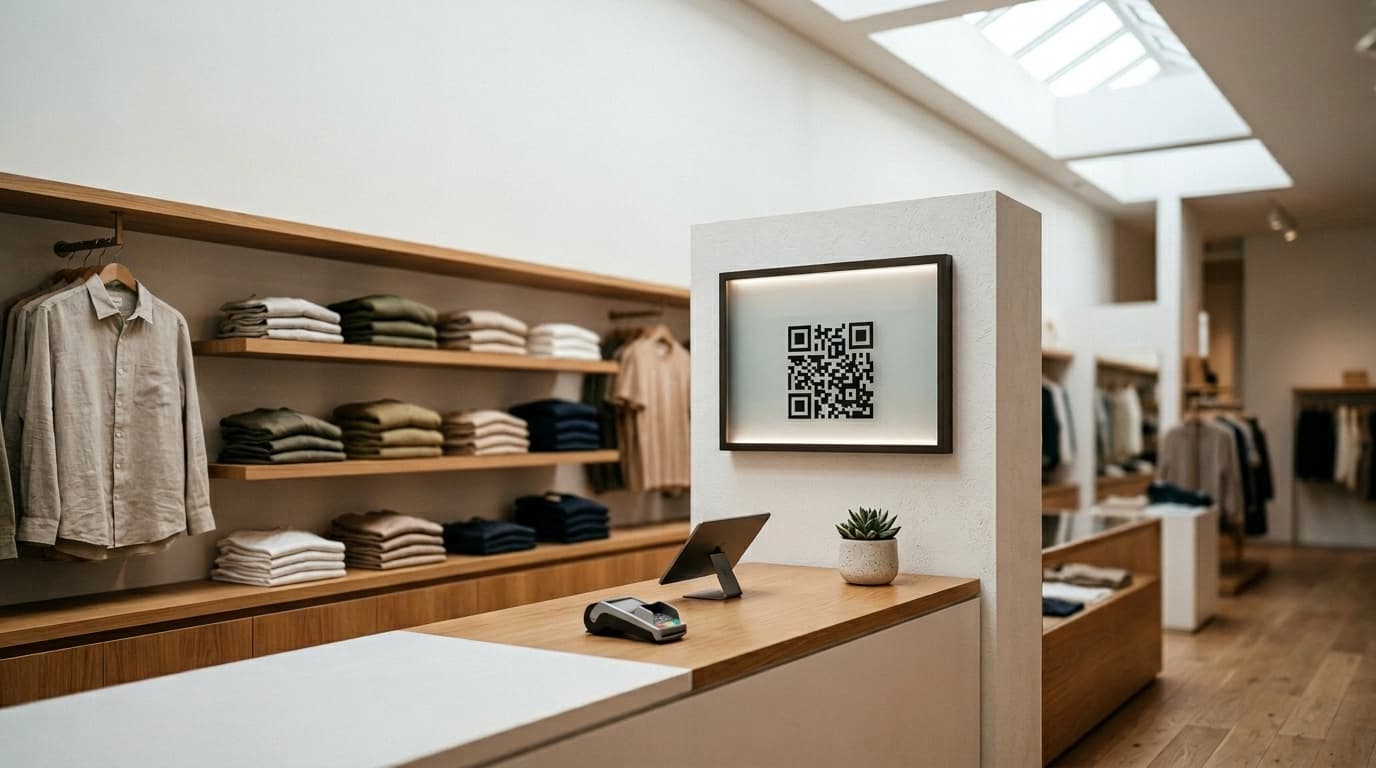
The most reliable review collection tool for a fast-service environment is a QR code placed exactly where customers look while they wait: at the counter, next to the till, or on a menu board display.
The code should link directly to your Google review form — not your homepage, not a landing page. One scan, one tap, one review. You can generate this link from your Google Business Profile dashboard in under a minute.
For maximum conversion, add a simple message above the code: "Loved your kebab? 30 seconds on Google means everything to us." The specificity of "30 seconds" removes the perceived effort barrier. People assume leaving a review takes time. Tell them it does not.
2. Review Prompts on Bags and Packaging
Many kebab shops already print custom bags or wrapping. Adding a small QR code and a one-line message to your packaging turns every order — including delivery — into a review touchpoint. Customers who order via delivery apps and scan the code on their bag are particularly valuable: they tend to write more detailed, considered reviews in the relaxed environment of their home.
A simple sticker with your QR code costs almost nothing to produce and can be added to bags and boxes within days.
3. Gamification at the Counter
The most effective review collection systems convert the ask from a chore into an experience. A fortune wheel mechanic — where customers spin to win a small prize (a free drink, a discount on their next order, an extra portion of fries) in exchange for leaving a review — dramatically outperforms a simple QR code link.
Platforms like Ludofy let you deploy this in minutes: a QR code at the counter launches a branded spinning wheel on the customer's phone. They spin, they win, and in the process they are guided to leave a Google review. The gamification element converts customers who would never act on a plain "please review us" into willing participants.
Kebab shops using this approach typically see review collection rates three to five times higher than those relying on passive QR codes alone. The small prize element fits naturally with the value-for-money culture that kebab customers already appreciate.
Handling Negative Reviews: The Patterns Kebab Shops See
Kebab shops attract predictable types of negative feedback: wait time complaints during peak hours, late-night quality inconsistencies, and occasionally remarks about the cleanliness of shared seating areas. These are manageable — and if handled well, they can actually strengthen your reputation.
The response matters more than the review itself. A thoughtful, non-defensive reply to a critical review demonstrates professionalism and often reassures potential customers more than ten five-star reviews with no owner response would.
For wait time complaints: acknowledge the rush, explain what you are doing to address it (extra staff on Fridays, a new ordering system), and invite the customer back on a quieter day.
For quality issues: thank them for the specific feedback, take it publicly seriously, and commit to something concrete.
For cleanliness: a fast "you are absolutely right, we have addressed this" is more powerful than any justification.
Never argue. Never blame the customer. Never leave a negative review unanswered. Even if the customer is wrong, future readers are watching how you respond.
Training Your Staff to Make Review Requests Feel Natural
The difference between a team that generates 5 reviews a month and one that generates 40 is almost entirely in whether staff mention the review option as part of their service flow.
You do not need a script. You need a habit: at the end of each transaction, after handing over the order, your staff says one sentence — "Feel free to scan the code on the counter if you enjoyed it." That is it. No pressure, no repetition, no awkwardness. Just an open door.
Train for this in one ten-minute team session. Practice it once. Then reinforce it by checking your review count weekly and celebrating each increase with the team.
Building Your 90-Day Review Strategy
The most important thing is to start. Most kebab shop owners know they should have more reviews but never implement a system.
Week 1: Generate your Google review direct link from your Google Business Profile. Create a QR code, print it on a card or small stand, and place it at the counter. This takes 20 minutes and costs nothing.
Weeks 2–3: Brief your staff on mentioning the QR code naturally at the end of each transaction. Check your review count at the end of the week. You will see the first results within days.
Month 2: Add the QR code to your packaging if you do delivery. Begin reading and responding to every incoming review — positive and negative. Look for patterns in the feedback that might point to easy operational improvements.
Month 3: If you want to accelerate, move to a gamified fortune wheel system like Ludofy. The combination of a small prize and a fun spinning mechanic consistently generates three to five times the reviews of a static QR code.
The Advantage You Are Leaving on the Table
In most cities, the kebab shop with the most Google reviews has a significant and durable competitive advantage. New customers consistently choose the reviewed option over the unknown one — even at a slightly higher price point.
The bar in this category is low. Getting to 100 genuinely positive reviews puts you ahead of the majority of competitors in most markets. That is achievable in three to four months with a consistent system in place.
Your next customer is searching Google Maps for a kebab right now. Make sure they find you first.