Lebanese cuisine is having a moment. From fast-casual shawarma counters to refined mezze experiences, Lebanese and Middle Eastern restaurants are among the most popular dining destinations in cities around the world. But even with full tables every weekend, many owners run into the same problem: their Google rating doesn't reflect the quality of their food or the warmth of their hospitality.
This guide is for Lebanese restaurant owners who want to turn satisfied diners into active Google reviewers — and build the kind of online reputation that fills tables on a Tuesday night.
Why Lebanese Restaurants Are Uniquely Positioned for Reviews
Lebanese food is inherently a social experience. Mezze sharing, communal platters, long family dinners — these are the hallmarks of a Lebanese restaurant. And social experiences generate stories. When people share food, they share memories, and they share those memories online.
The challenge is channeling that energy specifically toward Google Reviews.
Here's what makes Lebanese restaurants especially well-positioned to collect reviews:
- Long table times: A mezze meal often runs 90 minutes or more. That's multiple natural touchpoints to introduce a review request without it feeling rushed.
- High emotional engagement: People come to Lebanese restaurants to celebrate, connect, and indulge. High-emotion dining produces high-quality, detailed reviews — the kind Google weights more heavily.
- Beautiful food: Fattoush, kibbeh, hummus with olive oil, grilled meats with sumac — Lebanese dishes photograph brilliantly. Photo reviews on Google are favored by the algorithm and build more trust with future customers.
- Strong word-of-mouth culture: Lebanese restaurant patrons tend to bring friends, then bring those friends again. One loyal table, handled well, can generate five or six Google reviews across multiple visits.
The Numbers That Drive the Decision
According to BrightLocal, 98% of consumers read online reviews before visiting a local business. For restaurants, that number is consistently at the top across all categories — and Google Maps has become the primary discovery tool for dining decisions in most cities.
A Lebanese restaurant with 200 reviews at 4.6 stars will consistently outrank a competitor with 40 reviews at 4.8 stars in Google's local pack, because Google's algorithm weights both volume and recency alongside rating. Gaining 15 fresh reviews per month consistently beats a burst of 80 reviews a year ago that have since gone quiet.
The practical implication: you need a repeatable system, not a one-time push.
When to Ask: Four Natural Moments in a Lebanese Restaurant
Timing your request right is half the battle. Push too early and it feels transactional; leave it too late and the customer is already out the door. In a Lebanese restaurant, these four moments work best:
After the mezze arrive and land well
The energy at the table is high. If your team delivers the mezze spread and gets a visible reaction — "this looks incredible," a round of photos, excited conversation — that's an open window. A light comment from the server works perfectly: "So glad you're enjoying the mezze. If you have a moment later, a Google review means a lot to a place like ours."
With the dessert or mint tea
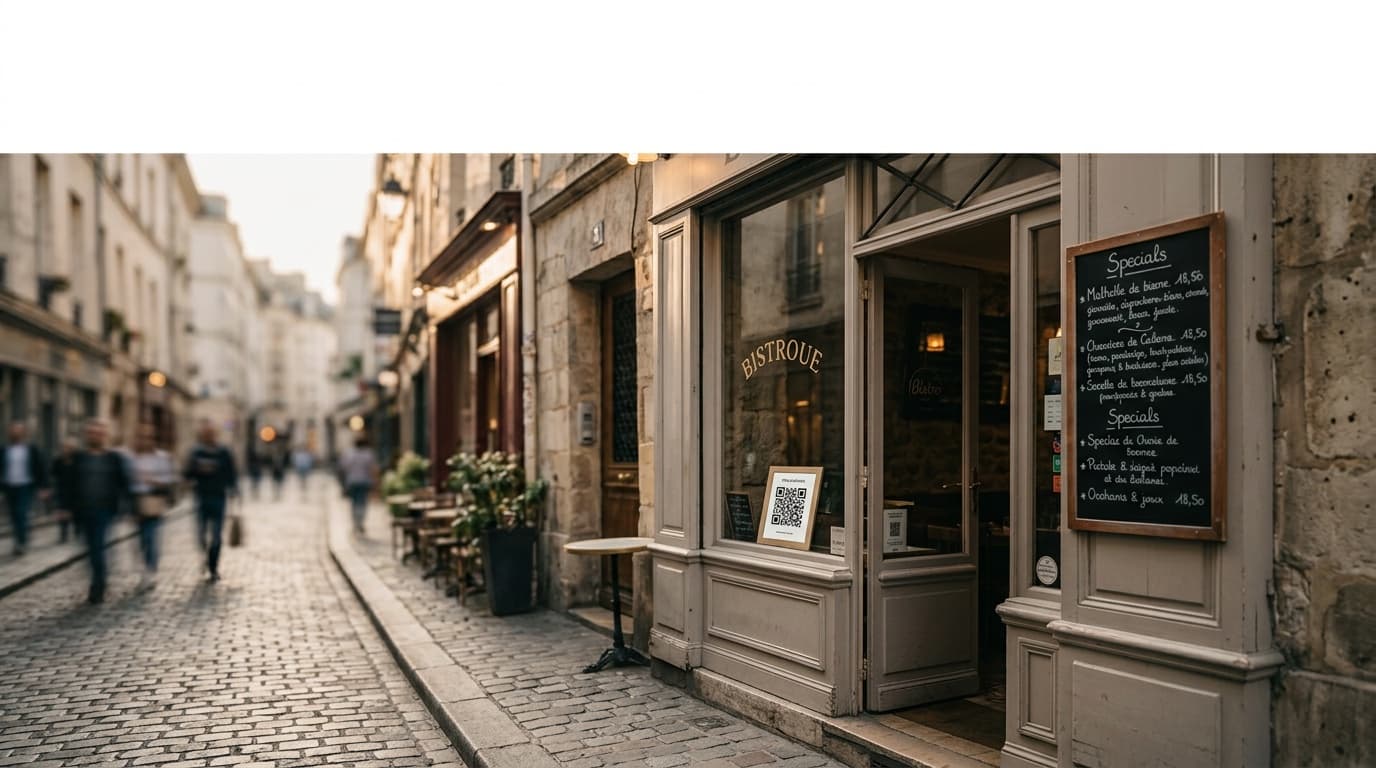
The final dessert or tea service is peak satisfaction for most guests. Sliding a QR code card under the tea glass, or presenting it with the baklava, feels like hospitality rather than a sales pitch. The guest is relaxed, happy, and has time to pull out their phone.
At the bill
This is the most common moment — but it's often wasted with a vague verbal ask that's easy to ignore. Use a physical QR code card in the bill folder, with a single line of copy: "A 30-second review means the world to us." No pressure, no long explanation. The card does the work.
With takeaway and delivery orders
Shawarma and falafel wrap orders often generate strong opinions. An adhesive sticker on the bag, pointing to your Google review page, converts a higher percentage of happy takeaway customers than most owners expect. The scan happens at home while the food is still fresh in their mind.
Scripts Your Staff Can Actually Use
Your team needs language that feels natural, not rehearsed. Here are scripts that work in real service:
At the table, mid-service:
"We're so glad you're enjoying it. If you have a second later, a quick Google review really helps people find us — the QR code is on the card with your bill."
For a large group:
"It's been a real pleasure having your group tonight. If anyone feels like sharing the experience, a Google review would mean a lot — even just a sentence makes a difference for a small restaurant."
For a repeat customer:
"Great to see you again. Have you ever left us a Google review? We'd love to have your voice on there — it really helps us stay visible on Maps."
The wording matters less than the consistency. Train your team to make it a habit, not an exception.
Fortune Wheel Gamification: The Method That Changes the Numbers
One of the most effective tools for scaling review volume in restaurants is the fortune wheel (also called the spin-to-win or prize wheel). Here's how it works in practice:
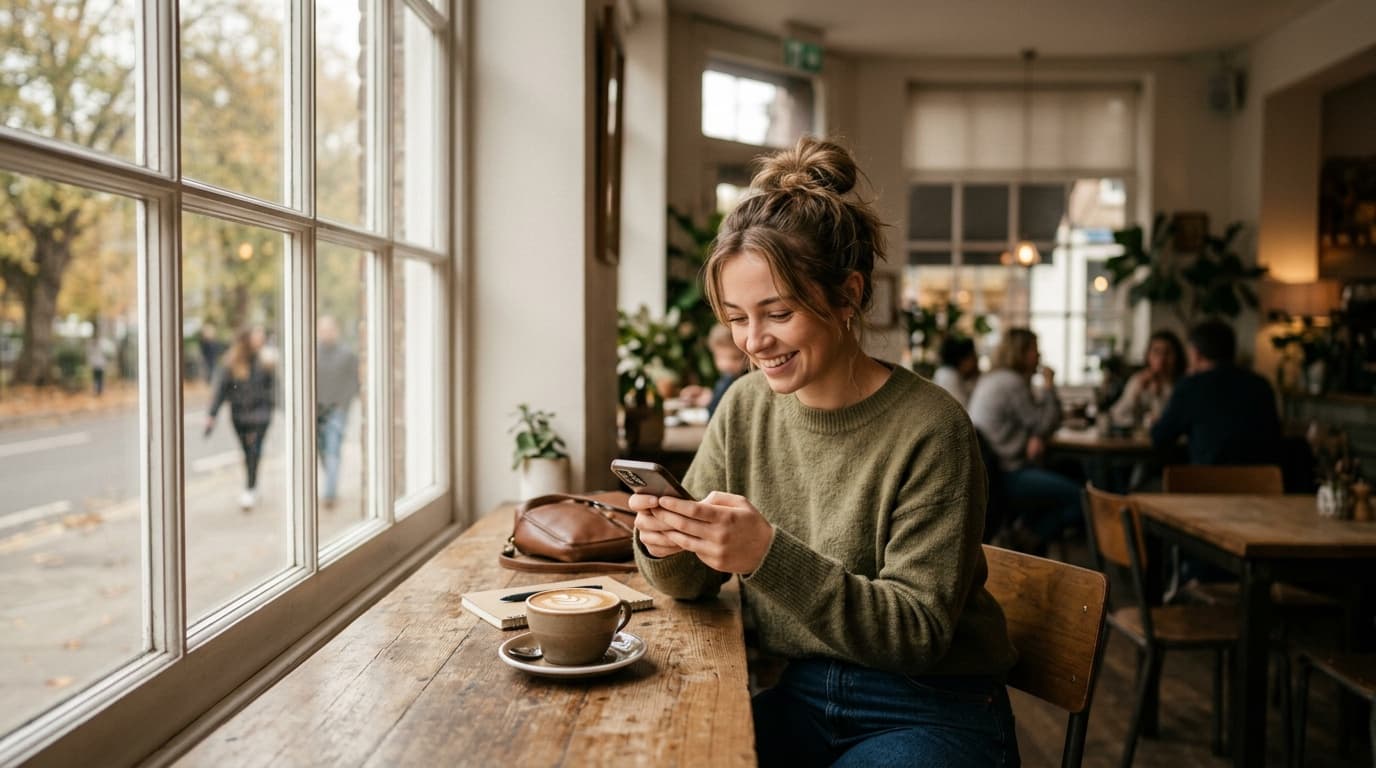
A QR code at the checkout or on the table leads to a digital spinning wheel. To spin, the customer leaves a Google review. Once they have, the wheel gives them a prize — a free mint tea on the spot, a discount on their next visit, or a complimentary dessert next time they come in.
Why this works particularly well for Lebanese restaurants:
- It aligns with your hospitality culture: you're giving something back, which matches the generous ethos of Lebanese dining
- It removes friction: customers who "wouldn't normally bother" are motivated by the spin — the psychological commitment is to a game, not a task
- It standardizes the ask: every server uses the same tool and the same message, regardless of their confidence level
- The reward reinforces your identity: a free tea or next-visit discount is on-brand for a warm, return-customer-focused restaurant
Operators using Ludofy's fortune wheel typically see review conversion rates jump from 3-5% (verbal ask alone) to 30-40% (gamified QR code). For a restaurant doing 50 covers per evening, that's the difference between 2 reviews per week and 20.
Optimizing Your Google Business Profile for Middle Eastern Cuisine
Getting reviews is step one. Step two is ensuring your Google Business Profile converts searchers into reservations.
Categories: Set "Lebanese Restaurant" as your primary category. Add "Middle Eastern Restaurant" as secondary. If you serve halal food, "Halal Restaurant" is a significant filter for a large segment of your potential audience.
Attributes: Enable halal food, takeaway, delivery, reservations, and outdoor seating where applicable. These attributes surface your listing in filtered searches that would otherwise miss you.
Photos: Post at least 15-20 high-quality photos of your most photogenic dishes — a full mezze spread, shawarma close-ups, baklava, your dining room. Listings with over 100 photos generate twice as many direction requests as those with fewer visuals.
Responding to reviews: Reply to every review, positive or negative. For positive ones, personalize the response — mention the dish they praised or the occasion they celebrated. For negative ones, acknowledge the concern without defensiveness. These responses are read by future customers and are one of the clearest signals of your brand character.
Google Posts: Use the Posts feature to share weekly specials, seasonal menu additions, or upcoming events. Posts appear directly on your profile and improve click-through rates from Maps searches.
Handling the Most Common Negative Reviews
Lebanese restaurant reviews tend to attract three recurring complaint types. Here's how to respond constructively:
Wait times: Mezze preparation is an art — and freshly made hummus takes longer than opening a tub. Your response: "We prepare everything fresh to order, which means a little more patience — but we hope the result was worth it. We're working on communicating this better at the table."
Sharing portion expectations: Not every customer understands mezze culture. Your response is an opportunity to educate while thanking them: "Our portions are designed for sharing — 3-4 mezze for two people works well as a meal. Your server can always help you find the right combination. We'd love another chance to show you how it works best."
Pricing: Quality lamb, cold-pressed olive oil, and imported spices have a real cost. A brief, confident response explaining your sourcing positions the price as a feature, not a failure.
Every negative review response is read by dozens of potential customers before they make a decision. Done well, it actually converts — they see you care, and they book anyway.
Turning One Meal Into Many Reviews
The Lebanese restaurant experience often involves returning customers and group bookings. This gives you a structural advantage: one satisfied table can generate multiple reviews over time if you build the ask into your return-visit communication.
A simple follow-up — a QR code on your menu, a tent card on the table, a reminder in your loyalty program — means you're not only capturing the first-time visitor. You're also activating the regulars who've never thought to leave a review but would happily do so if prompted.
Building Review Collection Into Your Daily Rhythm
The restaurants that build the best Google ratings aren't the ones that run a one-time campaign. They're the ones that integrate review collection into the daily service rhythm — the QR code is always visible, the server always mentions it, the fortune wheel is always live. Consistency is what generates the steady flow of fresh reviews that Google's algorithm rewards with sustained visibility.
Ludofy was built to make that consistency effortless for restaurant operators. With a simple QR code setup, a branded fortune wheel, and an onboarding process that takes less than a week, your Lebanese restaurant can start collecting reviews at 10× your current rate — without adding workload to your team. The wheel does the heavy lifting. You focus on the food.