Tagine, couscous, bastilla, harira — Moroccan and North African cuisine delivers one of the most sensory-rich dining experiences in the world. Guests leave with the smell of cumin on their clothes, the taste of preserved lemon on their tongue, and a warmth in the room they rarely find elsewhere.
Yet for many owners of these restaurants, that extraordinary in-person experience doesn't translate into an extraordinary Google profile. A 3.8-star rating and forty reviews is not uncommon for restaurants that have been neighborhood institutions for fifteen years. Meanwhile, a newer burger joint down the street has four hundred reviews and a 4.7 rating.
The gap isn't about quality. It's about the ask.
Why Google Reviews Matter More Than Ever for Moroccan Restaurants
When someone new to your neighborhood types "Moroccan restaurant near me" or "best couscous in [city]," Google returns a ranked list based primarily on review count, recency, and average rating. A restaurant with fewer than 100 reviews is at an algorithmic disadvantage regardless of how good the food actually is.
What's more, the content of Moroccan restaurant reviews tends to be uniquely compelling. Unlike generic five-star reviews that say "great food, good service," reviews of Moroccan restaurants often include vivid, sensory language: "The lamb fell off the bone the moment I touched it," "I felt like I was in my mother's kitchen in Casablanca," "The ras el hanout spice blend was unlike anything I've tasted in France."
This type of emotionally rich content does two things for your business:
- It signals quality to Google's algorithm, which indexes review text for semantic relevance.
- It converts browsers into buyers — a potential customer reading those descriptions is already mentally seated at your table.
The challenge is simply getting your customers to write those reviews.
The Real Obstacles Moroccan Restaurant Owners Face
Several factors make review collection harder in North African restaurants than in other dining establishments.
Cultural friction around asking. Many Moroccan and North African restaurant owners come from a hospitality tradition where service is given freely, without expectation of formal acknowledgment. Asking a guest to leave a review can feel transactional — the opposite of the generous welcome that defines the cuisine's culture.
A loyal but offline customer base. The couscous regulars who come every Friday, the family that books the back room for every celebration, the elderly gentleman who orders the same mechoui every Saturday — these are your warmest advocates. But they're also the least likely to think of opening Google Maps on their own.
Missed timing windows. The natural moment to ask for a review — when a guest is sipping their mint tea and feeling satisfied — is also the moment when the server is clearing three other tables and the kitchen is calling. The ask never happens, and the review never gets written.
QR Codes: Making the Ask Effortless
The most effective solution is to remove the human friction entirely. Instead of relying on staff to remember to ask, you put the ask on the table — literally.
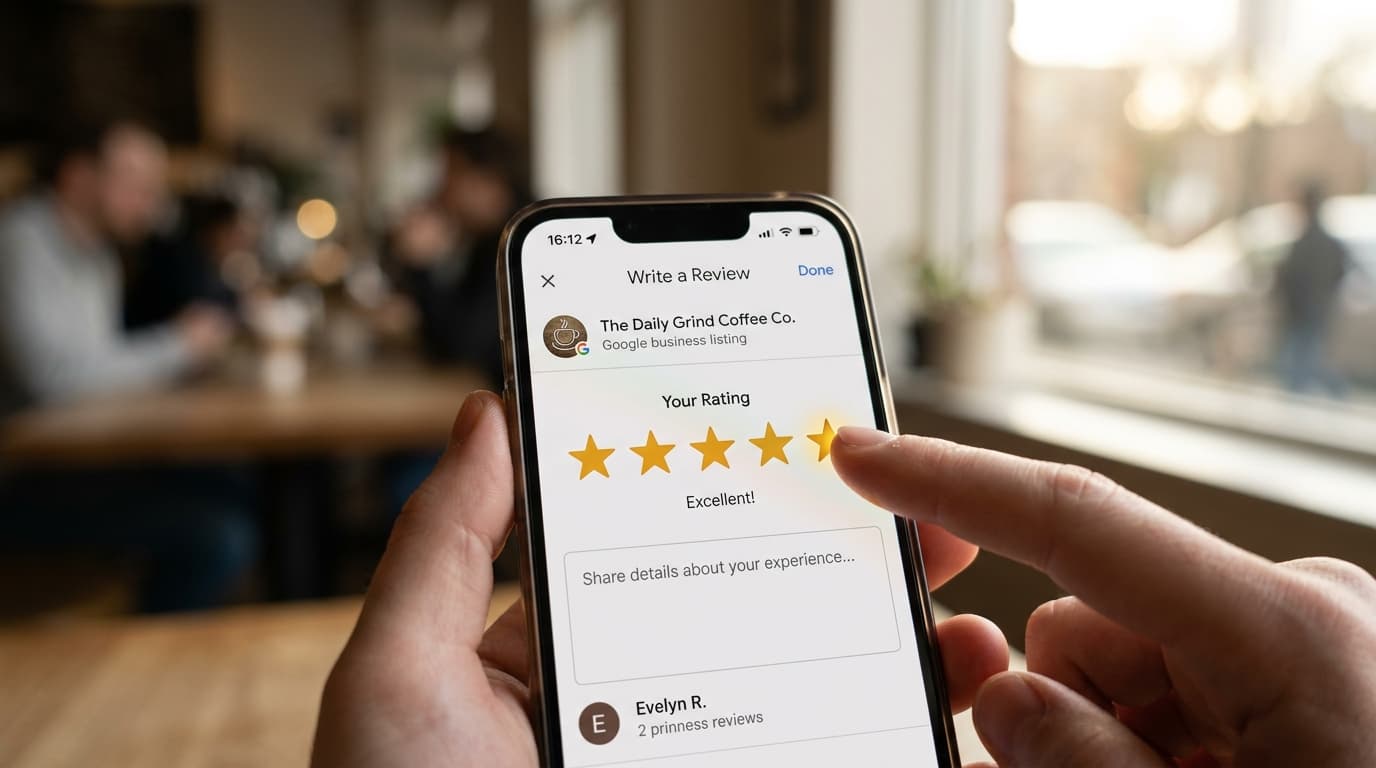
A QR code placed in the right spot means the customer can leave a review the moment satisfaction peaks, without anyone having to say a word. Here's where to put it:
On the receipt or bill presenter. Print your Google review QR code on the bill, or slip a small card into the bill presenter alongside the receipt. At payment time, the customer has their phone out anyway.
On a tent card at the center of each table. A small, attractive card with your branding and a simple message — "Loved your meal? Share the experience in 30 seconds" — stays visible throughout the dining experience.
With the complimentary tea or dessert. In Moroccan dining culture, the end of a meal is marked by mint tea, dates, or a small sweet. This is the most generous, warm moment of the visit — the ideal moment for a gentle ask. Attach a small card to the tea tray.
Staff training is minimal: a single sentence is enough. "There's a card on the table if you'd like to share your experience online — it takes about thirty seconds." Framed as a gift to other curious diners, the ask feels natural.
Gamification: Turning the Ask Into an Experience
Some Moroccan restaurants are going further by gamifying the review request. With Ludofy's fortune wheel mechanic, a customer who scans the QR code gets to spin a digital wheel for a chance to win a small prize — a complimentary glass of mint tea on their next visit, a bag of the house spice blend, a free pastry selection.
The psychology is simple: spinning a wheel is enjoyable. Even when the prize is modest, the act of playing creates a moment of fun and positive emotion — exactly the state of mind in which people write enthusiastic reviews.
For a Moroccan or North African restaurant, the prizes can be deeply on-brand:
- "Win a free harira on your next visit"
- "A complimentary piece of chebakia with your next tea"
- "Our house ras el hanout blend, to take home"
- "A free digestif for two at your next booking"
These prizes cost very little to deliver but feel authentic and generous — the perfect extension of the hospitality that defined the meal.
How to Handle Reviews Once They Come In
Collecting reviews is step one. Using them well is step two.
Respond to every review, especially positive ones. A thoughtful response in the same language the customer used shows personality and warmth. If someone writes "best tagine I've ever had outside Morocco," respond: "Thank you so much — our lamb tagine uses a spice blend passed down from our family, and it means the world to us when customers feel that." Every future reader sees that response and trusts you before they've visited.
Display your best reviews visibly in the restaurant. A framed printout near the entrance, a rotating digital display at the bar, or even a chalkboard with a highlighted weekly review creates a bridge between your online reputation and the in-person experience.
Mine your reviews for operational intelligence. If 40% of your reviews mention the bastilla, that dish deserves prime placement on every special occasion and group menu. If reviews consistently mention a wait for the main course, you have an operational signal worth acting on.
From Experience to Visibility
The Moroccan and North African dining experience is built on generosity, warmth, and culinary memory. These are exactly the qualities that produce the most memorable online reviews — when customers actually write them.
The gap to close is a practical one. A QR code on every table and a gamified nudge through Ludofy makes it easy enough that the customers who already love you finally say so publicly. Thirty to fifty new reviews per month becomes achievable, and a 4.7-star Google profile becomes the natural reflection of the restaurant you've always run.
The regulars have been telling their friends for years. Now give them an easy way to tell everyone else.