Few decisions feel as personal as choosing who will care for your dog while you're away. Pet owners spend more time researching a boarding facility than they do picking a restaurant, a hotel, or even a dentist. Google reviews aren't just a nice-to-have for your pet care business — they are the single most important factor in whether a new client books with you or calls the kennel down the street.
This guide breaks down exactly how to build a review strategy that fits the natural rhythms of a pet boarding or dog daycare business, so you collect more reviews without awkward asks, without incentives that violate Google's policies, and without adding anything to your staff's plate.
Why Pet Care Businesses Live or Die by Google Reviews
The search query "dog daycare near me" generates enormous local intent — and the businesses that appear first in Google Maps with 4.5 stars or higher capture the vast majority of clicks. Studies consistently show that over 88% of people trust online reviews as much as a personal recommendation, and in the pet care sector that number skews even higher.
Here's what makes your industry unique: the emotional stakes are enormous. When someone is looking for a boarding facility, they're not just comparing prices or locations. They're asking a very specific question — "Can I trust these people with my dog?" A business with 12 reviews at 4.2 stars loses to a competitor with 87 reviews at 4.8 stars every single time, even if the facility with fewer reviews is objectively better.
The businesses winning on Google Maps right now typically share one trait: they have a systematic way to ask every happy client for a review, at exactly the right moment.
The Perfect Moment to Ask: Pickup, Not Drop-Off
Timing is everything in review collection, and pet boarding has one of the best natural trigger moments of any business: the reunion.
When a dog owner arrives to pick up their pet and sees their dog bounding toward them, tail wagging, healthy and happy — that is peak emotional satisfaction. The stress of the trip is over. Their dog looks great. They are flooded with relief and gratitude.
That is your window. That moment, and the 10 minutes that follow as they settle their dog into the car and catch their breath, is when a review request lands with the highest conversion rate. Not during drop-off (they're anxious and distracted), not via email three days later (the moment has passed), but right now, at the height of positive emotion.
Drop-off is when anxiety is highest and conversion is lowest. Pickup is when joy is highest and conversion is at its peak. Build your entire review strategy around this fact.
How to Ask Without It Feeling Like Asking
The most effective method is also the most friction-free. Place a QR code tent card at your front desk, positioned so it's visible as you hand back the leash. Your staff can say something simple:
"Your pup did brilliantly — if you have a second, we'd love it if you shared your experience on Google. It really helps other pet parents find us."
That's it. No pressure, no follow-up guilt. For the clients who don't scan at the desk, you can follow up with a WhatsApp or SMS message within the first hour: "So glad [Dog's Name] had a great stay! Here's a quick link if you'd like to share your experience: [Google review link]."
The key insight is that you're not asking for a favor — you're giving clients who are already happy an easy outlet to express that happiness.
Gamification: Why a Fortune Wheel Works Better Than a Plain QR Code
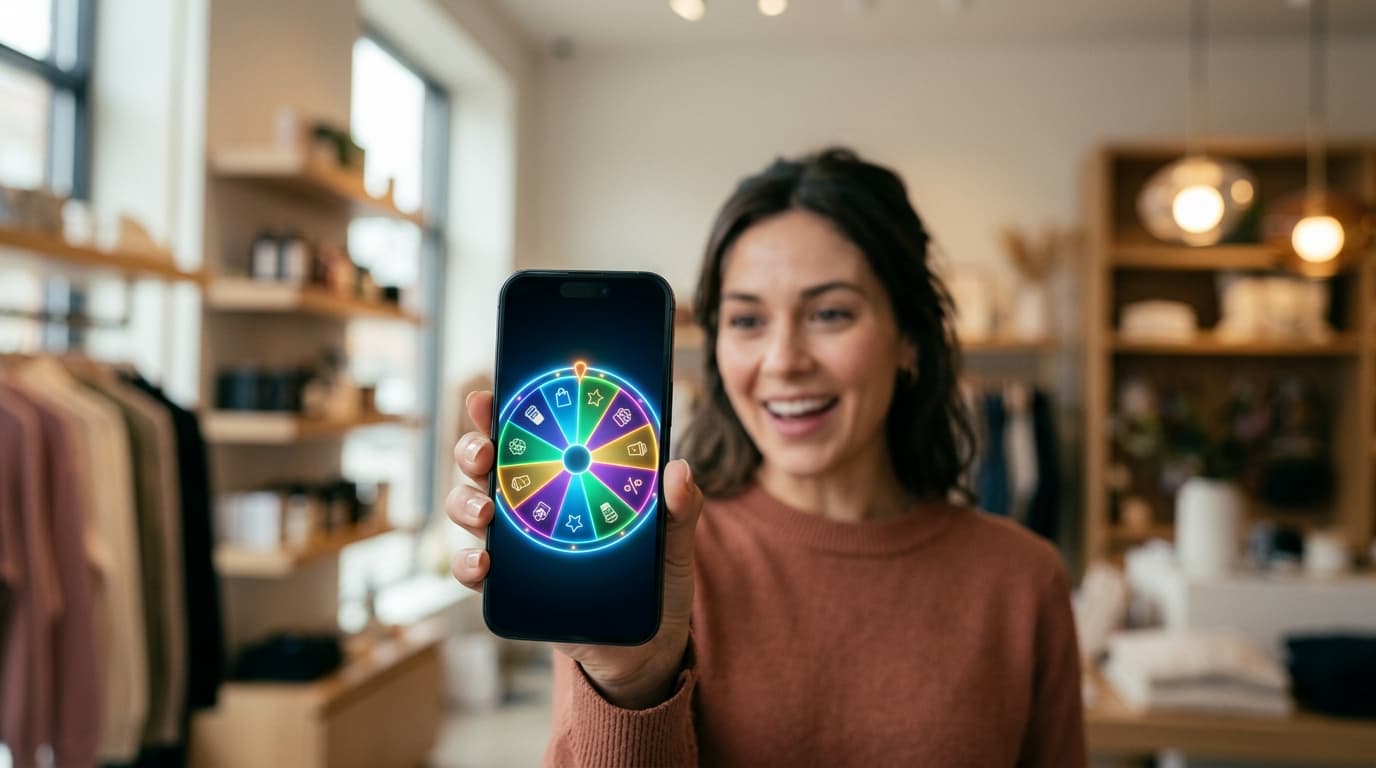
If you want to dramatically increase the percentage of pickups that turn into reviews, consider adding a gamification layer. A fortune wheel — a simple digital spinning wheel displayed on a tablet at your front desk or accessed via a QR code — gives clients a fun micro-experience before they write their review.
How it works: the client scans the QR code, spins the wheel, and lands on a small reward — a 10% discount on their next stay, a free nail trim add-on, a branded bandana for their dog. To receive the reward, they leave a Google review. The spin-before-review sequence works because it triggers commitment: the client has already taken an action, and the small dopamine hit of spinning creates positive momentum toward completing the review.
This approach, used by businesses across hospitality and food service, typically produces 3 to 5 times more reviews than a plain QR code link alone. For pet boarding specifically, the reward pool almost writes itself: free grooming sessions, discounted daycare days, premium food upgrades during boarding.
What to Do About Negative Reviews
Even the best kennels get the occasional one-star review — a dog that refused to eat, a miscommunication about medication times, a parent who was simply anxious throughout. How you respond publicly matters as much as the review itself.
Always respond within 24 hours. Acknowledge the specific concern, never get defensive, and invite the reviewer to contact you directly to resolve it. A calm, empathetic response to a negative review often convinces other readers that you're a trustworthy operator. In many cases, following up privately and resolving the issue leads the original reviewer to update their rating.
One tactical point specific to pet care: if a review mentions a specific animal by name, respond using that name. It signals to readers that you know your clients individually — which is exactly what anxious pet parents want to see.
Building Review Velocity Across the Year
Unlike restaurants that serve dozens of customers daily, a boarding facility might process 15 to 40 check-outs on a busy weekend. That makes consistency more important than volume. Aim for at least 4 to 6 new reviews per month, spread evenly across the year.
Pay special attention to peak periods — school holidays, summer vacation, Christmas — when your occupancy is highest. These are your best windows for review collection, since you'll have more happy reunions per week than at any other time. Setting up your QR code system before a peak season hits, rather than scrambling during it, is the single most high-leverage thing you can do for your Google Maps ranking.
Tracking What's Working
Set a monthly reminder to check your Google Business Profile dashboard. Look at: total review count, average star rating, and the keywords that appear most frequently in your reviews (things like "clean," "safe," "responsive," "great with my nervous dog"). These keywords feed directly into how Google categorizes and ranks your listing.
If you notice a dip in review velocity — say, only one review in a month — that's a signal to revisit your collection point. Is the QR code still visible? Did a new staff member join who didn't know to mention it? Treat your review system like any other operational procedure: train it, monitor it, and fix it when it slips.
The Compounding Effect of a Consistent Review Strategy
A pet boarding facility with 150 reviews at 4.9 stars doesn't just rank higher than its competitors — it captures a disproportionate share of trust. Pet owners share recommendations in Facebook groups, neighborhood apps, and word of mouth, and a strong Google profile amplifies every one of those recommendations. Someone who heard about you from a friend goes straight to Google to confirm the recommendation. What they find there decides whether they book or hesitate.
Tools like Ludofy are built specifically to help local businesses like pet care facilities create this kind of review flywheel — combining QR codes, fortune wheel gamification, and automated follow-up into a single system you can set up in an afternoon. The goal is to make review collection a natural part of every pickup interaction, not an afterthought.
The pet care businesses that will dominate their local Google Maps results over the next two years aren't the ones with the fanciest facilities — they're the ones that turn every happy reunion into a visible, permanent piece of social proof.