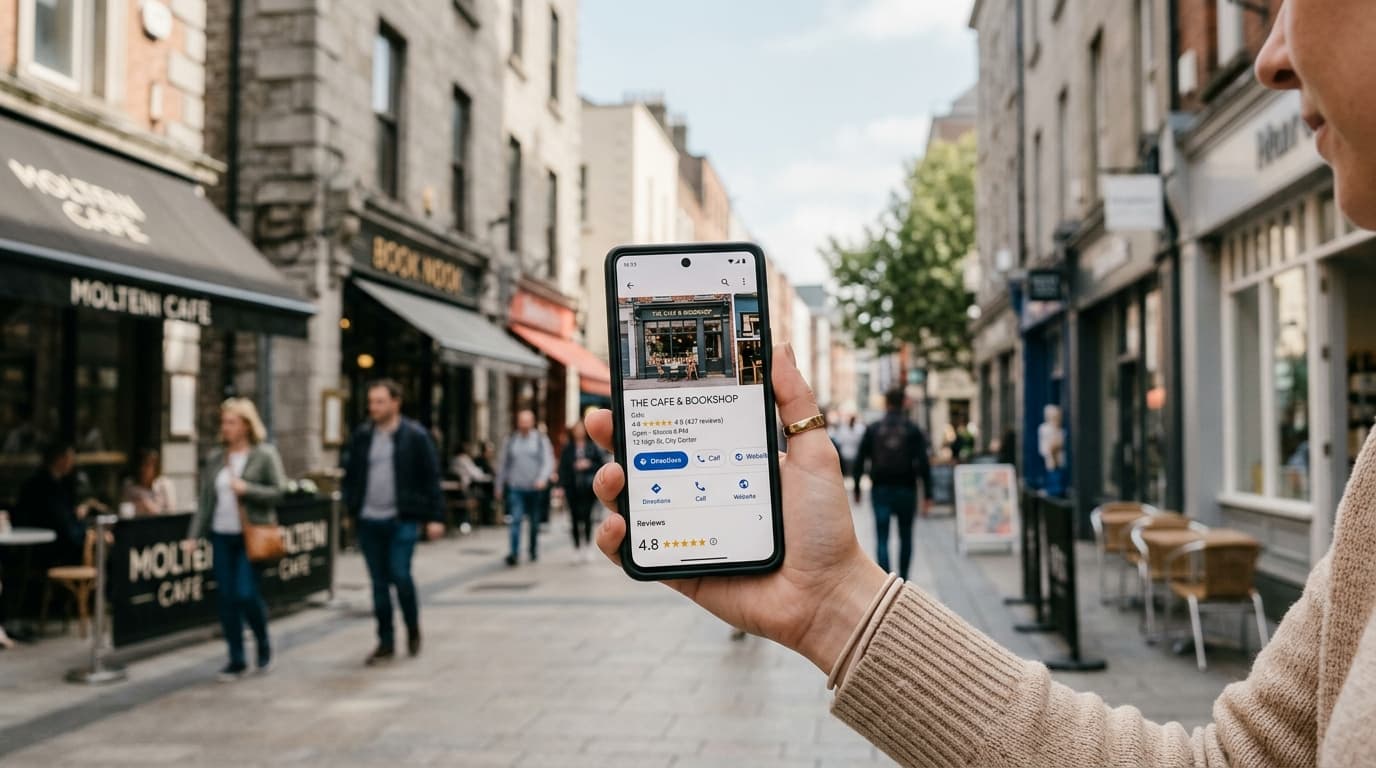
When a patient types "physiotherapy near me" into Google, they make a decision in about thirty seconds. They glance at the star rating, check how many reviews the clinic has, skim two or three comments, and either tap to call or scroll to the next result.
Most physiotherapy clinics are staffed by excellent practitioners with genuinely weak Google profiles. Not because their patients are dissatisfied — most leave pleased with their care. The problem is structural: without an active and consistent approach to requesting feedback, satisfied patients simply don't convert into reviewers at any meaningful rate. This guide is for practice owners and clinic managers who want to fix that, without compromising professional standards or turning every patient interaction into a solicitation.
Why Google Reviews Have Outsized Impact in Healthcare
Healthcare search operates differently from most other local searches. When someone types "restaurant near me," their intent is exploratory and the stakes are low. When someone types "physiotherapy near me," they're often in pain, recovering from an injury, or managing a condition affecting their daily life. The stakes are higher, and their decision-making reflects that.
Google Reviews serve three distinct functions for a physiotherapy clinic.
Ranking. Google's local algorithm uses review volume and recency as a signal of business prominence. A clinic with 200 recent reviews consistently outranks a clinic with 20 — even at similar star ratings and comparable geographic proximity. Every three months without new reviews is three months of declining relative visibility, as competitors with active review programmes steadily pull ahead.
Conversion. A patient who lands on your Google Business Profile has not yet booked an appointment. Reviews are the primary factor that converts a visitor into an enquiry. A profile with four detailed patient comments inspires far less confidence than one with 150. The conversion gap between these two scenarios is measurable and significant.
Peer validation. The content of reviews communicates things no self-authored clinic copy can: punctuality, warmth of the team, clarity of treatment explanations, how well pain was managed during sessions, quality of home exercise guidance. These details reduce the anxiety of a first-time visitor far more effectively than any polished website paragraph.
Getting the Ethics Right First
Physiotherapy professionals operate under codes of conduct that affect how they can communicate and market their services. Before setting up any review programme, it's worth being clear on what guidelines actually say — versus what many practitioners assume.
Consistently permitted:
- Inviting patients to share their genuine experience on Google
- Placing QR codes in the clinic that link to your Google review page
- Using gamification tools where the reward is for leaving any review, not for the star rating given
- Thanking patients at the end of a care episode and mentioning that reviews help others find the clinic
Consistently prohibited:
- Offering discounts, free sessions, or gifts specifically conditioned on writing a positive review
- Asking staff to pose as patients or generating reviews through any artificial means
- Including identifiable patient information in any public response to a review
The practical distinction is intent. You are facilitating authentic feedback from real patients, not engineering its content. A patient who had a neutral experience is just as eligible to engage with your review system as one who had an outstanding one — and the outcome is genuine feedback either way, which is what Google's guidelines are designed to protect.
The Two Best Moments to Ask
Most clinics that struggle with reviews make the same timing error: they either never ask, or they ask mid-treatment when satisfaction levels haven't yet peaked.
At the end of a care episode
Discharge — or the final session of a treatment course — is the single highest-conversion moment for a review request. The patient has achieved something. The emotional arc is at its highest point. Their relationship with your team is at its most developed. A brief, genuine invitation in this moment converts at three to five times the rate of a request made during an early session.
The script is simple: "If you'd like to share your experience online, it genuinely helps other patients find us — there's a QR code at reception." That's all it takes. The key is sincerity and the framing that the review benefits others, not primarily the clinic.
During the waiting period
Patients in your reception area are already looking at their phones. A well-placed QR code linking directly to your Google review submission page — not your website homepage, not a contact form, but the actual review interface — converts that idle screen time into action. Every unnecessary click you remove between the QR scan and the review submission increases completion rates.
Setting Up Your Clinic for Passive Review Collection
The goal is a system that generates reviews consistently without requiring your clinical team to remember to ask at every appointment. Once the infrastructure is in place, it runs largely on its own.
QR code placement. Test several locations simultaneously: a desk stand at reception, a table tent card in the waiting area, a small framed print near the payment terminal, and a card in the treatment room if your setup permits. Different patients notice different placements, so coverage across multiple points matters more than finding the single perfect spot.
Signage tone. Keep messaging warm and functional, not corporate. Something like: "Enjoying your care? A Google review helps other patients find us — thank you." Avoid anything that looks like a marketing push. The tone should feel like a natural extension of the relationship you've already built, not a sales prompt tacked onto it.
Staff script. Equip reception staff with a single low-key phrase for appropriate moments: "Before you go, we have a QR code at the desk if you'd like to leave us a quick Google review — it really helps other patients find us." The framing as something valuable to other patients — not commercially valuable to the clinic — consistently outperforms every other version of this ask.
Using Gamification in a Clinical Setting
Fortune wheel tools — where patients scan a QR code, leave a review, and then spin for a small prize — are most associated with restaurants and retail. They translate to physiotherapy clinics with some adjustment to the prize structure.
The principle is the same: the patient completes the review first, then spins. The variable reward (they don't know what they've won until the wheel stops) creates genuine curiosity that makes the review feel like an entry ticket to something fun, rather than an administrative obligation. That shift in framing matters enormously for participation rates.
For clinic-appropriate prizes, consider:
- A complimentary postural assessment — high perceived value, negligible cost to deliver
- A downloadable home exercise programme tailored to their condition or recovery stage
- A preferred rate on a maintenance or prevention appointment
- A small wellness item (resistance band, heat pack) redeemable at reception
Ludofy's digital fortune wheel can be customised with your clinic's branding and prize structure in under thirty minutes. The QR code links directly to your Google Business Profile, and the wheel activates after the review is submitted — preserving the authenticity of the feedback while making the whole experience genuinely engaging.
Responding to Reviews: Clinical Reputation Management
How you respond to reviews is as visible to prospective patients as the reviews themselves. A consistent, professional, and human response pattern signals that your clinic is attentive and that it takes patient experience seriously.
Positive reviews. Thank the patient genuinely. Reference something specific in their comment if possible — this shows you actually read it, not that you deployed a copy-paste template. Generic responses read as automated and impersonal, which works against the trust you're trying to build.
Neutral or mixed reviews. Acknowledge the feedback without defensiveness. Express your commitment to the specific area the patient identified. Invite them to speak directly with the practice manager. A measured response to a four-star review with a mild concern does more for prospective patients than five back-to-back generic thank-yous.
Negative reviews. Don't respond immediately if the review upset you. When you do reply — within 48 hours is ideal — acknowledge the patient's experience as they described it, express genuine regret, and invite private conversation to work toward a resolution. Critical rule: never include any patient-identifiable information in a public response, even to defend yourself. Confirming that someone attended your clinic can constitute a confidentiality breach in some jurisdictions, regardless of your intent.
Building Consistency Rather Than Running Campaigns
The clinics that build dominant Google profiles don't do it with a single push — they do it by making review collection a consistent, low-friction part of operations. That means tracking new monthly review volume as a routine metric alongside appointment fill rates and patient outcome measures.
A clinic treating 60 patients per week, with a 10% participation rate on a QR-code review programme, generates approximately 24 new reviews per month. Over six months, that's 144 reviews — enough to rank in the top three for most local physiotherapy searches in their area, and enough social proof to convert profile visits into enquiries at a compounding rate.
Consistency outperforms volume spikes. A clinic collecting 15 reviews per month for twelve months maintains stronger local ranking than one that collects 80 in a single campaign push and then nothing for six months. Google's algorithm weights recency alongside volume, and a steady cadence signals an active, engaged business in a way that irregular bursts cannot replicate.
Your clinical skills earn the goodwill of your patients every day. Google Reviews are simply the mechanism by which that goodwill becomes visible to people who haven't met you yet.
Closing the gap between your clinical quality and your online presence doesn't require a large investment of time or money — it requires a consistent system. The right QR code placement, the right timing, and the right invitation are all it takes to start.
Ludofy provides a gamified digital fortune wheel that connects to your Google Business Profile via QR code, customised to fit a health and wellness context. Setup takes under thirty minutes, and most clinics see their first new review within hours of going live. Try it free for 30 days and measure what consistent review collection does to your visibility.