Search "clothing boutique near me" or "specialty coffee shop downtown" and look at what ranks in Google's Local Pack. The top results almost always share one trait: a large volume of recent reviews. Now think about your own shop. You likely serve happy customers every single day — but how many of them leave a Google review?
For most retail operators, the answer is: not nearly enough. This isn't because your customers are dissatisfied. It's because retail shopping doesn't naturally create the moments that trigger review-writing behavior. Understanding why — and building a system to fix it — is one of the highest-leverage moves you can make for your local visibility in 2026.
Why Retail Stores Are Chronically Under-Reviewed
Restaurants have an inherent review advantage that most shop owners don't think about. A meal is an extended experience — 45 minutes to two hours — during which emotions run high and social sharing feels natural. The waiter can ask for feedback at a natural pause. Review platforms like TripAdvisor spent years teaching consumers that reviewing a restaurant is normal behavior.
Retail shopping is different. A customer walks in, finds what they need (or doesn't), pays, and leaves — often in under ten minutes. There's no natural pause, no moment of heightened reflection. The transaction is complete and the customer's mind has already moved on to the next errand. The impulse to share a positive experience evaporates within minutes if nothing captures it.
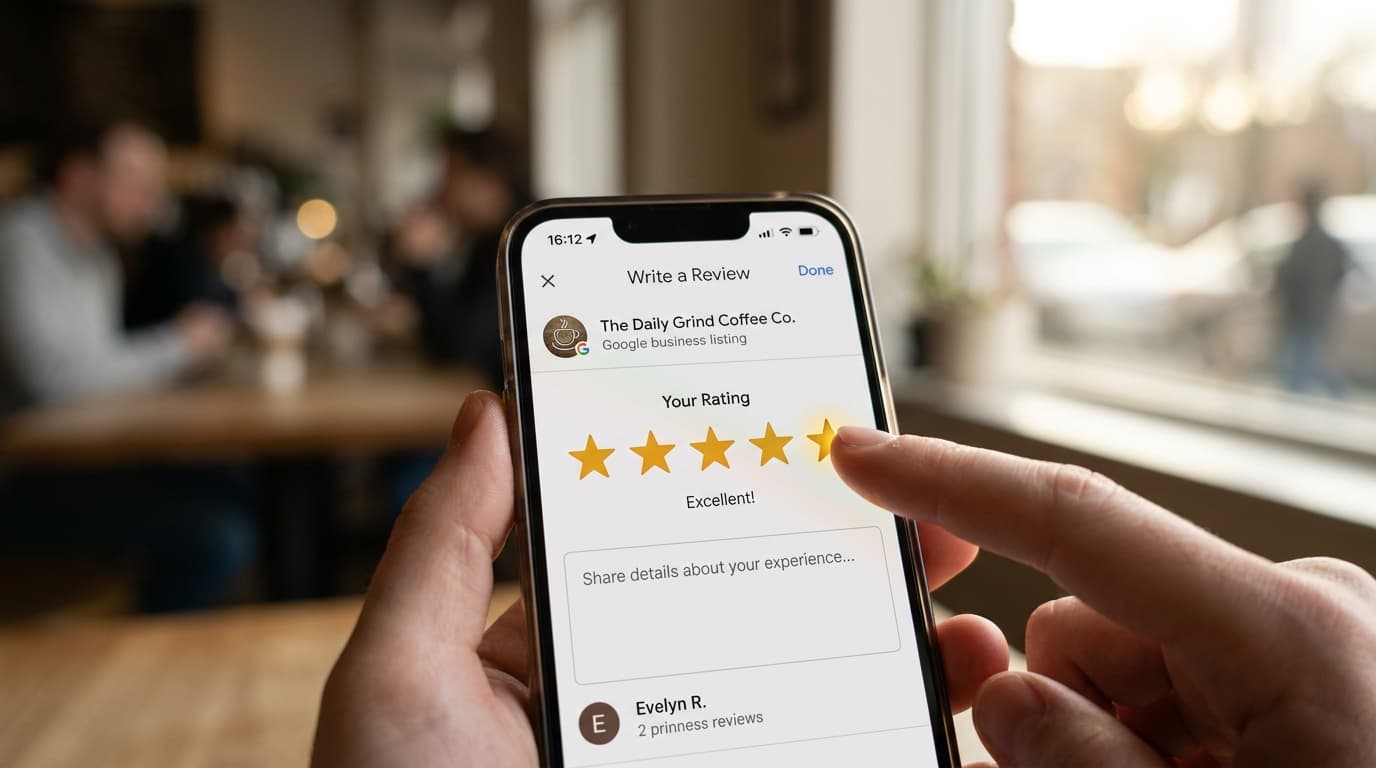
Add to this the friction of actually writing a Google review: unlock your phone, find the business on Google, navigate to the reviews section, write something meaningful. That's four steps for an action that has no urgency attached to it. Even enthusiastic customers rarely make it all the way through.
The result is a systematic gap: restaurants in your area accumulate dozens of reviews per week; the boutique next door gets three in a month. Yet Google's algorithm treats both businesses exactly the same.
What Google Actually Looks At — and Why Reviews Move the Needle
Google Maps rankings for local businesses are determined by three factors: relevance (does your business match the search?), distance (how close are you to the searcher?), and prominence — which is largely driven by reviews.
Prominence captures how well-known and trusted your business appears. Google measures this through review volume, average rating, recency of reviews, and the semantic content of what customers write. A shop with 250 reviews and a 4.6-star average will consistently outrank a comparable shop with 30 reviews and a 4.4 average — regardless of how much better your products or service actually are.
The velocity effect
Recency matters as much as total volume. A business that receives a steady flow of new reviews signals to Google that it's active and consistently delivering good experiences. A business that got 50 reviews two years ago and has received almost nothing since can actually lose ground in rankings over time, even as its absolute review count stays static.
This means the goal isn't just accumulating reviews — it's building a system that generates them continuously. Ten new reviews per week beats a one-time campaign that produces 100 reviews and then goes silent.
Keywords in review text
When a customer writes "best selection of artisan candles in the city" or "incredibly helpful staff, found exactly the right gift," they're generating semantic content that Google can index. This allows your listing to surface for specific searches you'd never think to optimize for. Text reviews deliver SEO value that star-only ratings simply can't.
The Four Biggest Obstacles to Review Collection in Retail
Staff-dependent asking is inconsistent. If your review strategy depends on employees remembering to ask customers at checkout, your results will be wildly inconsistent. Some staff will do it every transaction; others will never feel comfortable asking. You can't build a reliable system on individual initiative.
Verbal requests create social awkwardness. Asking a customer face-to-face to write a review puts both parties in an uncomfortable position. The customer feels obligated to say yes — but most never follow through. You've created friction in the relationship without getting the review.
The window of enthusiasm is short. A customer who had a genuinely great experience in your shop is most likely to act on that feeling within the first few minutes. If you don't give them a clear, zero-friction path to leave a review in that moment, the impulse fades. A follow-up email two days later is far less effective.
The review path has too many steps. Even motivated customers abandon the process partway through. Every additional tap or decision point between "I want to leave a review" and "I've submitted my review" is an opportunity to lose them.
A System That Solves All Four Problems at Once
The most effective approach to retail review collection combines two things: immediate point-of-sale capture and gamified incentives that make the action feel rewarding rather than like a favor.
Here's how it works in practice.
Step 1: QR code placement at checkout
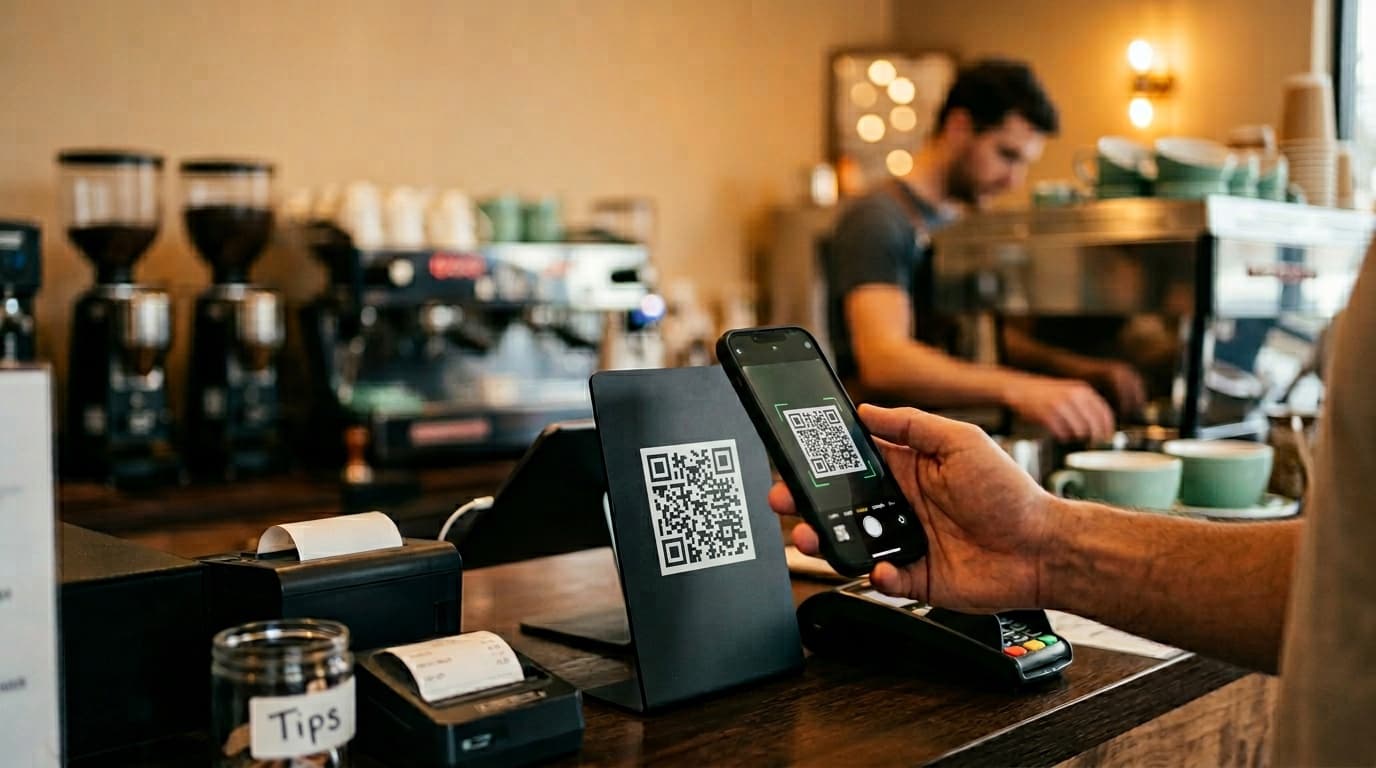
Place a QR code directly at your point of sale — next to the card reader, where the customer is already looking. This code links directly to your Google Reviews page, bypassing any intermediate steps. The moment of purchase is your best window: the customer has just completed a positive transaction, their satisfaction is at its peak, and they have their phone in hand.
A brief, low-pressure prompt — "Scan this to spin our wheel and leave us a quick review" — is enough. No pressure, no awkwardness, no employee judgment required.
Step 2: Add gamification to boost conversion rates
The QR code alone can double or triple your review volume compared to verbal requests. But adding a gamification layer — a digital fortune wheel — pushes conversion rates significantly higher.
The mechanic is simple: the customer scans the QR code, lands on a branded digital fortune wheel, and spins to win a reward (a discount on their next purchase, a small gift, early access to a sale). The condition to spin: leave a Google review first.
This works because of a well-documented principle in behavioral psychology: reciprocity. When someone receives something — even something modest — they feel a natural pull to give something back. By offering a reward upfront (or as an immediate outcome), you lower the psychological barrier enough that customers who would otherwise never leave a review go ahead and do it.
The fortune wheel also transforms the interaction from "I'm doing the business a favor" to "I'm participating in something fun that benefits me." That reframing is what separates a 3% conversion rate from a 20%+ conversion rate.
Step 3: Extend placement beyond the register
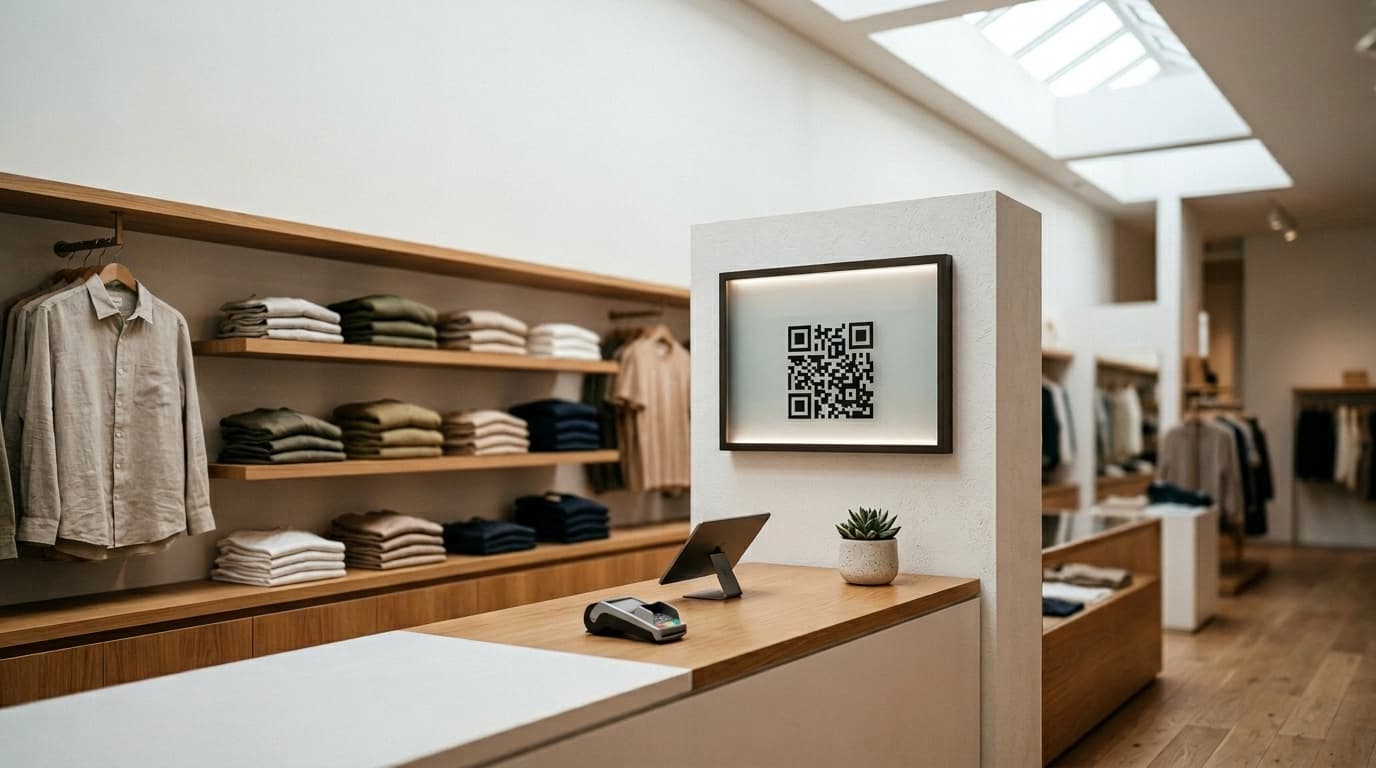
Don't limit your QR code to the checkout counter. A sticker on your exit door, a small card display near your fitting rooms, a sign at your product display — each placement creates another opportunity to capture reviews from customers who might have missed the prompt at the register. High-traffic areas with natural dwell time (anywhere customers pause and look at their phones) are particularly effective.
Measuring What You're Not Measuring Yet
Most retail owners don't track their review velocity because they don't have a system in place to generate it. Start with a baseline: note your current review count and average rating today. With an active system running, you should be able to see clear week-over-week progress within the first month.
Track two numbers alongside your total review count: weekly review velocity (new reviews per week) and average rating trend (is it climbing, flat, or declining?). These tell you more about your reputation health than the total count alone.
A typical retail shop starting from a low base (under 30 reviews) can realistically reach 150–300 reviews within six months using a gamified QR code system — a level that puts most businesses firmly in competitive territory for their local search rankings.
Ludofy: Built for Businesses That Rely on Foot Traffic
Ludofy was designed specifically for physical businesses that need a frictionless way to turn daily customer interactions into Google reviews. In a few minutes, you can set up a custom branded fortune wheel with rewards that fit your shop's model — percentage discounts, small gifts, loyalty points, exclusive access. Scan the generated QR code, print it or display it digitally, and the system handles the rest.
No daily management required. No staff training needed. Your customers interact with the wheel, leave their reviews, and your Google presence grows on autopilot.
In a local market where most of your competitors are still relying on word of mouth and hoping customers leave reviews spontaneously, a consistent review-generation system is the clearest competitive edge available to independent retail operators. The stores that build this infrastructure now will hold a Google Maps ranking advantage in six months that their competitors won't be able to close quickly.