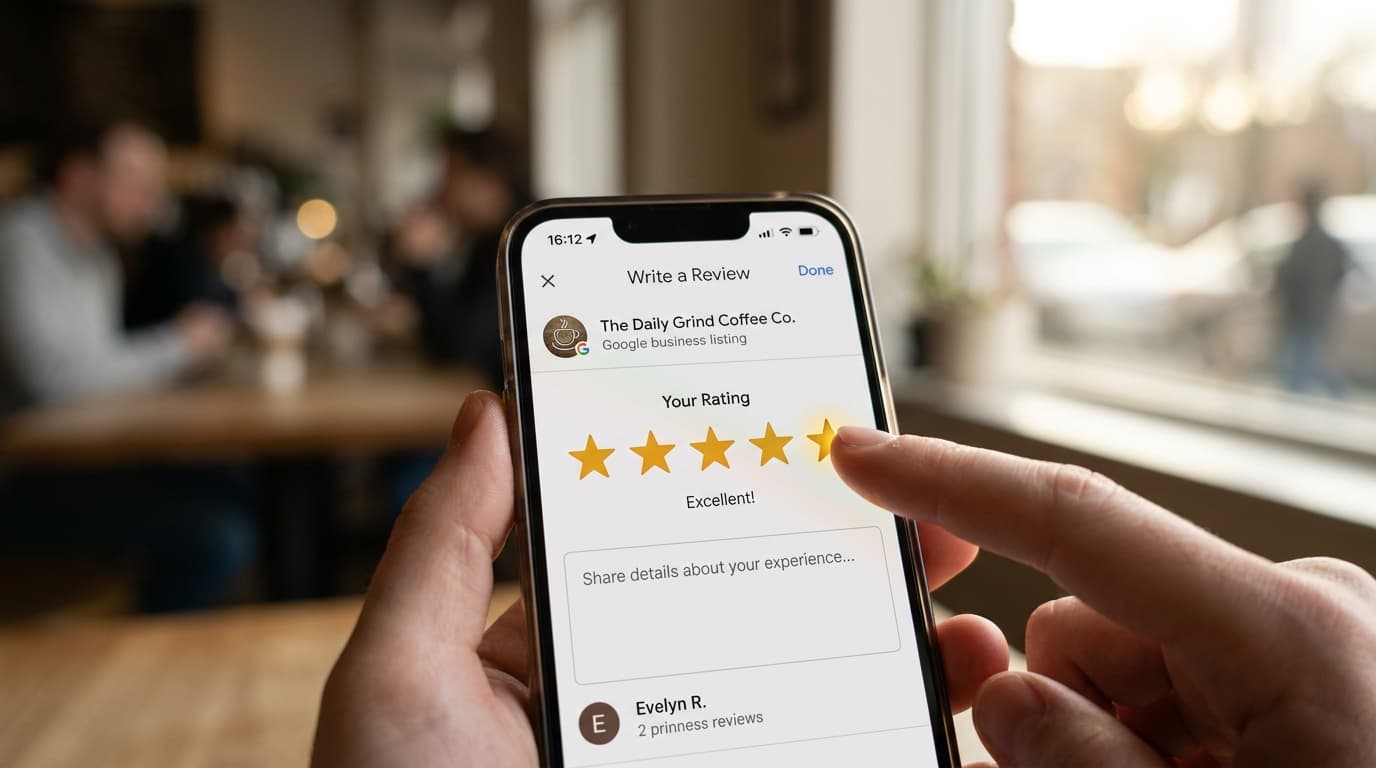
A hair salon with 4.8 stars and 300 Google reviews will outsell a technically superior salon with 4.2 stars and 40 reviews every single time. That's not a marketing opinion — it's a purchasing pattern that Google Maps data confirms repeatedly. In beauty services, trust is everything, and in 2026, trust begins online before a client ever calls to book.
The problem most salon owners have isn't quality. It's that their satisfied clients stay silent while the rare dissatisfied one writes a three-paragraph review at 11pm.
This post is about fixing that imbalance systematically — without making your team feel like salespeople, and without adding friction to the client experience.
Why Most Beauty Businesses Struggle to Collect Reviews
Ask any stylist or esthetician if they've ever asked a client for a Google review, and you'll hear the same story: it feels awkward. There's something about the intimacy of beauty services — the physical proximity, the trust, the personal nature of the work — that makes a transactional ask feel out of place.
So the ask doesn't happen. Or it happens once, tentatively, and the client says "of course!" and then forgets by the time they're two blocks away.
Even when clients genuinely intend to leave a review, the friction kills it. Finding the salon on Google, logging in, tapping through to the review section, writing a few sentences — on a busy afternoon, that's four steps too many. Studies on consumer behavior consistently show that review intent drops by more than 60% within 24 hours of the service if no system exists to capture it.
The salons that build consistent review momentum don't rely on intent. They build a system.
The Right Moment Is at Checkout, Not in the Chair
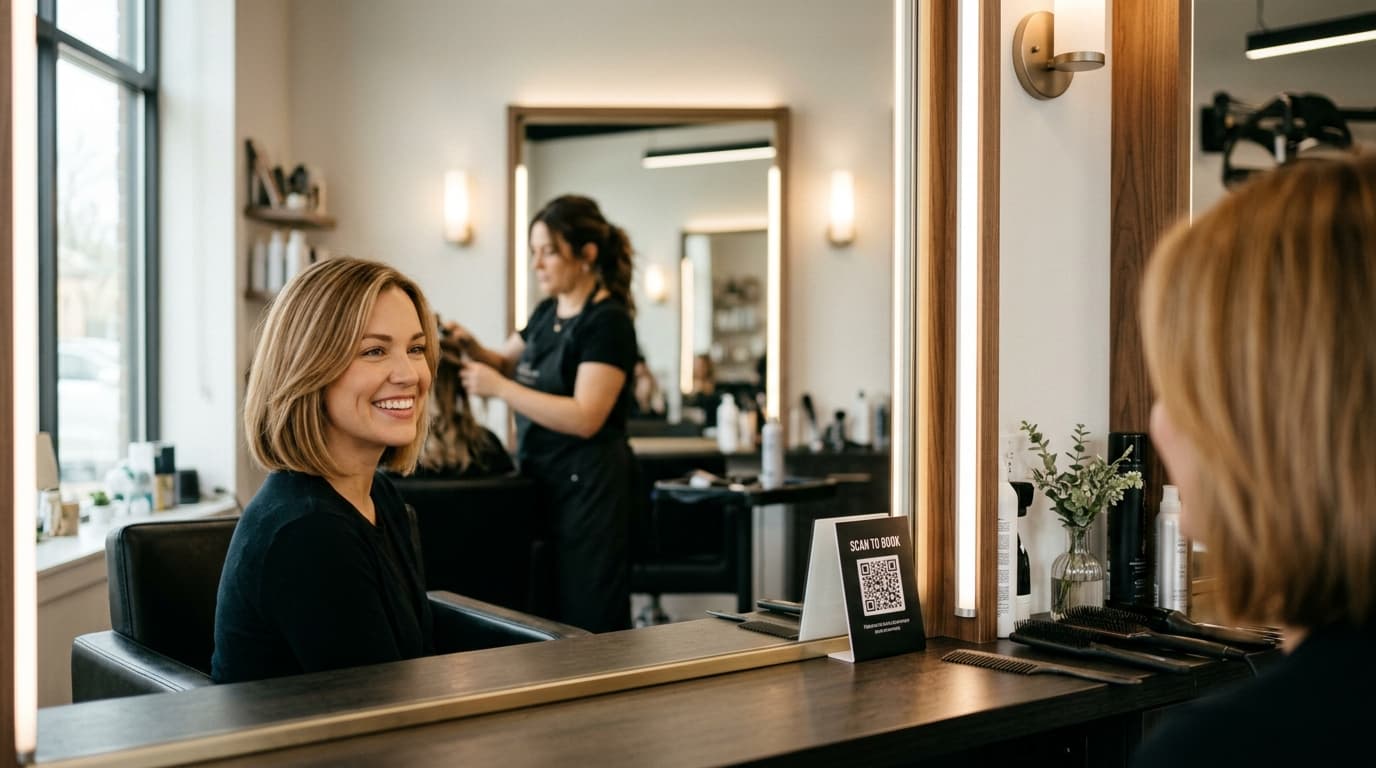
One of the most common mistakes beauty businesses make is trying to ask for reviews while the service is still happening — adding a sign to the mirror, mentioning it during the appointment, or putting a sticker on the product display near the wash station.
These touchpoints are too early. The client's attention is still on the service itself, not on the idea of recommending you to strangers.
The checkout moment is different. The client is satisfied, the experience is complete, and there are naturally a few seconds of downtime while the payment processes. That window — 20 to 40 seconds — is when a well-placed QR code does its work quietly, without anyone on your team having to say a word.
A small stand or tent card on the reception desk with a QR code and a short line like "Spin to win your next treat" is enough to draw attention. The client scans, the phone opens a page, and the process begins.
Why a Spin-to-Win Incentive Outperforms a Simple Review Request
A plain QR code linking directly to your Google review page will get some conversions — typically 5 to 12% of clients who scan it. Add a gamified incentive, and that number jumps to 25 to 45%.
The mechanic works like this: before the fortune wheel spins, the client is asked to leave a Google review. Once they do, the wheel activates and reveals a reward — a discount on their next visit, a complimentary add-on service, or a product sample.
Two psychological principles make this dramatically more effective than a straight ask.
Reciprocity: When a business offers something of value — even a chance at something — the client feels a natural impulse to give something back. A review is low-cost for them but high-value for you. The exchange feels balanced.
Variable reward: Unlike a fixed discount ("leave a review, get 10% off"), the uncertainty of a spinning wheel creates genuine anticipation. Research on reward systems consistently shows that variable rewards produce stronger engagement than predictable ones. The client doesn't know if they'll win a free treatment or a small sample — and that uncertainty makes the act of reviewing feel like part of a game rather than a chore.
Designing Rewards That Drive Return Visits
Not all rewards are equal. In the beauty industry, the most effective prizes share one quality: they bring the client back.
High-performing rewards:
- 15% discount on next appointment
- Complimentary express treatment on next visit (glossing service, brow tint, scalp massage)
- Premium product sample in a category the client hasn't tried
- Priority booking access during peak slots
Rewards to avoid:
- Discounts applied to the current bill (expensive, no loyalty effect)
- Gifts unrelated to beauty services (generic, zero return incentive)
- Complicated vouchers requiring printing or entering a code (friction kills redemption)
The principle: the reward should make the client look forward to their next visit, not just feel good about this one.
What About Negative Reviews?
A common fear among beauty business owners is that making review collection easier will surface more negative feedback. This concern is understandable, but the data points in the opposite direction.
When review collection is passive (relying on motivated clients), dissatisfied clients are proportionally overrepresented — they're more motivated to write. When you actively collect reviews from a broad cross-section of clients, the ratio naturally shifts toward your actual average experience.
The salons with the most reviews and highest ratings aren't the ones who got lucky — they're the ones who made it easy for their happy majority to speak up.
That said, a well-designed system will occasionally surface a negative review. Respond to it promptly and professionally. A thoughtful response to a negative review actually increases trust among prospective clients, who read both the review and the response.
Real-World Impact: What to Expect in 90 Days
A nail studio running this kind of QR-plus-spin system for a quarter typically sees:
- 4x to 8x more Google reviews per month than their pre-system baseline
- A 0.3 to 0.6 star improvement in overall rating (as the happy majority's voice finally gets recorded)
- Measurable improvement in Google Maps local ranking for core search terms
- 15 to 20% of reward winners redeeming their prize within 30 days — which translates directly to repeat bookings
The ranking improvement is particularly significant because it compounds. More reviews lead to better visibility, which brings more new clients, who become more reviewers. The system feeds itself once it's running.
Implementation: Simpler Than You Think
The barrier to setting this up is lower than most salon owners expect. There's no app for clients to download, no complex loyalty program to manage, and no staff training required beyond "the QR code is on the desk — it handles itself."
The core setup is three things:
- A configured digital wheel with your chosen rewards
- A QR code printed and placed at your checkout desk
- A dashboard to track results
Most salons that deploy this approach are generating reviews within hours of going live.
Ludofy and the Beauty Sector
Ludofy was built specifically for physical businesses that want to grow their Google review count and client retention through the fortune wheel mechanic. The platform handles the end-to-end flow — Google review capture, wheel spin, reward delivery, and analytics — without requiring any technical setup from the salon team.
For beauty businesses in particular, the no-app, browser-based experience matters. Clients scan, play, and leave — no accounts, no downloads, no barriers. The whole interaction takes under 60 seconds.
The salons that will dominate their local Google results in 2027 are the ones building their review base now. The tool is simple. The compounding effect is not.