Someone moving to a new city wants to find a running club and needs proper trail shoes. A parent is outfitting a teenager for their first ski season. A weekend cyclist is upgrading to clipless pedals and needs advice on which system to choose. In every one of these scenarios, the search starts on Google — and the first thing that customer checks is your star rating and recent reviews.
Sporting goods stores occupy a unique position in retail. Unlike a grocery run or a coffee shop visit, sports gear purchases involve real deliberation. Customers want expertise. They want to know whether the staff can actually help them pick the right pair of shoes for their gait, or whether they'll end up guessing in a cavernous warehouse. That expertise lives in reviews.
The challenge: most sporting goods store owners are too focused on inventory, staff scheduling, and managing seasonal spikes to build a structured review strategy. This guide gives you one.
Why Reviews Hit Differently for Sporting Goods
The average order value in a sporting goods store is significantly higher than in most retail categories. A decent running shoe runs $120–$180. A quality mountain bike costs $800–$2,000. Ski packages, hockey equipment sets, or team uniforms for a sports club can reach several thousand dollars in a single transaction.
When the stakes are this high, customers read reviews the way they'd read a product manual. They're not just skimming. They want specific answers: Is the staff knowledgeable about technical products? Are they helpful with beginners or do they talk over your head? Did the bike adjustment hold up? Was the return process fair?
Every positive review you accumulate is also a direct counter to the competitive pressure from large chains and e-commerce platforms. A customer who knows your store has 200 reviews averaging 4.7 stars, with recent comments praising the staff's expertise, is far more likely to drive past a Decathlon on the way to your door.
The Best Moments to Capture a Review
Timing is everything in review collection. The highest-converting moment is always the one closest to a peak satisfaction experience.
After a product fitting: Whether it's gait analysis for running shoes, a bike frame fitting, or ski boot mounting, customers who've just received specialized expertise leave in a uniquely high-trust state. This is the best moment in any sporting goods transaction to invite a review. A short phrase — "If the advice was helpful, a Google review really makes a difference for us" — combined with a QR code on the receipt or fitting area converts reliably.
At checkout after a significant purchase: The customer has made a decision they feel good about. The positive energy of a committed purchase is the right moment, not three days later when the product is unboxed and reality has set in.
After a team or club order is collected: Local sports clubs and school teams often place large orders. When that order is ready and the representative comes in to collect, it's a warm, relationship-affirming moment. A QR code slip included in the delivery bag is an easy, unobtrusive ask.
After a repair or servicing: If you offer equipment maintenance — bike tune-ups, ski edge sharpening, racket restringing — the customer picking up fixed or renewed gear is almost always satisfied. That moment of "my gear is back and better than before" is a natural review trigger.
QR Codes: Remove Every Possible Obstacle
The single biggest reason customers don't leave reviews isn't bad experiences — it's friction. The three-step process of opening Google, finding your business listing, and then writing something is enough friction to stop most people who genuinely intended to review.
A QR code that opens directly to your Google review prompt removes all of that. Four seconds, not four minutes.
Place them where customers naturally hold their phones:
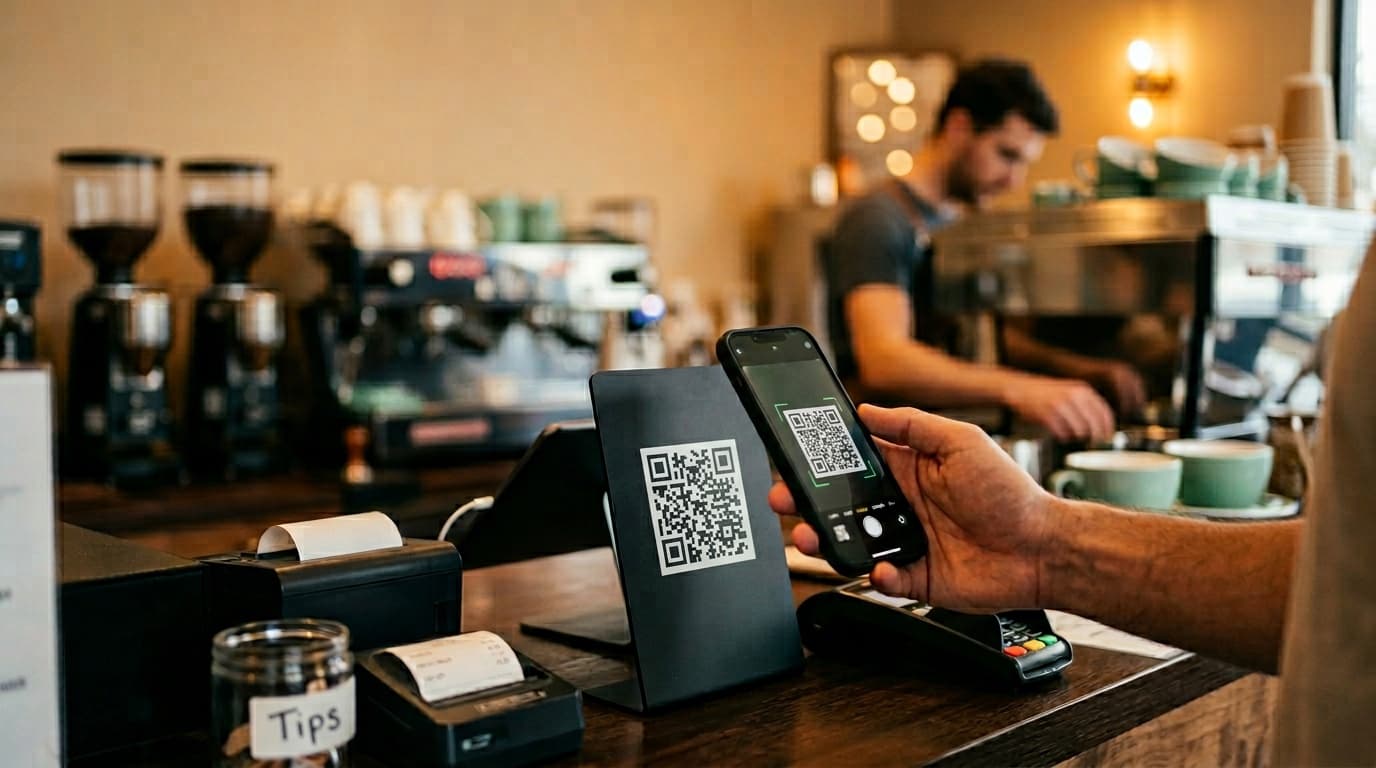
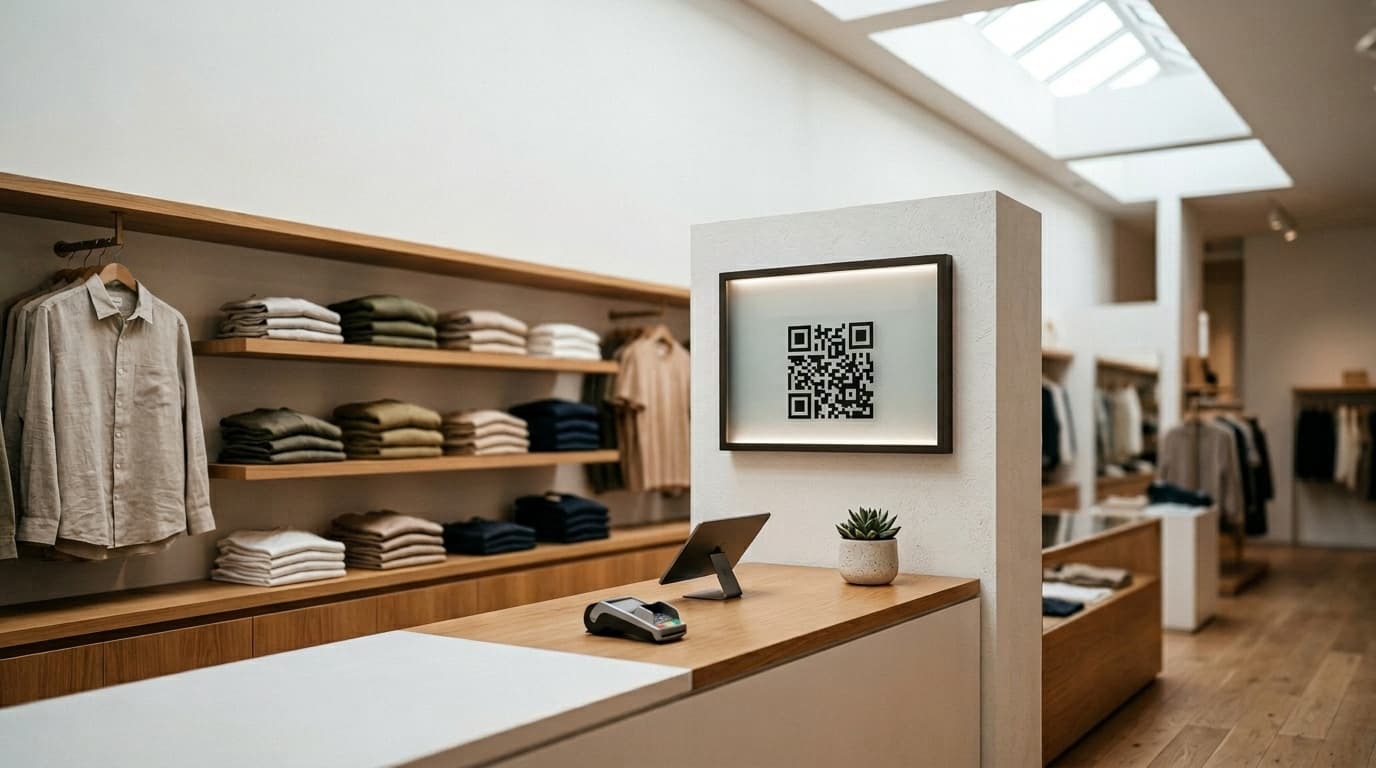
- The checkout counter: Mandatory. Every transaction ends here. A small QR code stand with a friendly message — "Enjoyed your visit? Tell Google!" — is consistently the highest-converting placement.
- The fitting or consultation area: Customers receiving expert advice often pull out their phone during the conversation. A QR code here is contextually perfect.
- On receipts and purchase bags: A printed QR code on the receipt, or a small card inserted in the bag, gives customers an easy way to review hours later if they didn't do it in-store.
- Near equipment displays: Popular product zones (running shoes, cycling accessories, winter sports) attract browsing time. A small sign with a QR code and the message "Our team curated this section — let us know if it helped" creates ambient review intent.
Gamification: Why the Fortune Wheel Works at Sporting Goods Stores
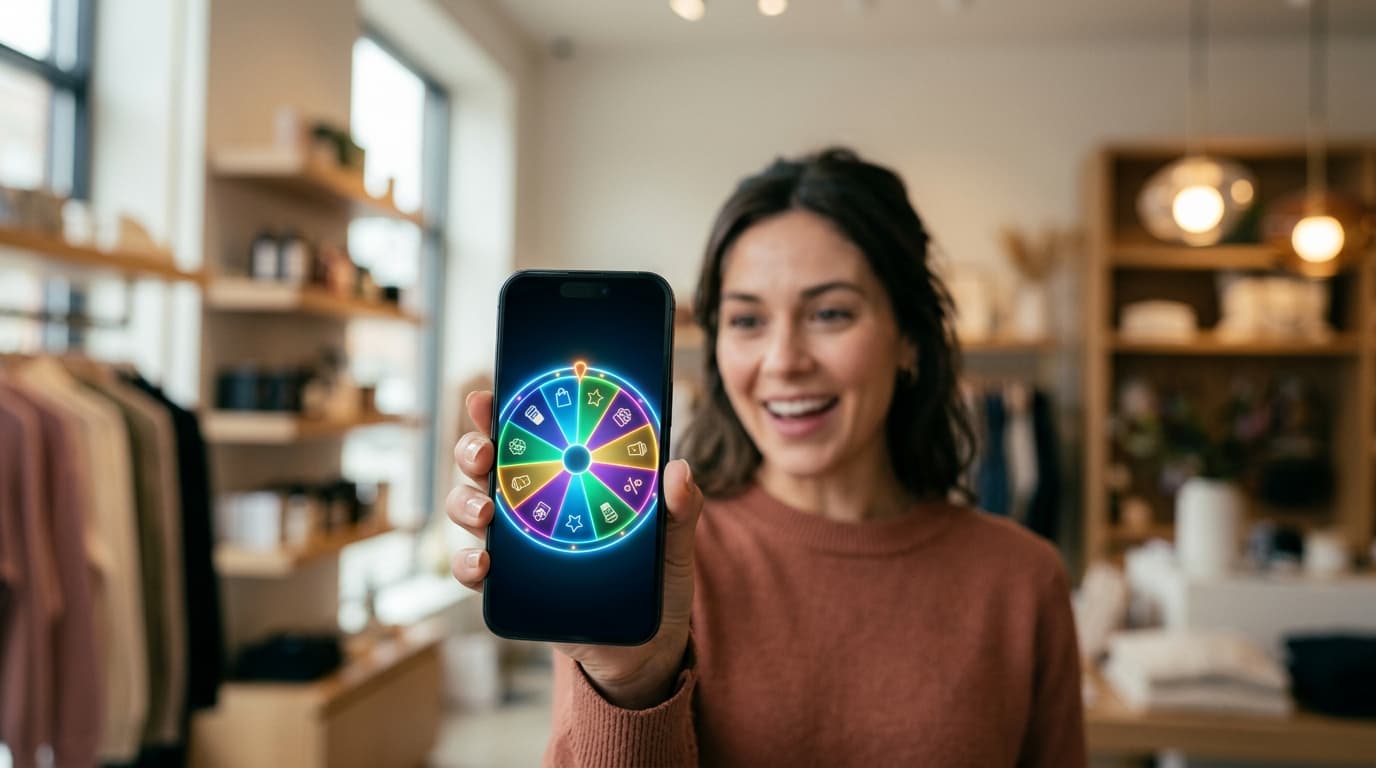
The highest-converting review collection approach for physical retail is the gamified fortune wheel. A QR code at checkout opens a branded digital wheel the customer can spin. To unlock their spin, they're invited to first leave a Google review. After reviewing, they spin and land on a prize — a discount on their next purchase, a free accessory, store credit, or a small branded gift.
Why it works in a sporting goods context:
- The customer is already engaged: Someone who just spent 30 minutes trying shoes or getting a bike fitted is far more receptive to a brief interactive moment than a stranger getting a cold email
- The prize aligns with their hobby: A 10% discount on their next sporting goods purchase, or a free pair of sports socks, resonates deeply with someone who just invested in their hobby
- It creates a return visit mechanism: Prizes redeemable on the next visit close the loyalty loop, turning a one-time review request into a repeat customer trigger
- It removes the guilt of asking: Staff feel more comfortable pointing to a QR code for a game than directly saying "please rate us"
Businesses using gamified review collection typically see conversion rates 3–5x higher than verbal asks alone.
Handling Reviews That Aren't Perfect
Not every customer will leave five stars. A product that didn't perform as expected. A long wait during a seasonal rush. A staff member who was knowledgeable but not warm. These reviews happen, and how you respond to them shapes how potential customers perceive you.
Respond within 48 hours: Speed signals care and engagement to readers who haven't made up their mind yet.
Be specific, not generic: "Thank you for your feedback" is worse than no response. "We're sorry your trail shoes didn't hold up on the descent — we'd like to look at that with you" shows you actually read the review.
Invite follow-up: Always close with a door: "Please come back and see us, or call [number] — we'll sort it out." This turns a public complaint into a recoverable situation.
Ranking Above the Chains in Local Search
The big-box sporting goods chains have brand recognition. What they don't have is the local presence signal that independent stores can build with consistent review activity.
Google's local ranking algorithm weights recency heavily. A store that collects 10–15 new reviews per month appears fresher and more actively engaged than one with 300 old reviews and nothing recent. For local SEO, a sustained pace of new reviews is more valuable than a historic volume.
Specific language in reviews also matters. When customers mention "mountain bike fitting," "running gait analysis," or "team kit for youth football," Google reads those keywords and surfaces your listing for those specific searches — queries you'd never rank for by purchasing ads, but that drive highly qualified foot traffic.
Building a Review Engine That Runs on Its Own
The sporting goods stores that consistently outperform their competitors in local search have one thing in common: they treat review collection as a system, not an occasional push.
That system looks like this: a QR code at checkout, trained staff who know the right moment to mention it, a gamified incentive that makes the ask feel like a gift rather than a favor, and a weekly habit of responding to the reviews that come in. Set it up once, and it runs.
Ludofy is built for exactly this: a branded QR code fortune wheel that local retailers configure in minutes, with results typically visible within the first two weeks. No technical expertise required — just a consistent process and a team willing to make the ask.