Running a Thai restaurant puts you at the intersection of two powerful dining trends: the global appetite for bold, complex flavours and the post-pandemic boom in local food discovery. The challenge is that discovery increasingly starts online. When someone types "Thai restaurant near me" into Google, the local pack shows businesses with the best combination of review volume, recency, and rating — and the only way to land there consistently is to make Google Reviews a core part of your operations.
This guide gives you a practical system for doing exactly that.
Why Google Reviews Hit Differently for Thai Restaurants
Thai cuisine carries built-in complexity: dozens of regional styles, nuanced heat levels, unfamiliar ingredients like galangal, kaffir lime leaf, and nam prik. First-time diners researching Thai restaurants lean heavily on reviews to answer questions they don't know how to ask. Is it authentic or adapted for Western palates? Is the heat actually hot? Is the pad thai made with rice noodles or egg noodles? Does the kitchen accommodate allergies?
These specific details only live in real customer reviews — and they do real persuasion work that a printed menu never can. A 4.7-star rating with 200-plus reviews also communicates credibility in a category that some diners approach with uncertainty: this place is the real thing, and people keep coming back.
Beyond discovery, the competitive landscape in most cities means your Thai restaurant is visible in two ways: through ads you pay for, or through the organic local search ranking that Google Reviews build for you. The second option compounds over time. The first stops the moment you stop paying.
Timing the Ask: The Bill Moment
The highest-leverage moment to request a review is during bill presentation. Your guest has finished eating, the experience is fresh, and the conversation is naturally winding down. This is the window.
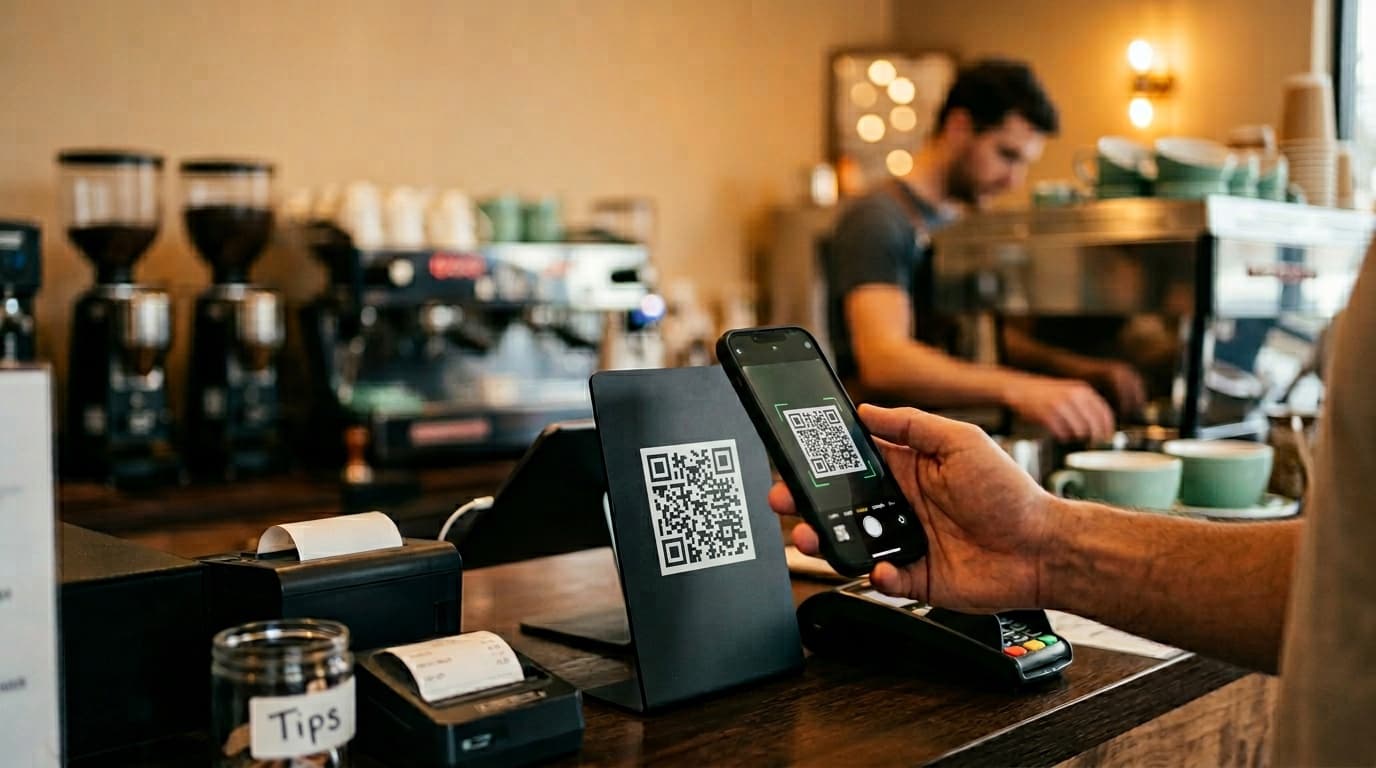
Train your team to present the check with a small QR code card and an unscripted, genuine ask: "We hope you enjoyed it — if you'd like to share your experience, a Google Review helps us a lot." The word "helps" is important. It signals that the request is meaningful rather than commercial.
For takeaway and delivery orders, place a QR code sticker on the bag or inside the box. The review window for a delivery customer peaks around twenty minutes after the food arrives — when the meal is finished and the phone is already in hand. A single sticker costs almost nothing and opens a review channel from a segment of your business that's otherwise almost impossible to reach.
What to Encourage Guests to Write About
Not all reviews are equally useful. A review that says "great food, friendly staff" is nice. A review that names your massaman curry as the best in the city, describes the lemongrass-infused broth, or confirms the kitchen handles nut allergies well — that review converts hesitant searchers.
Without directing customers on what to write (which violates Google's guidelines), you can still guide the memory they carry out the door. A server who says, "I hope you enjoyed the green curry — our chef makes the paste from scratch every morning," gives the guest a specific, memorable hook. When they open Google later that evening, that detail is what surfaces.
Encourage your team to close the meal with a sentence about one dish or one element of the experience. It doesn't need to be a script — just a genuine mention that gives the diner something to anchor their review on.
The QR Code: Removing Every Ounce of Friction
The number one reason satisfied diners don't leave reviews is friction. They intend to, they forget, they can't find the business on Google, or the process feels like too many steps. A well-placed QR code eliminates almost all of that.
Place QR codes on:
- The bill presenter or receipt
- A small card passed to the table with dessert
- A table-top card or tent
- The takeaway bag or delivery box
- The bottom of your printed menu
Each placement targets a different stage of the guest journey. Together, they create multiple opportunities to catch the diner at the right moment. The QR code should link directly to your Google Review form — not to your homepage, not to a landing page, not to a general business listing. One scan, straight to the form.
Responding to Reviews: The Step Most Thai Restaurants Skip
Google rewards engagement. Businesses that respond to reviews — both positive and negative — tend to rank higher in local search than those that don't. Your responses are also read by every prospective diner who visits your listing.
For positive reviews: Acknowledge the specific dish or experience mentioned, use the reviewer's first name if they included it, and invite them back. A brief, personal thank-you reinforces the identity you're building. Avoid copy-pasting the same response to every review — regulars and Google alike notice.
For negative reviews: Respond within 24 hours. Acknowledge the concern without being defensive, and offer a concrete path to resolution — a direct message, a phone call, or an invitation to return. A gracious response to a three-star review about spice levels shows prospective diners that you listen. That often reads better than the complaint itself.
The goal is not to win an argument. It's to show every future reader that your restaurant takes quality seriously.
Gamifying the Ask with a Fortune Wheel
The most effective technique for multiplying review volume quickly is gamification — specifically, a digital fortune wheel. Here's the mechanic:
A QR code at the table or on the receipt invites guests to spin a wheel for a chance to win a prize: a free spring roll on their next visit, a 10% discount, a Thai dessert, or a priority table reservation. To spin the wheel, guests complete a chosen action — like leaving a Google Review, following your Instagram, or signing up for a SMS list.
This approach works because it reframes the ask entirely. Instead of "do us a favour," it becomes "here's something fun — want to play?" The surprise element of a random prize keeps people engaged longer than a straight discount offer, and the incentive creates a reason to return.
The impact on review velocity can be dramatic. Restaurants using gamified review collection typically see three to five times their previous monthly review rate within the first four weeks, because every table becomes an active opportunity rather than a passive hope.
Ludofy is a platform built for exactly this use case — a branded, customisable fortune wheel triggered by a QR code scan that fits naturally into the end-of-meal experience. Setup takes under an hour, and the wheel can be configured with your dishes, your colours, and prizes that reflect your menu.
Building Review Consistency: The Rule That Matters Most
Google's algorithm treats review recency as a ranking signal. Fifty reviews collected this month count more toward your local ranking than five hundred collected over the past three years. This means sporadic campaigns — a burst of effort followed by months of silence — don't compound the way consistent collection does.
The goal is a steady drumbeat: a reliable flow of new reviews every single week. The best Thai restaurants build this into daily operations rather than treating it as a marketing project. The QR code on the bill. The sticker on the takeaway bag. The genuine mention from the server at the end of the meal. These small, repeatable actions accumulate into a competitive moat that a newer or less systematic competitor struggles to close.
If you're starting from zero, aim for five new reviews a week. That pace brings you to 250 reviews in a year — enough to dominate most local searches for Thai food in a mid-sized city.
The Compounding Value of a Strong Review Profile
Google Reviews don't just help you rank. A strong, consistent review profile also reduces your cost per new customer — organic local search is free, while delivery platforms and paid ads charge per order or per click. It accelerates word-of-mouth by giving a friend's recommendation a place to land and be verified. And it delivers market intelligence: what guests consistently praise tells you what to protect; what appears in three-star reviews tells you what to address before it becomes a pattern.
For a Thai restaurant, where the kitchen often has a culinary point of view ahead of what local diners are used to, strong reviews serve as proof of concept: yes, the flavours are this bold, and yes, it's worth the adventure.
Start with the bill. Put a QR code on it today — the rest builds from there.