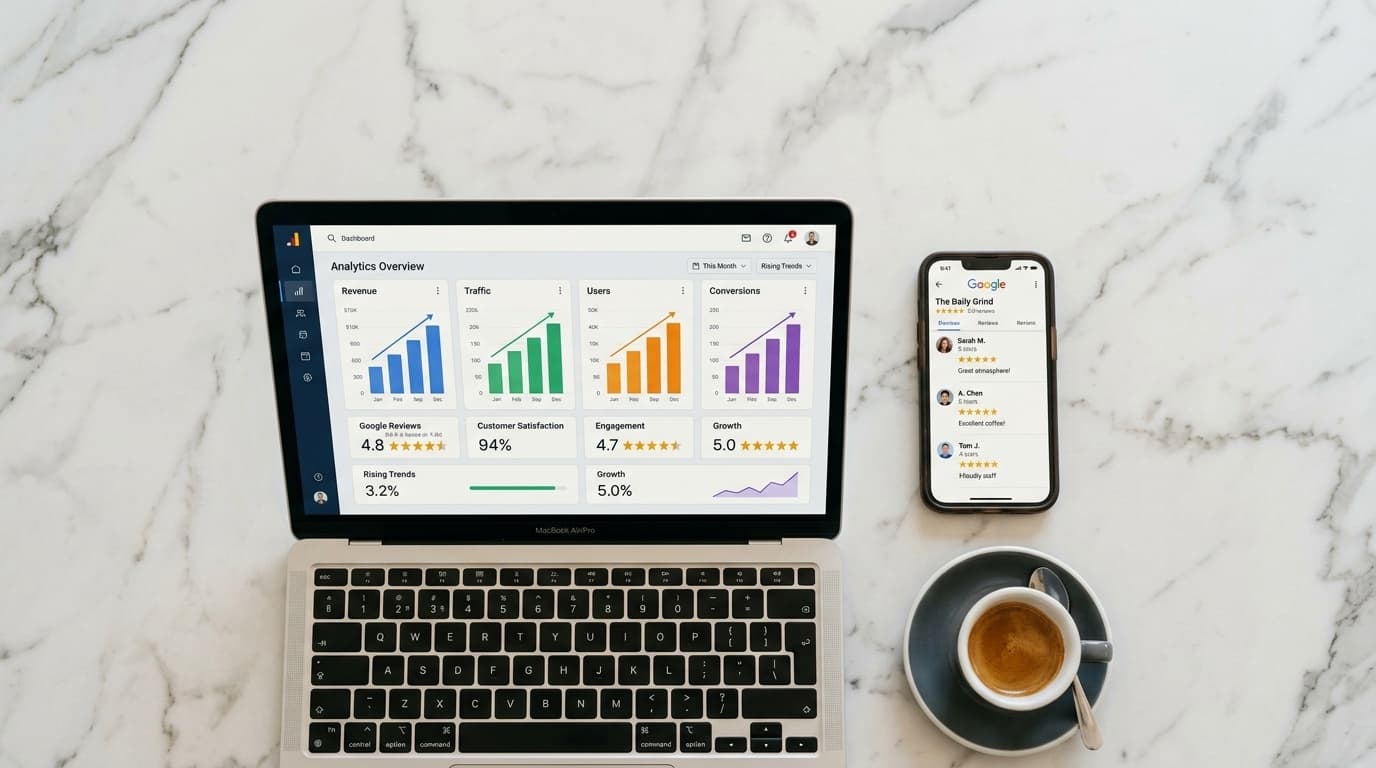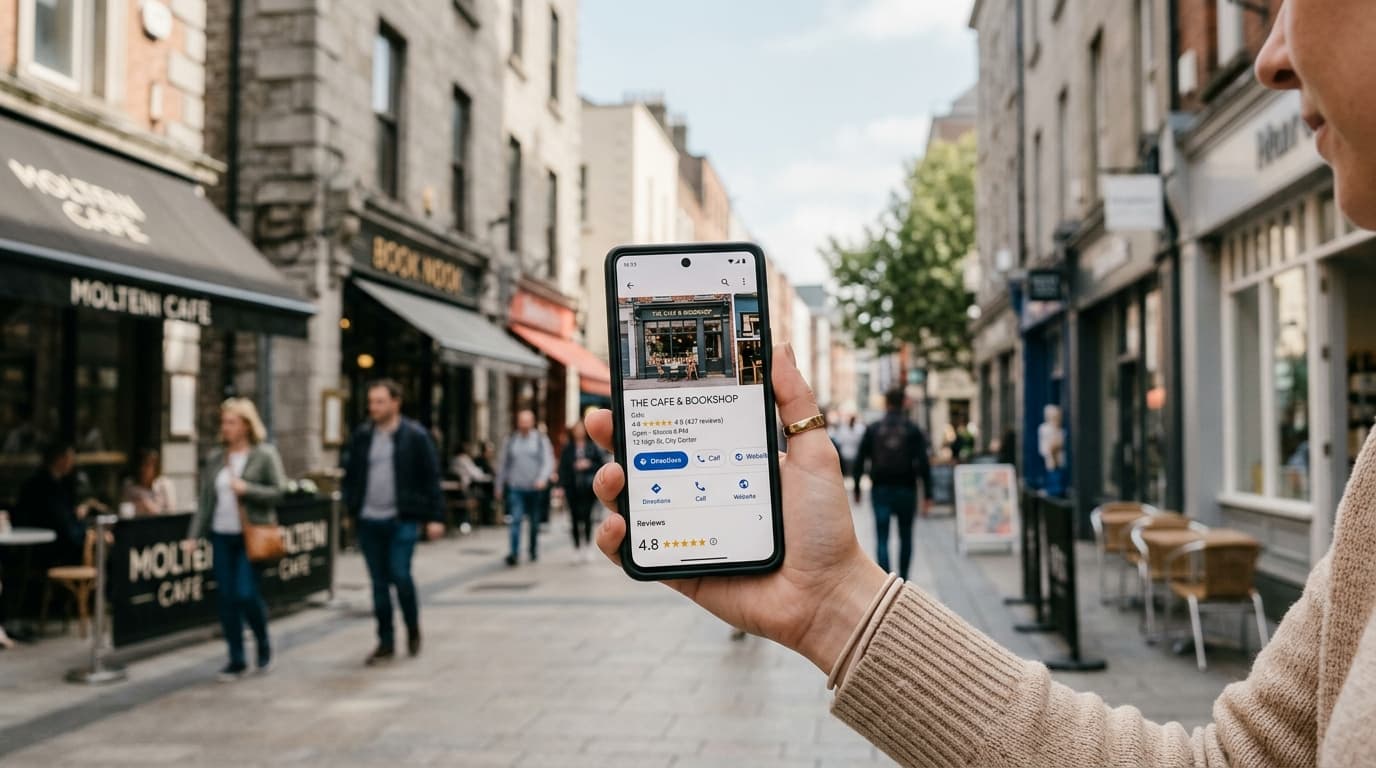
When someone starts planning a trip, their first stop isn't a travel brochure — it's Google. Whether they're searching "travel agency near me" or a specific destination package, the agencies with the strongest review profiles win the click. A business with 4.8 stars and 120 reviews consistently outperforms one with 4.6 stars and 15 reviews, even if the actual service quality is identical.
For travel agencies, the stakes are especially high. Travel is one of the highest-consideration purchases a consumer makes. They're committing thousands of dollars or euros to an experience they can't return. In that context, Google reviews function less like endorsements and more like insurance — they reduce the perceived risk of booking with a stranger.
Yet most travel agencies struggle to build review volume. The post-trip window is narrow, customers are busy settling back into their routines, and the emotional peak of the trip fades quickly. This guide walks you through a system that captures reviews at the right moment and keeps them flowing month after month.
Why Travel Agencies Have a Review Gap
Most local businesses can collect reviews within hours of a customer interaction. A restaurant can ask at the table. A salon can hand over a QR code at checkout. Travel agencies operate on an entirely different timeline — and most review strategies built for other industries fail here.
The gap between when a customer books and when they can genuinely review the experience can be weeks or months. If your agency relies on verbal requests at the point of sale, you're asking for a review before the customer has anything meaningful to say. By the time they return from their trip, your agency is a distant memory.
This timing mismatch is the root cause of thin review counts at most independent travel agencies. Solving it requires a system that activates at the right moment in the customer lifecycle — specifically, at the moment of return.
The 48-Hour Rule: When to Ask
The sweet spot for requesting a review is one to two days after the customer returns home. At that point:
- The experience is still vivid and emotionally charged
- The customer is actively sharing photos and stories with friends
- They haven't yet been fully absorbed back into daily routine
- They are in a naturally positive headspace (assuming the trip went well)
Most booking systems hold the return date. That's your trigger. An automated WhatsApp message or email sent 48 hours after the return date converts dramatically better than any generic post-booking request.
Example WhatsApp message:
"Hi [Name] 👋 Welcome back! We hope your trip to [Destination] was everything you hoped for. If you have 2 minutes, we'd love to hear your thoughts — it really helps other travelers find us: [Google Review Link]."
Short, warm, personalized, one-tap link. That's the formula.
QR Codes: Turning Your Agency Into a Review Touchpoint
Your physical office is an underused asset. Customers who come back in person — to pick up final documents, drop off a thank-you, or simply share their photos — are at peak emotional engagement. That's exactly the moment to ask.
Place a laminated QR code card on your front desk that links directly to your Google review page. Train your team to use it naturally: "We're so glad the trip went well! If you ever have a moment, a Google review means a lot to us — here's the code, it's just two taps."
Effective placements:
- Reception counter — visible during in-person return visits
- Invoice or itinerary footer — on the printed documents every customer receives
- Thank-you card in the travel kit — slipped into the document wallet alongside tickets
- Storefront window — for returning clients who walk by your agency
Each physical touchpoint becomes a micro-opportunity. Most customers won't act on all of them — but even one in ten is a meaningful conversion rate that compounds over months.
Gamification: Making the Review Feel Like a Reward
The biggest barrier to leaving a review isn't reluctance — it's forgetting. Customers intend to do it, then life gets in the way. Gamification eliminates that barrier by creating an immediate reason to act.
With a tool like Ludofy, you can add a fortune wheel spin to your review collection flow. The mechanic works like this:
- The customer lands on your branded page via the QR code or WhatsApp link
- They leave their Google review (verified before the reward unlocks)
- They spin the wheel to reveal their prize
- The prize is delivered automatically
For a travel agency, prize ideas that work particularly well:
- 10% discount on their next booking — highest conversion to repeat clients
- Free travel insurance upgrade — high perceived value, low actual cost
- City guide or branded travel accessory — tangible and shareable
- Priority access to new packages or promotions — creates a sense of exclusivity
A €30–50 reward on a €2,000 booking costs almost nothing in margin terms. But the 5-star review it generates will influence dozens of future customers over the coming months. The economics are overwhelmingly favorable.
Handling Reviews: The Part Most Agencies Ignore
Every review you receive — positive or critical — is a public conversation that future customers will read before deciding whether to book. Your response strategy matters more than most operators realize.
For positive reviews: Thank the customer by name, reference a specific detail if they mentioned the destination or a particular service, and briefly mention something new your agency is offering. Keep it warm and human, not a copy-paste template.
For negative reviews: Acknowledge the issue clearly, express genuine regret, and invite the customer to continue the conversation privately. Never be defensive in a public response. A potential client reading your reply is measuring your ability to handle things when they go wrong — which is exactly the scenario they worry about when booking travel.
Agencies that respond thoughtfully to all reviews, positive and negative, consistently outrank those that don't. Google's algorithm interprets engagement as a signal of business health. So does every customer who reads the exchange.
Building a Sustainable Review Cadence
Reviews decay in relevance over time. A 4.9-star rating built on reviews from 18 months ago looks stale next to a competitor sitting at 4.7 with 20 reviews posted in the last six weeks. Both Google's algorithm and the humans reading your profile weigh recency heavily.
The goal is not a one-time review sprint — it's a sustainable monthly cadence. For most independent travel agencies, 5 to 10 new reviews per month is a realistic target that produces compounding SEO benefits over time. With a QR code in place and an automated post-return WhatsApp sequence, reaching that target requires minimal ongoing effort from your team.
The agencies that dominate Google local results in their market are rarely the ones with the best product. They're the ones with the most consistent systems for collecting social proof — and those systems don't have to be complicated.
Take the Next Step
Ludofy helps travel agencies deploy a branded review collection system in under a day — QR codes, gamified incentives, and review tracking all in one place. If your competitors are already building their Google reputation systematically while you're relying on verbal requests and word-of-mouth, the gap between your ratings widens every month.
Start collecting reviews automatically, keep your satisfied travelers engaged, and turn your Google profile into your most effective booking channel.