Choosing a massage therapist or booking a day spa package is a fundamentally different decision from choosing a restaurant. The stakes feel higher, the vulnerability is real, and the experience is deeply personal. For these reasons, potential clients turn to Google reviews with a level of scrutiny they rarely apply to food choices: they read carefully, count stars, and look for signals of professionalism, hygiene, and genuine care.
Which makes the irony striking: wellness businesses are often among the worst in their category at collecting Google reviews, despite being home to some of the most satisfied customers imaginable.
This guide closes that gap — practically, for massage studios, day spas, naturopathic clinics, and wellness centers of every kind.
Why wellness clients rarely leave reviews (even after a 5-star experience)
The problem isn't gratitude. Your clients are frequently thrilled. The problem is the transition out of your space.
A client who has just had a 90-minute deep tissue massage is not in an optimal state for digital engagement. They're relaxed, perhaps slightly drowsy, possibly emotionally open in ways they weren't expecting. The moment they leave your reception area is not the moment they're most likely to pick up their phone and compose a thoughtful written review.
Add to this the nature of wellness services: people often book for private reasons — chronic pain, anxiety, post-injury recovery, burnout — that they don't necessarily want to discuss publicly. Even a genuinely enthusiastic client may hesitate to leave a review that implicitly reveals what brought them in.
The result is a structural undercount. Your Google rating almost never reflects the quality of your actual client experience. It reflects the percentage of clients motivated enough to navigate that barrier on their own.
The specific challenges of review collection in a spa or wellness environment
Beyond client readiness, wellness operators face practical constraints that don't exist in the same form for restaurants or retail shops.
The atmosphere problem. You have worked hard to create an environment of calm — soft lighting, ambient sound, aromatherapy, unhurried transitions. Asking for a Google review at the end of a session can feel jarringly transactional. The ask has to be frictionless and ambient, not direct and effortful.
The booking structure. Many wellness clients are appointment-only and don't linger the way restaurant diners or retail shoppers do. The window for review capture is narrow — typically the two or three minutes during checkout.
The service interval. Unlike a coffee shop where customers might visit daily, massage and spa clients often come every three to six weeks. There are fewer natural opportunities to develop the conversational rapport that makes a direct review request feel comfortable.
The solo practitioner dynamic. Independent massage therapists and small wellness studios often operate without a front-desk team. When the person delivering the service is also handling checkout, asking for a review can feel self-promotional in a way that undermines the therapeutic relationship.
The right moment to ask — and the right way to do it
The optimal review capture window in a wellness setting is during checkout, not immediately post-treatment. Clients who are still in the treatment room, or still in the immediate post-session glow, are in a state where any commercial ask will land poorly. But clients who have dressed, had their glass of water, and are settling their invoice have transitioned back into normal social mode — and are still carrying positive feeling from the session.
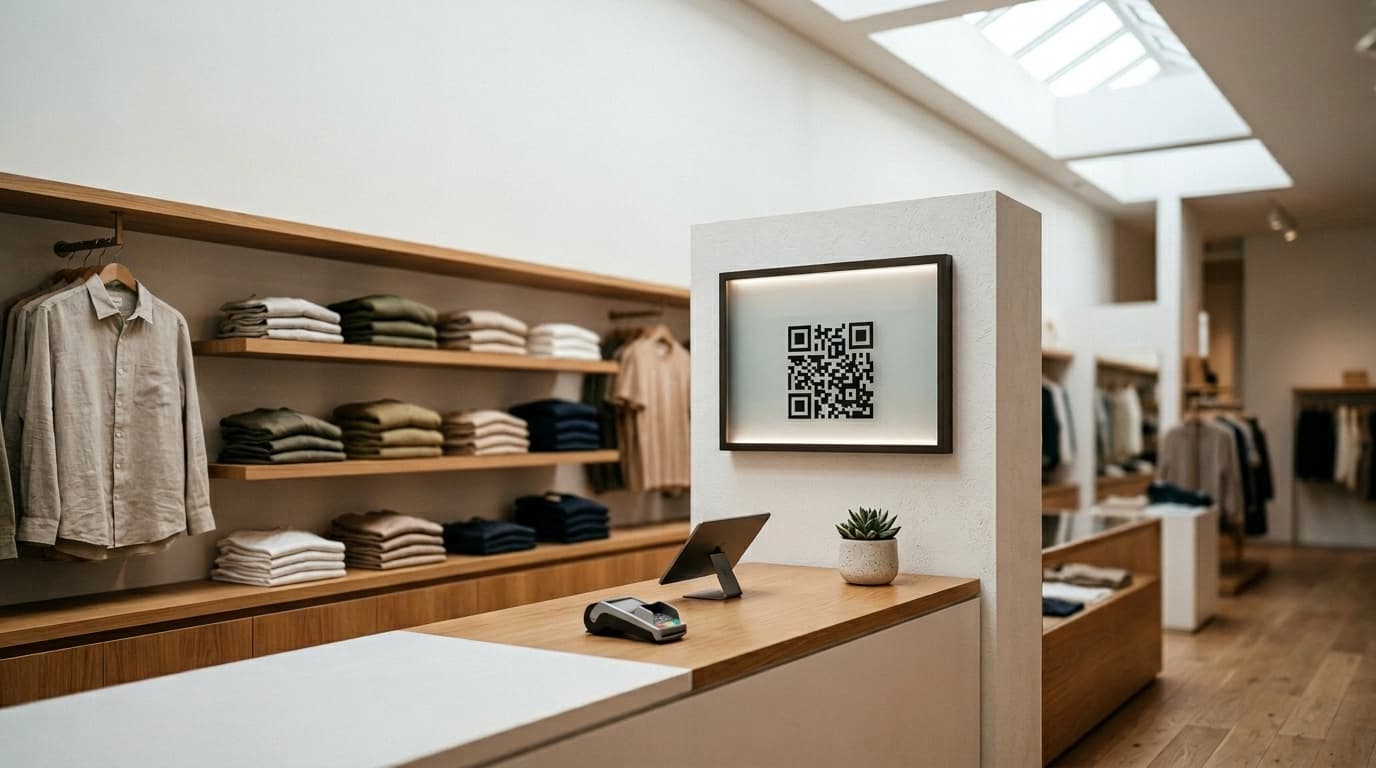
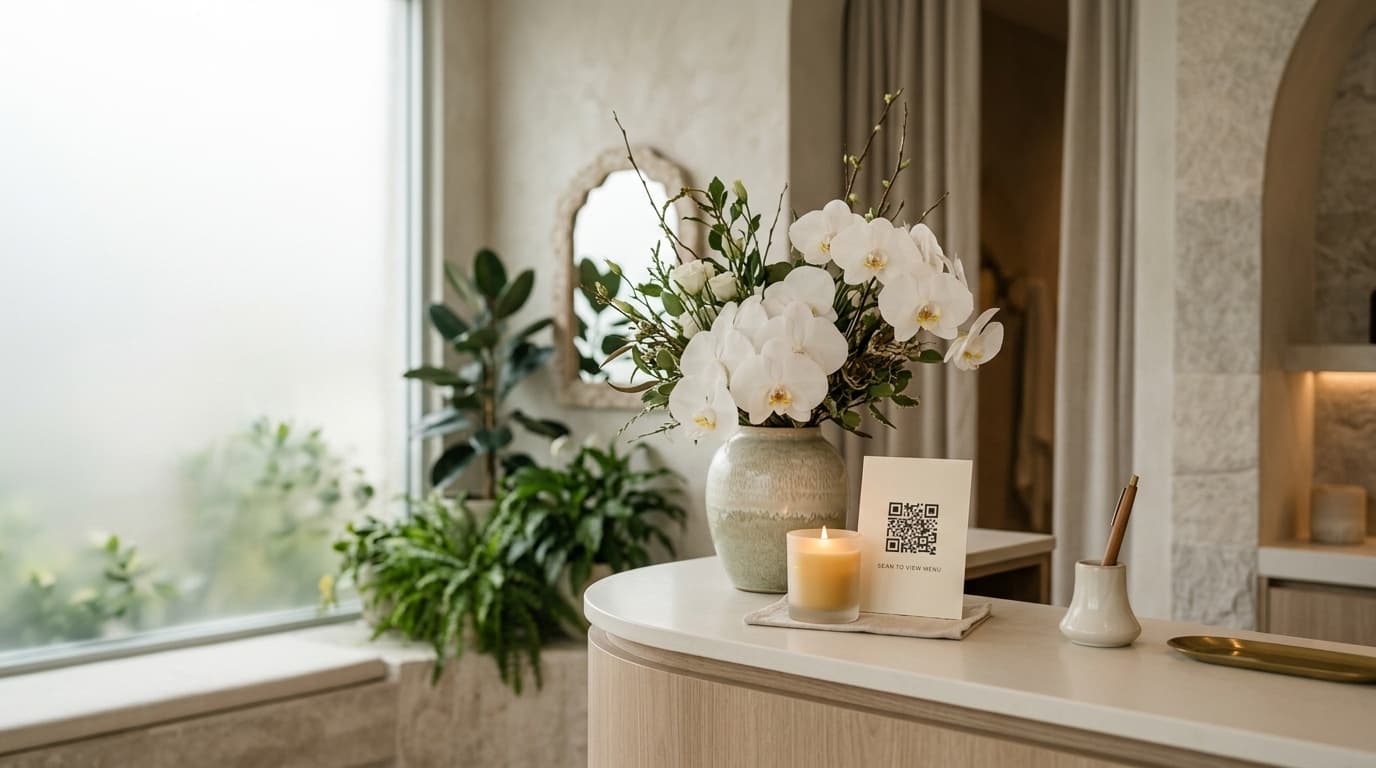
This is the moment to introduce the review mechanism. Not verbally — that ask is awkward regardless of industry — but passively: a QR code card placed on the reception counter or handed with the invoice.
A single line from staff removes the commercial framing entirely: "We have a little thank-you game for clients before they leave — worth a try if you have a minute." This positions the review request as something you're offering the client, not something you're extracting from them.
How QR codes fit naturally into the wellness checkout experience
QR codes have a significant advantage in wellness settings: they're silent. The client scans at their own pace, without any social pressure. A code on a tasteful card placed beside a candle or alongside the invoice feels entirely congruent with the atmosphere you've created.
The review flow itself should take under a minute: scan the code, write a short Google review, then spin a digital fortune wheel to reveal a reward. The review always comes first — this ensures you collect authentic feedback even if the client doesn't complete the game, and it prevents the prize from influencing what they write.
Gamification matters here for a specific reason. In a wellness context, the "ask" carries particular social weight — the client knows you're vulnerable to their opinion, and they feel the weight of that. A gamified flow reframes the entire interaction: instead of the client doing you a favour, they're participating in a fun ritual. The psychological shift is significant. Participation rates consistently climb from 2–5% (verbal requests) to 20–35% (QR gamified flow) across wellness operators who make the switch.
What prizes work best in a wellness context
Prize selection matters in your environment. Relevance to your service is as important as generosity.
What consistently works:
- A discount on the next booking (10–15%) — creates a direct incentive to return
- A complimentary add-on at the next visit (an extended massage, a face mask, aromatherapy upgrade) — high perceived value at low cost
- A small take-home product — a sample essential oil, a bath salt sachet, a mini body cream — feels generous and on-brand
- Priority booking access during peak periods (holidays, summer, Valentine's week)
What to avoid: Generic prizes with no connection to your service (gift cards for other stores, cinema vouchers). They create a mismatch with the experience you offer and undermine the sense of care that makes your business distinctive.
What conversion rates to expect
Wellness operators who implement QR-based gamified review flows typically report:
- Participation rates of 20–35% of clients at checkout — versus 2–5% for verbal requests alone
- Review quality that is substantially richer than average — wellness clients who do write reviews tend to be expressive, producing longer texts that carry more weight in Google's algorithm
- New review velocity of 15–50 per month for a studio seeing 60–80 clients per week
- Rating trajectory of 0.2–0.5 stars upward within 90 days, particularly in categories like cleanliness, communication, and value
The quality dimension matters as much as the volume. Google's ranking system considers review depth and recency as quality signals. A wellness center with 150 detailed, recent reviews consistently outperforms a competitor with 300 brief or stale ones.
The cumulative effect on local search visibility
For wellness businesses, Google Maps is often the single most important new-client acquisition channel. Someone searching "massage near me," "deep tissue massage [city]," or "day spa [neighborhood]" is a high-intent buyer — they've already decided they want the service; they're simply choosing from whom to buy it.
A wellness center in the top three local results, with a 4.8-star average and 200+ reviews, captures the majority of those searches. The gap between a 4.3-star rating with 40 reviews and a 4.8-star rating with 200+ reviews is not marginal — it's the difference between being chosen and being scrolled past.
A consistent review collection system, operating every day at checkout, closes that gap faster than any other marketing investment available to you. The math is direct: a studio seeing 50 clients per week, with a 25% participation rate, adds roughly 12 new reviews per week — or approximately 50 per month. At that velocity, a new practitioner can build an authoritative Google presence within two seasons.
Ludofy is built specifically for this kind of environment — a fully customizable digital fortune wheel that activates at the point of sale via QR code, sequences the review before the spin, and tracks participation and review volume in a straightforward dashboard. The QR card can be styled to match your reception aesthetic, setup takes under fifteen minutes, and the first reviews typically arrive before the end of your first day running the system.
If your Google profile doesn't reflect the quality of the experience you deliver, the problem isn't your service. It's that you haven't given your satisfied clients a clear, effortless pathway to say so publicly. Fix the mechanic, and your reputation catches up quickly.