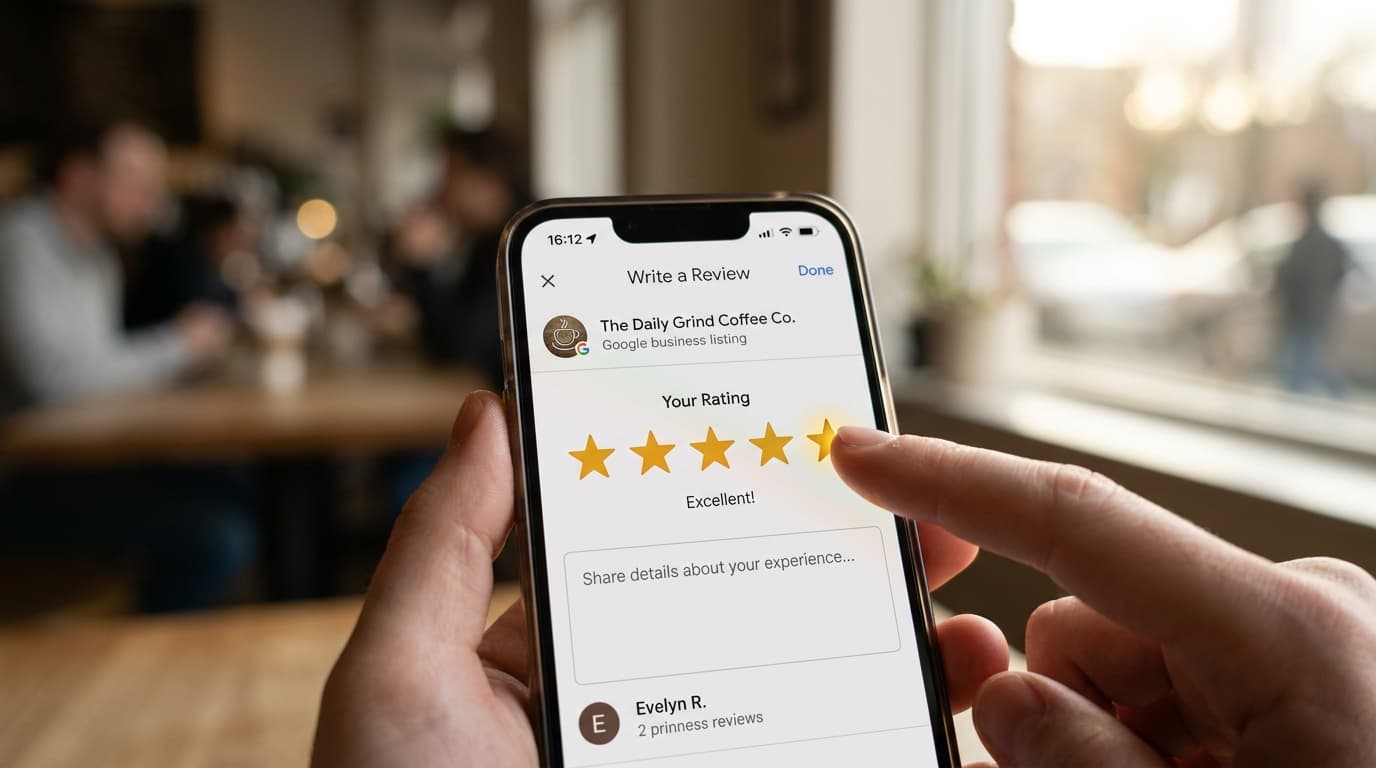
Walk into almost any independent grocery store or neighborhood supermarket and you'll find the same situation: dozens of loyal customers stopping in every week, yet a Google Business Profile showing 18 reviews, the most recent from eight months ago.
That gap isn't a sign that customers are unhappy. It's a sign that nobody ever built a system to collect reviews at the right moment.
Grocery stores sit in a uniquely advantageous position for review collection. The purchase cycle is short, repeat visits are the norm, and every transaction ends at a checkout counter — exactly the kind of contained, predictable moment where a well-placed QR code can do a lot of work. Understanding why most stores squander this advantage is the first step to capturing it.
Why grocery stores are underrepresented on Google Reviews
The food retail sector has the highest customer contact frequency of almost any local business. A neighborhood supermarket serving 300 customers per day accumulates over 100,000 customer interactions per year. If even 0.5 percent of those turned into a Google review, the store would have 500 reviews annually — more than most restaurants generate in five years.
The reason this doesn't happen comes down to timing and friction. Most grocery interactions end quickly: items are scanned, payment is tapped, and customers move on in under two minutes. There's no natural pause where a staff member might invite a review without seeming intrusive. Customers aren't lingering over coffee. They're executing a task.
The result: grocery stores over-index on passive footfall and under-index on review volume. And in the meantime, customers searching "supermarket near me" or "best grocery store in [neighborhood]" on Google see rating profiles that look thin and stale — which pushes them toward competitors with stronger signals.
What customers actually write about when they review a grocery store
Before building a review collection system, it's worth understanding what grocery customers comment on. Unlike a restaurant where the meal is the entire experience, grocery reviews tend to cluster around a few specific dimensions:
Product range and availability — "They always have the imported pasta I can't find elsewhere." "Never out of stock on the basics." This is the most common theme in positive reviews of independent grocers competing against chains.
Freshness and quality — Produce, meat, and dairy get called out explicitly. A store with genuinely fresh stock gets credit for it in reviews, which then becomes a searchable signal for customers who prioritize this.
Staff and service — Independent grocers consistently outperform chains on personal service. Customers notice when someone helps them find an item or carries a heavy bag to the car. These interactions become review content when customers are prompted immediately after.
Price perception — Not necessarily the lowest price, but fairness and value. "Slightly more expensive than the superchain but worth it for the quality" is a common review pattern that actually converts future customers.
Parking and convenience — Location-specific factors that matter enormously for grocery trips and that customers mention when prompted.
Understanding these themes helps you frame your review request. Rather than a generic "leave us a review," a prompt that says "Did you find everything you needed today?" anchors the customer's mind to their experience before they scan the QR code.
The checkout moment — and why it works for grocery
The moment of payment is where grocery stores have a structural advantage over service businesses. At a restaurant, the review request moment competes with conversation, coats, and the mental math of splitting the bill. At a grocery store, it's simpler: the transaction is done, the bags are packed, and there's a brief moment before the customer heads for the door.
That moment is short, but it's repeatable across every customer, every hour, every day.
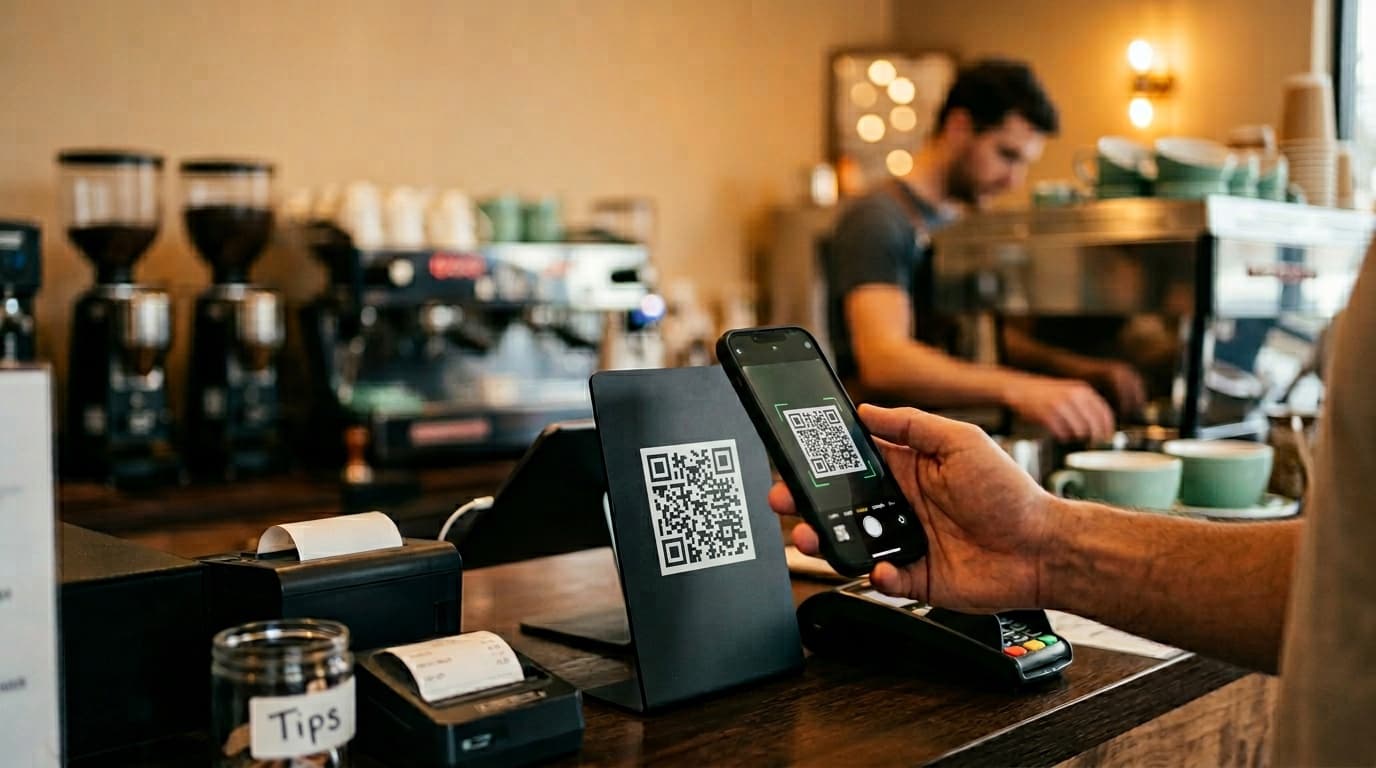
A QR code at the checkout — on the counter, on the payment terminal screen surround, or on the receipt — turns that brief pause into a review opportunity. The key is combining it with something that makes scanning feel worthwhile in the moment. A fortune wheel mechanic (spin to win 5% off your next shop, a free item, or entry into a monthly prize draw) converts the casual checkout glance into an active interaction.
The gamification element matters here more than in some other business types. Grocery customers are rational shoppers: they respond to tangible value. A discount on their next purchase is a concrete, immediately useful reward that aligns with why they came to the store in the first place.
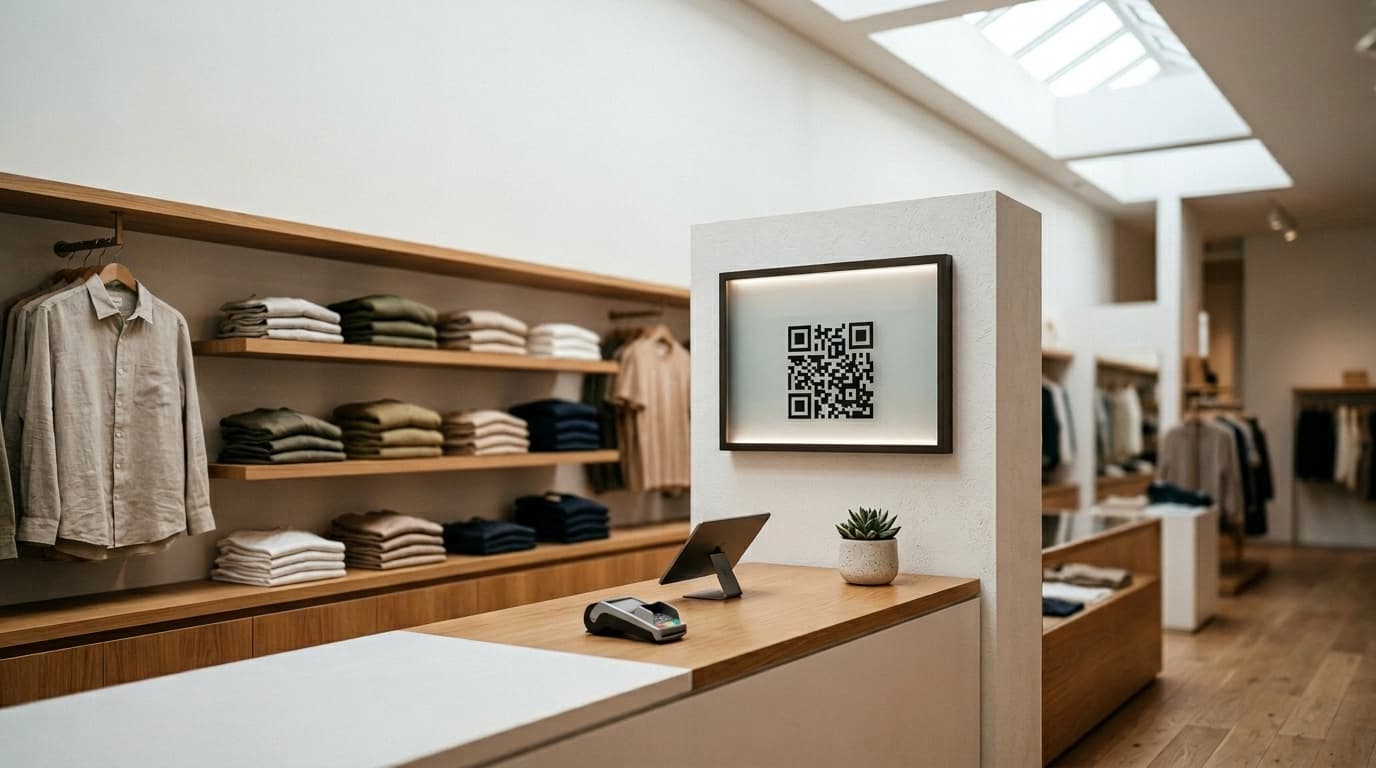
Where to place QR codes in your store
Beyond the checkout, there are several touchpoints where review QR codes generate scans in a grocery environment:
The payment terminal area — The most effective single location. Customers are stationary and momentarily task-complete after paying.
The produce section — Customers who stop to select fresh items have a moment of engagement. A small sign near the display ties the freshness experience to the review prompt.
The entrance or exit — Visible both on arrival (priming) and departure (action). Works well as a secondary placement to reinforce the checkout prompt.
Packaging bags — A printed QR code on paper bags turns every takeaway into a delayed review prompt. Less effective for immediate conversion but builds a longer review tail from customers who unpack at home and scan later.
On receipts — Works for customers who review their purchase before throwing the receipt away. Less effective but adds up over time.
The highest-converting setup is: primary placement at checkout, with a secondary visual cue at the exit. Every other placement is incremental.
Managing the volume challenge
A busy grocery store presents a challenge that most review collection guides don't address: when hundreds of customers pass through per day, the last thing checkout staff can do is pause to explain a QR code to each one.
This is why the placement and visual design of the QR code needs to do the work independently. The signage should answer three questions without any verbal explanation: what to do (scan), why to do it (spin the wheel, win a reward), and how long it takes (under 30 seconds).
Staff play a supporting role, not a primary one. Training for grocery review collection is lightweight: "If someone asks about the QR code, tell them it takes 30 seconds and there's a prize to spin for." That's it. The system handles the rest.
Local SEO impact for grocery and food retail
For neighborhood grocery stores, the competitive dynamic on Google is often surprisingly winnable. The major supermarket chains operate at a brand level, not a local level — their individual location profiles are often thin on reviews despite high foot traffic, because they apply the same review passivity as everyone else.
An independent grocer that systematically collects 30 to 50 new reviews per month will, within a few months, have a stronger local review profile than the nearest chain location. For searches like "organic grocery near me," "halal butcher [neighborhood]," or "local supermarket [city]," review count and recency are among the strongest ranking signals.
The business that appears first with 200 recent reviews and a 4.6 rating will capture a disproportionate share of the search traffic from customers who are new to the area, relocating, or simply deciding between options for the week's shopping.
The compounding return of consistent review collection
Unlike a restaurant where each meal is a distinct event, grocery customers are habitual. Someone who shops at your store twice a week is a valuable reviewer not because they'll leave two reviews — they'll leave one — but because they represent a known future purchase pattern. Keeping those customers visible and loyal through a well-managed Google profile matters beyond the first transaction.
High review volume also acts as social proof for customers discovering you for the first time through Google Maps. The decision to try a new grocery store is lower-stakes than choosing a restaurant or a hotel, but it's still a decision with routine impact. A profile with 350 reviews and a 4.5 average removes almost all friction from that first visit.
Ludofy was designed for exactly this use case: a high-volume, time-constrained checkout environment where each customer interaction is short, the reward needs to be instantly tangible, and the system has to run without depending on staff to explain it. Grocery and supermarket operators using Ludofy's fortune wheel at checkout consistently see review volume multiply within the first four to six weeks — not because their customers changed, but because they finally gave them a reason to act in the moment they were already there.
Your checkout line is already full. The reviews are waiting to be collected.