When someone is looking for a great wine bar or a knowledgeable local wine shop, they don't ask around first anymore. They open Google Maps, type "wine bar near me," and scroll through results sorted by rating and review count. The business with 280 reviews at 4.8 stars gets the click. The one with 22 reviews at 4.6 — even if it's objectively better — doesn't.
This is the visibility gap that quietly costs wine bars and wine shops customers every single week. And it's almost entirely fixable.
Why Google Reviews matter even more for wine businesses
Wine purchasing is trust-driven in a way that most retail categories aren't. Before visiting an unfamiliar wine bar or making a purchase from a shop they've never been to, customers want to feel confident they're in expert hands. They're not just buying a drink — they're buying expertise, atmosphere, and often the right bottle for a specific occasion. Google Reviews serve as a proxy for that trust before anyone even walks through the door.
There's also a local search dynamic that compounds the impact. Searches like "wine bar [city]" or "wine shop near me" have high commercial intent — the person searching is already planning to go somewhere. The only question is which establishment earns the visit. Review volume and recency are among the most significant factors Google uses to rank local results, meaning a business that actively collects reviews doesn't just look more trustworthy: it actually appears higher in the results that generate foot traffic.
For wine shops, there's a specific competitive pressure worth noting. The convenience of ordering wine online, combined with the dominance of large retailers, means independent wine shops increasingly need to justify why customers should walk in rather than click. A rich, active Google profile with consistent positive reviews communicates something an algorithm can't: the personal expertise and curation that a local caviste or wine shop owner provides.
Your customers are natural reviewers — with one key obstacle
Here's what makes wine businesses uniquely positioned for review growth: your clientele is already predisposed to sharing opinions. Wine culture is inherently social. People recommend bottles, compare tasting notes, and swap experiences with friends as a matter of course. A wine enthusiast who loved their experience at your bar or shop will tell their dinner table about it this weekend.
The obstacle is that the recommendation stays in the room. That enthusiastic word-of-mouth doesn't translate into a Google review unless you redirect it there — at the right moment, with as little friction as possible.
The customers who leave reviews spontaneously are disproportionately the disappointed ones. They have a specific motive: processing frustration, seeking accountability. Satisfied customers intend to leave a review and simply forget. Without a consistent prompt system, your Google profile skews negative over time — not because your work is poor, but because the incentive to act is asymmetric.
The best moments to ask for a Google review in a wine context
Timing is decisive. The ideal request comes immediately after a genuinely positive experience, while the satisfaction is still fresh and the customer hasn't mentally moved on to the next thing.
After a recommendation that lands well. When a customer tries a bottle you suggested and returns with genuine enthusiasm — "that Grenache was exactly what I was looking for" — that's your moment. A natural, unhurried: "Glad it worked out. If you wanted to share that on Google, it really helps people discover us." Specific, honest, and in context.
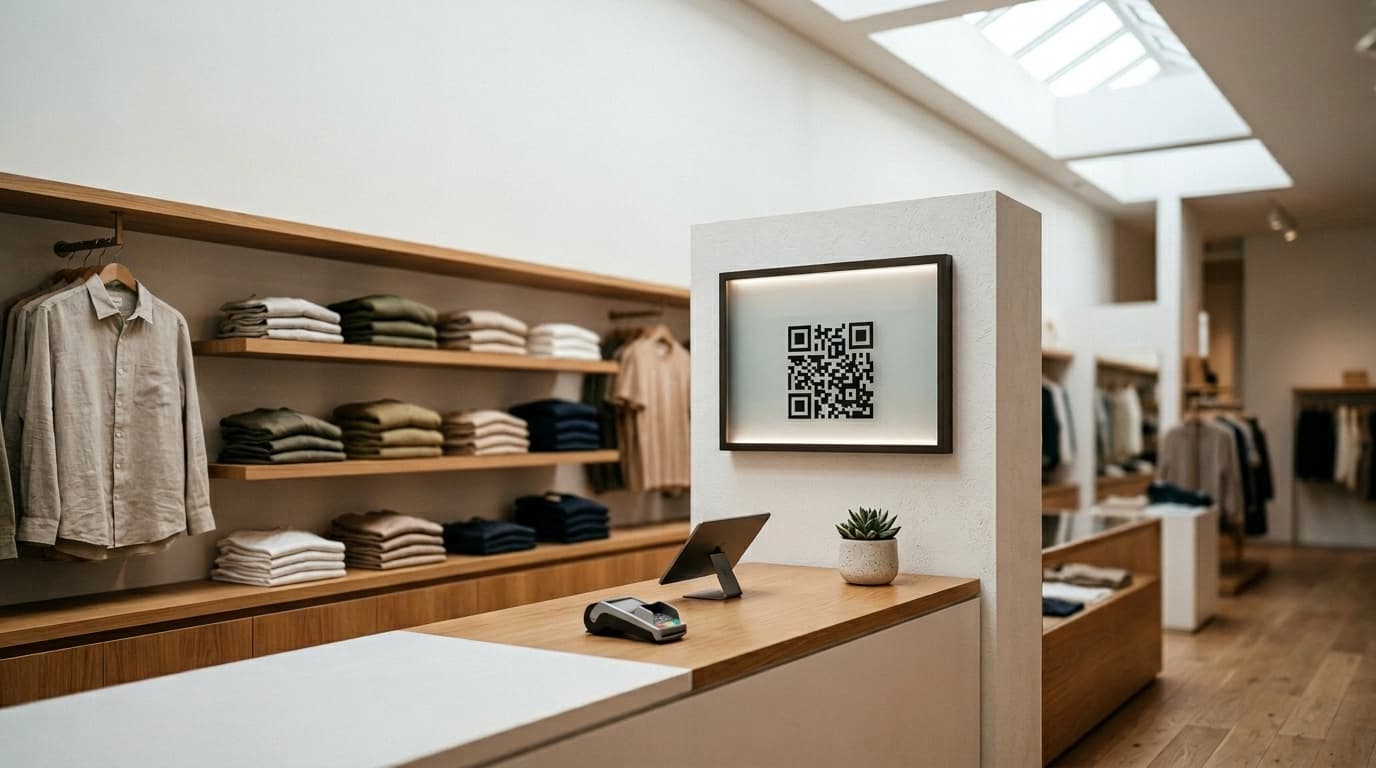
At the end of a tasting session. Whether private or group, wine tastings are high-engagement experiences by design. Participants are relaxed, curious, and have plenty to say about what they just experienced. A small table card with a QR code in the center of the tasting table makes leaving a review a natural extension of the conversation, not an interruption.
At checkout in a wine shop. The moment after a purchase — when the customer has made their choice, is satisfied with the recommendation, and is still in the warm space of your shop — is ideal for a simple prompt. A well-designed card on the counter with a QR code requires no verbal ask at all. The right customers scan it on their own.
When regulars return. A loyal customer who visits monthly or seasonally is your most valuable potential reviewer. They can speak to consistency, expertise, and curation in a way first-time visitors genuinely can't. Don't neglect them in favor of always chasing new customers for reviews.
Gamification: the method that outperforms everything else
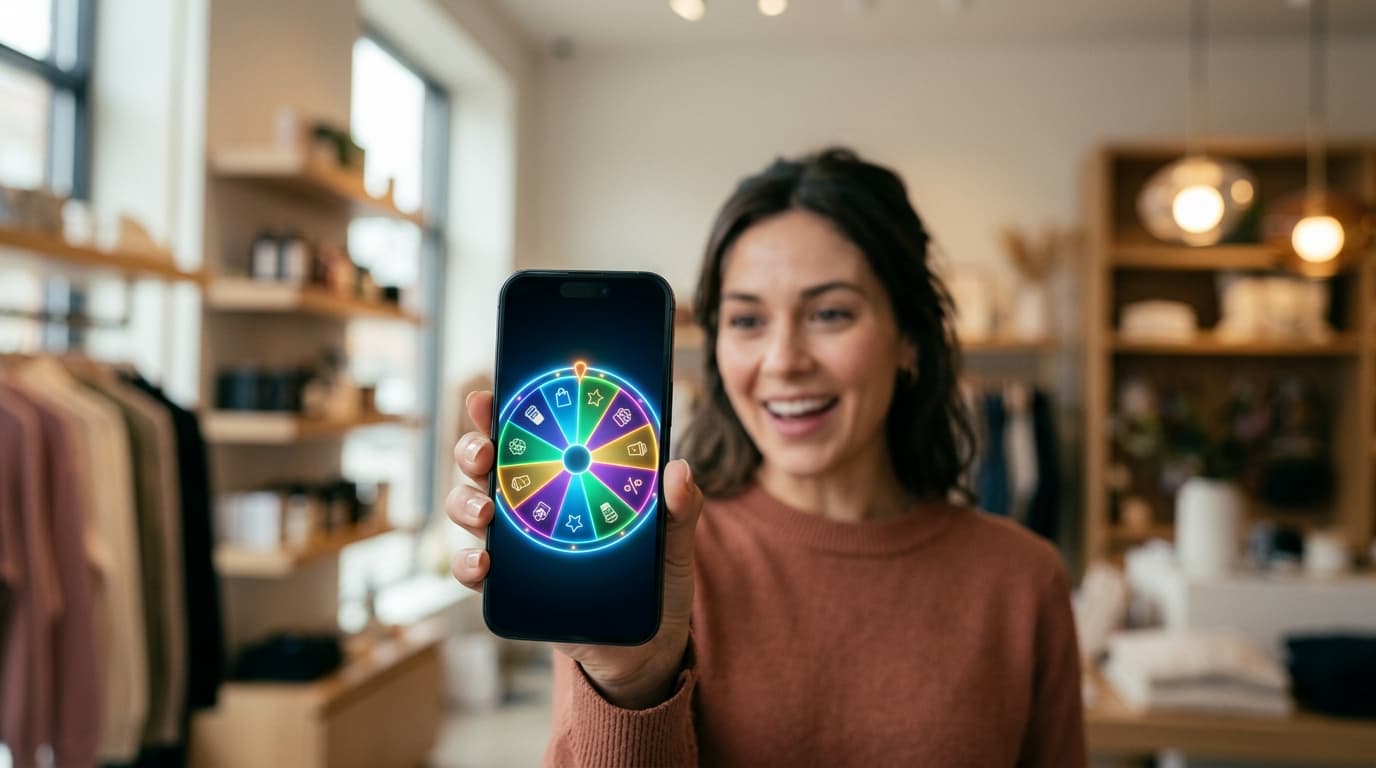
Across hospitality and retail, the most effective technique for sustained review growth is gamification — specifically, a fortune wheel mechanic tied to the act of leaving a review.
The mechanism: after a customer leaves a Google Review, they scan a QR code and spin a digital wheel for a chance to win one of several prizes. The variable reward — not knowing what they'll get — is intrinsically motivating, and the prizes can be precisely calibrated to your offering.
For wine bars and wine shops, the prize list writes itself:
- A free glass of the house selection
- 10% off their next bottle purchase
- An invitation to a private tasting event
- A complimentary wine pairing recommendation with their next meal purchase
- Early access to new arrivals before they hit the general floor
This approach works for a structural reason: it transforms the review from a favor the customer is doing for you into a game they're playing for themselves. The act of leaving a review becomes associated with excitement and reward rather than obligation. And because the prizes pull people back in, each review tends to generate a future visit — compounding the value of the initial interaction.
Tools like Ludofy let you configure and deploy this kind of wheel in under 30 minutes, with your branding, prize list, and a custom QR code ready to display on your counter or tables.
Responding to reviews: the wine business standard
In a context where expertise is your primary differentiator, how you respond to reviews communicates as much as the reviews themselves. Prospective customers read owner responses almost as carefully as the original reviews.
For positive reviews that mention specific wines or staff: Respond with specificity. "Glad the 2021 Côtes du Rhône worked for you — we just received a new vintage from the same domaine if you're curious." This signals genuine expertise and creates a natural conversation that draws people back.
For reviews containing factual disagreements — which happen in wine, where opinions are strong — stay calm and professional. Acknowledge the difference of perspective without being dismissive or defensive. Arrogance in a wine context is noticed immediately and damages your reputation far more than a single negative review.
For reviews about service or atmosphere: Thank the reviewer, apologize sincerely where warranted, and indicate what you've addressed. Invite them back with a specific, low-commitment offer.
The operational target: respond to every review within 48 hours. Google's algorithm rewards active profiles, and a business that consistently engages with its reviews signals to both the algorithm and potential customers that it takes its reputation seriously.
Building consistency: a review rhythm that compounds over time
One of the most common mistakes wine businesses make is treating review collection as a campaign. A burst of activity — 40 reviews in one month from a special event — followed by two months of nothing actually performs worse algorithmically than a steady pace of five or six reviews per week.
Google's local ranking model weights recency heavily. A review from three years ago contributes far less than one from last week. Consistency is what builds and maintains the kind of profile that appears first when someone in your area searches for what you offer.
To build that consistency:
- Make the QR code prompt a permanent fixture at your checkout and on your tasting tables, not a temporary display.
- Brief every team member on how to mention reviews naturally — when to raise it, what to say, when not to push.
- If you run tasting events, include the review prompt as a closing element at every session, not occasionally.
- Use a gamification tool to automate the reward loop, removing the need for a specific verbal ask every single time.
Optimizing your Google Business Profile alongside reviews
Reviews don't operate in isolation. The profile they attach to needs to be current, visual, and complete for them to translate into actual foot traffic.
Update your hours whenever they change — particularly around holidays, private events, and seasonal closures. A customer who shows up when your profile says you're open and finds the door locked doesn't just leave disappointed; they often leave a one-star review.
Add photos regularly. Listings with active photo uploads receive significantly more direction requests and website clicks than static ones. For a wine bar, photos of the atmosphere, the bottle selection, and the tasting space are the most effective. For a wine shop, a well-organized display and a few signature bottles in frame communicate curation and expertise before anyone reads a single word.
Keep your category and attributes accurate. If you offer wine tastings, have a terrace, or stock organic/natural wines, ensure those attributes are marked on your profile — they factor into filtered searches.
Conclusion: build your cellar one review at a time
Your customers already think well of your wine bar or wine shop. They tell their friends. They come back. What they don't automatically do is leave a Google review that makes your reputation visible to the people who haven't discovered you yet.
Closing that gap doesn't require a marketing overhaul. It requires a consistent system — the right prompts at the right moments, and a mechanism that makes leaving a review feel natural or even rewarding. The wine bars and wine shops that invest in this now will be the ones appearing first in local search results next year, while competitors with comparable selections stay buried.
Start with one QR code, one team briefing, and one well-timed ask after your next successful recommendation. Then repeat it every week until it's simply how you operate.