Pop-up shops, market stalls, festival vendors, traveling artisans, food trucks at weekend markets — temporary retail is a growing segment of local commerce. But most operators in this space are leaving a critical growth lever untouched: Google reviews.
The assumption is usually that you need a permanent address for Google reviews to matter. That's wrong. A well-managed Google Business Profile for a market vendor or pop-up shop can drive real discovery, build trust with new customers instantly, and even open doors to better event partnerships. The challenge isn't whether reviews are relevant — it's how you collect them when your customer window closes the moment they walk away.
This guide gives you a complete, practical system for collecting Google reviews as a temporary or mobile retailer.
Why Google Reviews Matter Without a Physical Storefront
Before getting into tactics, it's worth understanding what reviews actually do for a non-fixed business.
Discovery after the event. A customer who bought from your jam stall at Saturday's farmers market will often Google your brand name on Sunday to find your website, your next location, or your online shop. A strong Google profile with recent reviews gives them confidence to buy again and share your name with others.
Instant trust at the stand. When a new customer approaches your pop-up, they haven't seen your shop window, your interior design, or your regular clientele. A Google profile with 60 reviews averaging 4.8 stars delivers that social proof in two seconds — before they've even said hello.
Credibility with event organizers. Farmers market coordinators, festival producers, and venue managers increasingly screen applicants by online reputation. A robust Google profile can be the difference between securing a prime spot and being waitlisted.
Local SEO visibility. Google Maps ranks service-area businesses in local searches. More reviews — especially recent ones — improve your position for searches like "artisan cheese market near me" or "handmade candles [city]."
Setting Up Google Business Profile Without a Fixed Address
If you don't have a physical store open to the public, you can still create and verify a Google Business Profile using the "service area" option. Instead of displaying an address, you list the geographic area you serve — city, region, or a radius from your home base.
This works for food trucks, traveling artisans, mobile caterers, pop-up boutiques, and any business that meets customers at changing locations rather than a permanent venue.
Once your profile is live, focus on these details:
Choose a precise primary category. "Artisan baker," "handmade jewelry store," or "specialty food producer" will outperform generic categories in local search results.
Use the special hours feature. Update your profile regularly to show when and where you'll be at upcoming markets. This makes your profile feel active and gives potential customers a reason to come find you.
Add photos after every event. Fresh photos signal to Google that your business is active. Shot your setup, your products, and the market atmosphere — these also help undecided visitors decide whether to seek you out.
Link to your online store or social channels. Customers who can't make it to the market should have a clear next step.
The Core Problem: Your Review Window Is 10 Minutes Long
In a permanent retail store, you can display a review request sign at the register, put a sticker on the bag, and trust that a percentage of customers will remember to leave a review at home. The window is days, not minutes.
At a market stall, the window is roughly the length of the transaction. Once a customer walks away with their purchase, the probability of them proactively leaving a Google review drops close to zero. They'll get distracted, forget, or simply not think to do it.
This means every element of your review collection system needs to operate in-the-moment. You can't rely on follow-up emails or retargeting ads. You have to close the loop while the customer is still at your stand.
QR Codes: Lightweight, Portable, Always Ready
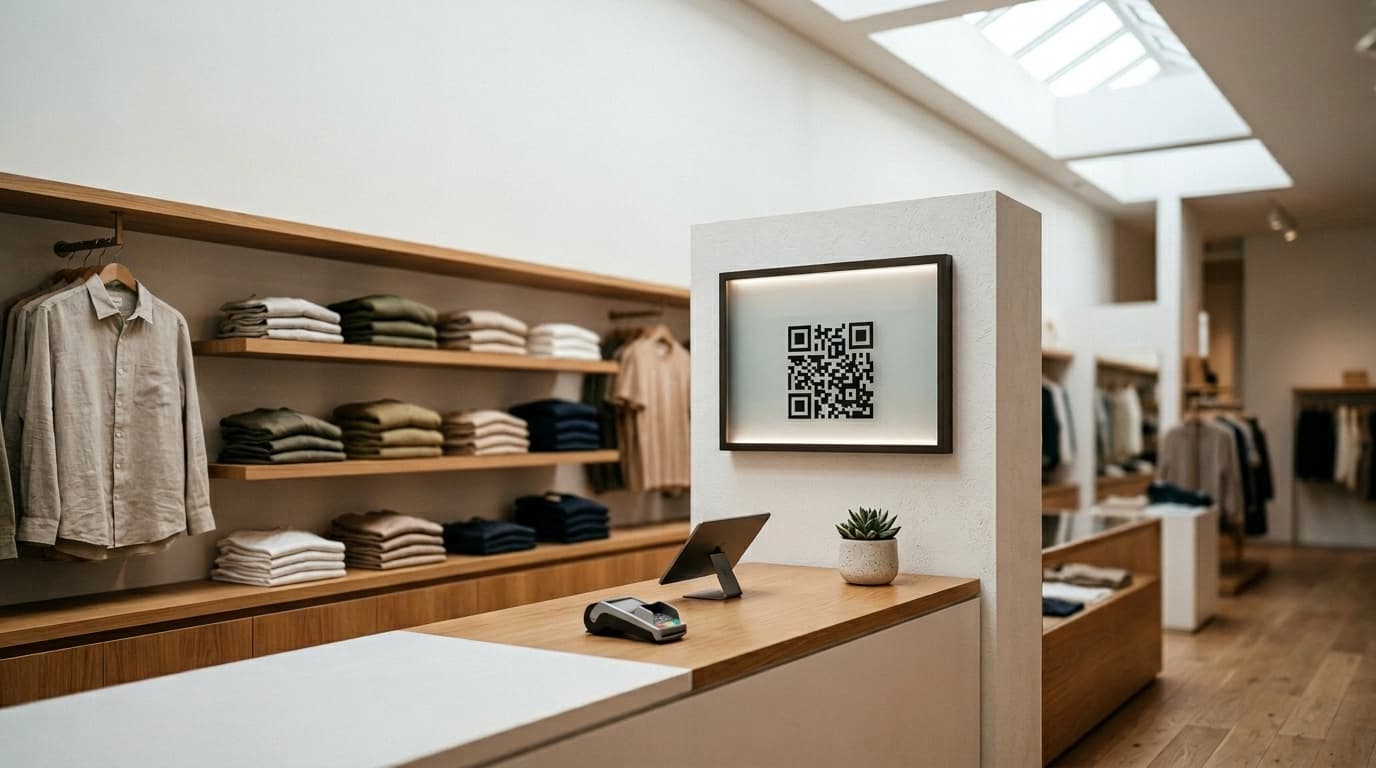
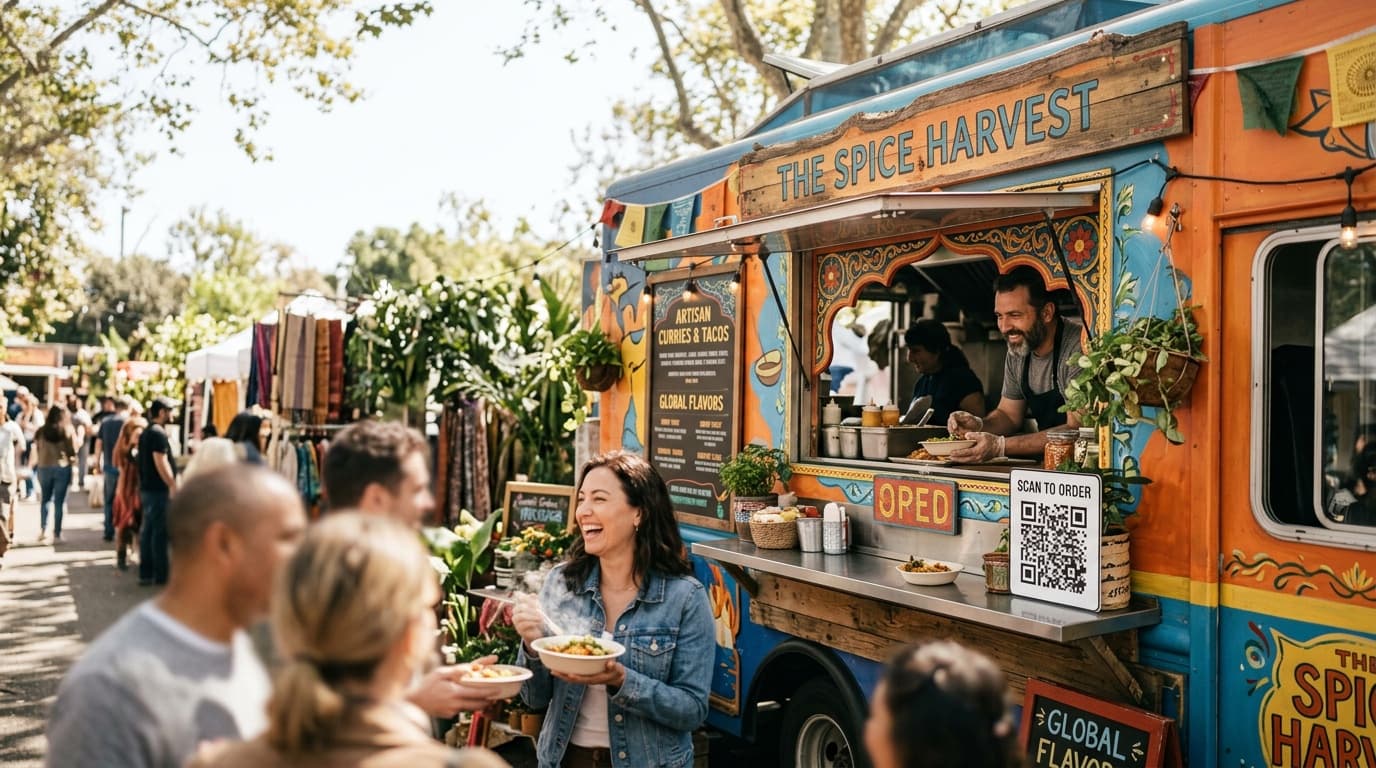
The QR code is the ideal tool for temporary retail review collection. It requires no infrastructure, takes up almost no physical space, and sends customers directly to your Google review page with one scan.
Put your Google review QR code on:
- Business cards — your brand on the front, the QR code on the back with a short prompt. Hand one to every customer with their purchase.
- A small counter sign or tent card — positioned at the payment point where customers naturally pause and have their phones out.
- Product packaging or bags — an adhesive label or printed insert that goes home with every purchase, capturing reviews from customers who check their bag later.
- Your own clothing or apron — a badge or printed design with a QR code and a one-line prompt. It sparks conversations and makes the ask feel organic.
The best placement is always at the payment moment. That's when attention is highest, the customer is most satisfied, and their phone is already in hand.
Gamification: The Difference Between 3% and 40% Participation
A static QR code with a "Leave us a review" sign will get some people to scan. Not many — typically 2 to 5% of customers who notice it. The reason isn't lack of goodwill; it's friction. Leaving a review requires effort, and without a reason to act right now, most people defer and then forget.
Gamification removes that friction by flipping the value exchange. Instead of asking customers for something, you offer them something.
With a tool like Ludofy, you can deploy a digital fortune wheel directly on your phone or a small tablet at your stand. The customer scans your QR code, lands on a quick spin-to-win game, and gets a chance to win a prize — a discount on their next order, a free sample, a bonus item, early access to your next pop-up. The ask is simple: leave a Google review to claim your prize.
In a market environment, this mechanic works exceptionally well for several reasons:
The setting is already playful. Markets and pop-up events carry a festive, discovery-oriented energy. A spin-to-win game fits perfectly and draws curious bystanders who then become customers.
The exchange feels fair. The customer gets something tangible. They're not doing you a favor — they're participating in an interaction with a clear benefit on both sides.
Reviews accumulate in real time. By the time you're packing up your stand, you may already have 15 to 30 new Google reviews visible — a meaningful boost before you even get home.
Operators using gamified review collection at markets and pop-ups report participation rates of 30 to 50% of customers transacted — a 10x to 20x improvement over passive QR code placement alone.
Choosing Prizes That Work for Temporary Retail
Not all prize structures are equally effective. For a market or pop-up context, the best incentives are:
Instant physical prizes — a small sample, an extra portion, a bonus item you can hand over immediately. The "I won something right now" effect is disproportionately powerful in a market setting.
Discount on next online order — this also serves as a loyalty mechanism, driving customers from your in-person stand to your e-commerce channel. A 10-15% discount code emailed immediately after the spin converts well.
Priority access to your next pop-up — for artisans and makers with limited-edition products, this is highly valuable to repeat customers. It also builds your email list.
Avoid generic prizes unconnected to your brand. A $5 Amazon gift card won't reinforce what makes you memorable.
Keeping Momentum Between Markets
The bulk of review collection happens on-site, but a few post-event habits protect and build on that momentum:
Respond to every new review within 48 hours. This shows Google your profile is actively managed and shows future customers that you care about feedback. Even a brief, genuine response matters.
Post a Google update after each event. From your Business Profile dashboard, publish a short post with photos from the market, your next dates, and any new products. These posts appear in local search results and map listings.
Update your special hours weekly. A profile with current, accurate information performs better in local search than one that looks stale.
With three to five market appearances per month and a 30% participation rate, you could realistically collect 25 to 50 new reviews per month. After three months, you'd have a Google profile that outranks most permanent competitors in local search — built entirely from weekend markets.
Building a Repeatable System
The difference between vendors who build strong Google profiles and those who don't is rarely motivation — it's system. Build the habit into your market setup checklist:
Day before the market: Print or prepare your QR code materials. Charge the tablet if you're using a spin-to-win game. Confirm your prize stock.
During the market: At every transaction, mention the game or the prize opportunity. "If you're happy with your purchase, you can spin for a chance to win something" is all you need to say.
Evening after the market: Spend 10 minutes responding to new reviews. Upload three to five photos to your Google profile. Post your next market date.
That's under 20 minutes of work per market day for a compounding return that grows every month.
Conclusion
Temporary retail doesn't mean temporary reputation. The operators who build the strongest Google profiles in their niche are often the ones who treat every market transaction as a reputation-building opportunity — not just a sales transaction.
A clean QR code setup, a gamified review mechanic, and a consistent post-event habit can turn a monthly farmers market appearance into a steady stream of Google reviews that rank you above businesses ten times your size.
Ludofy was built for exactly this use case: a lightweight, phone-first solution you can activate in minutes and deploy on any stand, at any market, in any city. If you sell at markets or run pop-ups regularly, it's one of the fastest ways to turn satisfied weekend customers into lasting Google ambassadors.