Every local business has them: the January slump after the holiday rush, slow Tuesday afternoons, that stretch in late August when everyone seems to be on holiday. Most operators treat these quiet periods as an inevitable cost of doing business — something to weather until the activity picks back up.
The businesses that pull ahead aren't waiting. They're using slow periods as a strategic window to work on the part of their operation that drives customers most reliably: their Google presence.
Here's why slow periods are actually an underused opportunity, and how to activate your Google reviews to turn quiet weeks into customer-generating momentum.
Why Your Google Profile Works Hardest When You're Quietest
When you're slammed on a Saturday night, new customers find you because you're full, loud, visibly popular. The social proof is live and in-person. But on a quiet Tuesday or during the January lull, your Google Business Profile is doing all the work — it's often the only signal a prospective customer has when deciding whether to give you a try.
A strong, recently-updated Google profile with a healthy flow of recent reviews converts undecided visitors at a dramatically higher rate than a profile that hasn't been touched in months. Searches like "restaurants open now near me" or "best coffee [neighborhood] Tuesday" pull up the same local pack results regardless of whether it's your busiest Saturday or your emptiest Wednesday. The difference is entirely in what your profile says when someone lands on it.
This is the paradox that most business owners miss: the periods when they need new customers most are exactly the moments when their Google presence matters most — and those are also the periods when they're least likely to be collecting new reviews.
The Slow Period Review Gap
During busy seasons, reviews arrive naturally. Customers have great experiences in a packed, energetic room; the staff is at their best; the atmosphere sells itself. Even without a proactive review strategy, the combination of higher volume and heightened energy generates a modest review flow.
During slow periods, volume drops, and so does the organic review rate. Fewer customers means fewer opportunities. And because the team is less stretched, the urgency to have a strong online presence feels lower — even though it isn't.
The result is a pattern that reinforces itself: your Google profile looks freshest and most active right before peak season, and gradually goes quiet exactly during the periods when new customers are making up their minds about where to spend reduced discretionary budgets.
The businesses that break this pattern are the ones that recognize the opportunity early: slow periods are the best time to collect reviews strategically, because you have more time to focus on it, and because the impact of every new review is amplified when fewer are coming in naturally.
Three Ways to Combine Reviews with Slow-Period Promotions
1. Create a slow-season offer that requires a review
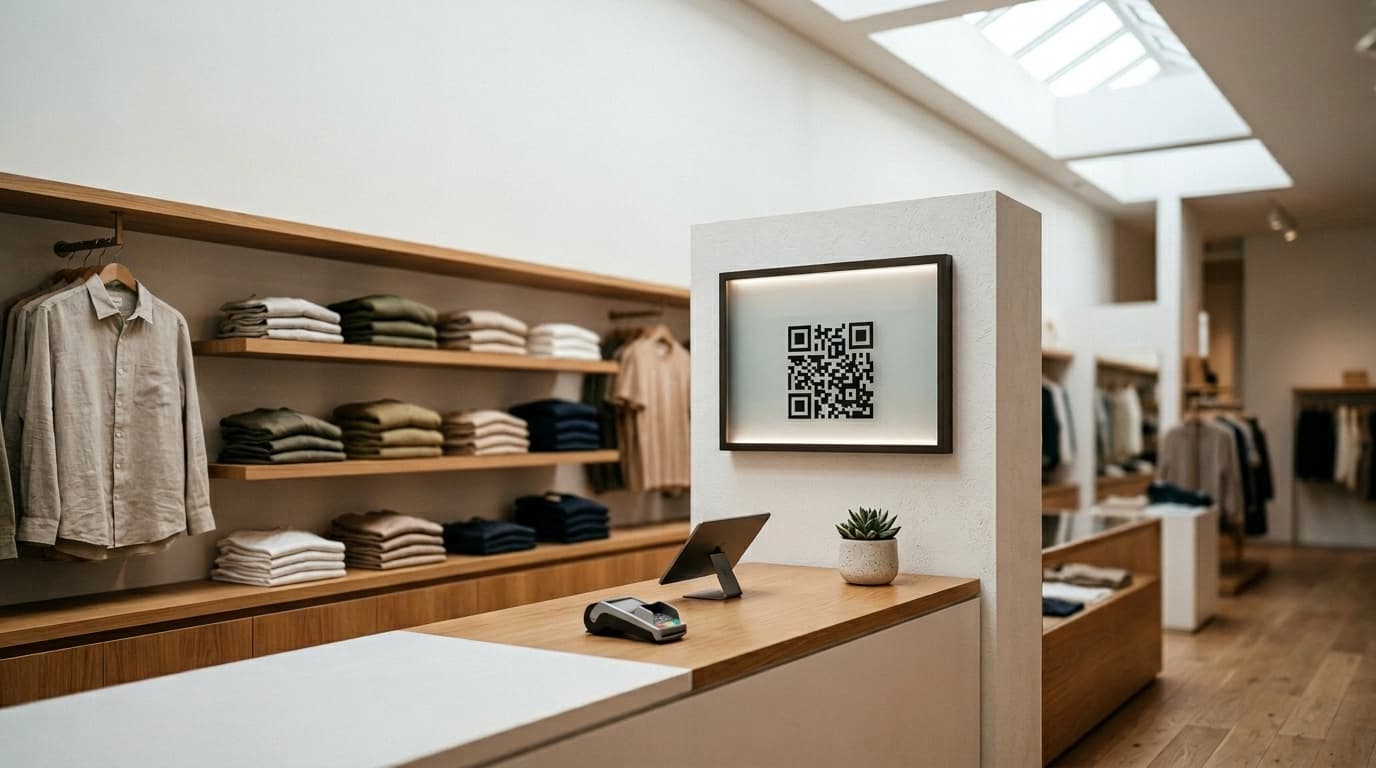
The most effective approach isn't asking for a review and hoping — it's building a small promotion where the review is part of the experience. A QR code at the counter, on the table, or on a takeout bag unlocks a spin of a digital fortune wheel. The wheel offers a modest slow-season reward: a free coffee upgrade, 10% off the next visit, a free dessert.
The structure does three things at once: it gives the customer a reason to visit during a quiet period, it gives them a reason to leave a review in the moment, and it creates a reason to return. All three outcomes reinforce your slow-season traffic.
This works because the offer doesn't have to be expensive. During a slow period, any incremental customer covers your fixed costs more than none at all. A free coffee for a new review is a marketing budget of roughly €0.50–€1 per acquisition — far cheaper than paid ads and with the added benefit of a permanent public endorsement on your profile.
2. Run a review sprint before your next slow period
If you know from experience that February is quiet, the best time to work on your reviews is November and December — not February. A brief sprint during a busy period can add 30–50 new reviews that will serve you through the slow weeks ahead.
Practically, this means briefing your team on a two-week review focus: every table gets a QR code, every checkout has a reminder, and the team mentions it naturally at the end of each interaction. Two or three extra reviews per day over two weeks changes your profile's appearance to someone researching you in February.
3. Update your Google profile to reflect the slow-season opportunity
Most business owners set up their Google Business Profile once and leave it. During a slow period, a few intentional updates can increase your conversion rate from profile views to actual visits:
Post a Google Business update about your current slow-season offer. Google Business posts appear on your profile for seven days — posting weekly during quiet periods keeps your listing looking active to the algorithm and gives potential customers a reason to act now.
Update your hours if they've changed. A profile with incorrect hours during off-season is one of the most common ways to lose a customer who checked and showed up to a closed door. That experience often becomes a negative review instead of a missed opportunity.
Add new photos. A slow period is the best time to take and upload fresh photos — your space is actually visible, the light isn't blocked by wall-to-wall customers, and you can stage shots thoughtfully. Google's algorithm favors profiles with regularly updated photos, and prospective customers make decisions within seconds based on whether a restaurant or shop looks appealing in its images.
How Gamification Changes the Slow-Period Dynamic
The psychology of a slow period creates a specific challenge: customers who do come in during quiet times often feel something is off. If a usually busy restaurant is empty on a Friday evening, even a regular might hesitate. The usual social proof mechanisms are absent.
Gamification works as a counter-signal. A fortune wheel at the counter, a QR code game on the table, turns a quiet visit into something slightly special — a game, a chance at a reward, an interaction with the brand beyond the transaction. It makes the slow period feel intentional rather than accidental, and it gives the customer something to mention if they do leave a review.
Operators who use gamified review collection during their slow periods consistently report two outcomes that compound each other: the immediate review rate increases because there's a tangible reason to pull out your phone, and the quality of reviews improves because customers who played a game leave with a more memorable overall experience.
Measuring the Impact: What to Track
It's worth tracking a few metrics during your slow-period review strategy to understand what's working:
New reviews per week during the slow period vs. the same period the previous year. This shows whether your active strategy is outperforming your passive baseline.
Profile views and website clicks from Google Business Profile insights. An uptick here during a typically slow period indicates your active posting and review collection is improving your ranking for local searches.
Redemption rate of slow-period offers. If you're offering a reward in exchange for a review, tracking how many are redeemed gives you a direct cost-per-acquisition figure. In most cases, it will be lower than any paid channel.
Conversion from reviews to visits. The hardest to measure directly, but anecdotally, operators who collect 20–30 reviews during a slow period consistently report that the following peak season starts stronger — because the profile looks more active and recently reviewed to customers making plans weeks in advance.
From Waiting to Working
The business owner who uses every slow period to strengthen their Google presence is building an asset that pays back every time the next busy season arrives. The competitor who waits out the quiet weeks is losing ground by standing still.
Ludofy was designed exactly for this dynamic. The QR code and fortune wheel mechanism turns any quiet visit into a review opportunity and a promotional moment, without adding to your team's workload during the periods when energy is naturally lower. Instead of hoping slow periods pass quickly, you're using them to compound your online reputation — week by week, review by review — so that when demand returns, your profile is the strongest it's ever been.