"My business runs on word of mouth." It's one of the most common things independent restaurateurs, salon owners, and shop owners say — and it's usually true. A loyal customer base built through genuine service and personal recommendation is worth more than any advertising campaign.
But here's the problem: word of mouth doesn't help the person who has never heard of you.
That person — the one searching "best coffee near me" at 8am, or "good sushi restaurant tonight" after getting off the metro — is making their decision based on a different kind of social proof. And increasingly, that social proof comes entirely from Google Reviews.
The word of mouth model: brilliant, but fundamentally limited
Word of mouth works through a simple chain. A happy customer tells someone they know. That person visits. If they're also happy, the chain continues. Over time, this builds a loyal base of regulars who feel genuine ownership over your business's reputation.
The model has real strengths: the trust it creates is deep, the commitment from referred customers is high, and there's zero acquisition cost. It's also the reason most independently-owned businesses survive their first three years while VC-funded competitors with bigger marketing budgets don't.
But the model has three structural weaknesses that become more significant as competition intensifies.
It's invisible to search. When someone types "nail salon open Sunday" into Google, your word-of-mouth reputation doesn't appear. Every 5-star experience your regulars have had is invisible to this customer. They're making their decision based on what they can see — and what they can see is your Google listing.
It's episodic. A satisfied customer doesn't tell their network on a schedule. They mention your restaurant when restaurants come up in conversation — unpredictably, and only to people they happen to be talking to at that moment. A Google review, by contrast, is available 24 hours a day to anyone searching for your type of business, indefinitely.
It doesn't scale. Your best customer might enthusiastically recommend you to 5 or 10 people over the course of a year. A single written Google review reaches an unlimited number of strangers, indefinitely, without any additional effort on anyone's part.
What the data says about how people actually decide
The numbers make the shift difficult to dismiss.
According to BrightLocal's 2024 Consumer Review Survey, 87% of consumers read online reviews before visiting a local business — up from 67% just five years ago. More striking: 79% say they trust online reviews as much as a personal recommendation from someone they know.
That second statistic deserves a closer read. Nearly 8 in 10 people give the same weight to a review from a stranger as to a recommendation from a friend. The personal relationship that made word of mouth feel so powerful no longer provides the trust premium it once did — because the volume and detail of online reviews has made them feel equally credible.
The practical implication: for new customers, your Google rating is the word of mouth.
Why the gap compounds over time
Consider two restaurants on the same street, with food of comparable quality. Restaurant A has been actively collecting reviews for two years: 280 reviews, 4.7 stars. Restaurant B relies on word of mouth: 35 reviews, 4.5 stars.
When a tourist, a new resident, or someone celebrating a birthday searches for restaurants in the neighborhood, both listings appear. Restaurant A looks established, trusted, and popular. Restaurant B looks relatively unknown — possibly good, but without the visible social proof that reassures a stranger making a fast decision.
Restaurant B almost certainly has more genuinely satisfied customers than its review count suggests. The word of mouth is real; it just isn't visible. And invisible trust doesn't convert new customers.
Over time, the gap widens rather than closes. Restaurant A's higher Google ranking drives more new customers, who generate more reviews, which drives an even higher ranking. Restaurant B's reliance on private referrals leaves it perpetually underrepresented online, regardless of the quality of what it serves.
The mechanism problem — and why it's solvable
The businesses that struggle to translate genuine customer satisfaction into Google reviews rarely have a quality problem or even a customer loyalty problem. They have a mechanics problem.
A satisfied customer forms the intention to leave a review while they're still at the table, settling the bill, or walking to the car. That intention is genuine. But it has a very short half-life. Within 15 to 20 minutes of leaving the premises, a phone notification, a conversation, or simply the routine of daily life displaces it. The customer didn't lie when they said yes — they just ran out of activation energy before the action happened.
The typical conversion rate for verbal review requests is 2–5%. Out of every 100 satisfied customers who sincerely intend to leave a review, 95 to 98 never do.
Your satisfied customers are already your best digital ambassadors — they just need the mechanism
Here's the part that matters most for local business owners: the raw material is already there. The same customers who would enthusiastically recommend you to a friend are also the customers most likely to leave a genuine 5-star review. The gap isn't in goodwill — it's in the moment and the method.
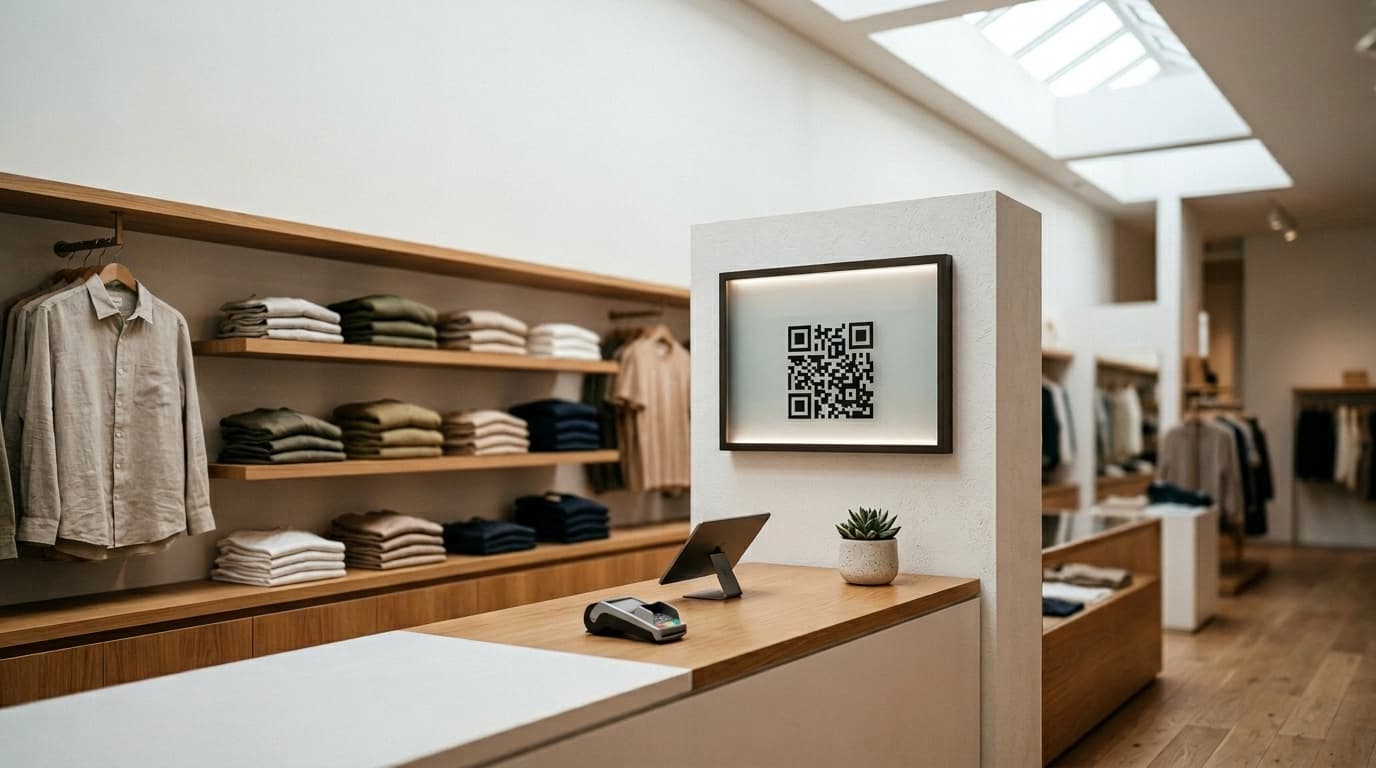
A QR code at the point of sale shortens the path from intention to action. It eliminates the friction of searching for your business on Google separately and puts the review flow at exactly the right moment — when the customer is still present, still feeling the warmth of the experience, and emotionally primed to do something generous.
A gamified review flow makes that shortened path into a consistent behavior. When the customer has something to look forward to — a chance to spin a wheel and win a small reward — the cost of leaving a review registers as trivially small compared to the fun ahead. Participation rates move from 3–5% of customers at checkout to 25–35%.
The reward isn't conditional on a positive review. A dissatisfied customer can spin the wheel after leaving two stars just as easily as a delighted one leaving five. What changes is that your silently satisfied majority — the ones who meant to write something kind but never did — now have a mechanism that captures their intent before it evaporates.
Making the transition: from invisible advocates to visible ones
The mental shift that matters here is understanding that asking customers for a Google review is not a compromise of the word-of-mouth relationship — it's an extension of it. You're inviting your most satisfied customers to share their experience digitally, the same way they'd share it with a friend. The only difference is who can hear it.
The businesses that make this transition earliest win a compounding structural advantage in local search. They build a review base that attracts new customers through Google, who in turn generate more reviews, which drives more search visibility. The reputation machine becomes self-reinforcing.
Your regulars are already talking about you. The question is whether those conversations happen privately, over dinner — or publicly on Google, where the next 10,000 potential customers can read them.
Ludofy helps local businesses turn checkout moments into digital word of mouth — a gamified fortune wheel at the point of sale, activated by QR code, that converts satisfied customers into Google reviewers at rates that traditional verbal requests can't match. Setup takes under fifteen minutes, and the first reviews typically arrive within hours of going live.
If your existing customer base isn't reflected in your Google rating, the gap isn't in your product — it's in your mechanics.