A Japanese tourist who spent the best evening of her trip at your restaurant in Lyon is about to become one of your most valuable marketing assets — or one of your most expensive missed opportunities. Her friends back in Osaka are already planning their own trip to France and will run exactly the searches she ran before she walked through your door. But unless she leaves a review in the next two hours, she probably never will.
Tourist reviews are among the hardest to collect and the most rewarding when you do. This guide is about closing that gap systematically.
Why Tourist Reviews Carry Disproportionate SEO Weight
Google's local ranking algorithm rewards diversity of signals, and tourist reviews deliver three that your local regulars cannot.
First, travelers search differently. They type "best restaurant near Sacré-Cœur," "things to do Bordeaux food," "authentic Thai restaurant Chiang Mai" — long-tail, location-anchored queries that a neighborhood resident would never use. A review that organically contains phrases like "found this while exploring the old town" or "stumbled upon it during our first night in Paris" functions as rich keyword content, anchoring your listing to travel-related searches that bring in new visitors before they even arrive.
Second, reviews written in foreign languages expand your visibility across international search. A review in English, German, or Mandarin on your Google profile is not a curiosity — it's a signal to Google that your business is a destination for international visitors, which directly influences how you appear in searches made from abroad. Travelers in Tokyo or Berlin who Google "restaurant Lyon" will see those multilingual reviews as social proof long before they book their flights.
Third, geographic diversity of reviewers signals genuine popularity. When your reviews come from customers across multiple countries, it suggests a quality that transcends neighborhood loyalty — and that signal influences both your ranking and your conversion rate with skeptical first-time visitors.
The Structural Problem with Tourist Review Collection
Most businesses understand they should be collecting more tourist reviews. The reason they don't is structural, not motivational.
Tourist customers have genuinely positive intentions. In the final minutes at your restaurant or shop, many of them are thinking "I should really review this place." The problem is what happens next: they get into a taxi, drop into a market stall, check back into their hotel, pack their suitcase, get on a flight. By the time they're home and unpacking, your business name has dissolved into the undifferentiated blur of a week of travel experiences.
Email follow-ups don't solve this problem for tourists the way they might for local customers. Travelers rarely leave a real email address, don't check it during their trip, and have zero reason to open it once they're home. The window for a tourist review is short — typically less than two hours after they leave your premises — and any strategy that depends on reaching them after that window will consistently underperform.
This is a fundamentally different challenge from collecting reviews from local customers, and it requires a fundamentally different approach.
Your Only Reliable Window: The Payment Moment
The 60 seconds surrounding payment is the one moment you reliably have a tourist's full attention while their experience of your business is still complete and emotionally fresh.
They've just eaten your food, experienced your service, absorbed your space. Their satisfaction — or dissatisfaction — is at its most vivid. And there's a natural pause built into the interaction: processing the payment, generating a receipt, exchanging a few closing words. That window is where the review either happens or doesn't.
Verbal requests at this moment help, but they have a critical flaw: they require the customer to take four separate actions on their own after they walk out the door — finding your listing, navigating to the review section, recalling what to write, and completing the form. Research on digital behavior consistently shows that review intent drops by more than 60% within two hours of leaving a business when no immediate action is taken. The tourist who says "absolutely, I'll leave a review" as they pocket their receipt almost never does.
The goal is not a better verbal request. It's removing all four of those steps at the exact moment when the customer is most likely to act.
Why a Physical QR Card Works Better Than Any Digital Follow-Up
A QR code card handed directly at the moment of payment — placed in the customer's hand, not left on the table — eliminates the "find the listing" problem. The tourist scans, lands on your review prompt, and completes the review before they've taken ten steps toward the door.
The key word is "handed." Leaving a QR code card on the table at the start of a meal generates almost no reviews. Sliding it under the receipt at payment — with a brief, friendly mention — converts dramatically better. The physical gesture triggers reciprocity and ensures the customer actually sees the prompt at the right moment.
For tourist customers especially, the card also solves a language problem. Your staff doesn't need to deliver a fluent explanation of where to find your Google listing or how to write a review. The card communicates everything visually. "Scan, spin, win" needs no translation.
The Gamification Advantage with Traveling Visitors
A plain QR link to your Google review page typically converts 5 to 10% of tourists who receive it. Add a gamified incentive — a spin-to-win wheel that reveals a small prize after the review is submitted — and that conversion rate climbs to 25 to 40% in most implementations.
The psychology is well-suited to travelers. Tourists are already in a reward-oriented mindset. They've given themselves permission to spend money, try new experiences, and enjoy themselves. A small additional prize — a 10% discount on a return visit, a free dessert, a branded souvenir — fits naturally into that frame. It extends the positive experience by one more beat, and it creates a moment of anticipation that keeps the customer engaged long enough to complete the review they already intended to write.
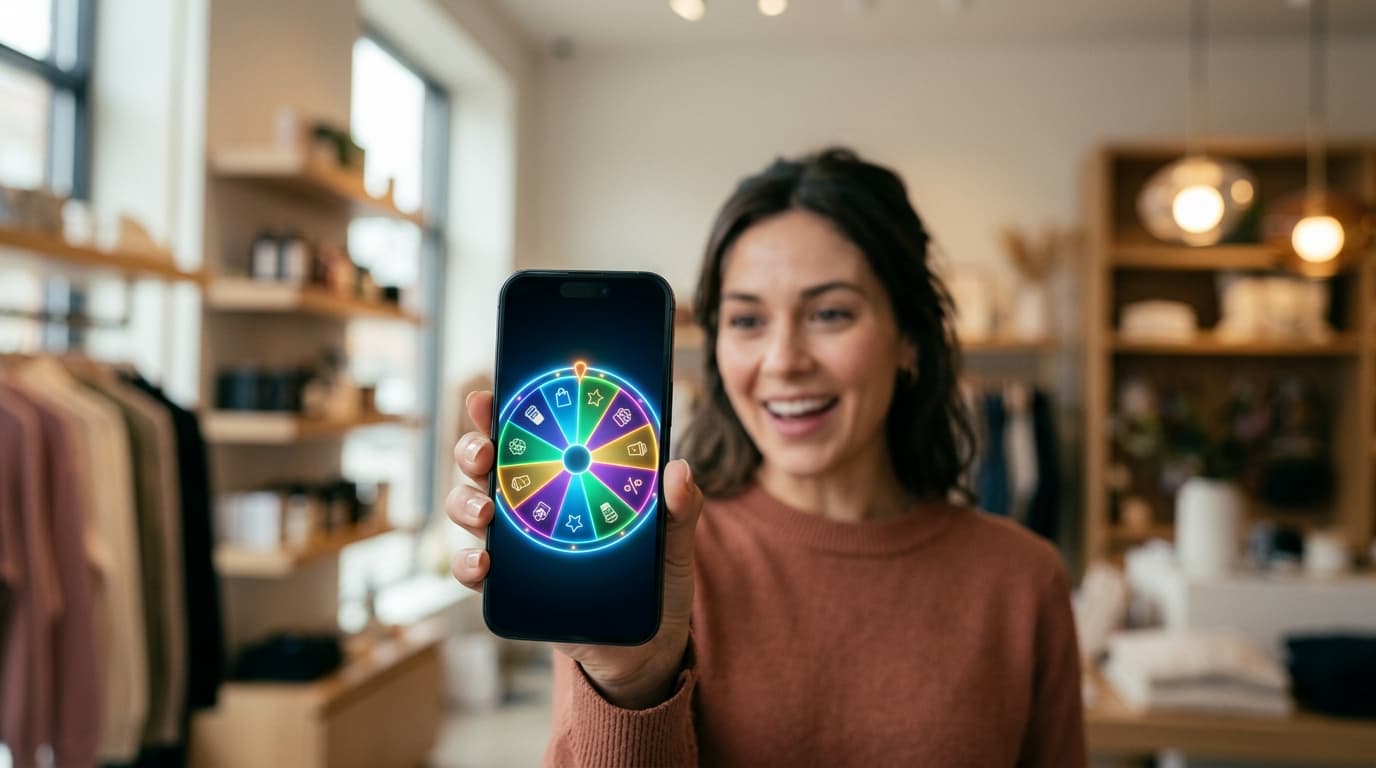
Just as importantly, the game mechanic requires no language fluency to understand. Spin a wheel, see what you win. That's universal. Ludofy's fortune wheel system is designed specifically for this context: it works on any smartphone, in any language, and guides the customer from scan to completed review to prize reveal in under 90 seconds.
Responding to International Reviews Signals That You Welcome Tourists
When a review arrives in English, Japanese, or Dutch, your instinct might be to leave it acknowledged or respond in your local language. The better move is to respond briefly in the same language the reviewer used.
"Thank you so much for visiting us during your trip! We hope Lyon was everything you hoped for and that you'll be back next time you travel this way" takes sixty seconds to write — possibly with the help of a simple translation tool — and delivers two lasting effects. First, it signals to future travelers who search your listing that international visitors are genuinely welcome and recognized. Second, Google indexes your responses alongside the reviews and uses them as content signals for local search rankings.
Even a brief response in the reviewer's language outperforms no response or a generic one. You don't need perfect grammar. You need presence.
Building a System That Collects Tourist Reviews Year-Round
Individual tactics produce occasional results. Systems produce consistent ones. Here's what a working tourist review system looks like in practice:
At the point of payment: Every customer — tourist or local — receives a physical QR card with the payment. Staff use one brief line: "Before you go, we'd love to offer you a little spin on our wheel as a thank-you." The card handles the rest.
Near the exit: A small QR code display at eye level near the door captures travelers who want to scan before leaving but didn't engage at the table. Tourists in particular are habitual scanners — they use QR codes to navigate, translate, and discover throughout their trip.
In your review responses: Set aside five minutes each morning to respond to every new review in the language it was written. This practice compounds over time, building a multilingual review profile that attracts more international visitors.
In your metrics: Track the ratio of local to international reviews monthly. If you're implementing a QR-and-gamification system at checkout, you should see foreign-language reviews growing within the first six to eight weeks.
What Consistent Tourist Reviews Do to Your Local Ranking
A restaurant or shop that collects tourist reviews steadily through peak and off-peak seasons doesn't just accumulate social proof — it changes its position in Google's local results. Review freshness, volume, and linguistic diversity are all ranking factors. A business that receives five reviews per week including reviews in English, German, and Chinese looks more active, more popular, and more relevant to international travel searches than a business that receives twenty reviews in a single burst around the holidays and then goes quiet.
The compounding effect matters. A tourist who reviewed your café in July influences another tourist's decision to visit the following summer. That visitor also leaves a review. Over three or four seasons, your listing becomes self-reinforcing: tourist reviews attract tourists, who leave more tourist reviews.
Ludofy is built to create exactly this kind of compounding system. The fortune wheel gives local businesses a physical, language-agnostic, gamified review collection tool that works in the only window that actually matters — the moment your tourist customer is still standing in front of you, satisfied, and willing to spend thirty seconds helping you in return for a little surprise.
Set it up once. Let it run every service. Your international reputation will grow every day without any additional effort from your team.