Think about the most loved bakery in your neighborhood. It probably has a line out the door on Sunday mornings, regulars who've been coming for years, and a product that people talk about. Now look it up on Google. Forty-three reviews. Meanwhile, the chain that opened three months ago already has three hundred.
This gap isn't a quality problem. It's a systems problem.
Bakeries sit in a peculiar spot when it comes to online reviews. Customers are deeply satisfied — often deeply loyal — but their relationship with the place is routine. And routine doesn't trigger review-writing behavior. Writing a review is a deliberate action. Buying a croissant every morning is automatic. The two don't naturally connect.
This article is about closing that gap.
Why Bakery Customers Don't Leave Reviews (Even When They Love You)
There are three structural reasons reviews are hard to collect in a bakery setting, none of which have to do with product quality.
The transaction is fast. A bakery visit lasts sixty seconds on a good day. There's no table, no waiting period, no natural pause in the experience. The customer walks in, orders, pays, and walks out. By the time they're on the sidewalk, they're already thinking about the next thing. The review moment never comes.
Regulars feel loyalty differently. People who come to your bakery every day already feel like they're showing support — with their wallet, every morning. Asking for an additional action on top of that can feel unnecessary, even slightly presumptuous. The implicit contract is: "I buy from you regularly. Isn't that enough?"
Nobody asks. Bakeries almost never prompt reviews. Restaurants do, hotels do, salons do — bakeries largely don't. When you don't ask, you don't receive. Most customers who would be happy to leave a review simply don't think of it.
The Checkout Counter Is Your Best Asset
The moment of payment is the single best opportunity to collect a review in a retail food environment. The customer has just completed a positive experience — they chose something, they're about to enjoy it, and their emotional state toward your business is at its peak. They're also stationary for a few seconds, card in hand or cash out.
That window is short, but it's real.
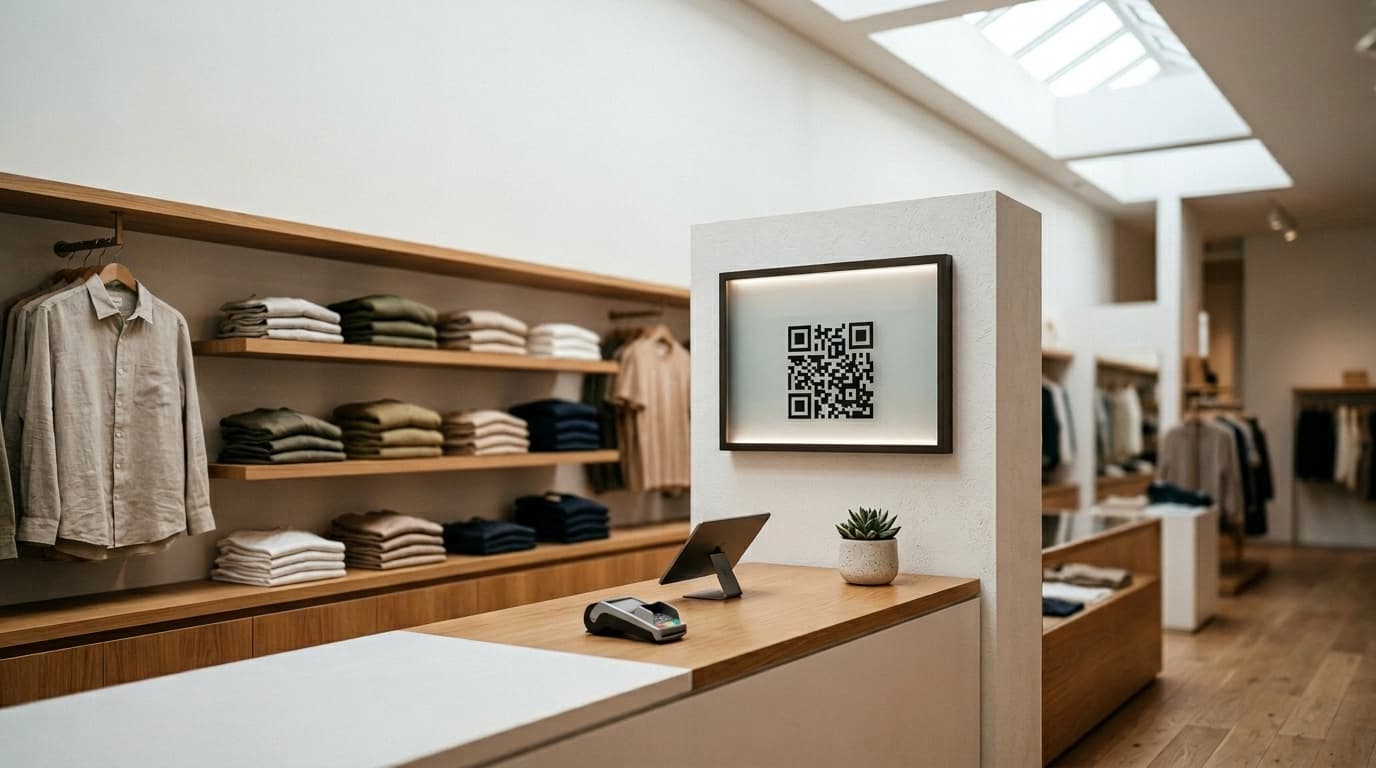
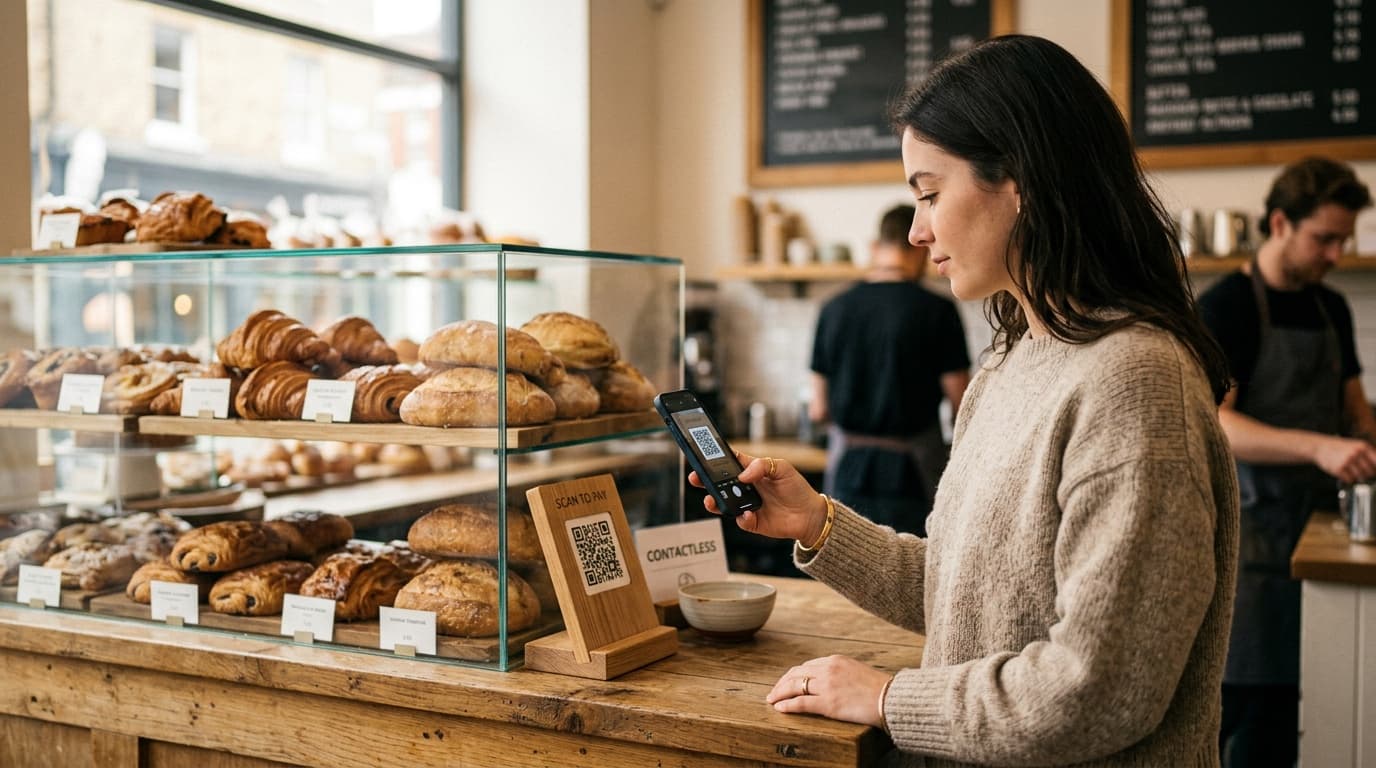
The simplest intervention is a QR code display at the point of sale. No verbal pitch required — a small tent card or counter display with a short message and a QR code does the work passively. Some customers will scan on the spot; most won't. But even a 5–8% scan rate on your daily foot traffic adds up fast.
The challenge with a plain "leave us a review" QR code is motivation. Scanning requires a small act of will, and most people won't perform it unless there's something in it for them. This is where gamification changes the equation.
Why a Fortune Wheel Works Better Than a Direct Ask
A fortune wheel mechanic shifts the frame entirely. Instead of asking the customer to do you a favor, you're inviting them to play a game — and the review is the entry ticket.
The psychology is different in a meaningful way. A direct ask puts the customer in the role of benefactor. A spin-to-win mechanic puts them in the role of player. The review is no longer an act of generosity; it's how you earn your shot at winning something. That reframe dramatically increases conversion.
For bakeries, the prize structure matters. The prizes that perform best are:
- A free pastry or item on the next visit
- A discount on a purchase over a set minimum amount
- A complimentary coffee with any morning order
- A "daily special" item available for pickup before a specific time
Notice the pattern: all of these require the customer to come back. That's intentional. A prize redeemed on the next visit turns a review-collector into a repeat-visit driver. You're not discounting the current transaction — you're guaranteeing a future one.
What the Numbers Look Like in Practice
A bakery with 100 customers per day is working with roughly 700 touchpoints per week. If a well-placed QR code display converts 10% of customers to scans, that's 70 scans. If 20% of those leave a review — a conservative estimate when a game mechanic is involved — that's 14 new reviews per week, around 60 per month.
Sixty reviews per month is transformative for a business that currently has 50 total. Within three months, you're at 230. Within six months, you're past 400, and your Google Maps ranking has shifted significantly.
The quality of reviews also tends to be higher through this channel. Customers who engage with a game are in a positive, active mindset. They write longer, more specific comments than someone firing off a one-liner after a frustrating experience. Your star average climbs alongside the volume.
Getting the Setup Right
Two placement mistakes can significantly reduce results.
Wrong position. A QR code on the front door or window underperforms consistently. The customer hasn't made their purchase decision yet; they're not in the right headspace. The counter — specifically the area closest to the payment terminal — is where attention naturally lands. Add a small, clear message: "Spin to win your next treat" is enough.
Wrong prizes. A generic 5% discount with no expiration converts poorly. Customers don't get excited about it, and even if they win, they rarely redeem it. The prizes that work are specific, time-bound, and tied to something your customers actually want. "One free croissant on your next visit before Saturday" outperforms "10% off your next order" in most cases.
One more thing worth getting right: timing. Display the QR code at the moment of payment, not at the end of the counter queue. If customers have already pocketed their wallet and are heading to the door, the window is gone.
From Neighborhood Bakery to Neighborhood Reference
Google Maps has changed the way people discover local food businesses. A new resident moving to your neighborhood isn't going to ask around for a bakery recommendation — they're going to open their phone and search. What they see in the next ten seconds determines whether they walk through your door or someone else's.
A bakery with 400 reviews at 4.8 stars captures an outsized share of that traffic compared to one with 45 reviews at 4.6. The product might be identical; the visibility isn't.
Ludofy is built for exactly this use case: helping local businesses like bakeries collect Google reviews consistently, through a QR code and fortune wheel that sits on the counter and works without any staff involvement. Setup takes under thirty minutes, there's no app for customers to download, and the results show up in your dashboard from week one.
Your regulars are already loyal. Ludofy gives them a reason to say so out loud — in a place where it counts.