Food trucks operate in a world where every interaction is brief, the location changes weekly, and the customer is already moving on to their next errand by the time they finish eating. These conditions make Google Reviews feel almost impossible to collect consistently — yet reviews are exactly what determines whether new customers find your truck or walk past it.
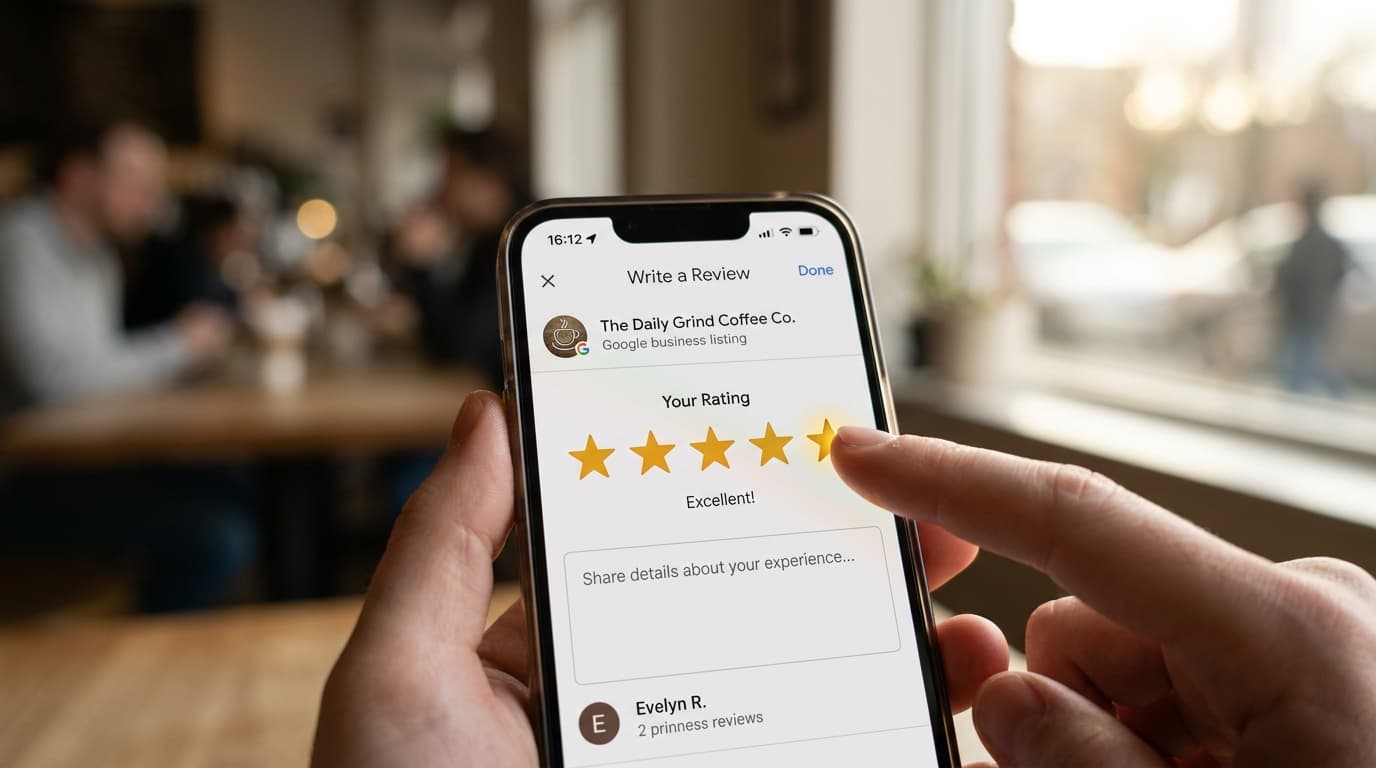
The good news: the same constraints that make review collection hard for food trucks also create an opportunity. Your customers experience your brand at a moment of peak satisfaction — hot food, outdoor energy, a moment of discovery. That's the ideal emotional state for leaving a review. The challenge is bridging the gap between that feeling and the four clicks it takes to open Google and write one.
Why Google Reviews Matter More for Food Trucks Than Fixed Restaurants
A traditional restaurant has a permanent address, a street presence, and the ability to build a local reputation passively over years. A food truck's visibility depends almost entirely on its digital footprint — Google Maps, Instagram, and word of mouth.
When someone in your market searches "food truck near me" or looks up your truck's name after spotting you at a Saturday market, your Google profile is often their first and only interaction with your brand between visits. A profile with 400 reviews at 4.8 stars builds immediate trust and converts browsers into first-time customers. A profile with 12 reviews — and an unanswered negative comment — does the opposite.
Google's local ranking algorithm weights review volume and recency heavily. For food trucks that appear at multiple locations — a weekly market, a corporate park, a festival — having consistent, recent reviews is the difference between showing up in local search and being invisible to potential new customers.
The Three Specific Challenges Food Trucks Face
Challenge 1: The Interaction Window Is Extremely Short
At a sit-down restaurant, there's a full meal's worth of time to prompt customers about reviews — table cards, the check, a moment with the server. A food truck transaction often lasts ninety seconds. The customer pays, takes their food, and rejoins their group. There's no second touchpoint.
This isn't a reason to give up on reviews. It's a reason to make the ask frictionless enough that it fits inside those ninety seconds.
Challenge 2: No Fixed Location on Google Maps
Food trucks typically register on Google Business Profile with a service area rather than a fixed address. This creates confusion for customers trying to find you on Google Maps after the fact — they search your name, aren't sure they've found the right profile, and give up before leaving a review.
Keeping your Google Business Profile consistently updated with location schedules, current photos, and prompt responses to reviews significantly reduces this confusion. It also signals to Google's algorithm that your listing is actively maintained, which carries its own ranking benefit.
Challenge 3: Competing With the Energy of the Moment
Food trucks often operate at markets, festivals, and events where twenty other things compete for attention. A customer who loved your tacos is already distracted by the next stall, a friend calling them over, or a child that needs managing. The review never gets written — not because they didn't enjoy the experience, but because the moment passed.
Every hour that passes after a great meal reduces the probability a review gets written. The ideal window is minutes, not hours.
A QR-Based System That Works at Counter Speed
The businesses solving this problem are using QR codes with a game mechanic that gives customers an immediate, concrete reason to act before they walk away.
Here's how it works for a food truck:
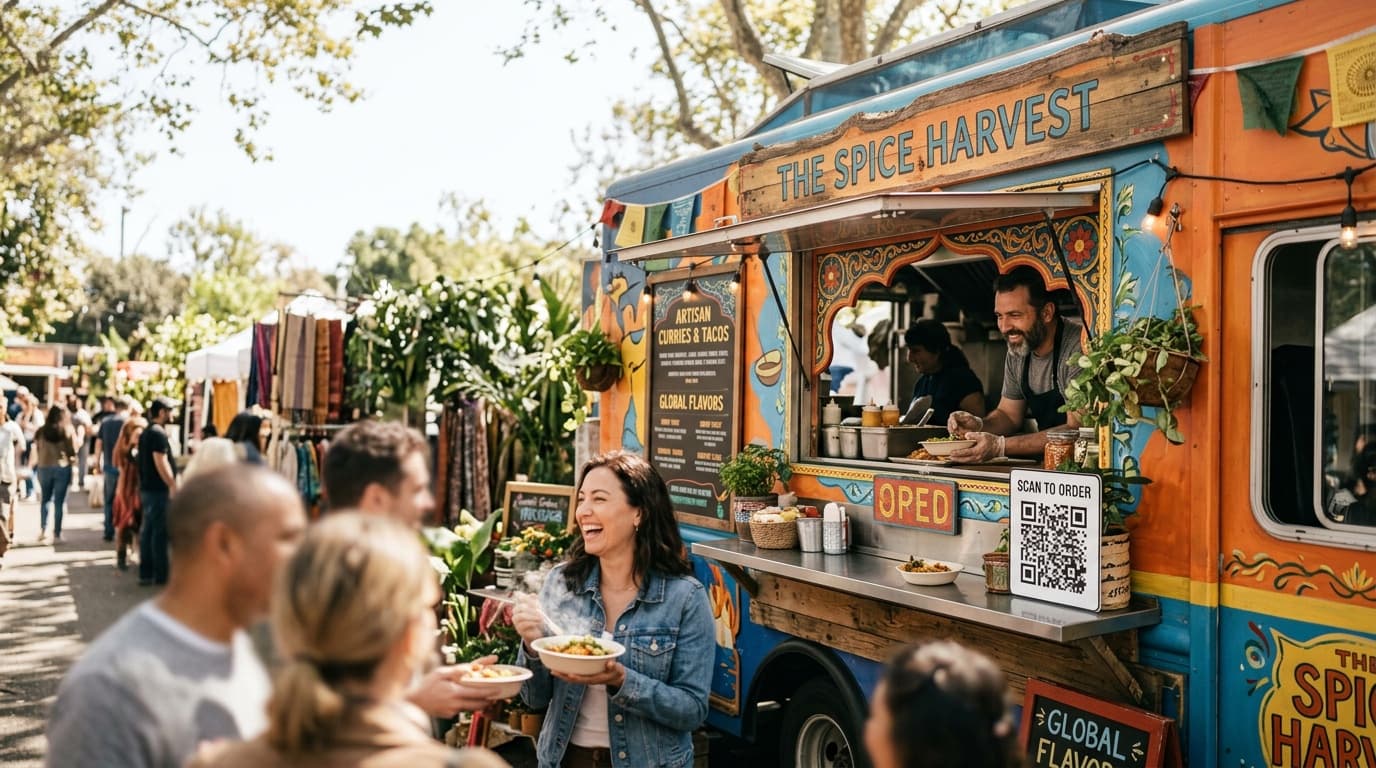
- A QR code is displayed prominently — on the counter, on a standing sign, printed on packaging, or on a small card given with every order.
- The customer scans the code and lands on a digital fortune wheel.
- They spin to win a reward: a discount on their next visit, a free upgrade, or a small gift.
- The condition to play: leave a quick Google Review first.
This mechanic works especially well for food trucks because the reward aligns naturally with the business model. A discount on the next visit gives the customer a concrete reason to track down your truck again — which is exactly the repeat-visit behavior you want to drive. The game element creates a moment of fun that fits naturally into the laid-back atmosphere of a market or festival.
The review is collected at peak satisfaction — immediately after eating — rather than hours or days later when the emotional state has faded. And the QR code handles the entire funnel: finding your Google listing, navigating to the review form, and submitting. The customer doesn't need to search anything or know your business name precisely.
Managing Reviews Across Multiple Locations
Food trucks operating at multiple weekly venues face an additional complexity: customers from different locations leave reviews at different rates, and patterns are hard to track without a system. Which venue drives the most reviews? Which one needs a better QR code placement? Without data, you're guessing.
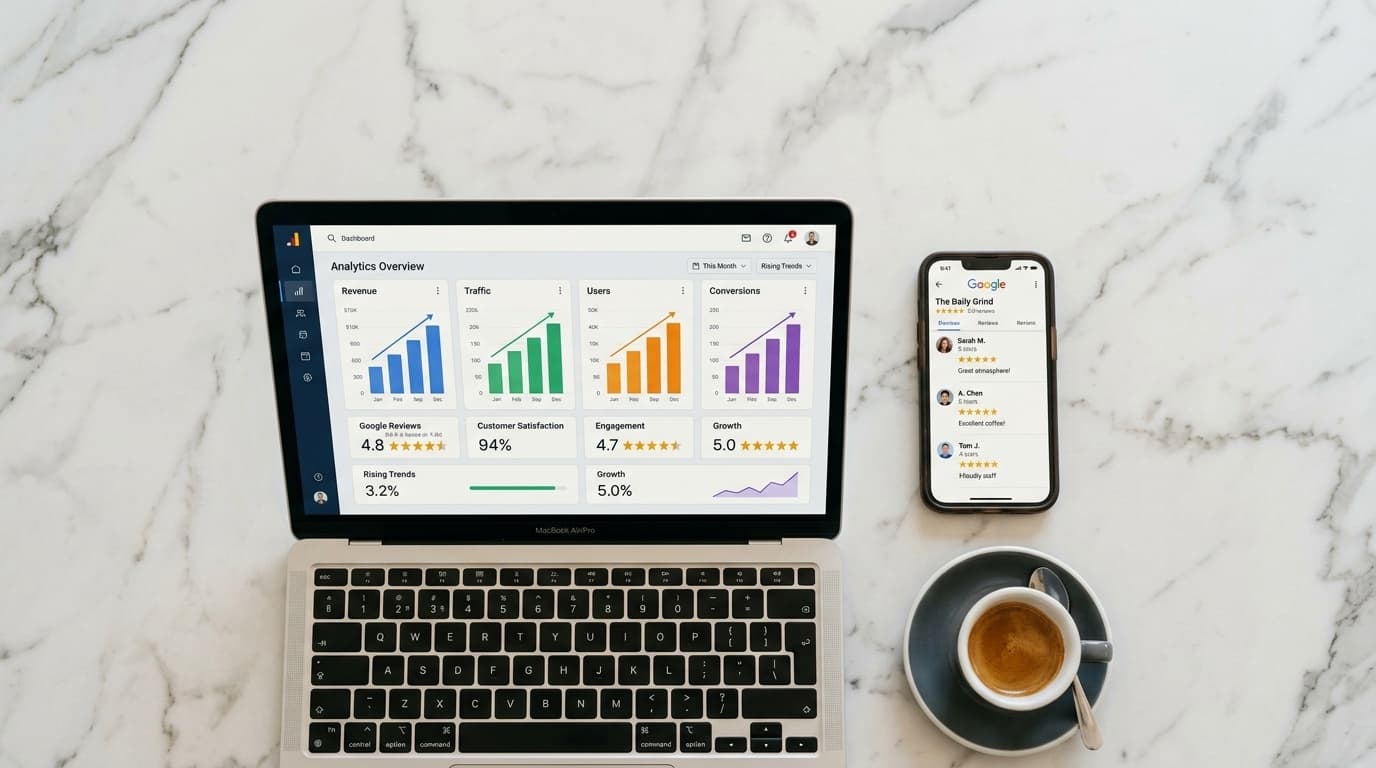
A platform like Ludofy centralizes everything into a single dashboard: review volume and average rating in real time, broken down by location and event. When reviews slow at one venue — say your Tuesday corporate park stop — you can see it immediately and act: adjust QR code placement, change the reward, or move the display to a higher-traffic spot.
This turns review collection from a passive hope into a managed operation with real levers.
Responding to Reviews: The Part Most Trucks Miss
Collecting reviews is half the work. Responding to them — including the negative ones — is the other half, and most food truck operators skip it entirely.
Google's algorithm gives additional weight to businesses that respond to reviews consistently. More importantly, how you respond to a negative review is often the most persuasive element on your entire profile. A customer who reads a professional, empathetic response to a complaint about a cold order will trust your business more than if the complaint had never appeared at all.
The standard for response: reply within 24 hours, acknowledge the specific issue, avoid defensiveness, and offer a concrete resolution. For food trucks, this usually means inviting the customer back with a genuine offer to make it right. Most readers watching that exchange come away with a positive impression of how you handle problems — and that directly influences their decision to visit.
What the Numbers Look Like Over Six Months
Consider two competing food trucks starting at roughly the same rating and review count:
- Truck A relies on occasional verbal asks and a sign near the window. Averages 5–8 new reviews per month across all venues.
- Truck B uses a QR gamification system at every location. Averages 15–20 new reviews per event, three events per week.
After six months, Truck A has added around 40 reviews. Truck B has added 1,000 or more. The gap in Google Maps ranking between them is measurable and growing. Truck B's profile also becomes self-reinforcing: more reviews generate more clicks, more clicks generate more visits, and more visits generate more reviews.
This isn't a marginal difference — it compounds into a durable competitive advantage that takes years to overcome from a standing start.
Building a Review System Into Your Operations
The food trucks that dominate local search on Google Maps don't treat review collection as something that happens organically. They've built it into their operational routine — a QR code at every location, a consistent reward mechanic, and a weekly check on the numbers.
That's the difference between hoping for reviews and systematically earning them.
Ludofy is built specifically for operations like this: brief customer interactions, outdoor or mobile settings, no dedicated marketing staff. The platform provides a permanent QR code display, a fortune wheel mechanic that drives action at the moment of peak satisfaction, and a dashboard to track performance across every location — without requiring day-to-day management.
The food trucks using it today are building a local search advantage that will be very difficult for late movers to close. The ones waiting for satisfied customers to review spontaneously are handing that advantage away, one market day at a time.