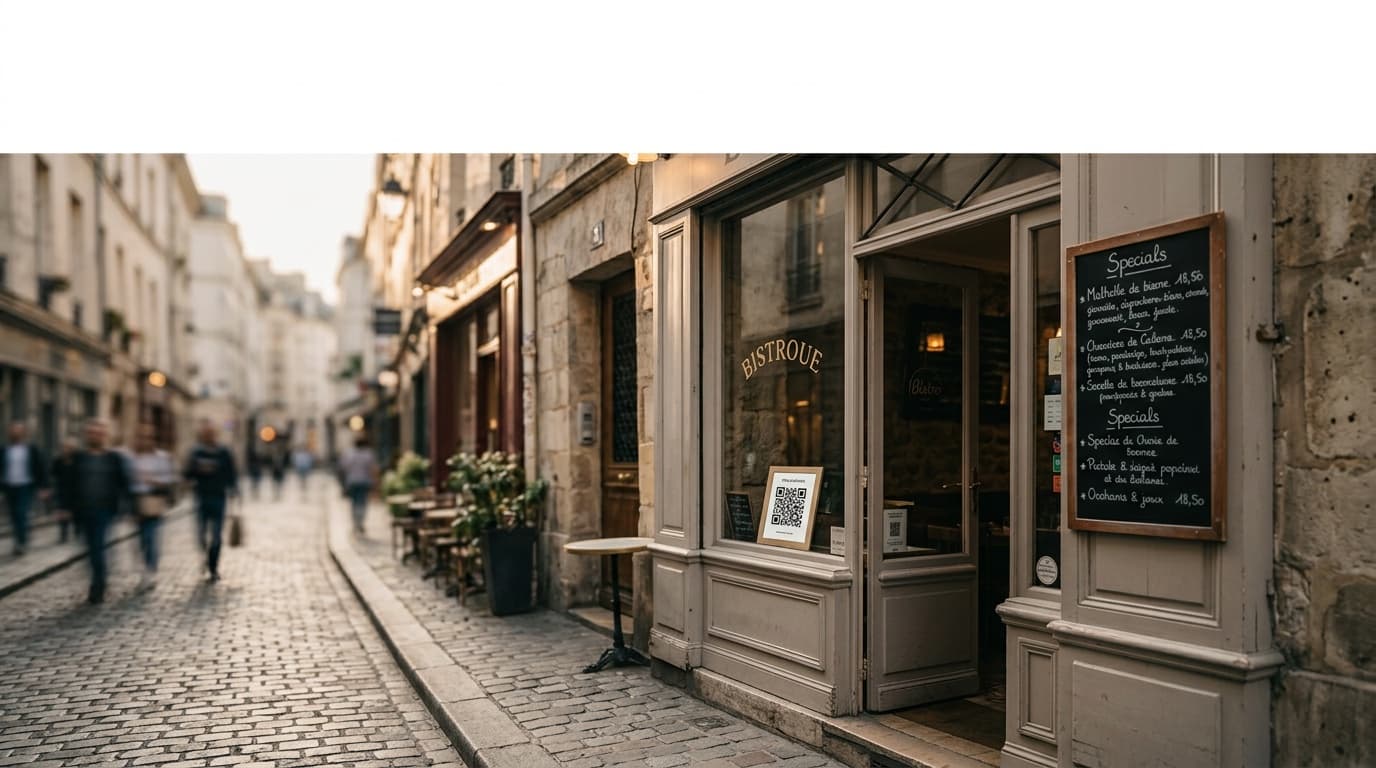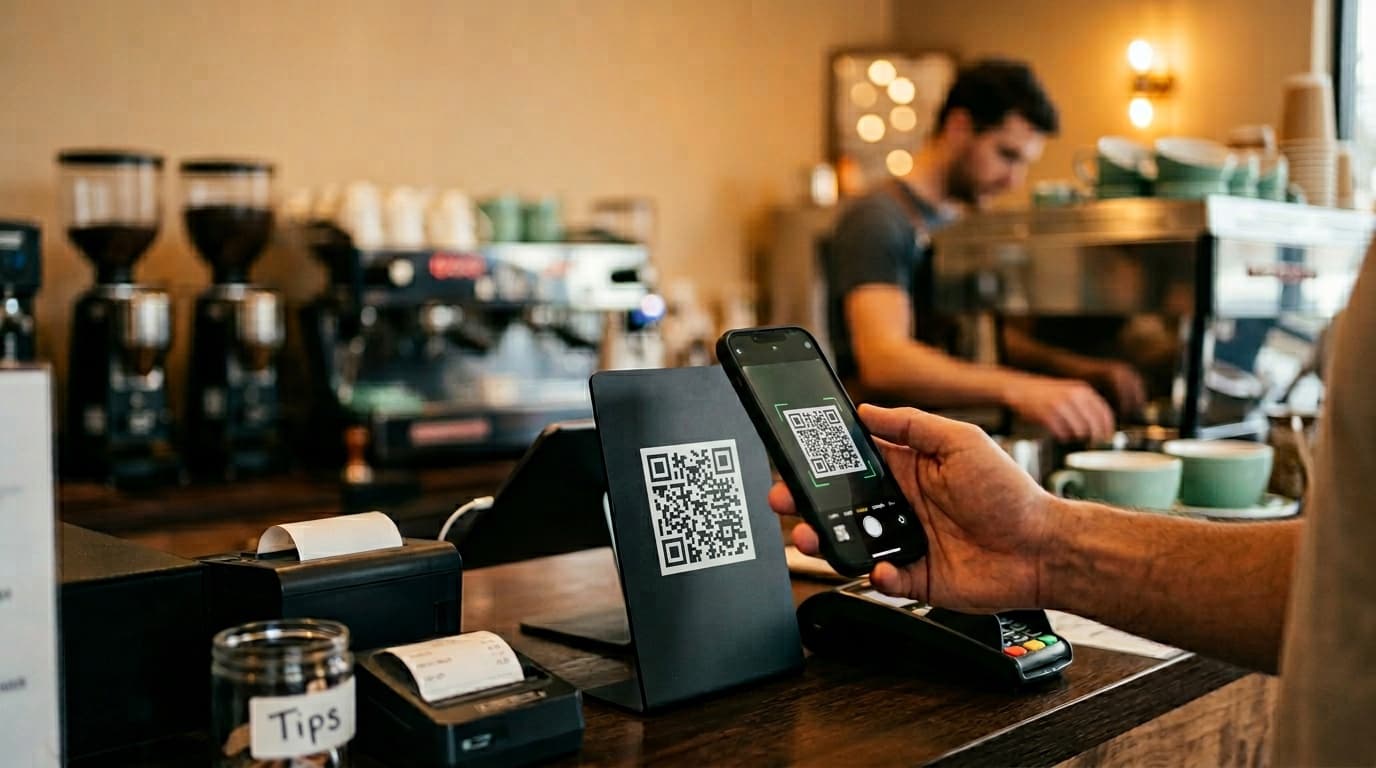
Every day, your business prints dozens or hundreds of receipts. Every order goes out in a bag or a box. These physical touchpoints end up in your customers' hands at the most emotionally charged moment of their visit — right after they've paid and experienced what you offer. Yet most local businesses ignore them entirely as a review-collection channel.
That's a missed opportunity. In this guide, you'll learn how to turn your receipts, bags, and packaging into a passive review-generation engine — without asking your staff to say a word.
Why the Checkout Moment Is Your Best Window for Review Requests
The psychology is straightforward: customer satisfaction peaks immediately after a purchase. Whether it's a great meal, a fresh haircut, or a well-crafted coffee, the positive feeling is at its strongest the moment your customer walks out the door or closes their takeout box.
Research on consumer behavior consistently shows that review completion rates drop sharply after 24 hours. After 48 hours, most of the emotional context has faded, and the friction of writing a review outweighs the motivation to do it. Email follow-ups fight this natural decay — your message lands after the peak has passed, in a cluttered inbox, competing with everything else in the customer's life.
A QR code on a receipt or packaging sidesteps this entirely. The customer encounters the prompt at the exact moment they're most satisfied, with the experience still fully vivid. They can scan immediately, in the few seconds while they're putting away their wallet, or on the bus ride home. Either way, the emotional context is intact.
Which Physical Surfaces Work Best
Receipts and Printed Bills
This is the most universal option. Restaurants, cafés, retail stores, hair salons, pharmacies — any business that prints a customer-facing receipt can add a QR code to the footer. Position it below the total, accompanied by a clear one-line invitation. Recommended minimum size: 2 cm × 2 cm for thermal paper (80 mm roll), tested before bulk printing since some thermal printers struggle with dense QR patterns.
Takeaway Bags and Boxes
For food businesses, the bag or box is often kept longer than the receipt. Customers bring it home, set it on the kitchen counter, eat from it — all moments where a well-placed QR sticker gets seen again. For restaurants and cafés with takeaway, stick the QR code on the bottom of bags or the lid of boxes. Bakeries and pastry shops see strong results with stickers on pastry boxes, where the unboxing itself is a moment of delight.
Packaging Inserts and Thank-You Cards
A business-card-sized insert slipped into every bag is a low-cost, high-flexibility option. Print a small batch, change the messaging seasonally, or test different prize offers without committing to a large print run. The card typically reads: "Enjoyed your visit? Spin our wheel and win a reward — scan to play." Small, targeted, and immediately actionable.
Clothing Store and Retail Tags
Boutiques and specialty retailers can add QR codes to price tags, hang tags, or tissue paper inserts in shopping bags. Customers often discover these after they get home, which is actually ideal — they've had a chance to try on or use the product, and their satisfaction has been confirmed.
Crafting a Call to Action That Gets Scanned
A QR code alone won't move the needle. What triggers the scan is the promise printed next to it. Here are the message structures that consistently outperform generic "leave us a review" prompts:
The specific reward hook: "Scan to win [X]." The X must be concrete — "a free coffee," "10% off your next visit," "a complimentary dessert." Vague rewards ("a surprise gift") perform worse than specific ones because customers can't weigh whether the scan is worth their time.
The fair exchange: "Your feedback helps us improve. Scan to leave a review and claim your reward." This framing creates psychological reciprocity — the customer gives something (their opinion) and gets something back (the reward). It removes the sense that you're asking for a favor.
The soft deadline: "Valid within 48 hours of your visit." Adding a time constraint, even a generous one, increases scan rates by 20–30% because it converts "I'll do it later" (which means never) into "I should do this now."
Avoid the common mistake of purely altruistic CTAs like "Help us grow!" or "Share your experience!" These feel like unpaid labor and generate minimal engagement.
Why Gamification Outperforms a Direct Google Link
There's a meaningful difference between a QR code that sends customers straight to Google and one that first takes them through a spin-the-wheel experience. Both end up at the same destination — a Google review — but the path matters enormously for completion rates.
The gamified flow works like this: customer scans → lands on a branded spin wheel → turns the wheel → sees their prize → is invited to leave a Google review to claim it. This sequence exploits two of the most reliable motivators in behavioral psychology: curiosity (what will I win?) and commitment consistency (I spun the wheel, I may as well finish).
Businesses using Ludofy's gamified QR flow report review completion rates 3–5x higher than those using a plain Google review link. A restaurant in central London that added Ludofy QR codes to its takeaway boxes went from 45 reviews to over 200 in two months, without any change to in-person service or staff behavior.
The reason isn't magic — it's timing and framing. The wheel creates a moment of engagement that happens before the ask, which makes the ask feel earned rather than demanded.
Getting Set Up: A Practical Week-One Checklist
Day 1: Log into Ludofy, set up your spin wheel with 3–5 prize tiers (one aspirational prize, a few mid-value offers, and a "try again" or small discount for the remainder). Generate your QR code.
Day 2: Edit your receipt footer. Most POS systems — Square, Lightspeed, Toast, Clover, SumUp — let you add custom footer text and images in the printing settings. Add the QR image and a one-line CTA. Print a test receipt and scan it yourself to confirm it works.
Day 3: Order QR stickers if you use packaging. Online print services deliver custom QR sticker rolls within 2–3 business days for under $30. If you need something faster, print a sheet of stickers on a standard inkjet printer to start.
Day 4–7: Run the first week, track your dashboard. Ludofy shows you scans, completions, and review conversions in real time. Look at which touchpoints are driving the most activity (receipt vs. bag vs. box) and adjust as needed.
Packaging vs. Email: What the Data Says
Among the review-collection channels tested by Ludofy partner businesses, physical QR codes on receipts and packaging consistently outperform email follow-up sequences. The gap is largest in food and beverage businesses: takeaway packaging QR codes convert at 12–18%, while the same audience's email sequence converts at 3–6%.
The reason is structural. Email requires the customer to:
- Open an inbox
- Recognize your sender name
- Open the email (fighting spam filters and notification fatigue)
- Click a link
- Complete the review
Each step loses a portion of your audience. The QR code on a bag skips steps 1–3 entirely. The customer picks up the bag, sees the code, scans. The reduced friction directly translates to higher completion.
There's also a context-persistence advantage. An email arrives in a generic environment — your customer's inbox — with no connection to the experience you provided. The packaging is part of that experience. The brand, the smell of the food, the texture of the box — all of it primes the customer to think well of your business before they've even read the CTA.
What to Track and Optimize
Once your QR codes are live, monitor these metrics weekly:
- Scan rate: How many receipts/units were distributed vs. how many QR scans occurred? Under 5% means your CTA or placement needs work. Above 15% is excellent.
- Wheel-to-review conversion: Of those who spin, how many follow through to Google? Below 40% suggests the reward tiers may need adjusting. Above 60% is strong.
- Review quality: Are new reviews substantive (mentioning specific dishes, staff, ambiance) or generic? The wheel flow tends to generate longer reviews because the engagement cycle primes more specific recall.
The Bottom Line
Every receipt you print is a marketing opportunity you're either taking or wasting. A gamified QR code converts that small piece of thermal paper into a 24/7 review-collection tool — one that works at the perfect moment, with no staff training required and no follow-up emails to schedule.
Ludofy makes the setup fast: design your wheel, generate your QR code, add it to your receipts and packaging, and watch your review count climb. The system runs in the background while your team focuses on what they do best — delivering an experience worth reviewing.