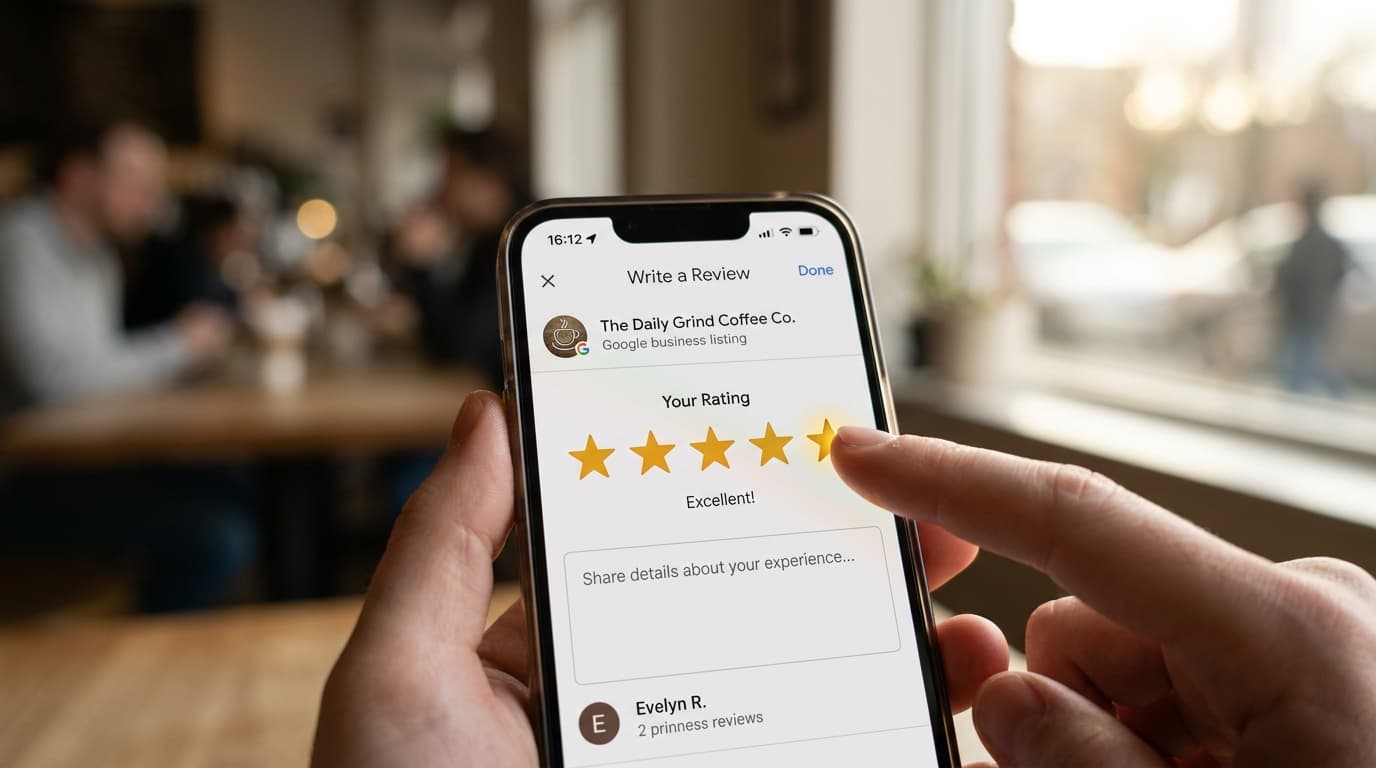
You served a great meal. The customer smiled on the way out. They even said "I'll definitely come back." And yet, three weeks later, your Google profile has exactly zero new reviews.
Sound familiar?
If you run a restaurant, café, salon, or any customer-facing business, you have almost certainly lived this frustration. Your satisfied customers vastly outnumber your reviewers — and the gap between the two can feel maddening. But here's what most business owners get wrong: the problem is not satisfaction, it's friction.
Understanding why happy customers stay silent is the first step to fixing it. Once you see the real barriers, the solution becomes obvious.
Barrier 1: They Simply Forget
This is the number-one reason, and it's nothing personal. Your customer has a wonderful experience. They fully intend to leave you a review — maybe even think about it on the drive home. Then life gets in the way: kids, emails, the next errand.
Research consistently shows that the longer the gap between an experience and the ask, the lower the conversion rate. If you're relying on a customer to remember to review you tomorrow, you've already lost most of them.
The fix: create a review moment at the peak of the experience, not hours later. The best window is right at checkout, while emotion is still high. A table tent card, a receipt QR code, or a prompt from your staff at the till are all worth ten follow-up emails sent the next day.
Barrier 2: Leaving a Review Feels Like Too Much Work
Count the steps it takes a customer to leave a Google review the "normal" way: open Google Maps, search for your business, navigate to the reviews tab, tap "write a review," rate, type something coherent, post. That is six to eight taps and about four minutes for someone who has never done it before.
Most customers will not do four minutes of work for free unless they are either very delighted or very angry — and the angry ones tend to be more motivated.
Friction is the silent killer of review velocity. Every additional step you add costs you a percentage of potential reviewers. Your competitors who have figured this out reduce the journey to one or two taps.
The fix: use a direct link or QR code that opens the Google review form immediately, skipping the search and navigation entirely. Remove every unnecessary step between "intending to review" and "review submitted."
Barrier 3: They Don't Know It Matters to You
Your customers think of leaving a review as doing you a nice favour — which means they rank it below everything else they need to do today. What most of them don't understand is how directly online reviews influence your business: your visibility in local search, the decisions of future customers, and yes, your revenue.
When businesses explain this clearly — even briefly — review rates go up. People are genuinely willing to help small businesses they like, but they need to understand the stakes.
The fix: make the ask personal and specific. "A quick review on Google makes a huge difference for us as an independent restaurant" lands far better than a generic QR code with no context. Staff who understand this can communicate it naturally in a few words.
Barrier 4: Being Asked Feels Awkward
Imagine finishing dinner and having a server lean in and say, "Would you mind leaving us a Google review?" Even if the customer liked the meal, that interaction carries social pressure. They might feel put on the spot, unsure whether to say yes immediately or check on their phone later.
This awkwardness cuts both ways — it makes customers uncomfortable, and it stops many staff members from asking at all. A survey of restaurant owners found that nearly 60% of front-of-house staff rarely or never proactively asked for reviews, not because they forgot, but because they found it uncomfortable.
The fix: remove the human ask from the equation. A well-placed QR code with a clear, inviting call-to-action does the asking without social pressure. The customer sees it, chooses to engage, and the interaction stays entirely on their terms.
Barrier 5: They Only Think to Review When Something Goes Wrong
Negativity bias is real: humans are wired to act on bad experiences more readily than good ones. A customer who waits 40 minutes for a cold meal will feel a strong pull to warn others. A customer who has an excellent evening feels good — but that feeling doesn't automatically translate into action.
The result is a systematic imbalance: businesses that do nothing proactive will always accumulate more negative reviews relative to their actual ratio of good to bad experiences. Your Google rating becomes a distorted picture weighted toward outliers.
The fix: you can't change human psychology, but you can change incentives. Giving a happy customer a small, immediate reason to act — a chance to win a coffee, a discount on their next visit — converts positive sentiment into action. It doesn't manufacture fake reviews; it activates real ones that would have otherwise evaporated.
The Compounding Effect of Unaddressed Friction
Each of the five barriers above removes a chunk of your potential reviewers. A customer who forgets AND finds the process complicated AND isn't sure why it matters AND feels awkward being asked AND lacks a prompt to act — that customer will almost certainly never review you, even if they genuinely loved their visit.
The businesses winning on Google in 2026 aren't winning because they have better food or better service. They're winning because they've systematically removed all five barriers at once: they ask at the right moment, they make it effortless, they communicate why it matters, they remove social pressure, and they give a compelling reason to act right now.
How Gamification Removes All Barriers at Once
This is exactly where Ludofy's approach changes the game. Rather than a cold QR code pointing to a review form, Ludofy turns the review into the entry ticket for a prize wheel. The customer scans the QR code, leaves a review, and then spins the wheel for a chance to win a reward.
- Forgetting: eliminated — the spin wheel at checkout creates a memorable, immediate moment
- Friction: eliminated — one scan, leave the review, spin, done in under 60 seconds
- Relevance: eliminated — winning something makes the action feel worthwhile right now, not as a favour
- Awkwardness: eliminated — the customer engages with the game on their own terms
- Negativity bias: eliminated — the positive emotion of playing a game amplifies the positive emotion of the visit
The result is conversion rates that routinely reach 30–40% of customers who scan the QR code — compared to 2–5% from passive signage alone.
Start by Diagnosing Your Own Friction
Before investing in any tool, walk through your own review funnel as if you were a customer. How hard is it to find your business on Google? How many taps does it take to submit a review? Does your team ask, and if so, how?
Most businesses discover that their review process has three or four unnecessary friction points they could eliminate tomorrow at zero cost. Fix those first. Then consider whether adding a compelling reason to act — like a gamified reward — could close the gap between the customers who intend to review you and the ones who actually do.
Happy customers who stay silent are not lost causes. They just need the right nudge, at the right moment, with the right amount of friction removed.
That is a solvable problem — and it's worth solving.