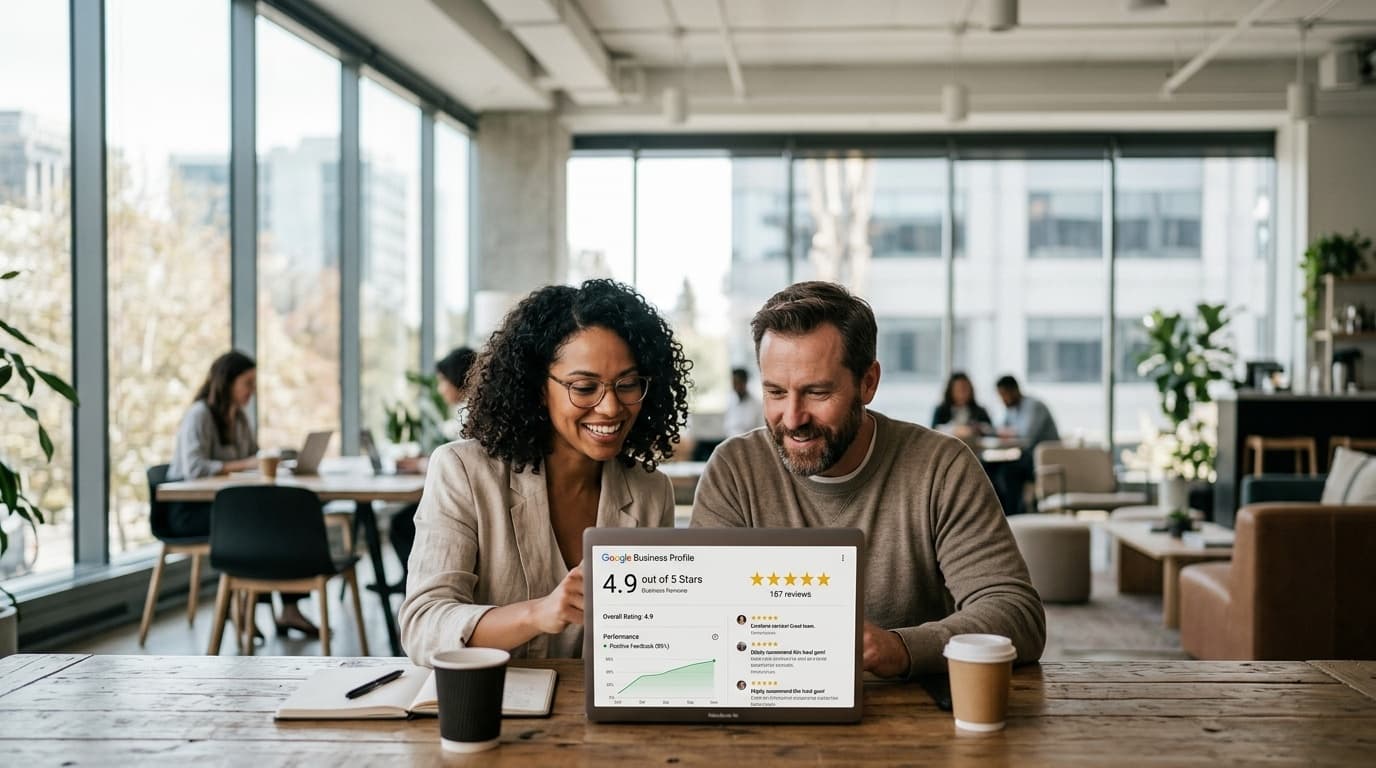
A traveler is planning a weekend in Barcelona. They open Google and type "hotel near Las Ramblas." Before they ever land on a booking platform, they're scanning star ratings, reading review snippets, and forming first impressions. Your 4.7-star Google profile with 312 reviews either earns a click — or doesn't.
Later, on Booking.com, the same traveler reads your 189 verified guest reviews and compares your 8.8 score against competitors. This second evaluation reinforces or undermines the impression Google already set.
These are two separate moments in a traveler's decision journey. Most hoteliers treat them as interchangeable. They're not — and the confusion costs real revenue.
What Booking.com Reviews Actually Do
Booking.com functions as an OTA (Online Travel Agency) — its core job is to convert browsers into bookers. Reviews on the platform exist entirely within that transactional context.
Your audience is already in purchase mode
When a traveler reads your Booking.com reviews, they've already decided to book somewhere. They're on the platform, credit card nearby, comparing your property against two or three others. Reviews here serve to reassure and differentiate in a direct competitive context — they're a closing tool, not a discovery tool. No amount of Booking.com excellence reaches travelers who haven't opened the app yet.
Verified reviews, but a closed ecosystem
Booking.com only collects reviews from guests who stayed via the platform. This creates a credible, tamper-resistant review pool — but it excludes a massive portion of your guests: direct bookings, corporate accounts, event groups, long-stay regulars. If 40% of your guests book directly, they contribute nothing to your Booking.com score unless they independently choose to review you elsewhere.
The commission math matters
Every Booking.com reservation costs you 15–25% in commission. A glowing Booking.com profile drives volume through the most expensive acquisition channel you have. The strategic goal for any independent hotelier should be converting OTA guests into future direct bookers — and that conversion starts with your Google presence, not your Booking.com score.
What Google Reviews Do for Your Hotel
Google Reviews operates at a fundamentally different level: your overall local visibility before any booking intent fully crystallizes.
Google is where travel intent begins
Before opening Booking.com, Expedia, or your own website, most independent travelers start with a Google search. Your Google Business Profile — star rating, photos, review snippets, location — is frequently the first impression a potential guest receives. BrightLocal's 2024 consumer survey found that 87% of consumers use Google reviews when evaluating local businesses, a figure that skews even higher for hotel searches among independent travelers.
The Local Pack is the real competition
Google's Local Pack — the three-property map block that appears at the top of local search results — is algorithmically influenced by review volume, recency, and average rating. A hotel with 400 recent reviews and a 4.5 average will consistently outrank a competitor with 80 older reviews, even if that competitor has a superior Booking.com score.
This Local Pack visibility is entirely free: no commission, no bidding, no platform dependency. It represents the most cost-efficient source of direct booking intent available to independent hotels.
Any guest can leave a Google review
Unlike Booking.com, Google reviews are open to any of your guests — direct bookings, walk-ins, restaurant diners, spa clients, conference attendees. This unlocks a much larger pool of potential reviewers and dramatically accelerates volume accumulation compared to OTA-gated review systems.
Head-to-Head Comparison
| Factor | Booking.com | Google Reviews |
|---|---|---|
| When it matters | Booking phase | Discovery phase |
| Reviewers eligible | OTA guests only | All guests |
| Local SEO impact | Minimal | Very high |
| Cost per booking | 15–25% commission | Free |
| Direct booking support | Indirect | Direct |
| Response and control | Partial | Full |
Why Most Hoteliers Get the Balance Wrong
The typical pattern: hoteliers obsess over their Booking.com score because reservations flow visibly from it. They request reviews at checkout, train reception staff to mention the platform, and monitor their score weekly. Meanwhile, their Google profile sits at 3.9 stars with 47 reviews — and they're invisible in local search.
A hotel with a 9.0 Booking.com score but a 3.8 Google rating has an enormous blind spot: every traveler who starts their search on Google — the majority — never reaches the comparison stage where that Booking.com excellence could do its job.
This is a short-term/long-term tradeoff failure. A strong Booking.com profile helps you compete on an expensive, commoditized marketplace. A strong Google profile reduces your dependence on that marketplace entirely.
How to Prioritize
Lead with Google Reviews if:
- Your Google rating is below 4.3 stars
- You have fewer than 100 Google reviews
- Your property doesn't appear in the Google Local Pack for your key search terms
- You want to reduce OTA commission costs and increase direct bookings
Add Booking.com focus in parallel when:
- Google is already solid (4.5+, 200+ reviews)
- Booking.com is your primary reservation channel
- Your Booking.com score is below 8.0/10
The best-performing independent hotels run both simultaneously. A strong Google presence builds the trust that makes a traveler choose you when they encounter your Booking.com listing. The two reinforce each other — but you can only build the Google foundation by actively collecting reviews from all your guests, not just OTA bookings.
A Practical System for Collecting More Google Reviews
The structural challenge for hotels: the natural moment to ask for reviews — checkout — is the worst moment for the guest. They're managing luggage, checking departures, processing their bill. Conversion from a verbal checkout request rarely exceeds 5%.
The solution is moving the ask earlier, when guests are still engaged and satisfied — at breakfast, during evening turndown, or at check-in when handing over the room key.
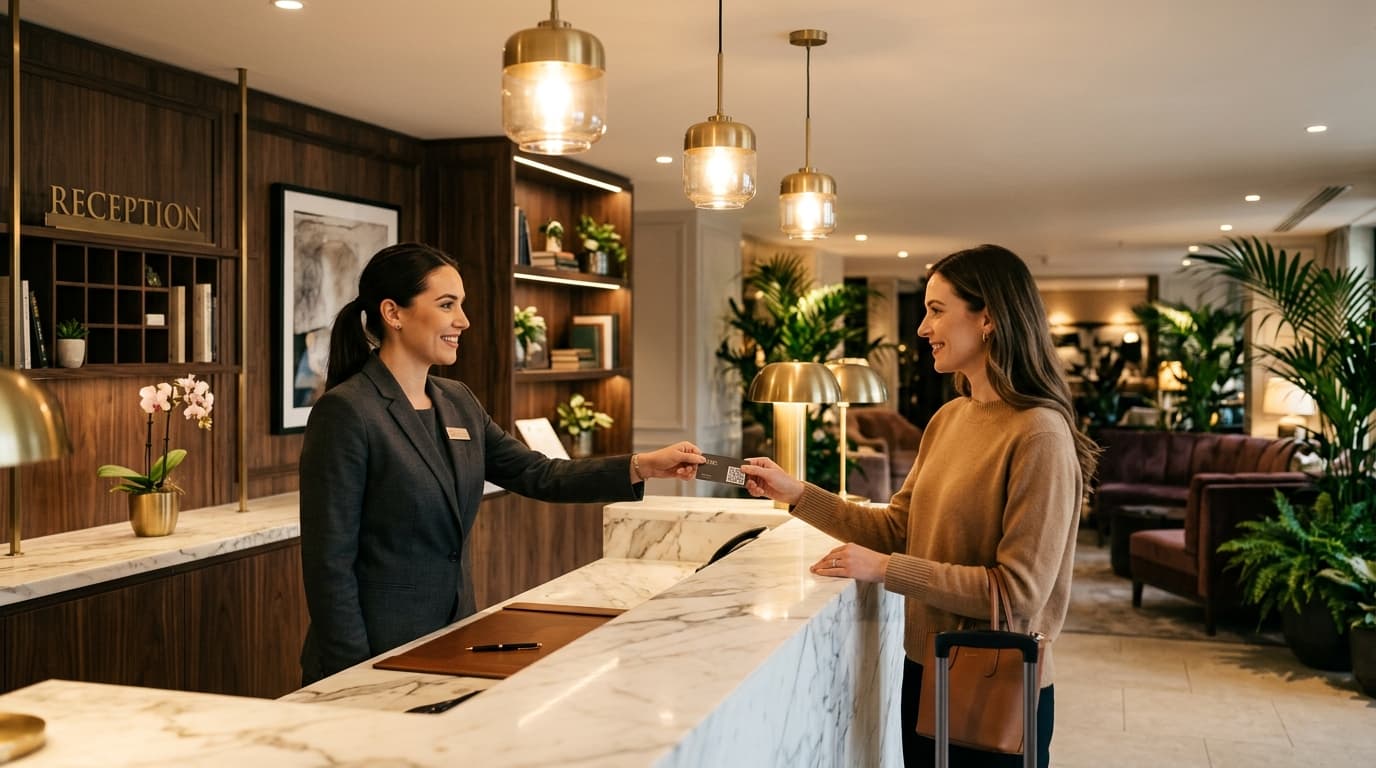
Ludofy makes this frictionless by attaching a gamification layer to the review request. A simple QR code card at the breakfast table or reception desk invites guests to spin a digital fortune wheel for a chance to win a free drink, a late checkout, or a discount on their next stay. After spinning, they're guided naturally to Google to leave a review.
The result: conversion rates 3–5x higher than a direct verbal request, and a steady accumulation of Google reviews from guests who actually enjoyed their stay — not just the vocal minority with a complaint.
The Bottom Line
Booking.com reviews and Google Reviews serve different travelers at different moments. But in the battle for long-term visibility and lower acquisition costs, Google Reviews is the terrain you need to own first.
Hotels that invest in systematic Google review collection — through tools that make it natural and rewarding for guests — are building an asset that compounds over time: rising search rankings, increasing direct bookings, and a reputation that precedes the OTA comparison entirely. Every review collected today is a booking captured tomorrow, at zero commission.