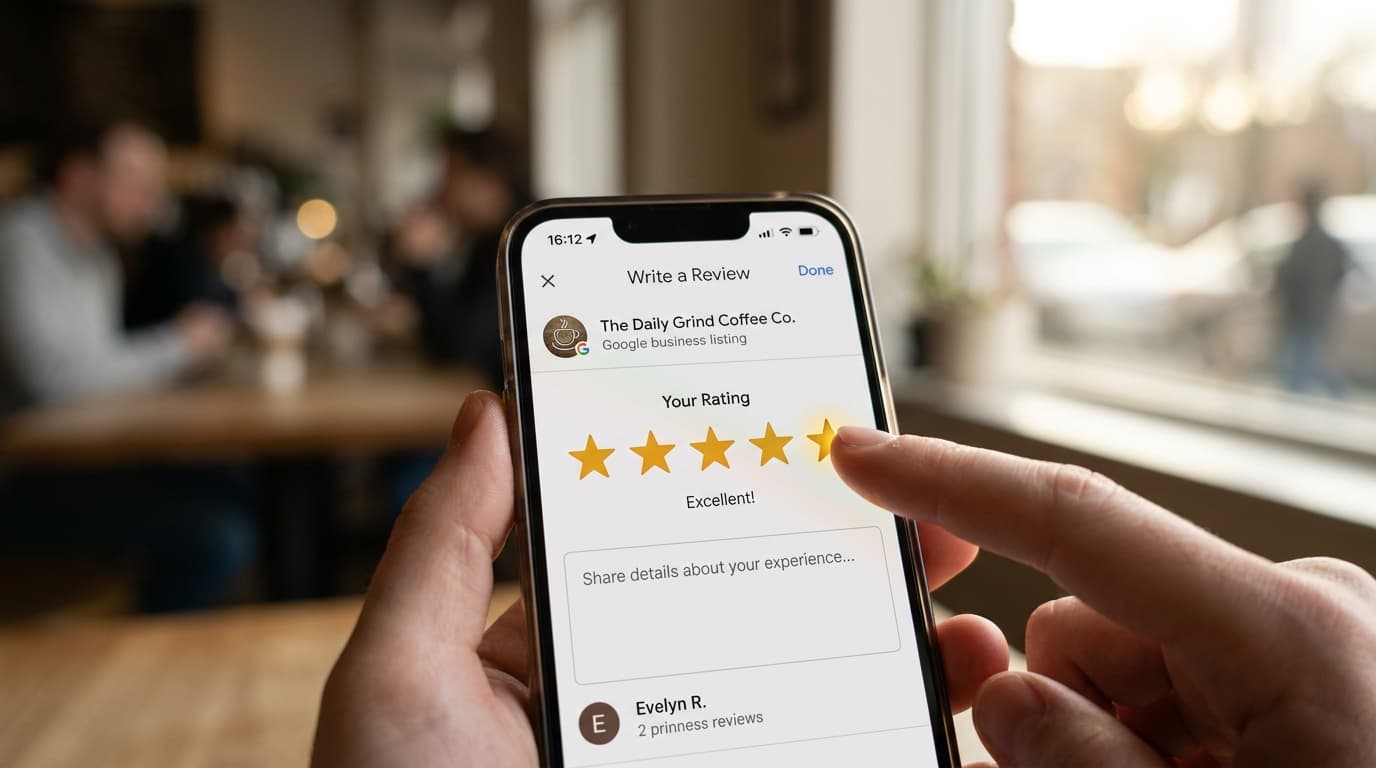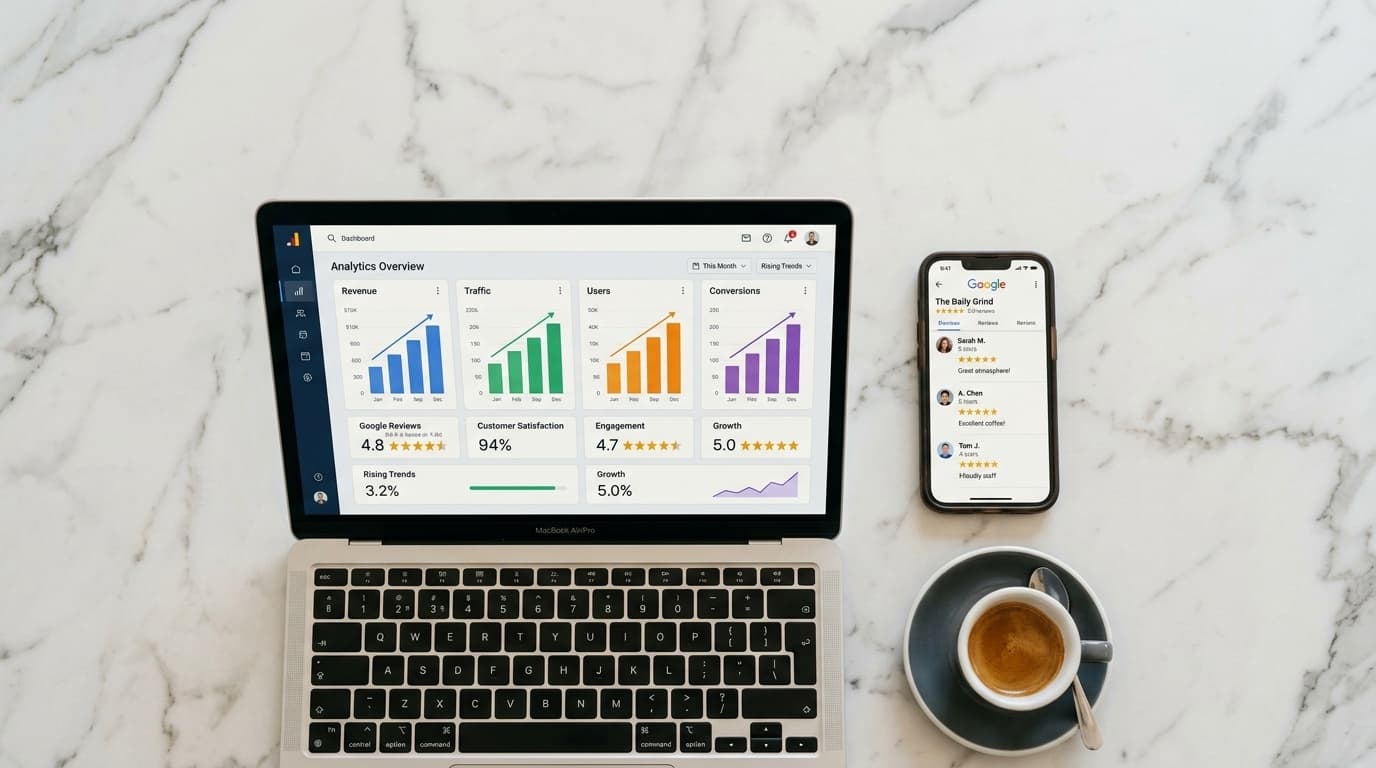
Most business owners check their own Google reviews regularly. Far fewer take the time to systematically read their competitors' reviews. That's a missed opportunity—because your competitors' Google reviews are one of the richest, most actionable sources of market intelligence available to any local business owner, and they're completely free.
Every review your competitor receives tells a story: what customers expected, what they got, and what they wished had been different. Aggregated across dozens or hundreds of reviews, these stories form a clear picture of where the market is underserved—and where you can win.
Why Competitor Reviews Are an Untapped Research Asset
Most competitive research focuses on prices, menus, hours, and marketing materials. These surface-level details tell you what a business offers. Reviews tell you how customers actually experience it.
A competing restaurant might advertise "quick service" on their website, while their reviews consistently mention 20-minute wait times. An aesthetic clinic might claim "personalized care" while customers complain about feeling rushed. There's often a significant gap between what businesses say and what customers experience—and reviews are where that gap becomes visible.
Reading your competitors' reviews systematically gives you something money can't easily buy: unfiltered, firsthand customer sentiment about your local market.
How to Read Competitor Reviews Like a Strategist
This isn't about reading reviews as a curious consumer. You're reading them as an operator looking for patterns. Here's a practical method:
Step 1: Pick your top 3–5 direct competitors. Same business type, same geographic area, similar price range.
Step 2: Focus on 2 and 3-star reviews first. One-star reviews often represent outliers—extreme situations that can skew your analysis. Four and five-star reviews tell you what competitors are doing well. Two and three-star reviews are the gold mine: they come from customers who weren't angry before they arrived, but who left disappointed. These are the structural gaps.
Step 3: Build a simple tracking table. Two columns: recurring complaints and recurring compliments. Fill it in as you read. After 50 reviews per competitor, patterns emerge clearly.
Step 4: Note what's missing. Sometimes the absence of something is as telling as its presence. If no one ever mentions a loyalty perk, a follow-up message, or a personal touch from staff—maybe it doesn't exist. And if it doesn't exist anywhere in your market, it's your differentiator to claim.
Spotting Recurring Complaints: Your Opportunity Map
Competitor complaints fall into predictable categories, each representing a specific opportunity for you:
Operational gaps: "Long wait times," "incorrect orders," "parking is a nightmare," "the place needs a deep clean." These are often systemic problems your competitors are slow to fix—and if you don't share them, you win by default. Lead with that in your communications.
Product and service gaps: "Wish they had a vegetarian option," "the dessert menu is thin," "I wanted to book online but couldn't." These are unmet needs your market has expressed, clearly and specifically. If you can serve them, say so—in your menu, on your website, in your marketing.
Relationship gaps: "Never responds to reviews," "sent a complaint and heard nothing back," "staff seemed indifferent to feedback." A simple commitment to responding to every review—within 48 hours—immediately differentiates you from competitors who ignore this basic customer expectation.
Digital gaps: "Impossible to find their hours," "website hasn't been updated in years," "no way to reserve online." For many local businesses, a professional, up-to-date online presence is still an advantage, not a baseline.
Finding What Customers Love—and Raising the Bar
Positive reviews deserve just as much attention as negative ones. They tell you what your market rewards—the factors that actually drive five-star ratings in your specific context.
If a nearby restaurant consistently earns praise for "the warmest welcome in the neighborhood," you know that in your market, hospitality is a primary driver of satisfaction. If a competing coffee shop gets repeated five-star reviews for "incredibly fast service even during rush hour," speed is clearly a competitive advantage in that space.
This doesn't mean copying your competitors. It means understanding what the market prizes, so you can either match those strengths—or exceed them in ways that feel authentically yours.
Building Your Positioning from the Intelligence You've Gathered
Once you've completed your analysis, you have something invaluable: a map of what your local market wants and isn't consistently getting.
Your positioning can then speak directly to those gaps. A few examples:
- If every competitor is criticized for slow service, make speed a brand promise—and back it up operationally.
- If no one in your area responds to reviews, make systematic responsiveness part of your identity. Customers notice when a business actually engages.
- If your market values value-for-money above all else, lead with transparency about pricing and generous portion sizes.
The best positioning isn't invented in a boardroom—it's discovered in the field. And competitor reviews are one of the most honest maps of the field you'll find.
Setting Up a Regular Competitive Review Cadence
Competitor review analysis isn't a one-time project. It's a monthly discipline.
Markets shift. Competitors improve (or decline). New businesses open. Set a recurring 30-minute block each month to:
- Check new reviews from your 3 main competitors
- Flag any new complaint patterns
- Update your positioning or communications if needed
This practice keeps you ahead—not by chasing your competitors, but by anticipating what your shared customers are going to value next.
From Intelligence to Action: Building More and Better Reviews Than Your Competitors
Understanding your competitive landscape through reviews is the strategy. Building a review advantage is the execution.
That's where Ludofy comes in. By combining a physical fortune wheel with a QR code, Ludofy turns the payment moment into a natural, frictionless review opportunity. No awkward verbal requests, no email blasts, no fake incentives—just a game mechanic that gives satisfied customers a fun, low-effort reason to share their experience on Google.
Businesses using Ludofy typically see their review count multiply by 5 to 10 within the first few weeks, with average ratings stabilizing above 4.5 stars. While your competitors accumulate avoidable one-star reviews through operational gaps you've already identified, you're building a reputation that works for your business 24 hours a day.
Next time you open Google Maps, spend ten minutes reading what your market is telling your competitors. It's the most underused free research tool in local business—and it might be the most valuable thing you read this week.